
Hey Jude Lyrics
Hey Jude
Hey Jude, don't make it badTake a sad song and make it better
Remember to let her into your heart
Then you can start to make it better
Hey Jude, don't be afraid
You were made to go out and get her
The minute you let her under your skin
Then you begin to make it better
Anytime you feel the pain, hey Jude refrain
Don't carry the world upon your shoulders
Well, you know that it's a fool who plays it cool
By making it a little colder
Na na na na na na na na na
Hey Jude don't let me down
You have found her now go and get her
(Let it out to let it in)
Remember to let her into your heart
Then you can start to make it better better better better better better Whooooooooo
na na na na na na na
na na na na hey Jude
na na na na na na na
na na na na hey Jude
na na na na na na na
na na na na hey Jude
(instrumental)
na na na na na na na
na na na na hey Jude
JUDE! HEY JUDE! HEY JUDE HEY JUDE HEY JUDE HEY JUDE HEY JUDE HEY!
na na na na na na na
na na na na hey Jude
Song Overview
Review and Highlights
Quick summary
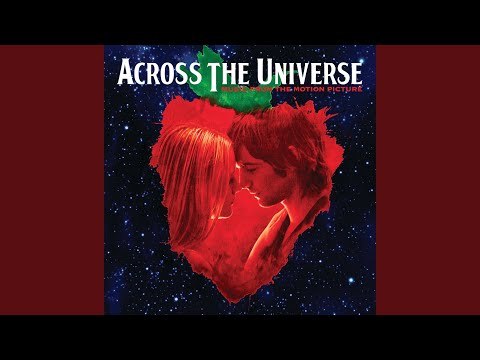
- Across the Universe (2007) assigns the number to Max, with Jude's mother, children, and immigrant voices joining the texture.
- The soundtrack credits the track to Joe Anderson and places it late in the standard edition sequence, running 4 minutes and 11 seconds.
- The film treats it as both pep talk and prayer, staged as communal lift rather than romantic confession.
- As stated on the official Beatles site, the source single was unusually long for a chart-topper, which makes the film's condensed version feel like a dramatic distillation.
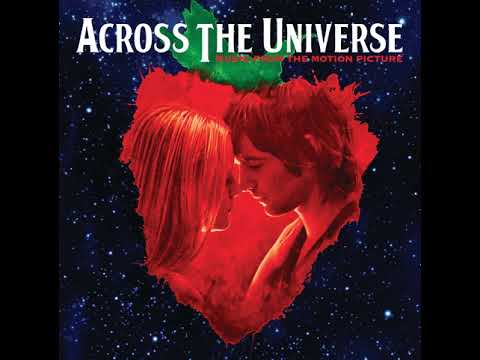
Across the Universe (2007) - film - not cleanly diegetic. Max leads the song while the film folds in other voices (including Jude's mother and children) like memory and street-corner chorus. Why it matters: it reframes a stadium anthem as a stitched community of caretakers, the kind you hear in your head when you are trying not to come apart.
Julie Taymor knows a trap when she sees one. This title can become a monument, the kind audiences salute on autopilot. Her move is to make it human again. Max does not sing it as a victory lap. He sings it as a friend putting his hands on your shoulders and refusing to let you spiral. The cut-in voices do the rest. They make the reassurance feel earned, not announced.
The arrangement also plays a clever theater trick: it keeps the song's forward drive without turning it into a marching band. The pulse stays steady, the phrasing stays conversational, and the ensemble sound is used sparingly so the lead line can stay intimate. A big sing-along becomes, in this frame, a scene about care that cannot be postponed.
Creation History
The Beatles released the original as a 1968 non-album single credited to Lennon-McCartney, written primarily by Paul McCartney and produced by George Martin. The film repurposes it as narrative support for Max, and the soundtrack release anchors that choice by crediting Joe Anderson on the album track listing. A later anecdote reported by People magazine describes McCartney nearly changing a key lyric before John Lennon insisted it stay, which fits the song's core idea: comfort can arrive in plain language that refuses to apologize.
Song Meaning and Annotations
Plot
By the time this cue arrives, the film has already shown how friendship can be battered by politics, ambition, and war. Jude has crossed an ocean and watched his chosen family fracture in new ways. The song lands as a counterweight. Max becomes the voice of steadiness, and the film layers in other voices like a reminder that Jude is not only one person in one room - he is also the sum of where he came from.
Song Meaning
In the film, the message is not "be brave" as a slogan. It is "let someone in." The song's most important action is permission: take the sad song, make it better, and do it by allowing connection to do its work. Taymor turns the lyric into staging. The chorus-like layers are not decoration. They are proof that help can be ordinary, even when the decade is not.
Annotations
"Hey Jude, don't make it bad"
On the page, it reads like a gentle scolding. In the film, it lands as triage. The line is less about attitude and more about survival: do not feed the spiral, do the next useful thing.
"Remember to let her into your heart"
The movie broadens the target. It is not only romance. It is the entire idea of letting other people matter when your defenses are loud.
"The movement you need is on your shoulder"
That famously odd line becomes stronger in this context. As reported by People magazine, Lennon pushed McCartney to keep it. In Taymor's frame, it reads like physical comfort made verbal: a hand on the shoulder, a friend close enough to be felt.
Driving rhythm and arc
The original recording is built to expand, gathering voices until the refrain becomes communal. The film borrows that architecture but keeps it tighter, using the arc for dramatic momentum rather than radio length. The rhythm does not rush. It insists.
Images and symbols
The key symbol here is the crowd itself. Not a concert crowd, but a chorus of remembered people: family, children, strangers, the kind of witnesses you carry from place to place. Taymor uses that chorus to argue that identity is not solitary, even for a character named Jude.
Technical Information (Quick Facts)
- Artist: Joe Anderson (film cast recording)
- Featured: Angela Mounsey and chorus (soundtrack credit context); Jude's mother, children, and immigrants (film chorus assignment)
- Composer: John Lennon; Paul McCartney
- Producer: T Bone Burnett; Elliot Goldenthal; Matthias Gohl (soundtrack compilation credits)
- Release Date: September 14, 2007 (standard soundtrack)
- Genre: film soundtrack; rock ballad cover
- Instruments: lead vocal; ensemble voices; band arrangement
- Label: Interscope
- Mood: supportive; resolute
- Length: 4:11 (standard soundtrack listing)
- Track #: Standard edition Track 15
- Language: English
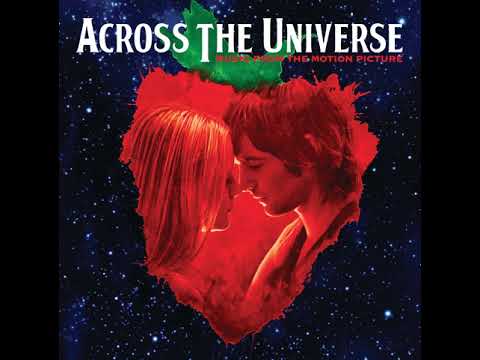
- Album (if any): Across the Universe (Music from the Motion Picture)
- Music style: chorus-forward build with restrained theatrical framing
- Poetic meter: speech-led pop prosody with flexible stress
Frequently Asked Questions
- Who performs the song in the film
- It is assigned to Max, with other voices layered in as chorus and memory.
- Who is credited on the soundtrack
- The standard soundtrack lists the track under Joe Anderson, and IMDb also notes Angela Mounsey and chorus in the performance credit detail.
- Is the scene staged as a concert
- No. It plays as narrative support, with the chorus sound used to suggest community rather than showbiz.
- Why add Jude's mother and children to the vocal texture
- It turns reassurance into lived history. The song becomes a collage of people who made Jude, not just a friend cheering him up.
- Is this the full-length Beatles version
- No. The Beatles single runs over seven minutes; the film and soundtrack use a shorter arrangement designed for pacing.
- Where does it sit on the soundtrack album
- On the standard edition, it is listed as track 15 with a 4:11 runtime.
- What is the main dramatic function of the number
- It steadies the story. After conflict and fracture, the song provides a scene of support that does not require argument.
- Does the film treat it as romantic advice
- The lyric suggests romance, but the staging pushes it toward solidarity and care, more than courtship.
- What is one line worth listening to closely
- The shoulder line, because it reads like physical comfort made verbal, and there is documented history of Lennon insisting it stay in the song.
Awards and Chart Positions
The film track is not a standalone single campaign, so its chart story is mainly album-level. The soundtrack album charted on Billboard 200 and the Top Soundtracks chart and later received a United States Platinum certification. The source Beatles single, released in August 1968, reached number one in many territories and logged a nine-week run at the top of the US Hot 100, according to the official Beatles site and the song's reference documentation.
| Item | Result | Notes |
|---|---|---|
| Across the Universe soundtrack album | US Billboard 200 peak 36 | Album-level weekly peak (2007-2008 chart run) |
| Across the Universe soundtrack album | US Top Soundtracks peak 12 | Album-level soundtrack chart peak |
| Across the Universe soundtrack album | RIAA Platinum | United States certification for the album |
| The Beatles single (1968) | Nine weeks at US number one | Hot 100 run length noted in official band history pages |
How to Sing Hey Jude
This song looks simple until you try to keep it honest for four minutes. The trick is to sing it like a friend talking, then gradually widen the sound as the refrain repeats. Sheet-music listings commonly place the vocal line roughly from E4 up to F6 (depending on arrangement and octave choices) and mark a slow rock-ballad tempo around q equals 74. Treat those numbers as practice landmarks, not courtroom evidence, and match them to the version you are performing.
- Tempo - Start near 72 to 76 BPM. If you drag, the phrases collapse. If you rush, the reassurance sounds anxious.
- Diction - Give the first verse crisp consonants. Soft delivery still needs clarity, especially on word endings.
- Breathing - Mark quiet renewal breaths before long lines. The goal is continuity, not heroic lung displays.
- Flow and rhythm - Keep the verse conversational, then let the refrain sit a fraction more legato. That contrast carries the build.
- Accents - Emphasize the action words: make, take, remember, let. Too many stresses turns counsel into scolding.
- Range strategy - If the top feels tight, lower the key or adjust octave choices. The refrain must stay warm, not forced.
- Ensemble handling - When voices join, treat it like dialogue, not volume competition. Blend first, then lift.
- Mic technique - Step back slightly as the refrain thickens. It keeps the sound open and avoids hard peaks.
- Pitfalls - Do not perform encouragement as a sermon. The scene works when it feels personal.
Additional Info
There is a neat irony in the way this cue plays inside the movie. The character named Jude is not the singer. Max is. That matters. It turns the title from self-portrait into an act of care, like saying someone's name out loud to keep them present. On paper, it is a Beatles hit. In the film, it is a friend refusing to abandon the room.
The source song also carries a well-documented origin as comfort addressed to a child, which makes its placement in a story about fractured families feel less like clever programming and more like dramaturgy. If you track the song's long afterlife, it has often been used as communal lift. Taymor keeps that function, but she pulls the camera close enough that it still feels like one person speaking to one person.
Key Contributors
| Entity | Type | Relationship (S-V-O) |
|---|---|---|
| Joe Anderson | Person | Anderson - performs - the soundtrack recording as Max. |
| Angela Mounsey | Person | Mounsey - appears as - Jude's mother and is included in performance credit context. |
| Julie Taymor | Person | Taymor - directs - the film and frames the song as communal support. |
| Paul McCartney | Person | McCartney - writes - the source composition (credited Lennon-McCartney). |
| John Lennon | Person | Lennon - co-credits - the source composition and influenced a retained lyric line. |
| George Martin | Person | Martin - produces - the original Beatles single. |
| T Bone Burnett | Person | Burnett - produces - the soundtrack compilation. |
| Elliot Goldenthal | Person | Goldenthal - composes - the film score and shares soundtrack producer credit. |
| Matthias Gohl | Person | Gohl - produces - the soundtrack compilation. |
| Interscope Records | Organization | Interscope Records - releases - the soundtrack album. |
| Apple Records | Organization | Apple Records - releases - the 1968 Beatles single as its first Beatles label era single. |
Sources
Sources: Wikipedia: Across the Universe (film) musical numbers list, Wikipedia: Across the Universe (soundtrack) track listing and charts, IMDb soundtrack credits page, The Beatles official site song history page, Wikipedia: Hey Jude single documentation, Musicnotes arrangement details (tempo and range), People magazine report on the retained lyric line, YouTube official topic audio upload