
Strawberry Fields Lyrics
Strawberry Fields
Let me take you down, 'cause I'm going to Strawberry Fields.Nothing is real and nothing to get hung about.
Strawberry Fields forever.
Living is easy with eyes closed, misunderstanding all you see.
It's getting hard to be someone but it all works out.
It doesn't matter much to me.
Let me take you down, 'cause I'm going to Strawberry Fields.
Nothing is real and nothing to get hung about.
Strawberry Fields forever.
Always no sometimes think it's me, but you know I know when it's a dream.
I think I know I mean, hey yes, but it's all wrong.
That is I think I disagree.
Let me take you down, 'cause I'm going to Strawberry Fields.
Nothing is real and nothing to get hung about.
Strawberry Fields forever.
Strawberry Fields forever.
Strawberry Fields forever.
Song Overview
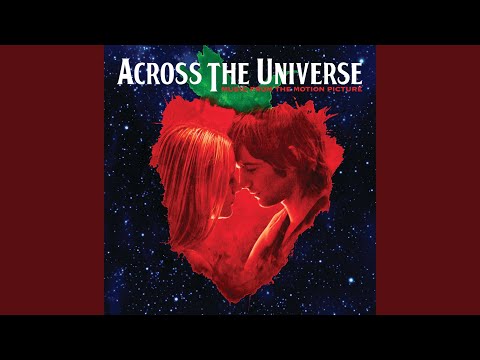
Review and Highlights
Quick summary
- Film musical number from Across the Universe (2007), directed by Julie Taymor.
- Cover performance credited to Jim Sturgess and Joe Anderson, with the original song written by John Lennon and Paul McCartney.
- Placed as a turning-point montage: art, argument, and war footage braided into one sequence.
- Soundtrack version runs about 3 minutes 37 seconds and sits in a darker key than many familiar band-era references.
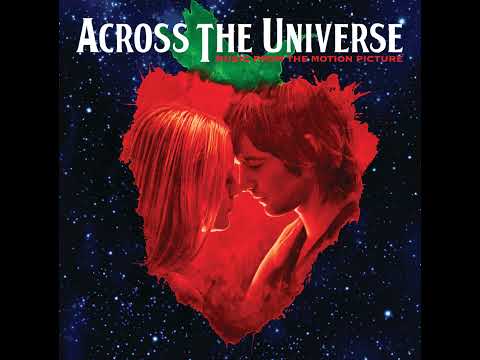
Across the Universe (2007) - film musical number - stylized blend (part diegetic, part montage). Jude sings while painting and the film crosscuts to Max in Vietnam; the edit treats the voice as a shared headspace more than a literal stage performance. Approx placement: around 1:22 into the film.
Julie Taymor stages this number like a short theatrical etude: one image, one prop, one idea, then she lets cinema do the rest. The strawberries are not cute. They are pinned, split, and made to bleed, a craft-table version of a newsreel wound. The vocal delivery stays controlled - almost resigned - which is exactly why the sequence bites. When the cutaways arrive, the song stops being memory and becomes commentary.
What I admire here is the refusal to play the tune as a nostalgia blanket. The arrangement keeps its distance: the groove is steady, the harmony leans minor in spirit even when the mode says otherwise, and the performance sounds like someone trying to remain coherent while the world flickers out of focus.
Key Takeaways
- Visual counterpoint drives the drama: the lyric about perception is paired with images that do not permit denial.
- Vocal restraint is the point: understatement reads as shock, not softness.
- Motif work: the strawberry becomes a repeatable sign for love, harm, and the public cost of private choices.
Creation History
The film treats Beatles catalog songs as narrative scenes rather than karaoke stops, and this number is a prime example. Taymor has described practical, in-camera techniques in the sequence: projecting war material onto faces and splashing paint onto plastic in front of the lens for the strawberry painting passages. That handmade approach matters - it keeps the surrealism tactile, like stagecraft caught on film, while the soundtrack producers shape the performances into a cohesive album built around the cast.
Song Meaning and Annotations
Plot
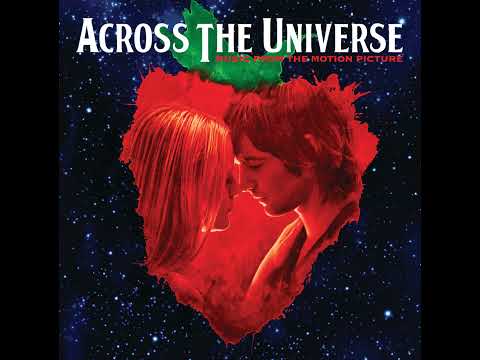
Within the film, the number lands after conflict cracks the central relationships. Jude hits a creative wall and turns the frustration into artwork; Lucy watches the war intrude through screens and headlines; Max is absorbed by Vietnam. The song runs as a braided montage, making their separation feel simultaneous rather than merely parallel.
Song Meaning
In this context, the lyric about slipping between reality and memory becomes less dreamy and more diagnostic: denial as survival tactic, imagination as refuge, and refuge as trap. The film uses the refrain as a warning light - the moment you say nothing is real, you also admit you are losing grip on what is happening to people you love.
Annotations
Let me take you down, cause I'm going to Strawberry Fields.
On its face, it is an invitation. In Taymor's staging, it plays like a retreat inward: Jude is not taking anyone anywhere; he is backing away from the argument he cannot solve with words.
Nothing is real, and nothing to get hung about.
In a pop song, this can sound like relief. Here, the cutaways turn it into a symptom. You can hear the line as a defensive shrug while the images insist the cost is very real.
Living is easy with eyes closed.
The film treats that sentence as the thesis and then argues against it with montage. The edit keeps forcing eyes open: war footage, a lover's face, paint and pulp, then back again.
Rhythm and style fusion
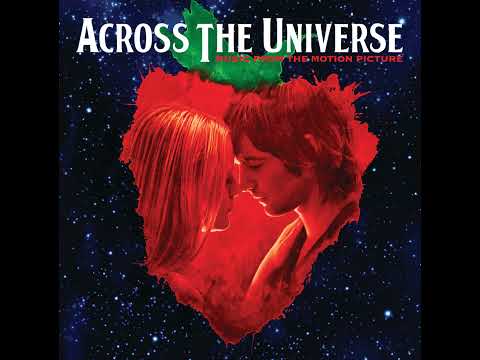
The arrangement favors a steady pulse over psychedelic drift, which makes the surreal visuals feel more disturbing. Instead of floating, the sequence marches - not with drums of triumph, but with the stubborn forward motion of time that will not wait for anyone to catch up.
Emotional arc
It begins as private contemplation, shifts into anger and helplessness, and ends in a kind of numb clarity. The vocal stays conversational, but the montage keeps raising the stakes, so the performance reads like someone forcing calm to avoid breaking.
Cultural and historical touchpoints
The film plants the story in the late 1960s, so the song's original theme of perception collides with televised war and protest culture. As stated at RogerEbert.com, Taymor leaned on projection and practical camera effects to merge character and newsreel - the period's media saturation becomes part of the staging grammar.
Technical Information (Quick Facts)
- Artist: Jim Sturgess and Joe Anderson
- Featured: none
- Composer: John Lennon; Paul McCartney
- Producer: soundtrack compilation producers include T Bone Burnett, Elliot Goldenthal, and Matthias Gohl
- Release Date: September 14, 2007 (soundtrack standard edition)
- Genre: film soundtrack; pop-rock cover
- Instruments: lead vocals; ensemble backing (studio arrangement for soundtrack album)
- Label: Interscope
- Mood: somber; introspective
- Length: 3:37
- Track #: 10 (standard edition track listing)
- Language: English
- Album (if any): Across the Universe (Music from the Motion Picture)
- Music style: cinematic pop arrangement with montage-friendly pacing
- Poetic meter: mixed (speech-like phrasing with mostly iambic fragments)
Frequently Asked Questions
- Who sings this version in the film?
- The film credits the performance to Jim Sturgess and Joe Anderson, aligning with the soundtrack listing.
- Where does the number land in the story?
- It arrives during a breakup-in-motion stretch: Jude turns to art, Lucy absorbs the war through media, and Max is shown in Vietnam. The film crosscuts their worlds as if they share the same room.
- Is it diegetic?
- It behaves like a hybrid. Jude is framed as singing while working, but the edit quickly treats the voice as a montage spine that can jump across locations and time.
- Why strawberries?
- The film makes the fruit a prop with teeth: bright, domestic, and then abruptly violent when punctured and smeared. It is a simple object that can carry protest art and battlefield imagery in the same breath.
- What is the scene trying to say about "nothing is real"?
- In context it reads less like comfort and more like a coping line. The film pairs the lyric with images that challenge denial.
- Does the arrangement copy the band recording?
- No. It borrows the recognizable contour, then steadies the pacing to serve montage and narrative clarity rather than studio psychedelia.
- Why does the performance feel restrained?
- Because the film is doing the shouting with images. The vocal stays controlled, letting the montage carry the pressure.
- What production trick stands out most?
- Taymor has described projecting war material onto faces and adding paint effects in front of the camera, which keeps the number feeling handmade rather than purely digital.
- Is this on the standard soundtrack or only deluxe?
- It appears on the standard edition track list and also on the deluxe editions.
- How long is the soundtrack recording?
- About 3 minutes 37 seconds on the standard listing.
Awards and Chart Positions
As stated on the Recording Academy site, the film soundtrack earned a nomination at the 50th Grammy Awards in the category then titled Best Compilation Soundtrack Album for Motion Picture, Television or Other Visual Media. Commercially, the album reached the Billboard 200 and later earned a United States Platinum certification via the RIAA.
| Category | Result | Details |
|---|---|---|
| Grammy Awards | Nominee | Best Compilation Soundtrack Album (50th ceremony era category naming) |
| Billboard 200 | Peak | No. 36 (week dated November 3, 2007) |
| RIAA | Certification | United States - Platinum (1,000,000 units threshold) |
How to Sing Strawberry Fields Forever
For practice, it helps to treat this as narrative singing rather than a belted showcase. Tempo references for the soundtrack recording cluster around the mid-80s BPM, and it is commonly indexed in E-flat major by music-metric databases. A widely used published melody arrangement lists a compact vocal range in the mid-to-upper register, which matches the scene's conversational delivery more than a big-theater finish.
- Tempo first: Set a metronome near 86 BPM, then sing slightly behind the click. The film version reads as weary and steady, not rushed.
- Diction: Keep consonants clean on the internal rhymes ("real" and "deal", "tree" and "see"), but do not clip the vowels - let them hang, as if the singer is thinking while talking.
- Breathing: Plan breaths before longer clauses, especially leading into the refrain. The trick is to sound unforced even when the line length grows.
- Flow and rhythm: The melody likes to slide across bar lines. Practice speaking the text in rhythm, then add pitch, so the phrasing stays natural.
- Accents: Lean gently on words that carry the scene's subtext (eyes, closed, real). Avoid turning them into punchlines.
- Blend and doubles: If you have a second voice, use it sparingly to underline the refrain, echoing the film's idea of shared consciousness across distance.
- Mic and tone: Aim for close-mic intimacy. A lighter onset (no hard glottal attack) sells the confessional quality.
- Pitfalls: Do not overdo the psychedelic vibe. In this setting, the chill is the menace - too much wobble turns it into parody.
Additional Info
One detail I keep coming back to is how Taymor treats the camera like a stagehand. The paint-on-plastic trick and the projected war footage are not just effects; they are scenic shifts, the kind you can feel in your hands. Playbill has noted Taymor's attention to who sings each song and how that choice changes key and character color - a casting decision as much as a musical one.
If you want a clean, external verification trail: IMDb prints the soundtrack credit line for the performance, and WhatSong pins it to a specific scene description with an approximate timestamp. That double confirmation matters in a film packed with covers, reprises, and shifting vocal assignments.
Key Contributors
| Entity | Type | Relationship (S-V-O) |
|---|---|---|
| Julie Taymor | Person | Taymor directs the film and designs the number as montage-driven staging. |
| Jim Sturgess | Person | Sturgess performs the cover recording used in the film and soundtrack. |
| Joe Anderson | Person | Anderson is credited as co-performer on the soundtrack version. |
| John Lennon | Person | Lennon co-writes the original song. |
| Paul McCartney | Person | McCartney co-writes the original song. |
| T Bone Burnett | Person | Burnett is credited as a producer for the soundtrack album. |
| Elliot Goldenthal | Person | Goldenthal contributes as producer and provides the film score material. |
| Matthias Gohl | Person | Gohl is credited among the soundtrack producers. |
| Interscope Records | Organization | Interscope releases the soundtrack album. |
| Billboard | Organization | Billboard charts the soundtrack on the Billboard 200. |
| Recording Academy | Organization | The Academy records the Grammy nomination for the soundtrack. |
| Across the Universe (2007 film) | Work | The film places the number as a montage tying art, conflict, and war imagery. |
| Across the Universe (Music from the Motion Picture) | Work | The soundtrack albums package the cast recordings, including this track. |
Sources
Sources: IMDb soundtrack page for Across the Universe, WhatSong scene listing, Billboard 200 chart page (week of November 3, 2007), Recording Academy artist nomination page (Elliot Goldenthal), RogerEbert.com interview with Julie Taymor, Playbill feature on Across the Universe.