
Across the Universe Lyrics: Song List
- Girl
- Helter Skelter
- Hold MeTight
- All My Loving
- I Wanna Hold Your Hand
- With A Little Help From My Friends
- It Won't Be Long
- I've Just Seen A Face
- Let It Be
- Come Together
- Why Don't We Do It In The Road?
- If I Fell
- I Want You / She's So Heavy
- Dear Prudence
- Flying
- Blue Jay Way
- I Am The Walrus
- Being for the Benefit of Mr. Kite!
- Because
- Something
- Oh, Darling
- Strawberry Fields
- Revolution
- While My Guitar Gently Weeps
- Across the Universe
- Helter Skelter (Reprise)
- And I Love Her
- Happiness Is A Warm Gun
- A Day in the Life
- Blackbird
- Hey Jude
- Don't Let Me Down
- All You Need Is Love
- Lucy In The Sky With Diamonds
About the "Across the Universe" Stage Show
TL;DR: It is a British-American musical that came out on the big screens in 2007 and it is a romantic drama. It was fully based on a song by The Beatles called the same, “Across the Universe” and tells a story of two beloved. Julie Taymor is the director of this. She has also managed some major productions as The Lion King theatrical musical on Broadway (it is included now in the TOP-6 most successful and long-running musicals of all time).
Columbia Pictures was chosen as the distribution company – a huge conglomerate that really cares about the business and had to lead this motion picture to the brightest shining tops. Unfortunately, it never happened.
The motion picture’s plot revolves around The Beatles’ songs. Writers are Ian La Frenais and Dick Clement. And Elliot Goldenthal made the score. A plot summary includes as many as 34 songs by The Beatles that were written/arranged by the band’s participants.
Cameo actors’ list includes many more famous stars than ones actually in the movie. Bono, Joe Cocker, and Salma Hayek – huge stars who participate here for several seconds or minutes.
Despite the Academy Award and Golden Globe nominations, the motion picture received mixed reviews and it is hard to say, whether lovers of The Beatles included this musical in their collections if it had such low box office.
Release date of the musical: 2007
"Across the Universe: Music from the Motion Picture (Deluxe Edition)" – Album Guide to Tracks and Key Scenes
Review
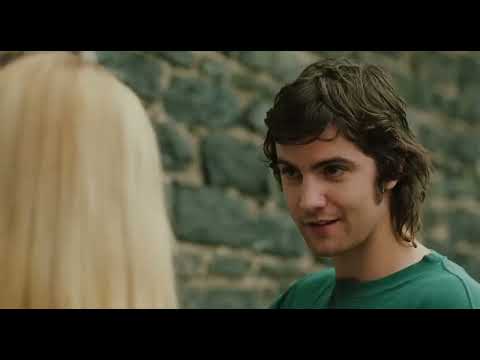
What do you get when you run thirty-plus Beatles songs through a Vietnam-era love story and refuse to treat any of them as museum pieces? You get the Across the Universe soundtrack, a jukebox musical album that plays like a concept record about leaving home, falling in love, burning out on politics and trying to climb back to some kind of hope. Heard front to back, the deluxe soundtrack sketches Jude and Lucy’s arc almost as clearly as the film does: beaches and bowling alleys at the front, riots and hospital wards in the middle, rooftop catharsis at the close.
Because the songs are covers, not needle-drops of the original Beatles recordings, the record lives or dies on interpretation. That’s the fun of it. Jim Sturgess leans into scruffy charm on “All My Loving” and “Across the Universe”; Evan Rachel Wood turns “It Won’t Be Long” and “Blackbird” into fragile, slightly haunted character pieces; Dana Fuchs and Martin Luther McCoy blow the doors off “Helter Skelter,” “Oh! Darling” and “Come Together.” The soundtrack was built to work in context first and on headphones second, and you can hear that in the way so many arrangements start small, then bloom into full-band or choral releases that feel like emotional payoffs rather than show-off moments.
Genre-wise, the album shape-shifts. Early tracks flirt with Merseybeat sparkle and 60s pop polish to sell first love and youthful optimism. As the story darkens, the palette tilts toward soul, blues-rock and gospel — Jojo’s guitar workouts, Carol Woods’ church-shaking “Let It Be,” and the psychedelic swirl of “I Am the Walrus” and “Being for the Benefit of Mr. Kite!” When the film wants vulnerability, you hear sparse indie-folk-like textures (“I Want to Hold Your Hand,” “If I Fell”); when it wants swagger or anger, you get stomping R&B and hard rock (“Oh! Darling,” “I Want You (She’s So Heavy)”). By the time the cast reaches “All You Need Is Love” and “Hey Jude,” the album has quietly mapped a whole emotional spectrum of the 1960s in musical form.
How It Was Made
Across the Universe started as Julie Taymor’s slightly insane idea: tell a new, non-biopic story almost entirely through Beatles songs. Instead of cutting original Fab Four recordings to picture, she brought in longtime collaborator Elliot Goldenthal to re-imagine the catalogue from the ground up, then paired him with roots-rock guru T Bone Burnett and producer Matthias “Teese” Gohl. Their job wasn’t just to arrange covers; it was to make each song feel like it naturally belonged to Jude, Lucy, Max, Sadie, Prudence and Jojo.
Recording ran alongside principal photography in 2005–2006, bouncing between big studios in Los Angeles and New York and smaller rooms where the band tracks came together. A lot of the vocals were cut with the film’s staging in mind: tempos adjusted to choreography, arrangements built around where the camera would land, and transitions designed so songs could bleed into one another as the story jumps from Liverpool docks to Ivy League dorm rooms to New York streets and war zones. Taymor and Goldenthal treated Beatles melodies like theatre material — key changes, reharmonizations, and mash-ups (like “Across the Universe” colliding with “Helter Skelter”) were fair game if they served the drama.
The other big creative swing: as Taymor has talked about on the commentary, a huge portion of the singing was done live on set, with playback used as scaffolding rather than a strict guide. That choice gives performances a slightly rough, human edge — breaths, cracks, the feel of people moving while they sing — that you can still hear even in the more polished album mixes. The deluxe edition then cleans those takes up, extends several numbers, and folds in Goldenthal’s score cues and guest turns from Bono, Joe Cocker, Eddie Izzard and the Secret Machines.
Tracks & Scenes
Below are key songs from the film and album, with where they land in the movie and why they matter. Times are approximate, based on the film cut and scene-by-scene listings.
“Girl” (Jim Sturgess)
- Where it plays:
- Opens the film on the beach around 0:00. Jude sits alone at the shoreline, singing directly to camera while waves roll in behind him. The scene is stripped down — just voice, water, and that last line hanging in the air — before the movie snaps back to earlier, more crowded memories.
- Why it matters:
- As a cold open, it frames everything as a remembered love story. The spare, almost a cappella arrangement sets a melancholic tone, so that when the soundtrack later explodes into dances and parties, you’ve already been told things won’t stay innocent.
“Hold Me Tight” (Jim Sturgess, Evan Rachel Wood, Lisa Hogg)
- Where it plays:
- Around 0:02, the song cross-cuts between two dances: Lucy at a polished American high-school prom and Jude in a grittier Liverpool club. The editors ping-pong between both couples on the beat, turning it into a split-screen emotional prologue before the characters ever meet.
- Why it matters:
- The arrangement keeps the song bouncy, but the visual contrast – clean suburban lights vs. smoky pub – quietly draws the class and culture line the whole story will cross. On album, you still hear that duality in the trade-off vocals.
“All My Loving” (Jim Sturgess)
- Where it plays:
- About 0:07. Jude sings to his girlfriend as he prepares to leave Liverpool, then continues the song on the ship to America while she watches him sail away. In parallel, Lucy says goodbye on the train platform as her boyfriend ships out to Vietnam.
- Why it matters:
- It’s the story’s first big departure song. The jaunty arrangement underlines how naive everyone still is; the same cheerful melody covers two very different journeys — one toward self-discovery, one toward war.
“I Want to Hold Your Hand” (T.V. Carpio)
- Where it plays:
- Around 0:09 on the football field. Prudence, dressed as a cheerleader, sings the song slowly to herself as she watches the game. Only midway through the scene do we realize she’s actually longing for another cheerleader, not one of the players. The vocal is mostly diegetic — she’s singing alone in the stands and down the corridor as she leaves.
- Why it matters:
- Turning an early-Beatles banger into a lonely ballad reframes it as a queer coming-out moment. The soundtrack version keeps that vulnerable tempo, so even away from the visuals you feel Prudence’s mix of crush, shame, and isolation.
“With a Little Help from My Friends” (Joe Anderson, Jim Sturgess & ensemble)
- Where it plays:
- Roughly 0:17. Max and Jude’s dorm party anthem starts as a drunken sing-along in the room, then spills into corridors, a campus bar and even the rooftop, where they golf off the edge and slide down railings. It’s semi-diegetic: the boys clearly sing, but the track grows into full band and chorus.
- Why it matters:
- This is the “we’re a gang now” moment. The song’s boozy, stretched phrasing gives classic Beatles camaraderie a slightly chaotic, student-radical edge, introducing the film’s found family vibe that the later protest songs depend on.
“It Won’t Be Long” (Evan Rachel Wood)
- Where it plays:
- At about 0:21, Lucy races upstairs with a letter from her soldier boyfriend and bursts into song in her bedroom. The number follows her through school corridors and into daylight, while Prudence boards a bus in the background of the montage.
- Why it matters:
- The arrangement stays fairly bright, but Wood threads in anxious energy — you can hear the denial under the cheer. On the album it plays as Lucy’s last purely pop moment before loss and politics start to reshape her songs.
“Let It Be” (Carol Woods & Timothy T. Mitchum)
- Where it plays:
- Around 0:33, after Lucy learns her boyfriend has been killed in action. A young boy sings in a church as street protests turn violent; the sequence intercuts a Black gospel funeral with images of riots and military repression. The performance is diegetic within the funeral, but swells into full cinematic underscore.
- Why it matters:
- This is the soundtrack’s emotional gut-punch. The gospel arrangement relocates the song from private comfort to public mourning and makes Vietnam’s casualties feel communal. Many listeners treat this cut as the album’s spiritual centerpiece.
“Come Together” (Joe Cocker, Martin Luther McCoy)
- Where it plays:
- At about 0:37. Jojo rides an escalator down into New York as different street characters — a pimp, a homeless man, a hustler — each take a verse. He walks through the city’s underbelly while the groove rolls on, eventually ending up in Sadie’s club where he shows off his guitar chops.
- Why it matters:
- It introduces Jojo and New York’s gritty side in one go. Joe Cocker’s raw vocal over that thick, bluesy arrangement shifts the song from late-Beatles cool to something closer to 70s funk, situating the film firmly in an American soul tradition.
“I Want You (She’s So Heavy)” (Joe Anderson & ensemble)
- Where it plays:
- Around 0:53, as Max goes through his surreal draft board sequence. He walks into the induction center, then suddenly carries a massive Statue of Liberty arm alongside other recruits. Uncles Sam figures loom, soldiers march in lockstep, and Sadie and Prudence echo the title line as a kind of taunting chorus.
- Why it matters:
- The heavy, almost industrial groove turns romantic obsession into the weight of conscription. On the album, the track is intense even without visuals, but knowing that the physical deluxe soundtrack originally omitted it gives the scene an extra “missing protest” aura for collectors.
“Strawberry Fields Forever” (Jim Sturgess & Joe Anderson)
- Where it plays:
- Roughly 1:26. Jude, now a graphic artist, pins strawberries to a board while designing Sadie’s record-label logo. Each fruit slowly bleeds down the wall like drops of blood. Intercut: Max in Vietnam, surrounded by explosions and chaos, joins the vocal from the battlefield.
- Why it matters:
- The song becomes a visual metaphor for the war, turning a dreamy psychedelic track into a commentary on bloodshed and commodification. The soundtrack performance mirrors that mood swing, starting airy and gradually grinding into something darker.
“I Am the Walrus” (Bono & the Secret Machines)
- Where it plays:
- Around 1:04 during Dr. Robert’s introduction. He leads a chaotic, trippy performance at his party, then continues singing as his bus full of hippies barrels across the countryside. The song is mostly diegetic — the characters are clearly blasting and singing along as they drive.
- Why it matters:
- Bono’s vocal, paired with the Secret Machines’ space-rock backing, pushes the album fully into psychedelia. It marks a pivot from scruffy bohemia into outright hallucination, setting up the even stranger Mr. Kite sequence that follows.
“Being for the Benefit of Mr. Kite!” (Eddie Izzard)
- Where it plays:
- At about 1:10 in a circus field. Mr. Kite presides over a surreal sideshow, surrounded by dancers and figures inspired by Yellow Submarine’s Blue Meanies. The performance sits in that odd space between dream and performance art, stitched together with jump cuts and visual tricks.
- Why it matters:
- The track is pure theatrical chaos. Izzard’s improvised, talk-sing delivery and the warped carnival arrangement underscore how far the story has drifted from realistic protest drama into symbolic, sometimes unsettling fantasy.
“Across the Universe” (Jim Sturgess)
- Where it plays:
- Around 1:38 on the subway, as Jude rides toward a student occupation at Columbia University. He sings sitting alone in the carriage, then the song threads over images of Lucy at the protests and Sadie on stage as “Helter Skelter” bleeds in. The number pieces together their diverging paths in split images.
- Why it matters:
- This is Jude’s thesis statement. Sturgess sings it quietly, almost like an inner monologue, while the world around him turns violent and loud. On the album, the mash-up with “Helter Skelter” captures that tension between resignation and chaos.
“While My Guitar Gently Weeps” (Martin Luther McCoy)
- Where it plays:
- About 1:34, after news of Martin Luther King Jr.’s assassination hits. Jojo stands in a club, playing and singing to a small crowd, while images of grief and disillusionment ripple through the community.
- Why it matters:
- The arrangement leans into blues and R&B, and McCoy’s vocal makes it feel like a lament for the entire movement. It’s one of the rare tracks where the movie pauses to let a single emotional performance breathe, something the album preserves beautifully.
“Blackbird” (Evan Rachel Wood)
- Where it plays:
- Around 1:54 by the seaside. Lucy sits with Max as they recover from trauma; she sings softly while the waves and wind fill the spaces between phrases. The scene is quiet, almost a palate cleanser after the violence and psychedelic excess.
- Why it matters:
- Wood’s understated vocal turns “Blackbird” into a song about picking yourself up after being shattered. On the album, it’s a small track that looms large — a turning point from despair toward the tentative hope of the finale.
“Hey Jude” (Joe Anderson)
- Where it plays:
- Roughly 1:55. Max, back in the States, sings in a bar and then in a cab as he travels to pick Jude up at the docks. The film cross-cuts between his journey and Jude deciding to return to New York, with the big “na-na-na” coda becoming a literal sing-along between them.
- Why it matters:
- Flipping the song so Max sings to Jude gives it a fraternal angle. It’s not a breakup ballad anymore; it’s a best-friend pep talk. On record, the big choir ending still sounds like a whole city dragging Jude back into life.
“All You Need Is Love” (Jim Sturgess & Dana Fuchs)
- Where it plays:
- At about 2:02, during the rooftop concert. Jude, now illegally back in the U.S., sings a cappella from the top of a building, then Sadie’s band crashes in from a neighboring roof. Police and crowds gather below as the performance turns into a full street-level event.
- Why it matters:
- It’s the film’s answer to the Beatles’ own rooftop gig. The arrangement starts delicate and swells into rock-gospel, acting as both love song to Lucy and final anthem to the 60s idealism the movie keeps chasing.
“She Loves You” (Joe Anderson) & “Lucy in the Sky with Diamonds” (Bono)
- Where it plays:
- As the rooftop scene resolves around 2:05, Max briefly sings over a snippet of “She Loves You” when he spots Lucy watching Jude from a neighboring building. Immediately after, the credits roll into Bono’s studio version of “Lucy in the Sky with Diamonds,” with psychedelic visuals washing over the final moments.
- Why it matters:
- “She Loves You” doesn’t appear on most album configurations at all, and “Lucy in the Sky with Diamonds” is an off-screen performance, so these cues are almost bonus tracks tied to the visuals. They underline the film’s habit of treating Beatles songs like in-world mythology: even the character names echo them.
Off-album & trailer notes
Not every cue you hear in the film lives on the original CD editions. The physical deluxe album omits “Why Don’t We Do It in the Road?” and “I Want You (She’s So Heavy)” even though they drive major club and draft scenes, and instrumental “A Day in the Life” (Jeff Beck’s version) only exists in the film and on a separate compilation. Depending on which trailer cut you saw, the marketing leaned on different snippets of the cast’s “Across the Universe,” “All You Need Is Love,” and “I Am the Walrus,” plus flashes of “Helter Skelter” over quick-cut war and protest imagery — all meant to sell the soundtrack as much as the movie.
Notes & Trivia
- Roughly thirty-three Beatles compositions appear in the film, but the deluxe soundtrack tops out at thirty-one tracks, so a few musical moments are still “movie-only.”
- “Let It Be” on the standard CD is shorter than in the film; the album trims the final verse to keep runtime tight.
- “And I Love Her” functions more as a recurring motif in the score than a full vocal number; Julie Taymor has called it a kind of hidden theme for the movie.
- Names like Jude, Lucy, Max, Sadie, Jojo, Prudence, Dr. Robert and Mr. Kite are all lifted straight from Beatles song titles and lyrics, so the soundtrack is baked into the character list before anyone sings.
- Goldenthal’s original score material — some of it quite wild and dissonant — mostly stayed off the albums, which focus instead on the vocal performances.
- The rooftop “All You Need Is Love” sequence deliberately echoes the Beatles’ Apple Corps rooftop concert, right down to how the police slowly push through the crowd.
- On home video, the film’s sound mix pushes live-recorded vocals closer to the front so you can hear the imperfections that the soundtrack slightly smooths over.
- A limited 3-LP edition released years later finally gathered all 31 film performances in one remastered package, turning the soundtrack into more of a stand-alone listening experience.
Reception & Quotes
When it landed in 2007, the soundtrack divided critics almost as much as the film. Some reviewers loved the ambition but argued it made you crave the original Beatles records; others praised the way it repurposed familiar tunes for new emotional beats. Over time, especially as the movie found a cult audience, the album has been reassessed as one of the more daring jukebox soundtracks of the 2000s.
Commercially, the standard CD arrived in September 2007, with a 31-track deluxe edition following shortly after. The longer version briefly became the most downloaded album on iTunes and pushed the record onto Billboard’s soundtrack and main album charts. A few years later, the Recording Academy nominated the album for the Grammy for Best Compilation Soundtrack Album for Motion Pictures, Television or Other Visual Media, cementing its reputation in industry circles.
“The arrangements and performances are just right for each particular moment in the film, even if they don’t always play like radio singles.” — film music review
“The 33-song soundtrack mixes obscurities and surefire crowd-pleasers, often giving the hits a fresh perspective.” — newspaper soundtrack feature
“For casual Beatles listeners, this is a joyous gateway; for purists, it can be an infuriating listen.” — college press review
“In the years since release, the film has gained cult status — in no small part due to its celebrated soundtrack.” — retrospective article
The soundtrack has also stayed alive in think-pieces and fan blogs, where writers highlight particular covers — Prudence’s “I Want to Hold Your Hand,” the gospel “Let It Be,” or Sadie and Jojo’s “Oh! Darling” — as standalone reinventions worth hearing even if you never watch the movie.
Interesting Facts
- Paul McCartney attended an early screening, reportedly mouthing along to songs like “All My Loving” under his breath — a quiet but massive endorsement for the project.
- Several Beatles insiders, including Ringo Starr and Yoko Ono, later expressed support for the film, which helped soften early skepticism among fans.
- In recent years, Evan Rachel Wood revealed that she and Jim Sturgess were actually tripping during part of the “I Am the Walrus” sequence, which explains some of the scene’s wild, lived-in energy.
- Studio executives once pushed hard to remove much of the political, queer and psychedelic content; Taymor and the cast pushed back, arguing the songs themselves demanded those elements.
- Because the film uses Beatles songs in story order, the soundtrack doubles as a crash course through the band’s evolution — from early pop to White Album weirdness and Abbey Road introspection.
- Bono appears twice on the album, as Dr. Robert in “I Am the Walrus” and as an off-screen vocalist on “Lucy in the Sky with Diamonds,” bridging Beatles fandom and 2000s rock royalty.
- Joe Cocker plays multiple street characters during “Come Together,” a nod to his own history with Beatles covers.
- The soundtrack’s cult reputation surged again when the film returned to theaters for special anniversary screenings, introducing the album to a new generation who mostly knew the Beatles from streaming playlists.
- Some fans unofficially sequence the deluxe edition in strict film order and add Jeff Beck’s “A Day in the Life” from his own album to get as close as possible to a complete narrative record.
Technical Info
- Title: Across the Universe (Music from the Motion Picture) – Deluxe Edition
- Year: 2007 initial release; later expanded and reissued, including a deluxe 3-LP vinyl edition.
- Type: Film soundtrack album for the jukebox movie musical Across the Universe.
- Composers & songwriters: Core songs by John Lennon, Paul McCartney, George Harrison and, on “Flying,” all four Beatles; original score and arrangements by Elliot Goldenthal.
- Producers / music direction: Album compiled and produced by T Bone Burnett, Elliot Goldenthal and Matthias “Teese” Gohl, in close collaboration with director Julie Taymor.
- Music supervision: Song selection and clearances coordinated through Apple Corps and the production team, with Burnett, Goldenthal and Gohl effectively overseeing how each Beatles song was placed and arranged for picture.
- Key featured vocalists: Jim Sturgess (Jude), Evan Rachel Wood (Lucy), Joe Anderson (Max), Dana Fuchs (Sadie), T.V. Carpio (Prudence), Martin Luther McCoy (Jojo), plus guests Bono, Joe Cocker, Eddie Izzard, Salma Hayek and the Secret Machines.
- Selected notable placements: “Let It Be” underscoring a funeral and riot montage; “I Want to Hold Your Hand” reframed as a closeted love song; “Strawberry Fields Forever” intercutting art-studio strawberries with Vietnam combat; “All You Need Is Love” as a rooftop performance echoing the Beatles’ own final concert.
- Release context: Standard CD released September 14, 2007 to coincide with the film’s limited U.S. rollout after its Toronto International Film Festival premiere; 31-track deluxe edition followed in early October.
- Label / catalog: Interscope Records, multiple CD and digital editions; later expanded to vinyl, including a modern 3-LP collector’s set.
- Formats & availability: Standard and deluxe CDs, digital download, streaming (various services list the 31-track deluxe as the primary version), plus limited vinyl runs.
- Charts & awards: Reached the U.S. Billboard 200 and soundtrack charts; nominated for the Grammy Award for Best Compilation Soundtrack Album for Motion Pictures, Television or Other Visual Media.
- Running time: Approx. 52 minutes (standard) and about 100 minutes (digital deluxe), covering nearly all vocal numbers used in the film.
Key Contributors
| Subject | Verb | Object |
|---|---|---|
| Julie Taymor | directs | Across the Universe (film) |
| Julie Taymor | conceives | a Beatles-driven jukebox movie musical narrative |
| Elliot Goldenthal | composes | original score for Across the Universe (film) |
| Elliot Goldenthal | arranges | Beatles songs for the soundtrack album |
| T Bone Burnett | co-produces | Across the Universe (Music from the Motion Picture) |
| Matthias “Teese” Gohl | co-produces | Across the Universe (Music from the Motion Picture) |
| Jim Sturgess | performs | lead vocals on songs such as “Girl,” “All My Loving,” “Across the Universe” |
| Evan Rachel Wood | performs | lead vocals on “It Won’t Be Long,” “If I Fell,” “Blackbird” |
| Dana Fuchs | performs | Sadie’s rock vocals on “Helter Skelter,” “Oh! Darling,” “Don’t Let Me Down” |
| Martin Luther McCoy | performs | Jojo’s soul-infused “Come Together” and “While My Guitar Gently Weeps” |
| T.V. Carpio | performs | Prudence’s interpretation of “I Want to Hold Your Hand” |
| Bono | appears as | Dr. Robert and sings “I Am the Walrus” and “Lucy in the Sky with Diamonds” |
| Joe Cocker | appears in | multiple street roles while singing “Come Together” |
| Eddie Izzard | performs | Mr. Kite’s circus number “Being for the Benefit of Mr. Kite!” |
| Interscope Records | releases | Across the Universe (Music from the Motion Picture) |
| Columbia Pictures & Revolution Studios | produce | Across the Universe (film) |
| Toronto International Film Festival | premieres | Across the Universe in September 2007 |
| Liverpool & New York City | anchor | the film’s main story locations reflected in the soundtrack’s tone |
| The Beatles | provide | the entire underlying song catalogue for the film and album |
Questions & Answers
- Is the Across the Universe soundtrack made from original Beatles recordings?
- No. The album uses newly recorded covers sung by the film’s cast and guests, built on Beatles compositions but arranged specifically for the movie.
- What’s the difference between the standard and deluxe editions of the soundtrack?
- The standard CD has 16 tracks; the deluxe version expands to 31, adding most of the remaining vocal numbers and some score, though a few cues still only exist in the film.
- Do the actors actually sing, or is it mostly studio trickery?
- Most principal actors perform their own vocals, and a large share of the singing was done live on set, then polished and sometimes extended in the album mixes.
- Which film songs are missing or altered on some soundtrack editions?
- The physical deluxe album leaves out “Why Don’t We Do It in the Road?” and “I Want You (She’s So Heavy),” and the standard disc shortens “Let It Be.” Instrumental “A Day in the Life” and a brief “She Loves You” tag remain film-only.
- Where should a new listener start with this soundtrack?
- If you only sample a few tracks, make it “I Want to Hold Your Hand,” “Let It Be,” “Strawberry Fields Forever,” “While My Guitar Gently Weeps,” and the rooftop “All You Need Is Love.” Together they show the album’s emotional range.
Sources: Across the Universe (film) production notes; Across the Universe (soundtrack) discography entries; SoundtrackRadar scene-by-scene song guide; contemporary soundtrack reviews; Grammy Awards and label information; later interviews with Julie Taymor, cast and critics.