
Helter Skelter Lyrics
Helter Skelter
When I get to the bottomI go back to the top of the slide
Where I stop and turn and I go for a ride
Till I get to the bottom and I see you again
Yeah, yeah, yeah
Do you, don't you want me to love him
I'm coming down fast but I'm miles above you
Tell me, tell me, tell me, come on tell me the answer
Well you may be a lover but you ain't no dancer
Look out
Helter skelter
Helter skelter
Helter skelter
Uhhhhh
Will you won't you want me to make you
I'm coming down fast but don't let me break you
Tell me, tell me, tell me, baby tell me the answer
You may be a lover but you ain't no dancer
Helter skelter
Helter skelter
Helter skelter
Uhhhh, ow
[Instrumental Interlude]
When I get to the bottom
I go back to the top of the slide
When I stop and turn and I go for a ride
And I get to the bottom and I see you again
Yeah, yeah, yeah
Well, do you gonna want me to make you
I'm coming down fast but don't let me break you
Well tell me, tell me, tell me the answer
You may be a lover but you ain't no dancer
Oh no,
Helter skelter
Helter skelter
Helter skelter
Uhhhh, ow
Song Overview
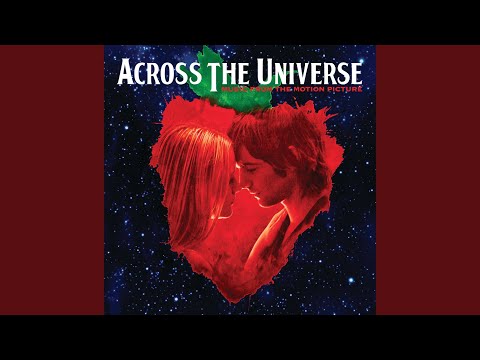
Review and Highlights
Quick summary
- What it is: A hard-edged cover of a Beatles original, staged as a pressure-release valve inside the film.
- Who performs it in the movie: Dana Fuchs as Sadie.
- Where it lands in the soundtrack: Track 12 on the standard album; a longer reprise appears on the deluxe set.
- How it plays against the story: The vocal sits over a protest-and-crackdown montage, with Jude and Lucy pulled into the churn.
- What makes this version distinct: Blues-rock grit, sermon heat, and a band feel that keeps the song on the verge of breaking.
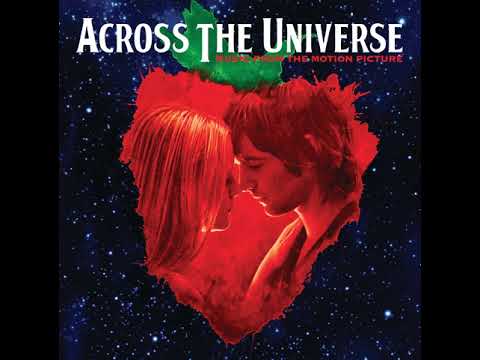
Across the Universe (2007) - film performance - not diegetic. In the sequence, Sadie launches the number while the film cross-cuts to a campus protest and police violence; the song becomes a running motor for the montage rather than a literal on-screen concert you are meant to believe uninterrupted. It matters because Julie Taymor uses the track as a kind of editorial chorus: the music says "chaos" while the images show what that word costs.
On stage, "Helter Skelter" is a trap door: once you open it, you cannot pretend the evening is only romance and tie-dye. In this film, the arrangement leans into that function. The drums and guitar do not simply accompany the vocal; they egg it on. Dana Fuchs does not "interpret" so much as test the song's joints, yanking phrases until they creak. That is exactly the right instinct for a Beatles cut that was written as a dare to be loud and dirty.
Apple Music's album notes describe her performance as channeling Janis, and the line reads like a critic's shorthand that happens to be accurate. The vocal lives in that same neighborhood: a rasp that can still pitch, a belt that lands like a thrown bottle, and a phrasing style that enjoys being slightly late to the beat, like a singer stepping into a spotlight a half-second after the band is already burning.
Creation History
The film is a Beatles jukebox musical directed by Julie Taymor, with the soundtrack compiled and produced by T Bone Burnett alongside Elliot Goldenthal and Matthias Gohl. "Helter Skelter" is credited to Lennon-McCartney, though it was authored by Paul McCartney; in the movie, it is reimagined as a blues-rock blowtorch, sung by Dana Fuchs. The track appears on the Interscope soundtrack release and is framed in the film as a montage driver, a choice that keeps the number from turning into a nightclub postcard and instead makes it part of the plot's machinery.
Song Meaning and Annotations
Plot
In the late-1960s swirl of the film, relationships fray as politics harden. The "Helter Skelter" sequence arrives when public turmoil and private fracture start to mirror each other. The song overlays a protest scene and police crackdown: Lucy is caught in the sweep, Jude pushes through the crowd, and the film cuts between performance energy and street violence until the two feel like the same event from different angles.
Song Meaning
The hook is a carnival slide turned into a metaphor for freefall. In the Beatles original, it is already a warning disguised as a ride. In Across the Universe, that idea is tightened: the number becomes the sound of a culture losing balance. The mood is not "rebellion as poster art"; it is rebellion as bruises, sirens, and consequences. When the vocal keeps insisting on speed, the film answers with bodies moving fast for reasons no one chose.
Annotations
"When I get to the bottom"
The lyric is built on repetition, but the film treats repetition as escalation: each cut in the montage feels like another trip down the slide, faster and less controllable.
"I'm coming down fast"
In this performance, "fast" is not flirtation. It is a threat, and the arrangement makes sure you hear it as momentum, not romance.
"You may be a lover"
This is where Taymor's editing gets theatrical: the line lands like a pointed aside, as if the film is talking back to its own love story for a moment.
"Helter skelter"
Chanted rather than sung, it turns into a label for the times. Entertainment Weekly notes the number plays over a black-and-white montage with angry ocean imagery - a visual rhyme for the song's spiraling descent.
Style and rhythm
This cover sits at the intersection of hard rock and blues shouting. The band pushes a driving 4-4 feel that can be counted straight, yet is often felt in half-time because the vocal takes up so much space. That is part of the theatrical point: the song moves quickly, but the listener experiences it as heavy.
Arc and staging logic
The number starts like a provocation and ends like a forecast. In a stage show, you would call it a "turn" - the moment the room's temperature changes. The film uses it the same way, swapping the safety of musical performance for the danger of public conflict, then stitching them together until you cannot tell which is fueling which.
Technical Information (Quick Facts)
- Artist: Dana Fuchs
- Featured: None
- Composer: Lennon-McCartney (written by Paul McCartney; credited to Lennon-McCartney)
- Producer: Teese Gohl; Elliot Goldenthal (track). Album production: T Bone Burnett; Elliot Goldenthal; Matthias Gohl
- Release Date: September 14, 2007 (soundtrack album release)
- Genre: Rock cover; blues-rock vocal style
- Instruments: Lead vocal; electric guitars; bass; drums
- Label: Interscope
- Mood: Volatile; urgent; abrasive
- Length: 3:44
- Track #: 12 (standard soundtrack edition)
- Language: English
- Album (if any): Across the Universe (Music from the Motion Picture)
- Music style: Hard-rock arrangement with blues phrasing
- Poetic meter: Predominantly accentual rock phrasing (stress-led, not strict iambs)
Frequently Asked Questions
- Who sings "Helter Skelter" in Across the Universe?
- Dana Fuchs performs it in character as Sadie, with a band-forward arrangement designed for the film's montage language.
- Is the song performed on-screen, or used as background?
- Both ideas are braided. The film presents the performance energy while cutting to protest footage; the result plays like a number that leaks into the world outside the club.
- Why does this version feel heavier than the Beatles original?
- The vocal timbre is rougher, the phrasing is more blues-based, and the mix favors impact. Even when the beat can be counted briskly, the performance makes it land with weight.
- What is the sequence doing in story terms?
- It marks the point where romance stops being the engine and the era's violence takes the wheel, forcing Jude and Lucy into the same frame under pressure.
- Does the soundtrack album match what is heard in the film?
- The standard soundtrack includes the main performance, while expanded editions add more cues and variations tied to the film's structure.
- Is "Helter Skelter" connected to other Beatles works in the film?
- Yes. Taymor often sets one song's mood against another. In this stretch of the movie, the juxtaposition with "Across the Universe" sharpens the contrast between lullaby calm and civic disorder.
- Is the phrase "helter skelter" meant literally?
- It points to a fairground spiral slide, but the film leans into the second meaning: disorder, speed, and a sense of sliding past the last safe stop.
- What kind of voice type suits this cover?
- A rock-leaning mezzo or alto with secure chest voice and stamina. The goal is not prettiness; it is control while sounding close to the edge.
- Is there an official audio upload?
- Yes. The soundtrack audio has a YouTube upload credited to Universal Music Group, which is the cleanest reference for the album cut.
Awards and Chart Positions
The single track was not marketed as a charting single, but the Across the Universe soundtrack had a sturdy commercial life. According to Billboard chart data, it peaked at No. 36 on the Billboard 200 and No. 12 on the Top Soundtracks chart. The album also earned a Grammy nomination for Best Compilation Soundtrack Album for Motion Pictures, Television or Other Visual Media. The RIAA later certified it Platinum in the United States.
| Item | Result | Notes |
|---|---|---|
| Billboard 200 peak | No. 36 | Soundtrack album peak |
| Top Soundtracks peak | No. 12 | Soundtrack album peak |
| US Soundtrack Albums year-end | No. 22 (2008) | Billboard year-end listing |
| Grammy recognition | Nominated | Best Compilation Soundtrack Album category |
| RIAA certification | Platinum | United States |
How to Sing Helter Skelter
Databases that tag tempo for the soundtrack cut commonly place it in the mid-160s BPM range, which many singers feel in half-time to keep the diction punchy and the phrasing grounded. Treat that as a rehearsal tool, not scripture: the performance sells danger, but it is built on technique.
- Tempo first: Rehearse the lyric rhythm on a monotone count. Keep consonants percussive so the words do not smear at speed.
- Diction: Practice the repeated hook with clean "t" and "k" attacks. The hook works because it snaps, not because it floats.
- Breathing plan: Mark two safe breath points per section. Aim for quick, silent inhales; the line wants forward motion.
- Flow and groove: Sing verse lines slightly behind the beat while the band pushes ahead. That push-pull is where the style lives.
- Accents: Hit the first word of each repeated phrase with a firm onset, then let the second half loosen. You are painting a spiral, not a straight line.
- Band balance: If you are working with a live group, ask for a steady drum backbeat and avoid guitar clutter. The voice needs room to bite.
- Mic craft: For belted peaks, back off the mic a few inches. For snarled lines, come closer and let the texture carry without extra volume.
- Pitfalls: Do not yell the whole song. Keep one dynamic gear in reserve so the last hook still has somewhere to go.
- Practice materials: Use a metronome at half-time to lock the backbeat, then return to full count once the consonants stay crisp.
Additional Info
The Beatles cut was born from Paul McCartney's desire to write something "loud and dirty," and it has long been treated as a cornerstone for early heavy metal influence. That history matters here because Taymor does not use the song as a retro wink. She uses it as a structural beam: the track carries the film into a harsher register without pausing to ask permission. As stated in Entertainment Weekly's retrospective on the film's musical numbers, the montage framing gives the performance a public, historical bite that goes beyond club theatrics.
If you track the cover trail, "Helter Skelter" has been taken on by plenty of loud acts (U2 even opens their Rattle and Hum album with it), but the Across the Universe version is interesting because it is loud in a different way: it is loud as storytelling. The song becomes the sound of a relationship and a country both slipping.
Key Contributors
| Entity | Type | Relationship (S-V-O) |
|---|---|---|
| Dana Fuchs | Person | performs "Helter Skelter" as Sadie |
| Julie Taymor | Person | directs the film Across the Universe |
| Paul McCartney | Person | writes the song "Helter Skelter" (credited to Lennon-McCartney) |
| John Lennon | Person | shares songwriting credit as Lennon-McCartney |
| T Bone Burnett | Person | produces and compiles the soundtrack album |
| Elliot Goldenthal | Person | produces the track and contributes to the album's music framework |
| Teese Gohl | Person | produces the soundtrack track recording |
| Interscope Records | Organization | releases the soundtrack album |
| Across the Universe (Music from the Motion Picture) | Work | contains "Helter Skelter" as Track 12 |
| Across the Universe (film) | Work | stages the song during protest montage sequence |
| The Beatles | Organization | originate the song "Helter Skelter" |
Sources
Sources: Billboard, Recording Industry Association of America (RIAA), Grammy Awards site, Wikipedia (Across the Universe soundtrack; Across the Universe film; Helter Skelter song), MusicBrainz, Apple Music album notes, IMDb plot summary, Entertainment Weekly