

The Apple Tree (Reprise) Lyrics
The Apple Tree (Reprise)
I must advise your proudness,There are things it is better not to know.
If you insist your proudness,
Then of course I will tell you even so.
You will not reconsider,
You are certain you want this knowledge.
Though I warn you against this knowledge,
Be it on your own head!
What's forbidden to know.
You shall know.
Be it so!
Song Overview
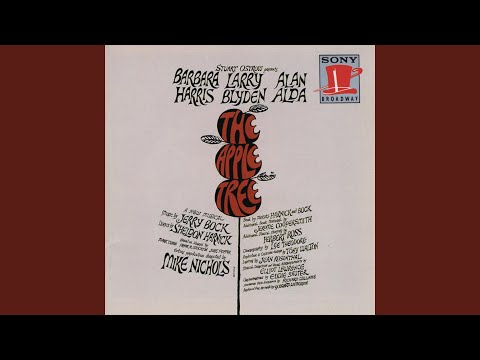
Review and Highlights
Quick summary
- Work: The Apple Tree (Broadway, 1966), Act Two ("The Lady or the Tiger?" segment).
- Role in the act: A Balladeer checkpoint after "Forbidden Love (In Gaul)", when the fable tightens its grip.
- Voice: Balladeer-led (Larry Blyden on the cast recording), with the orchestra keeping it lean and pointed.
- Why it hits: It is a short reprise that feels like a raised eyebrow from the narrator, reminding you the kingdom will always get the last word.
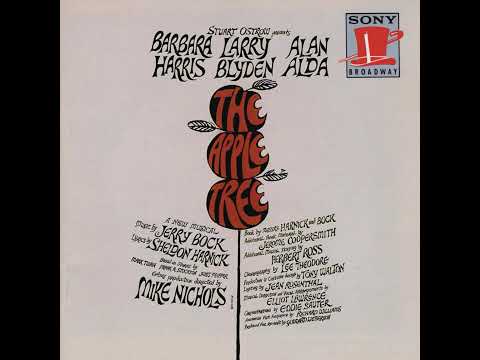
The Apple Tree (1966) - stage musical - Non-diegetic. Balladeer reprise that reframes the lovers' escape fantasy as a cautionary beat, nudging the plot back toward the arena and its two doors. It matters because the show uses the narrator like a stage manager for fate: he resets the room with a few brisk lines.
This reprise is small on paper, but it lands like a cold splash of water. "Forbidden Love (In Gaul)" gives you a private corner, two people trying to imagine a life beyond rank and ritual. Then the Balladeer returns and the corner vanishes. The melody snaps back into that fable posture - tidy, knowing, and a little too pleased with itself.
I hear it as the act's pivot hinge. The earlier material sells pageantry. The duet sells longing. This reprise sells consequences. It is not shouting, it is steering: a quick reminder that the story is being told by someone who benefits from keeping the audience focused on the game.
Creation History
Jerry Bock and Sheldon Harnick wrote Act Two as a stylized adaptation of Frank R. Stockton, framed by the Balladeer. On the Masterworks Broadway album notes, the Act Two story is laid out step-by-step: after the lovers resign themselves to stolen moments, the king catches them and the legal machine starts turning. This reprise sits right in that corridor, where romance stops being a dream and becomes evidence.
Song Meaning and Annotations
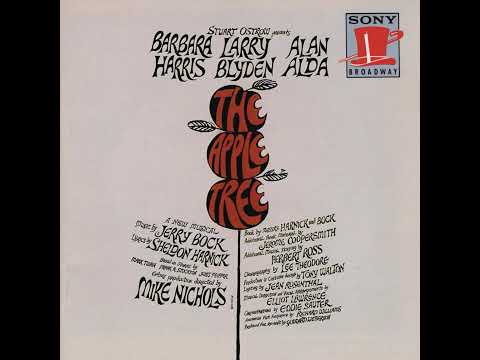
Plot
In Act Two, a semi-barbaric kingdom treats justice as entertainment: a prisoner must choose between two doors, one leading to marriage and the other to death. After Captain Sanjar and Princess Barbara confess their forbidden relationship and talk about fleeing, the king catches them. The Balladeer returns with this reprise as the act shifts from private risk to public punishment.
Song Meaning
The reprise is a moral reset. It does not add new plot so much as it changes the lens: the Balladeer tells you, in effect, that love does not get to be private here. Everything is processed by the kingdom and presented back as spectacle. As stated in the Masterworks Broadway notes, the king treats guilt as simple and procedure as sacred, and the reprise feels like the narrator stamping that logic into the air.
Annotations
"I must advise your proudness."
That formal address is doing character work fast. It is respectful on the surface, but it carries a sly distance, like a clerk reading rules with practiced calm. The Balladeer sounds helpful while guiding someone toward a trap.
"There are things it is better not to know."
This line is the act's philosophical poison pill. Knowledge is framed as dangerous, not because truth harms, but because truth forces choice. The story is famous for making a choice unbearable, and the reprise lays the groundwork by suggesting curiosity itself is a punishable appetite.
Rhythm, tone, and the fable voice
The writing is speech-forward and quick, more like a confidential aside than a full song. That is the point. A reprise like this is a hinge, not a hallway. It turns the audience from sympathy back to suspense, and it does it without breaking stride.
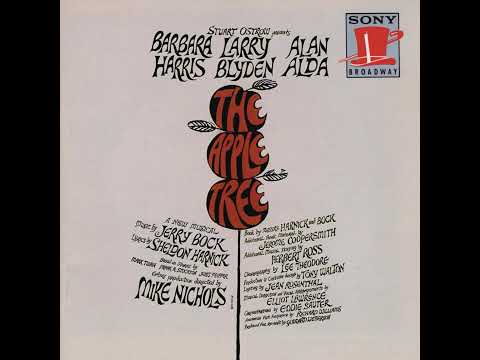
Technical Information (Quick Facts)
- Song: The Apple Tree (Reprise)
- Artist: Original Broadway Cast of The Apple Tree
- Featured: Larry Blyden (Balladeer)
- Composer: Jerry Bock
- Lyricist: Sheldon Harnick
- Music director and conductor: Elliot Lawrence
- Release Date: January 1, 1966
- Recording Date: October 23, 1966
- Genre: Musical theatre
- Instruments: Pit orchestra, narrated vocal
- Label: Masterworks Broadway (catalog editions)
- Mood: Dry, cautionary, suspense-setting
- Length: 0:59
- Track #: 13 (common cast recording sequence)
- Language: English
- Album: The Apple Tree (Original Broadway Cast Recording)
- Music style: Balladeer reprise, spoken-sung fable cue
- Poetic meter: Mixed, speech-led theatre prosody
Frequently Asked Questions
- Who sings "The Apple Tree (Reprise)" on the 1966 cast recording?
- Larry Blyden performs it in the Balladeer role on the original cast album listings.
- Is this the same musical idea as "The Apple Tree (Forbidden Fruit)" from Act One?
- It is connected by title and motif, but this reprise belongs to Act Two's fable framing and functions as narration rather than temptation comedy.
- Where does it sit in the Act Two sequence?
- It follows "Forbidden Love (In Gaul)" and serves as a narrative pivot as the king's response and the arena logic move forward.
- Why is it so short?
- Because it is a cue, not a showcase. The reprise exists to steer attention and sharpen suspense, then get out of the way.
- What does the Balladeer gain by returning here?
- Control of tone. He pulls the audience back from sympathy into the kingdom's rulebook, where curiosity and desire are treated as liabilities.
- Is the reprise diegetic inside the story world?
- No. It works as direct-address narration, a fable device that frames how the audience interprets the scene that follows.
- Does this moment foreshadow the two-doors dilemma?
- Yes. It puts a spotlight on knowledge as danger, which is the same pressure the prisoner faces: choosing while everyone watches.
- Why does the language sound formal and slightly mocking?
- The phrasing mimics court etiquette, which lets the narrator sound polite while delivering a warning that is anything but gentle.
- Is there a definitive "meaning" the show wants here?
- The reprise pushes one idea hard: in this kingdom, knowing too much is risky, and love becomes a public event the moment power notices it.
Awards and Chart Positions
This is cast-recording repertoire rather than a pop single, so the measurable milestones belong to the show. The original Broadway production earned major Tony attention, including a Best Musical nomination and a win for Barbara Harris as Best Actress in a Musical. According to IBDB and Broadway reference listings, the production also received multiple nominations across performance and creative categories.
| Year | Award | Category | Result |
|---|---|---|---|
| 1967 | Tony Awards | Best Musical | Nominated |
| 1967 | Tony Awards | Best Actress in a Musical (Barbara Harris) | Won |
| 1967 | Tony Awards | Best Actor in a Musical (Alan Alda) | Nominated |
| 1967 | Tony Awards | Best Composer and Lyricist (Bock and Harnick) | Nominated |
Additional Info
A reprise like this is an old theatre trick, but The Apple Tree uses it with a particular sharpness. The evening is three different stories tied by a shared theme, and the Balladeer is one of the threads that lets the show slide from comedy into consequence without stopping to explain itself. One minute you are in a lovers' argument about escape, the next you are back under the kingdom's fluorescent rules.
Metadata backs up the performance feel. Major discographies list the track at 0:59 and credit Blyden on vocals, with Elliot Lawrence as conductor. That tiny length is almost a dare: if you blink, you miss it, and the act has already moved the chess pieces.
Key Contributors
| Entity | Type | Relationship |
|---|---|---|
| Jerry Bock | Person | Jerry Bock composed the music for The Apple Tree. |
| Sheldon Harnick | Person | Sheldon Harnick wrote the lyrics for The Apple Tree. |
| Frank R. Stockton | Person | Frank R. Stockton wrote the short story adapted for Act Two. |
| Mike Nichols | Person | Mike Nichols directed the original Broadway production of The Apple Tree. |
| Larry Blyden | Person | Larry Blyden performed the Balladeer on the cast recording for this reprise. |
| Elliot Lawrence | Person | Elliot Lawrence conducted the cast recording listings. |
| Masterworks Broadway | Organization | Masterworks Broadway distributes catalog editions and the official audio upload. |
| IBDB | Organization | IBDB documents the Broadway production record and awards results. |
Sources
Sources: Masterworks Broadway - The Apple Tree (1966) album notes, MusicBrainz release page for The Apple Tree (1966 original Broadway cast), Overture track list for The Apple Tree (1966), Discogs release listing for The Apple Tree (Original Broadway Cast), Wikipedia - The Apple Tree (musical)