

Feelings Lyrics
Feelings
Feelings are tumbling over feelingsFeelings i do not understand
And i am more than slightly worried
That they are getting out of hand
Sometimes they happen in my stomach
Sometimes they happen on my skin
What is the name of this condition
That i am in?
If i'm more objective and observant
If i can keep an even keel
I'll be the first to pin a name to
What i am the very first to feel
I am the first to face this problem.
I am the first to have this dream.
How can i harvest his attention?
How can i harvest his esteem?
Should i something different with my hair?
Is there some tid-bit that will please him?
What should i wear?
What is the source of this congestion
That i must learn to rise above?
Is there a name for this condition?
Yes there's a name......
An it is hell!
Song Overview
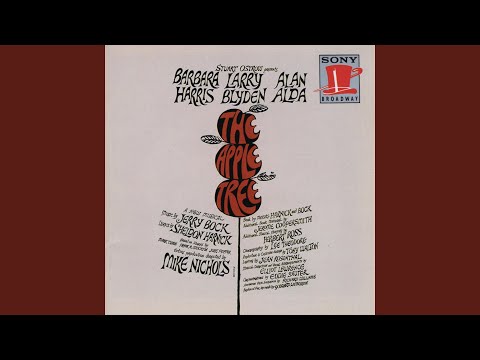
Review and Highlights
Quick summary
- What it is: A short comic-uneasy song from The Apple Tree (1966), where Eden stops being a postcard and starts being a relationship.
- Who sings it: Eve, performed on the original cast recording by Barbara Harris.
- Where it appears: Part I, "The Diary of Adam and Eve," right after the initial wonder of "Here in Eden" turns into friction.
- Why it matters: It is the first moment the show admits attraction and irritation can share the same chair.
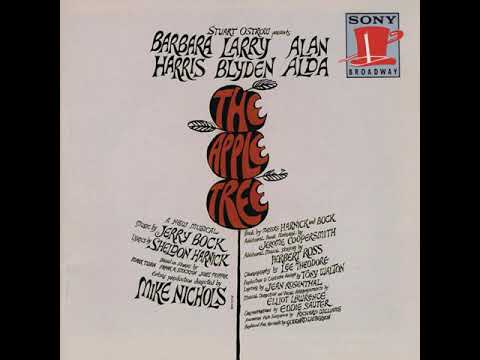
The Apple Tree (1966) - stage musical - diegetic. In Eden, Adam and Eve discover the awkward truth of being together: you can be thrilled by someone and also want to throttle them, sometimes in the same minute. This scene matters because it turns the garden into a real room with real tension.
The song is tiny, but it lands like a pin. You can hear the writers grinning at the idea that the very first romance on earth would also be the very first headache. The melody keeps its steps neat and quick, almost dainty, while the text keeps spilling over itself, like Eve is surprised by her own reactions and cannot stop naming them.
What I love is the compression. No long build, no grand exit. It is an instant portrait of mixed signals: attraction, annoyance, pride, curiosity. The humor does not come from mockery. It comes from recognition. That is why the piece still plays in auditions and cabaret sets: it lets a performer act a whole argument in under two minutes.
- Key takeaway: The garden is not the conflict - personality is.
- Key takeaway: The arrangement supports speech rhythm, so the best performances lean into consonants and pacing.
- Key takeaway: The number sets up the Eden arc: companionship is a want, not a peace treaty.
Creation History
The Apple Tree opened on Broadway on October 18, 1966 at the Shubert Theatre, directed by Mike Nichols, with music by Jerry Bock and lyrics by Sheldon Harnick. "Feelings" belongs to the Twain-based Eden playlet and is presented as a quick pivot from wonder to emotional clutter. The original cast recording documents the track at about 1:21 to 1:22, with Barbara Harris on the vocal line and Elliot Lawrence credited as conductor on major reissue listings.
Song Meaning and Annotations
Plot
Part I begins with Adam naming the world in blunt categories, pleased with solitude. Eve arrives, dazzled by everything, and begins naming with detail, taste, and flair. That difference in approach becomes the first real clash between them. "Feelings" lands when the novelty of meeting gives way to irritation, yet attraction is already in the air and neither of them has the vocabulary to manage it politely.
Song Meaning
The meaning is simple and slippery: Eve is experiencing emotional overlap and trying to file it into neat labels. The humor is that she cannot. She is pulled toward Adam, pushed away by his stubbornness, and a little startled that desire can arrive alongside anger without asking permission. The song makes a point that feels modern even in a biblical frame: emotions do not queue up, they pile on.
Annotations
-
"Feelings are tumbling over feelings."
A perfect image for the number's pacing. The line is not describing a calm thought. It is describing a spill, and the music keeps nudging the spill forward.
-
"Feelings I do not understand."
This is the character hook. Eve is not embarrassed by confusion. She is curious about it, which makes her bold without making her hard.
-
"There is a name and it is hell."
The joke has bite. Eden is beautiful, yet the first serious discomfort is not weather or hunger - it is another person with opinions.
Rhythm, diction, and the emotional arc
The feel is brisk and lightly skittering, built to sound like thought chasing itself. A singer who tries to "pretty" it up usually dulls the point. The better move is to keep the line spoken, then let the rhythm do the work. As stated in Masterworks Broadway album notes, the Eden section is written around the push-pull between the two leads, and this number is the first clear sign that the push-pull is mutual.
Symbols and subtext
Eden becomes a mirror. Adam is the part of us that wants order and quiet. Eve is the part that wants naming, change, reaction. The title is the symbol: not love, not faith, not sin - just messy sensation. It is the show telling you that the first human drama is not a fall from grace, it is learning to live with another mind in the room.
Technical Information (Quick Facts)
- Song: Feelings
- Artist: Barbara Harris
- Featured: The Apple Tree Orchestra
- Composer: Jerry Bock
- Producer: Thomas Z. Shepard (cast recording)
- Release Date: October 1966 (Broadway opening); 1966 (original cast album)
- Genre: Musical theater, show tune
- Instruments: Orchestra, lead vocal
- Label: Masterworks Broadway (major reissue listing)
- Mood: Comic, restless, sharp-edged
- Length: 1:21 (common listing; some catalogs show 1:22)
- Track #: 3 (cast album sequencing)
- Language: English
- Album (if any): The Apple Tree (Original Broadway Cast Recording)
- Music style: Character patter with a lightly buoyant pulse
- Poetic meter: Mixed stress, speech-led phrasing
Frequently Asked Questions
- Who sings this number in the show?
- Eve sings it in the Eden playlet, and the original cast recording performance is by Barbara Harris.
- Where does it sit in the Eden sequence?
- It comes after the first rush of discovery and marks the moment when attraction and annoyance start sharing the same space.
- Is it an audition-friendly song?
- Yes, because it is short, text-forward, and lets an actor show timing, shifts, and clarity without relying on big sustained notes.
- What is the main dramatic job of the lyric?
- To show overlap: Eve is confused, drawn in, and irritated, and she chooses to say all of that out loud.
- Does the song advance plot or character?
- Character. It makes the relationship feel real by revealing how quickly idealism breaks into complexity.
- Is it performed with comic delivery or sincerity?
- Both. The best performances treat the jokes as sincere observations, not as punchlines aimed at the audience.
- How long is it on the cast album?
- Most major track listings place it at about 1:21 to 1:22.
- Why does it matter in a show with three separate stories?
- The Eden section sets the tone for the whole evening: desire and dissatisfaction arrive together, and the score is not afraid to laugh about it.
- Was the original production recognized by major awards?
- Yes. The show received multiple Tony nominations, and Barbara Harris won the Tony for Actress in a Musical.
Awards and Chart Positions
There is no reliable evidence that this track had a standalone pop single campaign with a documented chart run. Its public profile comes from the Broadway production and its performers. The original run opened in October 1966 and played 463 performances, and Barbara Harris won the 1967 Tony Award for Actress in a Musical. The show also appears in widely circulated nomination summaries for 1967 in categories including musical, score, and direction.
| Year | Award | Category | Item | Result |
|---|---|---|---|---|
| 1967 | Tony Awards | Actress (Musical) | Barbara Harris - The Apple Tree | Won |
| 1967 | Tony Awards | Best Musical | The Apple Tree | Nominated |
Additional Info
This is one of those Bock and Harnick pieces that teaches you how to perform it while it plays. The tempo wants you to be alert. The rhyme wants you to be precise. And the character wants you to admit something slightly embarrassing without apologizing for it.
Masterworks Broadway frames the Eden portion as a tug-of-war between the two leads, with Eve beginning to feel attraction even as the partnership grates. That framing is useful for performers: the song is not just "confused feelings" in a vague sense. It is confusion aimed at one specific person, in one specific moment, with an audience of animals who cannot help you explain it.
Key Contributors
| Entity | Type | Relationship (S-V-O) |
|---|---|---|
| Barbara Harris | Person | Barbara Harris performed the song as Eve on the original cast recording. |
| Jerry Bock | Person | Jerry Bock composed the music. |
| Sheldon Harnick | Person | Sheldon Harnick wrote the lyrics. |
| Mike Nichols | Person | Mike Nichols directed the original Broadway production. |
| Thomas Z. Shepard | Person | Thomas Z. Shepard produced the cast recording. |
| Elliot Lawrence | Person | Elliot Lawrence conducted the cast recording on major reissue listings. |
| Shubert Theatre | Venue | The Shubert Theatre hosted the Broadway opening in 1966. |
| The Apple Tree | Work | The Apple Tree includes the song in Part I, The Diary of Adam and Eve. |
Sources
Sources: IBDB production record, Tony Awards winners database, Masterworks Broadway album notes, Apple Music track listing, Presto Music tracklist and credits, Musicnotes sheet music listing
How to Sing Feelings
Sheet-music listings commonly describe the number as moderately fast and dainty, with a metronome mark around q = 144, a published key of C major, and a vocal range listed as B3 to E5. That package tells you what the song wants: quick clarity, not a heavy dramatic drag.
- Tempo: Practice at 120 first to lock the text, then step up toward 144 once every consonant lands cleanly.
- Diction: Treat the repeated word as a rhythmic tool. Crisp "f" and "l" sounds keep the line buoyant without forcing volume.
- Breathing: Mark breaths by thought. The danger is snatching air mid-phrase and making the character sound panicked instead of quick-witted.
- Flow and rhythm: Ride the beat like spoken comedy. If you sing it too legato, the joke turns foggy.
- Accents: Give tiny emphasis to the words that show contradiction: understand, hell, and any moment where affection flips into irritation.
- Acting choices: Keep the tone curious. The character is naming sensations, not confessing a tragedy.
- Mic: If amplified, go lighter and closer. Let the mic capture the speed rather than pushing sound across the room.
- Pitfalls: Do not rush through the funniest images. A half-second of space can make the line land without breaking tempo.