

It's A Fish Lyrics
It's A Fish
I just got back from a hunting trip up north and found thatEve caught some new kind of animal!
Now I could swear that its a fish though it resembles us in every way, but size.
She gives it milk and every night she picks it up and pats and pets it when it cries.
I always knew she'd pity fish, but its ridiculous to make them household pets.
She says its not a fish.
I say it is a fish cause it surrounds itself with water almost every chance it gets.
Its not a fish. Fish never scream and this one does on occasion it say goo.
Its legs are long, its arms are short,
So I suspect its a kind of kangaroo.
And Since it came, I pity Eve,
shes gotten madder by the minute and it shows.
Just now I said to her,
that I would much prefer to have it stuffed for my collection
and she punched me in the nose!
It's growing teeth and it can bite!
And I'm convinced what we have here is a bear.
I'm worried sick, but Eve is not.
She burnt the muzzle I made for it to wear.
I've searched the woods, I baited traps,
but yet I couldn't find its sister or its brother!
And though I've hunted far and wide!
While Eve heartily stepped outside!
I'll be damned if she didn;t catch another!
Song Overview
Review and Highlights
Quick summary
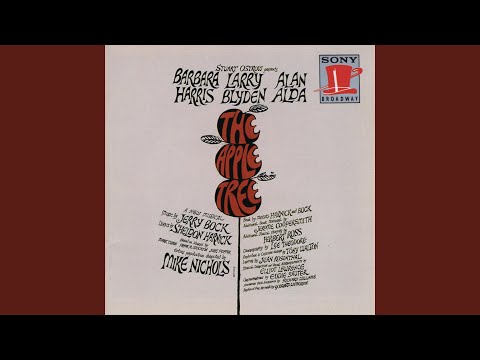
- What it is: A compact character number from The Apple Tree (1966) where Adam tries to classify a strange new creature and ends up in a domestic spat.
- Who sings it: Primarily Adam, with the scene tied to Eve and the wider Eden trio on the cast album credits.
- Where it appears: Part I, "The Diary of Adam and Eve," after the garden has changed and life starts arriving with complications.
- How it plays: Text-forward, punchy, and built for timing - more "talking on pitch" than vocal display.
- Why it matters: It makes Eden feel like a home with arguments, not a postcard with rules.
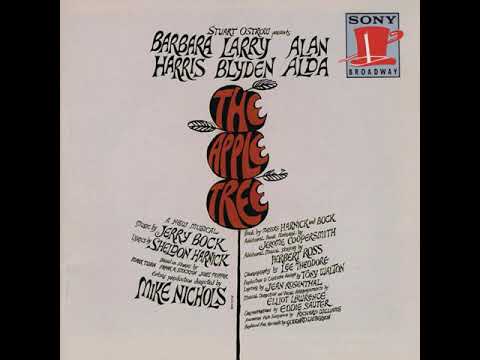
The Apple Tree (1966) - stage musical - diegetic. Adam stares at a new creature and tries to decide what it is. He lands on one blunt label, while Eve treats the creature tenderly and argues back. The scene matters because it shows how quickly "knowledge" turns into opinion - and how opinion turns into conflict.
The charm is in the logic that keeps collapsing. Adam builds a neat case, then the lyric undercuts him with details that do not fit his tidy categories. It is funny, but the joke has an edge: he is not only naming the creature, he is trying to keep his world predictable after the apple changes everything. Masterworks Broadway describes this beat as Adam not being sure what the object is, with him settling on the line that gives the song its title, and that plainness is the gag.
The writing also slips in a little portrait of early parenthood without ever saying "parenthood." There is a new dependent, a disagreement over care, and a sense that the household rules are being invented mid-argument. The cast album track listing keeps it short - under two minutes - which forces the performer to land every consonant and pivot fast.
- Key takeaway: The number is a classification rant that turns into a relationship scene.
- Key takeaway: Comedy comes from certainty meeting evidence that refuses to cooperate.
- Key takeaway: The song is an early signal that Eden is now a place with consequences and responsibilities.
Creation History
The Apple Tree opened on Broadway on October 18, 1966 at the Shubert Theatre, directed by Mike Nichols, with music by Jerry Bock and lyrics by Sheldon Harnick. The Eden section adapts Mark Twain, so the score favors conversational phrasing and quick observational turns. On licensing materials, "It's A Fish" is credited as a show extraction orchestrated by Eddie Sauter, with a listed starting key of D-flat and an estimated duration of 1 minute 46 seconds.
Song Meaning and Annotations
Plot
In Part I, Adam and Eve move from discovery to disagreement, then to a changed world after the forbidden fruit. Soon, new life appears - strange, loud, and hard to classify. Adam tries to make sense of it using his old system: name it, file it, relax. Eve responds with care and instinct, and the mismatch becomes the scene. It is domestic comedy with mythic lighting.
Song Meaning
The meaning sits in the argument style, not in a moral speech. Adam insists on certainty because certainty used to work for him. Eve answers from empathy and attention to details. The song is saying: once the world becomes complicated, the old habit of labeling things is not enough. You need patience, and you need to accept that you can be wrong in public.
Annotations
-
"I always knew she pitied fish, but it's ridiculous to make them household pets."
It is a complaint that sounds grown-up and reasonable, then swerves into absurdity. That is the comedy engine: Adam tries to sound like an authority while describing a situation that is plainly new to everyone.
-
"She says it's not a fish. I say it is a fish 'cause it surrounds itself with water almost every chance it gets."
Here is the show in miniature. Adam builds a definition out of one observation and calls it proof. The line is funny because it is almost convincing, which makes the stubbornness feel real.
-
"Fish never scream, and this one does."
This is where the lyric admits evidence. The argument is not only between Adam and Eve. It is between Adam and reality, and reality is winning.
Driving rhythm and style
The number leans on quick syllables and clean accents, sitting between patter and scene-song. It is not about a big sustained line. It is about a character trying to win an argument on momentum. The orchestration stays light enough to keep the text on top, which fits the Twain diary vibe of the Eden section.
Metaphors and touchpoints
The creature itself is a symbol of the post-apple world: messy, demanding, and impossible to classify with yesterday's vocabulary. The lyric keeps bringing the listener back to definitions, which turns language into the battleground. If "Forbidden Fruit" is the temptation lecture, this song is the morning after.
Technical Information (Quick Facts)
- Song: It's A Fish
- Artist: Alan Alda (cast recording lead credit)
- Featured: The Apple Tree Orchestra
- Composer: Jerry Bock
- Producer: Thomas Z. Shepard (cast recording)
- Release Date: 1966 (original cast album; many digital services display January 1, 1966)
- Genre: Musical theater, show tune
- Instruments: Orchestra, lead vocal
- Label: Masterworks Broadway (major reissue listings)
- Mood: Wry, argumentative, quick
- Length: 1:46 (common listing)
- Track #: 8 (common cast album sequencing)
- Language: English
- Album (if any): The Apple Tree (Original Broadway Cast Recording)
- Music style: Actor-forward patter with brisk scene pacing
- Poetic meter: Mixed stress, speech-led cadence
Frequently Asked Questions
- Who is the song for in the story?
- It is Adam's scene-number, built around his attempt to define a new creature while Eve argues back.
- Where does the scene land in the Eden playlet?
- After the garden changes and life starts arriving with complications, leading into Eve's lullaby that follows.
- Is it a comedy song or a plot song?
- Both. It plays as comedy, but it marks the shift to a world where Adam cannot control outcomes by naming them.
- Why is the title so blunt?
- That is the point: Adam wants a single label. The lyric keeps showing how labels fail when reality is new.
- How long is it on the cast album?
- Many catalog listings place it at 1:46.
- Is it performed outside the show?
- Yes. School and community productions often use it for character auditions, and live performance videos circulate online.
- What comes right after it in the plot?
- Eve sings the creature a lullaby, "Go to Sleep, Whatever You Are," as described in Masterworks Broadway's summary of the Eden section.
- Does the song have a known starting key in licensing materials?
- Yes. MTI lists a starting key of D-flat for the show extraction version.
Awards and Chart Positions
There is no solid evidence that this cast recording track had a standalone pop single chart run. Its awards footprint comes from the Broadway production. The Apple Tree drew major Tony attention in 1967, including a Best Musical nomination, with Barbara Harris winning Best Actress in a Musical. As stated in Playbill's archival coverage, the production still stood out in a season with heavy competition.
| Year | Award | Category | Item | Result |
|---|---|---|---|---|
| 1967 | Tony Awards | Best Musical | The Apple Tree | Nominated |
| 1967 | Tony Awards | Best Actress in a Musical | Barbara Harris | Won |
Additional Info
One detail I keep coming back to is how the show treats language as a survival tool. Adam is not only stubborn, he is scared of uncertainty, and the lyric lets him weaponize definitions. When the lines list evidence, then contradict that evidence a beat later, you can hear a mind trying to keep the world small enough to manage.
The licensing listing is also a small window into how robust the orchestral world is behind the comedy. MTI posts a detailed instrumentation lineup for the show extraction, naming multiple reeds, brass, strings, harp, guitar, and piano-conductor materials. That explains why the cast recording never feels thin, even when the scene is basically two people bickering about a creature.
Key Contributors
| Entity | Type | Relationship (S-V-O) |
|---|---|---|
| Jerry Bock | Person | Jerry Bock composed the music. |
| Sheldon Harnick | Person | Sheldon Harnick wrote the lyrics. |
| Alan Alda | Person | Alan Alda is credited as the cast recording lead vocalist for the track. |
| Barbara Harris | Person | Barbara Harris performed as Eve on the cast recording and in the original production. |
| Thomas Z. Shepard | Person | Thomas Z. Shepard produced the cast recording. |
| Elliot Lawrence | Person | Elliot Lawrence conducted the cast recording in major reissue credits. |
| Eddie Sauter | Person | Eddie Sauter orchestrated the show extraction listing for the song. |
| Masterworks Broadway | Organization | Masterworks Broadway maintains the official album page describing the scene sequence. |
| Music Theatre International | Organization | MTI lists the starting key, estimated duration, and instrumentation for the licensed extraction. |
Sources
Sources: Masterworks Broadway production notes, Music Theatre International song extraction listing, Presto Music tracklist, Apple Music track listing, Spotify album listing, Musicals 101 lyric PDF, YouTube Topic track upload, Playbill Archives feature
How to Sing It's A Fish
The most reliable performance spec posted on licensing pages is the starting key: D-flat, with an estimated duration: 1 minute 46 seconds. That tells you what the number needs: speed, clarity, and character choices that read instantly.
- Tempo and pacing: Aim for forward motion. This scene works best when the argument feels like it is happening faster than Adam can think.
- Diction: Treat every definition as a punchline. Consonants are the engine, especially in the list-like lines.
- Breathing: Breathe on thought breaks, not on bar lines. If you breathe too often, Adam sounds unsure, and the joke softens.
- Flow and rhythm: Keep it speech-led. Let the accompaniment support you, but do not wait for it. The character is trying to win on momentum.
- Accents: Emphasize the moments where "proof" is offered, then undercut. That is where the audience hears the contradiction.
- Acting choice: Play certainty. The comedy is not "look how silly this is." The comedy is "I am absolutely right," while the lyric keeps proving otherwise.
- Pitfalls: Do not rush the best images. Clarity beats speed. A clean line at slightly under tempo lands harder than mush at top speed.