

Passionella Postlude/Finale Lyrics
Passionella Postlude/Finale
Flip:Here we are.
Passionella:
The star
Flip:
And the star.
Passionella:
Well it just goes to show
Flip:
We were some pair -
Me with my crazy hair.
Passionella:
Me with my solid gold gown.
Female Chorus (Male Chorus):
Movie star, every inch a movie star.
(Like a shining light of truth she stands)
All:
This truly remarkable,
Sensitive, luminous
Movie star!
[Thanks to Rick Jefferson for lyrics]
Song Overview
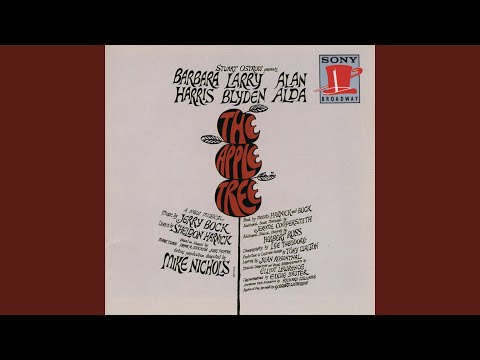
Review and Highlights
Quick summary
- Work: The Apple Tree (Broadway, 1966), playlet three: "Passionella".
- What it is: A wrap-up cue that ties the love plot, the TV timer gag, and the fable moral into one last push.
- Voices on the cast recording: Alan Alda and Barbara Harris with The Apple Tree Ensemble.
- Why it lands: The score lets the fairy-tale shine fade just enough to reveal the human beings underneath.
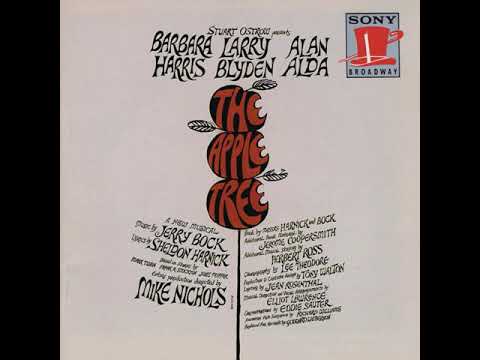
The Apple Tree (1966) - stage musical - Diegetic and non-diegetic layers. The finale resolves the third playlet by letting the celebrity mask drop at the worst possible second, then turning that accident into the point. It matters because the ending says, without scolding, that a fantasy can be both lifesaving and flimsy.
If the earlier "Passionella" tracks are camera flashes, this one is the lights coming up. The music still has that Bock-Harnick snap, but it stops chasing applause and starts chasing clarity. The story has spent a whole playlet teaching Ella how to sell an image. Now the postlude asks what happens when the image cannot stay switched on.
I like how the finale keeps a slight smile even while it tightens the screws. It is not a grand anthem. It is closer to a tidy bow that reveals a wrinkle: the lovers finally meet each other without the costumes they were hiding behind, and the scene treats that as the real romance, not the red-carpet version.
Creation History
The Apple Tree pairs three sources with a single musical voice, and "Passionella" is the most modern of the set, built around television and celebrity. As stated in Masterworks Broadway album notes, the playlet turns into a satire of glamour culture and "realness" posing as virtue. This closing cue is the capstone, recorded for the original cast album during the documented October 23, 1966 studio session conducted by Elliot Lawrence.
Song Meaning and Annotations
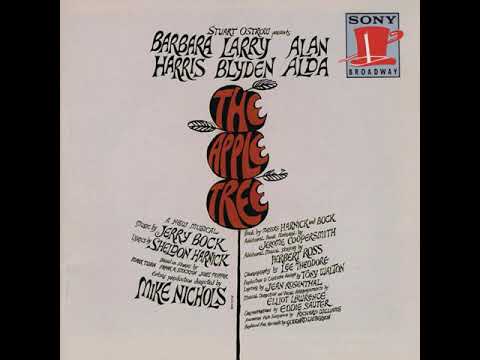
Plot
Ella becomes the glamorous Passionella on a nightly timer tied to television programming. She gets fame, beauty, and money, then learns none of it fixes loneliness. After Flip rejects her for not being "real," she demands a role as a chimney sweep, wins top honors, and Flip proposes. In the final beat, the couple loses track of time in front of the television and the transformation window ends. She is Ella again, and he is no longer the cool star, revealing his ordinary self. The story lands on mutual recognition rather than glitter.
Song Meaning
The finale is a small lesson delivered like a punchline: the thing you chased might be a costume, but the person inside the costume still needs love. The number also makes the timer idea do double duty. It started as a comic rule of the world. Now it becomes a moral rule: when the clock runs out, whatever is left is what matters. According to MTI synopsis materials, "Passionella" is a Cinderella spoof that nearly sabotages the character's chance at true love, and this is the moment the sabotage stops.
Annotations
"You are not real."
That earlier accusation hangs over the finale like a bad perfume. The postlude answers it without arguing. It just changes the scene conditions until both people have to show up as themselves.
"Seven o'clock news to the end of the late show."
The timer rule is more than a gag. It is a metaphor for the hours we spend performing. When the performance ends, the relationship either collapses or starts for the first time.
Production and musical function
Finale cues in this score tend to behave like neat stitches, pulling a fable shut while leaving a little air inside the seam. This one resolves the playlet without turning it syrupy. It keeps the rhythm moving, but the emotional temperature drops into something honest.
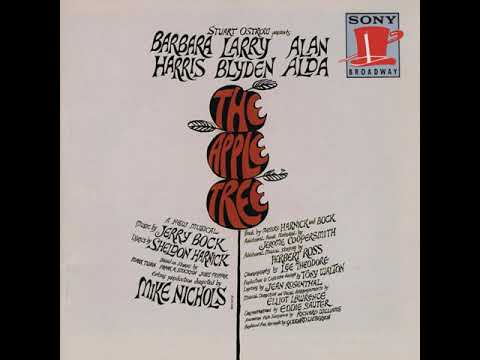
Technical Information (Quick Facts)
- Song: Passionella Postlude / Finale
- Artist: Original Broadway Cast of The Apple Tree
- Featured: Alan Alda, Barbara Harris, The Apple Tree Ensemble
- Composer: Jerry Bock
- Lyricist: Sheldon Harnick
- Music director and conductor: Elliot Lawrence
- Release Date: January 1, 1966 (common digital catalog date for the cast recording)
- Recording Date: October 23, 1966
- Genre: Musical theatre
- Instruments: Pit orchestra, ensemble vocals
- Label: Masterworks Broadway (catalog editions)
- Mood: Conclusive, playful, gently revealing
- Length: About 2:11 to 2:12 (varies by listing)
- Track #: 24
- Language: English
- Album: The Apple Tree (Original Broadway Cast Recording)
- Music style: Scene wrap-up and curtain-style coda for the "Passionella" playlet
- Poetic meter: Mixed, speech-led theatre prosody
Frequently Asked Questions
- Which part of the show does this track close?
- It closes the third playlet, "Passionella", on the original cast album sequencing.
- Who sings on the cast recording?
- Discography listings credit Alan Alda and Barbara Harris with The Apple Tree Ensemble.
- What does the finale resolve, in plain terms?
- It resolves the love plot by stripping away the celebrity pose and forcing a face-to-face meeting between ordinary selves.
- Why is the TV timer rule so central?
- It turns glamour into a schedule. When the schedule ends, the story tests whether affection survives without the image.
- Is this a separate song from "Postlude"?
- Many digital editions present it as a single combined track titled "Postlude / Finale".
- How long is it?
- Most listings place it around 2:11 to 2:12, with small variation by platform.
- Is there a pop chart history?
- No. It is known through cast recordings and productions rather than singles charts.
- What role does Flip play in this ending?
- He becomes the proof that "realness" was also a performance, once his own mask falls away with the time change.
- Does the show end with this track?
- Yes, the original cast recording ends with this cue as the final track.
Awards and Chart Positions
This track is theatre-catalog material rather than a chart single. The measurable milestones belong to the Broadway production: according to IBDB, The Apple Tree opened October 18, 1966 and ran through November 25, 1967. The 1967 season also brought major Tony recognition for the show, including a Best Musical nomination and a Best Actress win for Barbara Harris.
| Year | Category | Nominee | Result |
|---|---|---|---|
| 1967 | Best Musical | The Apple Tree | Nominated |
| 1967 | Best Actress in a Musical | Barbara Harris | Won |
Additional Info
The clever move in the "Passionella" ending is that it treats ordinariness as the true special effect. The playlet spends its time glamorizing Ella, then reveals that the real transformation is the couple learning to live without the spotlight. Wikipedia summaries of the plot spell out the final twist clearly, and you can hear the score lean into it by keeping the finale brisk rather than sentimental.
Discogs notes for the original album list this track as "Finale" with a timing close to other platforms, which is a neat reminder that cast albums are also stage artifacts: edited, timed, and labeled to tell the story in audio-only form.
Key Contributors
| Entity | Type | Relationship |
|---|---|---|
| Jerry Bock | Person | Jerry Bock composed the music for the finale cue. |
| Sheldon Harnick | Person | Sheldon Harnick wrote the lyrics for the finale cue. |
| Elliot Lawrence | Person | Elliot Lawrence conducted the cast recording session. |
| Alan Alda | Person | Alan Alda performed Flip on the cast recording track credits. |
| Barbara Harris | Person | Barbara Harris performed Ella or Passionella on the cast recording track credits. |
| The Apple Tree Ensemble | Organization | The ensemble supports the finale with chorus texture and scene energy. |
| Masterworks Broadway | Organization | Masterworks Broadway distributes the cast recording catalog and official audio uploads. |
Sources
Sources: Masterworks Broadway album notes (The Apple Tree - 1966), MusicBrainz release entry (1966 original Broadway cast), Apple Music track page (Passionella: Passionella Postlude / Finale), Discogs release listing, IBDB production record, MTI synopsis materials, Wikipedia plot summary, YouTube (official audio upload)