

I Know Lyrics
I Know
Look at me I'm a movie star.Every inch a movie star.
A beautiful, galmorous ...
Oh, oh, oh, oh, oh.
Passionella how I love you ...
I know.
If you knew how I adore you ...
I know.
I can't sleep at night for thinking about you ...
It's understandable.
I want you, I want you, I want you ...
It must be awful.
Did you know I stole your slippers?
I knew.
Pictures of you fill my bedroom ...
Mine too.
I don't love Sofia,
I don't love Bardot.
I love Passionella ...
I know.
Passionella you're my idol ...
Of course.
How I long to look like you do ...
You should.
I've read every word they've written about you ...
You're not the only one.
In private you are me and I am you.
That's what I'm here for.
As a goddess you're immortal, oh ...
Let me touch your sacred body, oh ...
We'll be right here waiting everywhere you go.
You cannot escape us!
Passionella!!!
Song Overview
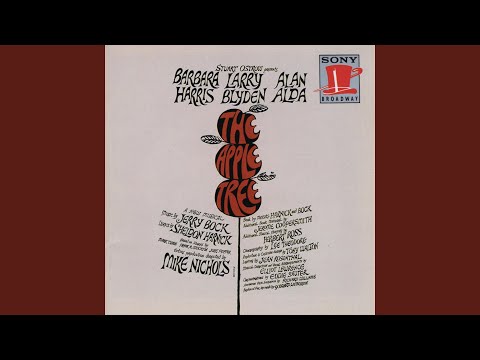
Review and Highlights
Quick summary
- Work: The Apple Tree (Broadway, 1966), playlet three: "Passionella".
- Placement: After Passionella arrives as a celebrity figure and the room fills with admirers.
- Who sings it: Barbara Harris with The Apple Tree Ensemble on the original cast recording.
- Why it hits: A fame chorus disguised as flirtation, with a sharp little punchline on every reply.
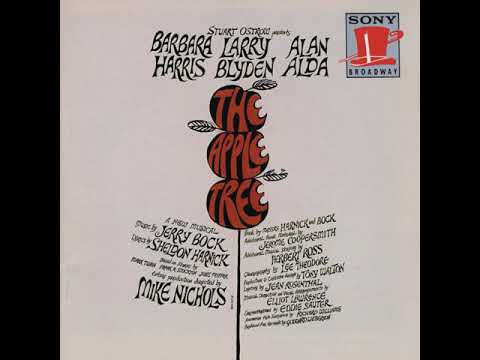
The Apple Tree (1966) - stage musical - Diegetic and non-diegetic layers. A crowd confesses devotion in waves, and Passionella answers with calm, clipped certainty. It matters because the playlet shows the moment adoration stops feeling like love and starts feeling like entitlement.
This number is a tiny machine that runs on repetition and nerves. The ensemble piles on with declarations, each one louder than the last, and Passionella answers with the same two words as if she has been trained to absorb praise without blinking. That is the joke, and it is also the warning: the crowd gets bigger, while the star gets smaller.
The song moves like a press line. Everyone wants a piece of her, and the writing makes the demands sound charming until you realize how quickly they become invasive. The best detail is the tone of the responses. She is not surprised. She is not even impressed. She is performing familiarity, which is what celebrity culture often asks for: act as if you already belong to us.
Creation History
Jerry Bock and Sheldon Harnick built "Passionella" as a TV-era fable, and Masterworks Broadway summarizes this beat with a wink: Passionella knows just how they feel in this song. The cast album documents it as part of the October 23, 1966 recording session under conductor Elliot Lawrence, with Harris and the ensemble carrying the scene like a fast-moving crowd tableau.
Song Meaning and Annotations
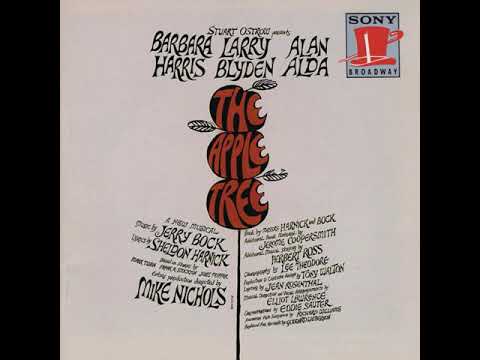
Plot
In the "Passionella" playlet, Ella is transformed into Passionella, a glamorous star with a mysterious schedule and a public legend. After the transformation sequence, a crowd gathers and pours out declarations of admiration, obsession, and imitation. Passionella responds in a steady refrain, acknowledging each confession as if it is routine. The scene sets up the next turn: fame has arrived, and it is not peaceful.
Song Meaning
The meaning is less about romance than about access. The ensemble voices represent the public claiming closeness, while Passionella plays the role of a star who is expected to accept it. Her refrain is a mask that keeps the interaction moving, but it also reveals something bleak: she is already used to being watched. According to Masterworks Broadway album notes, this playlet tracks how the dream of glamour collides with dissatisfaction, and "I Know" is the first clear sound of that collision.
Annotations
"Passionella, how I love you!"
The line is classic fan language: absolute, sweeping, and oddly anonymous. Nobody says why, because the why is not the point. The point is possession through praise.
"I know."
That reply is the whole trick. It is funny because it is blunt, but it also suggests fatigue. She is not meeting them with curiosity or warmth, she is meeting them with practiced certainty. The star is already managing the room.
"In private, you are me, I am you."
This is where the scene turns from cute to creepy. It is fandom as identity swap. The music keeps it buoyant, but the idea is a little scary: admiration that wants to erase the boundary between person and projection.
Craft: canon, crowd, and the shrinking center
One reason the number reads so clearly is its structure. The ensemble lines stack, overlap, and ripple like a crowd trying to talk over itself, while Passionella stays centered on a simple refrain. The contrast is the story. The group gets more elaborate, the star stays minimal, and that imbalance tells you who is actually in control.
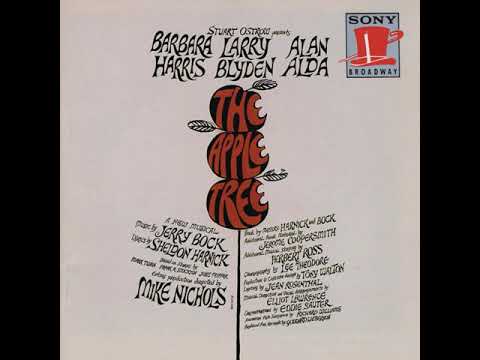
Technical Information (Quick Facts)
- Song: I Know
- Artist: Original Broadway Cast of The Apple Tree
- Featured: Barbara Harris, The Apple Tree Ensemble
- Composer: Jerry Bock
- Lyricist: Sheldon Harnick
- Music director and conductor: Elliot Lawrence
- Release Date: January 1, 1966 (common digital catalog date for the cast recording)
- Recording Date: October 23, 1966
- Genre: Musical theatre
- Instruments: Pit orchestra, chorus and featured vocal
- Label: Masterworks Broadway (catalog editions)
- Mood: Bright, busy, slightly claustrophobic
- Length: 2:31 (common platform listing)
- Track #: 21 (common cast recording sequence)
- Language: English
- Album: The Apple Tree (Original Broadway Cast Recording)
- Music style: Ensemble scene with refrain, crowd canon texture
- Poetic meter: Mixed, speech-led theatre prosody
Frequently Asked Questions
- Which part of the show contains this number?
- It appears in the third playlet, "Passionella", after the celebrity transformation and the first public frenzy.
- Who performs it on the original cast recording?
- Barbara Harris is credited with The Apple Tree Ensemble on major discography entries.
- What is happening dramatically during the song?
- Admirers confess devotion and obsession in a crowd scene, while Passionella answers each confession with a steady refrain.
- Why is the refrain so simple?
- It plays like a protective script. The star keeps control by staying minimal while the crowd grows louder.
- Is this a satire of celebrity culture?
- Yes, but it is not only a joke. It shows how quickly admiration can turn into a claim of access.
- How long is the track?
- Many platform listings show 2:31, with small timing differences across editions.
- Does it connect to the next song "Wealth"?
- Directly. "I Know" is the noise of success, and "Wealth" is the quiet hangover when the dream does not satisfy.
- Is there a pop chart history for this track?
- No. Its history is tied to cast recordings and productions rather than singles charts.
- Why does the crowd sound almost cheerful?
- Because the crowd thinks it is celebrating. The scene becomes unsettling only when you hear how little space Passionella has left.
Awards and Chart Positions
This is theatre-catalog material rather than a chart single, so the main milestones sit with the Broadway production. According to the Tony Awards site, Barbara Harris won Best Actress in a Musical for The Apple Tree in 1967, and the show received nominations across major categories in that season.
| Year | Award | Category | Result |
|---|---|---|---|
| 1967 | Tony Awards | Best Actress in a Musical (Barbara Harris) | Won |
| 1967 | Tony Awards | Best Director (Musical) (Mike Nichols) | Nominated |
| 1967 | Tony Awards | Best Costume Design (Tony Walton) | Nominated |
Additional Info
Masterworks Broadway describes the celebrity figure here with a sly shorthand: Passionella knows just how they feel. That phrase captures what the music is doing, too. The crowd keeps escalating, and she stays cool, as if fame has taught her to answer devotion the way a receptionist answers calls.
I also like how this song reframes the "movie star" fantasy from earlier in the playlet. The wish was to be seen. The reality is to be seen by everyone, all at once, and for the attention to keep asking for more. That shift is the story engine of "Passionella", and this track is where you hear it click.
Key Contributors
| Entity | Type | Relationship |
|---|---|---|
| Jerry Bock | Person | Jerry Bock composed the song for The Apple Tree. |
| Sheldon Harnick | Person | Sheldon Harnick wrote the lyrics for the song. |
| Barbara Harris | Person | Barbara Harris performed Passionella and recorded the song with the ensemble. |
| Elliot Lawrence | Person | Elliot Lawrence conducted the original cast recording session. |
| Masterworks Broadway | Organization | Masterworks Broadway distributes the cast recording catalog and official audio upload. |
| Tony Awards | Organization | The Tony Awards site lists the 1967 nominee and winner records for the show. |
Sources
Sources: Masterworks Broadway (The Apple Tree - 1966 album notes), MusicBrainz release entry (1966 original Broadway cast), Apple Music track metadata, Discogs release listing, Presto Music track list, Tony Awards nominee and winner listings, Playbill Barbara Harris awards page, YouTube (official audio upload)