

What Makes Me Love Him? Lyrics
What Makes Me Love Him?
What makes me love him?It's not his singing,
I've heard his singing,
It sours the milk
And yet, it's gotten to the point
Where I prefer that kind of milk.
What makes me love him?
It's not his learning.
He's learned so slowly,
His whole life long
And though he really knows
A multitude of things
They're mostly wrong.
He's not romantic,
And yet I love him.
No one occasion
He's used me ill
And though he's handsome
I know inside me
Were he a plain man
I'd love him still.
What makes me love him?
It's quite beyond me,
It must be something
I can't define.
Unless it's merely
That he's masculine
And that he's mine.
Song Overview
Review and Highlights
Quick summary
- What it is: Eve's late-life reflection song from The Apple Tree (1966), tender on the surface, unsentimental in the details.
- Who sings it: Barbara Harris as Eve on the original Broadway cast recording.
- Where it appears: Part I, "The Diary of Adam and Eve," near the end of the Eden section, paired with the Eden postlude.
- How it plays: A lullaby-shaped confession with punchlines that land like facts, not zingers.
- Why it matters: It reframes the whole Eden story as a marriage diary, not a morality lecture.
The Apple Tree (1966) - stage musical - diegetic. As her life draws to a close, Eve takes stock of Adam with affectionate honesty, then the Eden sequence moves into its postlude. The placement matters because it makes the story feel lived-in: after temptation, after parenting, after grief, love remains - messy, specific, stubborn.
The first time you hear it, the hook sounds like a simple question. Then the lyric starts answering with the kind of blunt inventory only a long relationship can afford. The jokes do not float above the feeling. They are welded to it. She lists flaws with the ease of someone who has stopped negotiating the obvious, and that honesty becomes a love language of its own.
Masterworks Broadway summarizes the moment with a simple stage logic: Eve reflects on her feelings for Adam. That is accurate, but it undersells the craft. The song is a character study built from small choices: she is not pleading, not scolding, not rewriting history. She is remembering a whole person, and choosing him again.
- Key takeaway: Love is shown as recognition, not idealization.
- Key takeaway: The lyric keeps sentiment in check by insisting on plain evidence.
- Key takeaway: The number functions as the Eden section's emotional final draft.
Creation History
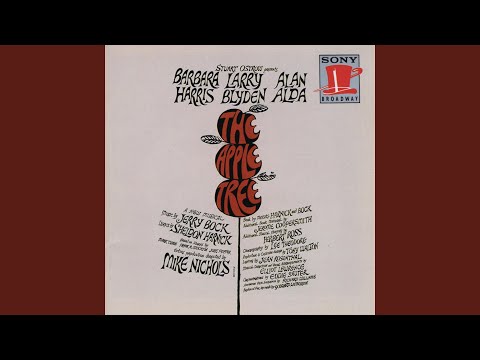
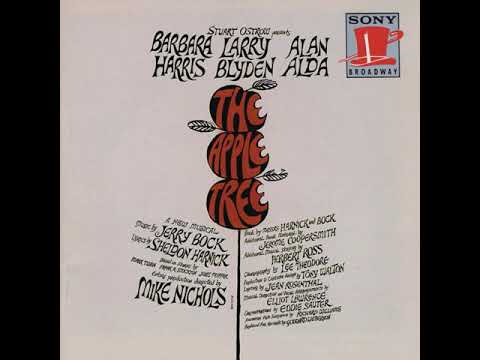
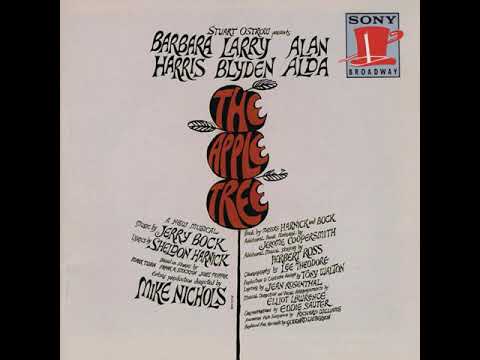
The Apple Tree opened on Broadway on October 18, 1966 at the Shubert Theatre, directed by Mike Nichols, with music by Jerry Bock and lyrics by Sheldon Harnick. The Eden material draws from Mark Twain, so the writing favors conversational rhythm and diary-like observation. On major catalogs, the cast recording lists this track as "What Makes Me Love Him? / Eden Postlude" at 3:29, sung by Barbara Harris with Elliot Lawrence conducting.
Song Meaning and Annotations
Plot
In the Eden playlet, Adam starts content and solitary, then Eve arrives and the two learn to live inside each other's differences. Snake pushes Eve toward the apple, the world turns harsher, and the couple becomes more dependent on one another. Children arrive, conflict erupts, and time telescopes forward. Near the end, Eve looks back at her bond with Adam and asks what, exactly, holds it together. Her answer becomes the scene, then the Eden postlude follows.
Song Meaning
The meaning is devotion without illusions. Eve is not praising Adam's talent, intellect, or charm. She is describing an attachment that outlasts the usual explanations. The song treats love as something partly logical and partly mysterious: you can list a thousand reasons and still miss the real one. The mood is gentle, but the message is tougher than it sounds - love can be a decision you keep making after the romance story stops being useful.
Annotations
-
"It sours the milk. And yet, it's gotten to the point where I prefer that kind of milk."
That is a marriage joke with a twist of psychology. She has acclimated to him so thoroughly that even his flaws become part of her normal. The line is funny, but it is also intimacy by exposure.
-
"And tho' he really knows a multitude of things, they're mostly wrong."
The rhythm here matters: the sentence strolls in, then lands the verdict. It is not cruelty. It is familiarity. She can say it because the relationship has survived far worse than being right.
-
"It must be something I can't define; unless it's merely that he's masculine, and that he's mine."
The last clause is the key turn. After all the rational accounting, she admits the irrational core: belonging, history, a shared claim on each other's lives. It is not possessive in a melodrama way, more like a quiet handshake with time.
Style fusion and emotional arc
This sits in that classic Bock and Harnick lane: show-tune clarity with the pacing of spoken confession. It is not a power ballad. It is a sustained thought that keeps changing its mind, then keeps going anyway. The emotional arc moves from comic evidence to real acceptance, and the audience barely notices the shift until it is already in the room.
Symbols and touchpoints
The Eden framing is the symbol doing the heavy work. We expect myth. Instead, we get domestic specificity: milk, learning, small irritations, big loyalty. In a Masterworks Broadway blog reflection on the writing team, Peter Filichia notes that the melody nearly qualifies as a lullaby, which fits the song's quiet power: comfort without pretending life was simple.
Technical Information (Quick Facts)
- Song: What Makes Me Love Him?
- Artist: Barbara Harris
- Featured: The Apple Tree Orchestra
- Composer: Jerry Bock
- Producer: Thomas Z. Shepard (cast recording)
- Release Date: 1966 (original cast album; many services display January 1, 1966)
- Genre: Musical theater, show tune
- Instruments: Orchestra, lead vocal
- Label: Masterworks Broadway (major reissue listings)
- Mood: Warm, wry, reflective
- Length: 3:29 (cast album listing for the paired postlude track)
- Track #: 10 (common cast album sequencing)
- Language: English
- Album (if any): The Apple Tree (Original Broadway Cast Recording)
- Music style: Actor-forward ballad with conversational phrasing
- Poetic meter: Mixed stress, diary-like cadence
Frequently Asked Questions
- Who sings the number in the original cast recording?
- Barbara Harris performs it as Eve on the original Broadway cast album.
- Where does it fall in the Eden playlet?
- Near the end of "The Diary of Adam and Eve," as Eve looks back on her relationship with Adam.
- Is it a comedy song or a ballad?
- It is a ballad with comedy embedded in the evidence. The humor never breaks the sincerity.
- Why is the lyric so blunt about Adam?
- The bluntness is the point: Eve is describing real companionship, not selling a fantasy version of him.
- Is it considered a good audition piece?
- Yes. It is frequently cited as a strong choice for mezzo-soprano or legit-comedy auditions because it tells a full story without shouting.
- Does the track include the Eden postlude on streaming?
- Many catalogs label it as a paired track with the Eden postlude, and they list a combined runtime around 3:29.
- What vocal type is it commonly associated with?
- Listings and role notes align it with a female voice that sits comfortably in a mid range, with a top around E5 for the role in the show.
- Is there a famous cover version?
- Yes. Sarah Brightman recorded a version as part of her 1989 album The Songs That Got Away, showing how the tune works outside the Eden plot.
Awards and Chart Positions
There is no reliable evidence of a standalone pop single chart run for the original cast recording track. The documented accolades attach to the Broadway production of The Apple Tree. In the 1967 Tony Awards, the show received a Best Musical nomination, and Barbara Harris won Best Actress in a Musical, with additional nominations for Bock and Harnick, Alan Alda, Mike Nichols, Lee Theodore, and Tony Walton.
| Year | Award | Category | Item | Result |
|---|---|---|---|---|
| 1967 | Tony Awards | Best Musical | The Apple Tree | Nominated |
| 1967 | Tony Awards | Best Actress in a Musical | Barbara Harris | Won |
| 1967 | Tony Awards | Best Actor in a Musical | Alan Alda | Nominated |
| 1967 | Tony Awards | Best Composer and Lyricist | Jerry Bock and Sheldon Harnick | Nominated |
| 1967 | Tony Awards | Best Direction of a Musical | Mike Nichols | Nominated |
| 1967 | Tony Awards | Best Choreography | Lee Theodore | Nominated |
| 1967 | Tony Awards | Best Costume Design | Tony Walton | Nominated |
Additional Info
The smartest thing the lyric does is refuse to give the audience the flattering answer. It does not claim Adam is brilliant or gifted or even especially kind in the ways theater usually rewards. Instead, it builds a case for attachment as accumulation: years, habits, shared damage, shared jokes. That is why the song can feel like a lullaby and a eulogy at the same time.
There is also a quiet historical footnote in how often the piece shows up in audition talk. Some lists frame it as a less overused option for mezzo voices, partly because the show is not mounted constantly. That rarity can be an advantage: you get to sound like yourself, not like a dozen callbacks you have heard in the same hallway.
Key Contributors
| Entity | Type | Relationship (S-V-O) |
|---|---|---|
| Barbara Harris | Person | Barbara Harris performed the song as Eve on the original cast recording. |
| Jerry Bock | Person | Jerry Bock composed the music. |
| Sheldon Harnick | Person | Sheldon Harnick wrote the lyrics. |
| Thomas Z. Shepard | Person | Thomas Z. Shepard produced the cast recording. |
| Elliot Lawrence | Person | Elliot Lawrence conducted the cast recording in reissue credits. |
| Mike Nichols | Person | Mike Nichols directed the original Broadway production. |
| Masterworks Broadway | Organization | Masterworks Broadway published album notes describing Eve's reflection scene near the Eden ending. |
| Music Theatre International | Organization | Music Theatre International lists the show song catalog and role vocal ranges for licensed productions. |
| Sarah Brightman | Person | Sarah Brightman recorded a cover version in 1989. |
Sources
Sources: Masterworks Broadway album notes, Musicals 101 lyric PDF, Musicnotes sheet music listing, MTI song list and role notes, Presto Music tracklist, Discogs release tracklist, Theater Love audition list, Wikipedia production and awards summary, Spotify track listing
How to Sing What Makes Me Love Him?
Sheet-music listings commonly show an E major setting with a vocal range around G#3 to C#5. MTI role notes for Eve list a broader show range down to C3 with a top around E5, so this number can sit comfortably as a legit, actor-forward ballad rather than a belt showcase.
- Tempo: Keep it steady and unhurried. The power comes from clarity, not speed.
- Diction: Treat the punchlines like facts. Overplaying the jokes can cheapen the tenderness.
- Breathing: Breathe at the ends of the thought-units, especially before the "and yet" turns. Those pivots are the acting beats.
- Flow and rhythm: Let the line speak. Aim for conversational legato, as if you are writing in a diary and the notes happen to be there.
- Accents: Gently stress the contrast words: "not," "yet," "and tho'." That is where Eve reveals her long view.
- Style: Keep vibrato natural and moderate. This reads best as honest reflection, not grand statement.
- Ensemble and piano: Ask for clean, supportive voicing from the pianist so the lyric stays forward without forcing volume.
- Pitfalls: Do not rush the final thought. Give it room, and let the last admission land quietly.