

Forbidden Love (In Gaul) Lyrics
Forbidden Love (In Gaul)
Bar-Bara.Sanjar.
Sanjar.
Bar-Bara.
Do you love me?
Forever.
Did you miss me?
Did I ever?
When battle had all but drained me.
One vision alone sustained me.
The though of you,
And our forbidden love.
Whenever my days were harried.
And Father would say "Get Married".
I thought of you,
And our forbidden love.
So kiss me,
Come kiss me.
For who knows when,
We may kiss like this,
A (someone's coming).
Bar-Bara this is torture.
I know.
Let's run away.
Where?
I have this cousin who served with Julius Caesar.
And he told me about a place called Gaul.
What?
Gaul.
They tell me it's divided into three parts.
We'll pick the part that's closest to our hearts.
In Gaul,
We'd live so simply.
No more feathers and fuss,
Just the children and us.
In Gaul,
We'd have a garden.
On the outskirts of town,
And a house painted brown.
No more stolen kisses,
No more stolen sighs.
Stolen nights,
Stolen days.
Stolen bites,
Swollen eyes.
In Gaul,
We'd be so happy.
Oh Sanjar my hawk,
Bar-Bara my dove.
We'd be two ordinary people in love.
In love, in Gaul.
It's impossible.
You know as well as I,
Our place is here.
My people need me,
And I have my career.
Though this is our fate,
We'll fight it.
Our passion will ride dispite it.
And though we're at odds,
With all the Gods above.
Will keep well hidden,
Our forbidden love!
Song Overview
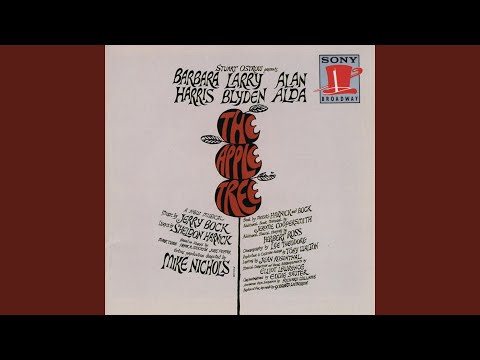
Review and Highlights
Quick summary
- Work: The Apple Tree (Broadway, 1966), Act Two ("The Lady or the Tiger?" segment).
- Placement: After the court spectacle is established, the plot suddenly narrows to two people trying to breathe.
- Characters: Princess Barbara and Captain Sanjar, singing in private while the kingdom stays loud outside the door.
- What makes it stand out: A romantic duet that keeps bumping into class rules, like lovers whispering while the crowd warms up the arena.
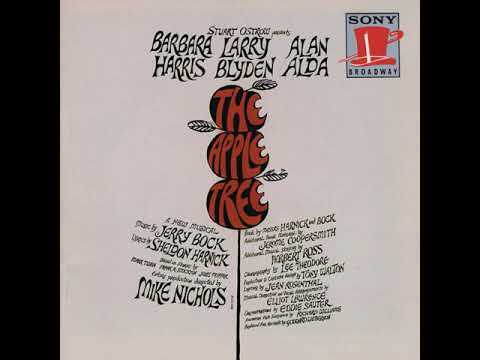
The Apple Tree (1966) - stage musical - Non-diegetic. Princess Barbara and Captain Sanjar admit what the kingdom forbids and fantasize about escape. It matters because the show swaps pageantry for pressure: a love song that already sounds like it is running out of time.
After the Act Two parade music and the public rules, this duet feels like stepping into a side corridor where the air is cooler and the stakes are sharper. Sanjar has just come back from war and the court treats him like scenery. Barbara has status, but it plays like a cage with better lighting. Put them together and you get a romance that cannot stretch out - it has to fold itself into quick, stolen lines.
The craft is in the contrast. The earlier numbers sell the kingdom as a party. Here, the party noise becomes a threat, even when you cannot literally hear it. The melody leans into intimacy, but the lyric keeps tripping over rules, titles, and the obvious fact that someone is always watching. I hear it as a duet written with one ear on the door handle.
Creation History
Jerry Bock and Sheldon Harnick built Act Two as a stylized fable with a Balladeer framing the action, then tightened the focus with this scene for Barbara and Sanjar. Album notes for the cast recording summarize the moment as Sanjar proposing Gaul as an escape route, while Barbara hesitates because giving up royalty is not just a change of address, it is a collapse of identity. That tension is the engine of the song.
Song Meaning and Annotations
Plot
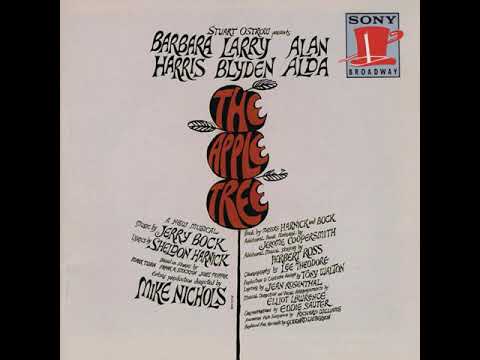
In the "Lady or the Tiger?" section, the Balladeer introduces a kingdom where justice is turned into arena entertainment. After the court shows off its power, Captain Sanjar returns from battle and is left behind as the celebration continues. Princess Barbara comes back, sends away the slave who is helping him, and the two reveal they are in love. Because class rules make their relationship illegal, they imagine fleeing to Gaul as the one place where they might live like ordinary people.
Song Meaning
This is not a love song about feeling safe. It is a love song about bargaining with reality: what would you trade for a life that belongs to you? The duet treats "Gaul" like a spell, a single word that turns danger into possibility. Yet the music also keeps the fantasy on a short leash. You can hear that they want the same thing, but they do not want it at the same price.
Annotations
"No more stolen kisses, no more stolen sighs."
The repetition lands like a vow and a complaint at once. They are not describing romance, they are describing logistics - hiding, waiting, pretending. The phrasing makes love sound like contraband, which fits a kingdom that monetizes judgment.
"In Gaul we'd be so happy."
"Gaul" is doing symbolic work. It is not a postcard, it is a counter-life: a place where their names stop being weapons. Album notes spell out that Sanjar even sells the plan with a comic historical aside about a cousin who served with Julius Caesar, and that little wink keeps the dream from turning syrupy.
The duet also sharpens the fable's theme. The arena story is about a choice with two doors. Barbara and Sanjar are living a version of that mechanism: duty on one side, risk on the other, with a crowd waiting to call it justice. According to IBDB records for the show, this number is explicitly assigned to Princess Barbara and Sanjar, and it plays like the first time Act Two lets the audience see what the kingdom's rules cost a real person.
Rhythm and staging feel
Even on audio, the scene suggests close blocking: two characters moving toward each other, then stopping, then leaning in again. The lyric keeps alternating between what they want and what they cannot have. That start-stop motion becomes its own rhythm, a pulse of desire interrupted by fear.
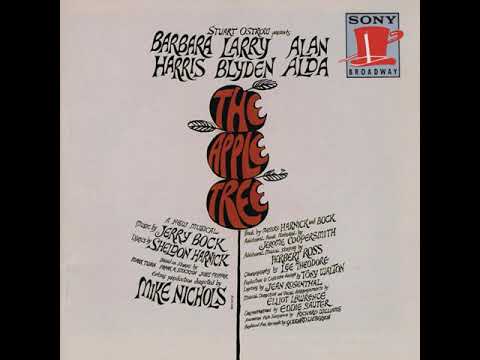
Technical Information (Quick Facts)
- Song: Forbidden Love (In Gaul)
- Artist: Original Broadway Cast of The Apple Tree
- Featured: Alan Alda, Barbara Harris
- Composer: Jerry Bock
- Lyricist: Sheldon Harnick
- Book: Jerry Bock, Sheldon Harnick, Jerome Coopersmith (show credits)
- Music director and conductor: Elliot Lawrence (cast recording credits)
- Producer: Goddard Lieberson (cast recording credit listings)
- Release Date: January 1, 1966 (digital catalog metadata for the cast recording)
- Recording Date: October 23, 1966 (discography session date for this track)
- Genre: Musical theatre
- Instruments: Pit orchestra, duet vocals
- Label: Masterworks Broadway (catalog editions)
- Mood: Tender, tense, aspirational
- Length: About 3 minutes 25 seconds (varies slightly by edition)
- Track #: Commonly Track 12 on the 1966 cast recording sequence
- Language: English
- Album: The Apple Tree (Original Broadway Cast Recording)
- Music style: Intimate character duet inside a satirical fable act
- Poetic meter: Mixed, speech-led theatre prosody
Frequently Asked Questions
- Who sings this number on the 1966 cast recording?
- It is performed as a duet by Alan Alda and Barbara Harris, reflecting Captain Sanjar and Princess Barbara in Act Two.
- Where does it happen in the story?
- It lands after Sanjar returns from battle and Barbara confronts her feelings, with the kingdom's class rules closing in around them.
- Why is "Gaul" mentioned?
- Gaul is their shorthand for escape: a place far enough away that status might stop deciding who is allowed to love whom.
- Is this connected to the arena "two doors" concept?
- Yes, thematically. The duet turns the fable into a private version of the same choice: obedience versus risk.
- Is the number comic or serious?
- It is both. The scene can carry a sly wink, but the stakes stay real because the law treats their embrace as a crime.
- Does it appear in later revivals?
- Yes. Song lists for the 2006 Roundabout revival keep it in the Act Two sequence for "The Lady or the Tiger?" segment.
- Is this a pop single with chart history?
- No, it is musical theatre repertoire from a cast album, so its public milestones are tied to the show's productions rather than radio charts.
- What is the dramatic turning point inside the song?
- The turning point is not a twist, it is a price tag: the closer the fantasy of leaving becomes, the clearer Barbara's loss of identity feels.
- Is there an official music video?
- Not in the modern pop sense. The most common official upload is the auto-generated audio from the cast recording catalog.
Awards and Chart Positions
The track is theatre-catalog material, so the headline achievements belong to The Apple Tree itself. The original Broadway production earned major Tony recognition, including a Best Actress in a Musical win for Barbara Harris. According to Playbill archives, the 1966 production is often cited as a key Mike Nichols staging from that period, and the cast recording remains the main way most listeners meet Act Two today.
| Year | Award | Category | Result |
|---|---|---|---|
| 1967 | Tony Awards | Best Musical | Nominated |
| 1967 | Tony Awards | Best Actress in a Musical (Barbara Harris) | Won |
| 1967 | Tony Awards | Best Actor in a Musical (Alan Alda) | Nominated |
| 2007 | Tony Awards | Best Revival of a Musical | Nominated |
Additional Info
One underappreciated move in this scene is how it changes the audience's role. The kingdom has been teaching everyone to watch. This duet quietly asks you to listen instead - to hear the human cost of a system that treats judgment as entertainment. When the plot later swings back toward the arena, you do not forget that two people tried to step outside the rules and could not find a clean exit.
Catalog metadata also tells a small story. The track shows up as its own cut on major services, and discography entries log it as part of the October 23, 1966 recording session, with Alan Alda and Barbara Harris credited on vocals. That neat documentation fits the show itself: a fable with hard edges, filed cleanly, while the characters inside it are anything but calm.
Key Contributors
| Entity | Type | Relationship |
|---|---|---|
| Jerry Bock | Person | Jerry Bock composed the music for The Apple Tree, including Act Two. |
| Sheldon Harnick | Person | Sheldon Harnick wrote the lyrics for The Apple Tree, including this duet. |
| Jerome Coopersmith | Person | Jerome Coopersmith contributed to the book of the musical (show credits). |
| Frank R. Stockton | Person | Frank R. Stockton wrote the short story adapted for the Act Two segment. |
| Alan Alda | Person | Alan Alda performed Captain Sanjar on Broadway and on the cast recording. |
| Barbara Harris | Person | Barbara Harris performed Princess Barbara on Broadway and on the cast recording. |
| Elliot Lawrence | Person | Elliot Lawrence served as music director and conductor for the cast recording listings. |
| Goddard Lieberson | Person | Goddard Lieberson is credited as producer on cast recording listings. |
| Masterworks Broadway | Organization | Masterworks Broadway distributes major catalog editions and official audio uploads. |
| IBDB | Organization | IBDB documents Broadway production records and song lists by production. |
Sources
Sources: Masterworks Broadway album notes, MusicBrainz release entry, IBDB show and revival song lists, Overture recording credits, MTI show page, Apple Music track metadata, Musicals 101 lyrics PDF