
Roustabout Lyrics
Roustabout
I'm just a roustaboutShifted from town to town
No job can hold me down, I'm just a knock-around guy
There's a lot of space beneath that sky
Till I find my place there's no doubt...
I'll be a rovin' roustabout
Call me the carefree kind
I wander with the breeze
My mind and heart's at ease
Doing what pleases me best
Gotta keep-a movin' east or west
Till I find my place there's no doubt
I'll be a rovin' roustabout
And even if a pretty girl, should catch my eye
I'll give her a quick "hello", and a fast goodbye
I'll go the way I want
Driftin' just like the sand
Doin' what job I can
Changing my plans as I choose
Long as I keep happy I can't lose
Till I find my place there's no doubt
I'll be a rovin' roustabout
I'll be a rovin' roustabout...I'll be a rovin' roustabout
I'll be a rovin' roustabout..rovin', rovin' roustabout....
Song Overview
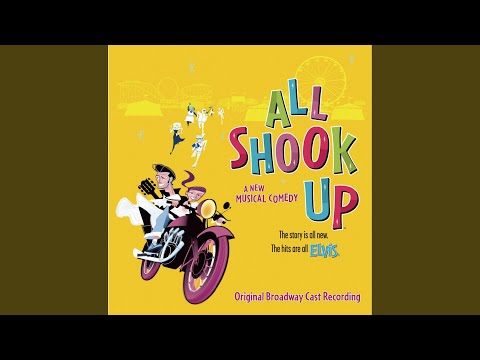
Review and Highlights
Quick summary
- What it is: Chad's entrance card in Act I - a swaggering announcement that the motorcycle is not just transportation, it is a narrative instrument.
- Who sings on the 2005 cast album: Cheyenne Jackson.
- Where it appears: Right after the town chorus sets the mood in Sylvia's Honky-Tonk; the synopsis explicitly cues the bike cutting through the air before this number.
- How this version differs from the film original: It is trimmed and targeted: less movie atmosphere, more stage punctuation and character intent.
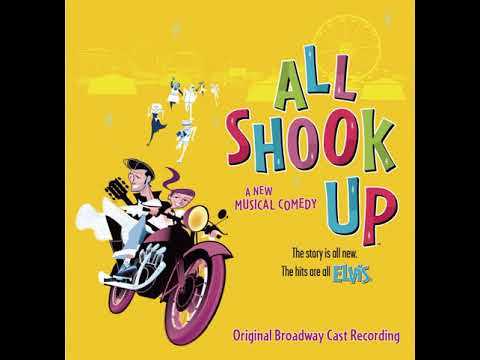
All Shook Up (2005) - musical - non-diegetic. Act I, just after the townsfolk admit their loneliness in the bar: the motorcycle arrives, and Chad appears on the horizon. The placement is clean theatre craft - first you show the problem (a stalled town), then you drop in the catalyst (a drifter with rhythm and nerve).
On Broadway, an entrance song is a contract. This one signs in grease pencil: Chad is a man who lives by motion, and his music moves the room whether the room wants it or not. The tune has a workingman's bounce, but the point is not blue-collar realism. The point is velocity. A jukebox show can feel like it is waiting for its first true plot shove; this number gives it that shove, with a grin and a leather jacket.
Key takeaways
- Character clarity: Chad arrives already mythologized, and the score does the mythmaking in real time.
- Driving rhythm: A forward-leaning rock pulse that plays like a stage cue: things are about to happen, whether the mayor approves or not.
- Comic edge: The lyric's self-description is half brag, half warning label.
Creation History
The song was written by Bernie Baum, Bill Giant, and Florence Kaye for the 1964 film "Roustabout" starring Elvis Presley, then repurposed decades later as Chad's calling card in Joe DiPietro's Broadway book. The cast recording preserves the show logic: Masterworks Broadway's synopsis describes the motorcycle sound cutting through the air before the number begins, which is exactly how a stage musical tells you, in one stroke, that the temperature of the town is about to change.
Song Meaning and Annotations
Plot
A town is stuck. People have roles they did not choose. Sylvia's bar holds the quiet pressure of lives lived in the same few blocks. Then the bike arrives. Chad enters as an outsider who treats music like a crowbar. The plot does not merely introduce him; it announces him, and the number functions as the announcement.
Song Meaning
In this musical setting, the song is a manifesto for motion. Chad is a "roustabout" in the theatrical sense: a drifter who refuses roots, a social disruptor who cannot help turning a square room into a dance floor. The meaning is not subtle, and it does not need to be. The whole evening depends on the town believing that change can arrive from outside and still feel irresistible.
Annotations
Suddenly, the sound of a motorcycle cuts through the air, as Chad, a mysterious stranger, appears on the horizon - "Roustabout".Synopsis cue
This is stage direction disguised as marketing copy. The sound cue matters as much as the melody: it frames Chad as interruption, the kind that rewrites a room's rules before anyone can vote.
"Roustabout" was written by Bernie Baum, Bill Giant, and Florence Kaye for the 1964 film of the same name.Authorship note
That film origin explains the song's built-in bravado. Movie title songs are designed to label a hero fast; the musical borrows that labeling power and attaches it to Chad's first seconds onstage.
The cast album places the track early, listed as track 4, with a runtime of 1:24.Recording note
A one-and-a-half-minute entrance is not stingy - it is efficient. Broadway uses short numbers like this the way a director uses a close-up: to establish status and energy, then get out before the joke wears out.
Style and instrumentation
The arrangement speaks Broadway with a rock accent: rhythm section forward, accents clean, and a vocal line delivered with theatrical clarity rather than period impersonation. The goal is legibility - both musical and dramatic. As stated in a Playbill production overview of the show, the score is built from the Elvis songbook but shaped to behave like a book musical, and this number is a prime example: it sells character and plot in the same breath.
Technical Information (Quick Facts)
- Song: Roustabout
- Artist: Cheyenne Jackson
- Featured: None
- Composer: Bernie Baum; Bill Giant; Florence Kaye
- Producer: Jay David Saks (cast recording)
- Release Date: May 31, 2005
- Genre: Musical theatre; rock and roll
- Instruments: Voice; theatre orchestra and band
- Label: Masterworks Broadway (Sony BMG Music Entertainment)
- Mood: Brash; kinetic
- Length: 1:24
- Track #: 4
- Language: English
- Album (if any): All Shook Up - Original Broadway Cast Recording (2005)
- Music style: Rock-fronted Broadway entrance number
- Poetic meter: Accent-driven rock phrasing with conversational stresses
Frequently Asked Questions
- Who sings "Roustabout" in the musical?
- Chad sings it as his entrance statement, and the cast recording credits the track to Cheyenne Jackson.
- Where does the number land in Act I?
- It follows the Honky-Tonk scene where the town laments its stasis, then the motorcycle cue introduces Chad and the song begins.
- Is this the same as the Elvis film title track?
- It is the same song, originally written for the 1964 film, but staged here as a plot catalyst rather than a movie title flourish.
- Why is the cast album version so short?
- Because it functions like a dramatic label. The show uses it to establish Chad's vibe and momentum, then moves on before the scene cools.
- What does "roustabout" signal about Chad?
- It signals a drifter identity: someone who does not settle, who treats towns as temporary stops and rules as suggestions.
- Does the song advance romance or conflict?
- Both, indirectly. It turns Chad into the object of fascination while also marking him as a threat to the mayor's order.
- Is the number diegetic, like a performance in a bar?
- It is typically staged as scene music, not a formal in-world act. The bar setting helps, but the dramaturgy is broader than a karaoke moment.
- Who wrote the song?
- Bernie Baum, Bill Giant, and Florence Kaye.
- Does this cast recording track have pop chart history?
- No. It is a theatre album cut. The chart story tied to "Roustabout" is mainly about the 1964 soundtrack album for the film.
Awards and Chart Positions
The 2005 cast recording track is not marketed as a singles-chart release, so its measurable impact is theatrical: it is a structural hinge in Act I and a calling card for Chad in licensing life. For hard chart numbers, the "Roustabout" name points back to the 1964 film soundtrack, which reached number 1 on Billboard's Top LPs chart, and later received an RIAA Gold certification date listed in discography references.
| Work | Year | Chart or award marker | What it indicates |
|---|---|---|---|
| Roustabout (film soundtrack album) | 1964 | Billboard Top LPs: peak 1 | Strong commercial life for the film-linked Elvis release |
| All Shook Up (Broadway production) | 2005 | Theatre World Award: Cheyenne Jackson (won) | Performance recognition tied to the original Broadway run |
Additional Info
What I enjoy here is the showmanship of efficiency. The town has just told you it is bored, then Chad shows up and refuses boredom as a lifestyle. A lesser jukebox musical would let the entrance be applause bait. This one uses the entrance as plot engineering. And that motorcycle cue, spelled out in the official album synopsis, is not decoration - it is the show firing its starter pistol.
If you want a backstage-history footnote, the film era around "Roustabout" also contains an almost-comic what-if: Billboard has noted that "I'm a Roustabout" was written and recorded for the movie but rejected at the time, later surfacing in archival releases. Different song, same title gravity - the brand was always bigger than any single track.
Key Contributors
| Entity | Type | Relationship (S-V-O) |
|---|---|---|
| Cheyenne Jackson | Person | Jackson performs "Roustabout" on the 2005 cast album as Chad. |
| Joe DiPietro | Person | DiPietro wrote the book that places "Roustabout" as Chad's Act I entrance. |
| Christopher Ashley | Person | Ashley directed the Broadway production that staged the entrance. |
| Bernie Baum | Person | Baum co-wrote the song for the 1964 film. |
| Bill Giant | Person | Giant co-wrote the song for the 1964 film. |
| Florence Kaye | Person | Kaye co-wrote the song for the 1964 film. |
| Masterworks Broadway | Organization | Masterworks Broadway released the cast recording and published the synopsis cue for the motorcycle entrance. |
| Roustabout (film) | Work | The film provides the original context for the song's authorship and title identity. |
| Roustabout (soundtrack album) | Work | The soundtrack album reached number 1 on Billboard's album chart. |
| Palace Theatre (Broadway) | Venue | The original Broadway run played at the Palace Theatre, where Chad's entrance lands as a key early beat. |
Sources
Sources: Masterworks Broadway album page and synopsis, Apple Music album listing, YouTube audio release (Masterworks Broadway), Wikipedia entry for Roustabout (Elvis Presley song), Wikipedia entry for Roustabout (soundtrack), Billboard archive note on "I'm a Roustabout"