
It Hurts Me Lyrics
It Hurts Me
It hurts me to see him treat you the way he doesIt hurts me to see sit and cry
When I know I could be so true
If I had someone like you
It hurts me to see those tears in your eyes
The whole town is talking, they're callin' you a fool
For listening to his same old lies
And when I know I could be so true
If I had someone like you
It hurts me to see the way he makes you cry
You love him too much, you're too blind to see
He's only playing a game
But he's never loved you
He never will
And darling, don't you know he will never change
Oh, I know he never will set you free
Because he's just that kind of guy
But if you ever tell him you're through
I'll be waiting for you
Waiting to hold you so tight
Waiting to kiss you goodnight
Yes, darling, if I had someone like you
Song Overview

Review and Highlights
Quick summary
- Work: All Shook Up (jukebox musical, book by Joe DiPietro), using songs associated with Elvis Presley.
- Where it lands: Act Two, right after the abandoned fairgrounds scramble, when the show needs a breath and a bruise.
- Who drives it: Dennis, trying to steady Natalie when her disguise plot starts costing her real feelings.
- What changes from the pop release: the stage version plays as a direct address to a friend, not a private lament.
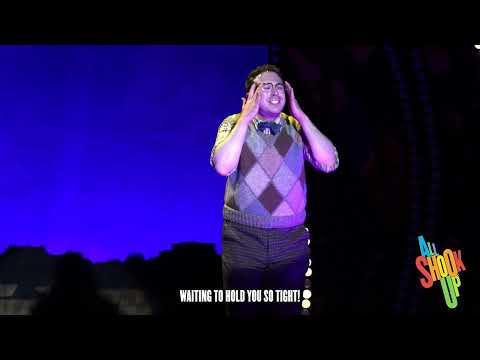
All Shook Up (2005) - stage musical number - non-diegetic. Act Two, after Natalie breaks under the strain: Dennis tries to console her, and the song becomes the moment when the story stops sprinting long enough to admit damage. It matters because it converts the show’s prankish disguise engine into consequence - a friend watching someone accept less than they deserve.
Here is the number’s best theatrical trick: it is not written for the person in pain, but for the person forced to witness it. Dennis sings like someone who has rehearsed being agreeable, then suddenly cannot stay polite. The melody sits in that sweetly-not-too-slow pocket where a Broadway singer can shape consonants without chopping the line, and the arrangement keeps the spotlight tight - no carnival, no crowd, just a human being choosing honesty.
Key takeaways
- Character function: Dennis steps out of comic sidekick territory and earns moral weight.
- Musical pacing: the score downshifts so the audience can register what the farce has been masking.
- Lyric focus: the text is protective, not self-pitying - that shift is the whole stage point.
Creation History
The song was recorded by Elvis Presley in January 1964 and released the next month as the B-side to "Kissin' Cousins." In pop terms, it is a carefully built ballad with a steady internal pulse and a vocal that refuses to coast. Decades later, the stage show folded it into a plot about restraint and disguise, with theatre arrangements shaped by Stephen Oremus. As stated in Playbill reporting on the production’s creative setup, that music team aimed for Elvis flavor while still meeting Broadway clarity demands - which is why this number reads cleanly as narrative, not nostalgia.
Song Meaning and Annotations

Plot
Act Two opens with the town at the abandoned fairgrounds, everybody chasing the wrong person under the right emotions. After the chase, Natalie is shaken, still trapped between her feelings and her disguise. Dennis, who has watched this whole mess with a tender grimace, finally tries to reach her in plain language. That attempt is the song: an interruption of the comedy machine to show what it has been doing to someone’s heart.
Song Meaning
In this musical context, the lyric is not a romantic pitch. It is advocacy. Dennis is naming a pattern of mistreatment and the shame that comes with tolerating it. The show uses the ballad as a small act of resistance: in a town that polices behavior, someone still chooses to say, out loud, that kindness should be a minimum. The emotional arc moves from careful observation to a firm, almost protective insistence. If the fairgrounds scene is confusion, this is clarity.
Annotations
"When Dennis tries to console Natalie, he sings this song."
That synopsis line is practically stage direction. The number is not an exhibition, it is an intervention - the song exists because a friend will not let the moment slide by.
"She rushes off, but soon returns as Ed to try to convince Chad..."
The timing is cruel in a believable way. The ballad offers a truth, and the plot immediately shows how hard truth is to live: Natalie hears Dennis, then runs right back into the disguise that keeps hurting her.
Style and musical language
Unlike the show’s dance-forward hits, this one asks for legato and patient breath. The published tempo marking "Sweetly, not too slow" tells you the intent: keep the line moving, keep the dignity intact. The arrangement sits comfortably between pop rock and theatre ballad - a fusion that lets a singer act on consonants while sustaining the long ache of the vowels.
Instrumentation and staging notes
The orchestration in licensed productions varies, but the job stays the same: support the vocal without sentimental syrup. The staging usually benefits from stillness. A chair, a pause, a small step closer. I have seen it played as a quiet plea and as a near-argument, and both work if the performer commits to the word "see" as an accusation of reality, not a decorative verb.

Technical Information (Quick Facts)
- Song: It Hurts Me
- Artist: Mark Price, All Shook Up Ensemble (cast recording credit line)
- Featured: Dennis with ensemble support (stage context varies by production)
- Composer: Charles E. Daniels; Joy Byers
- Producer: Jay David Saks (cast recording production credit in common listings)
- Release Date: May 31, 2005 (Original Broadway Cast Recording)
- Genre: Pop rock; musical theatre ballad
- Instruments: Voice with pit band (licensed orchestration varies)
- Label: Masterworks Broadway (cast album site listing)
- Mood: Protective, candid, quietly heated
- Length: PT2M1S (cast album track length listing)
- Track #: 18 (cast album track list position)
- Language: English
- Album: All Shook Up - Original Broadway Cast Recording
- Music style: Narrative ballad with pop phrasing and theatre diction
- Poetic meter: Accentual, speech-driven phrasing
Frequently Asked Questions
- Who sings the number in the Broadway cast recording?
- The track credit lists Mark Price with the ensemble, aligning the moment with Dennis as the scene’s voice.
- Where does it sit in the plot?
- It arrives in Act Two after the abandoned fairgrounds sequence, when Dennis tries to console Natalie before she throws herself back into the disguise plan.
- Is it played as a love song onstage?
- Usually no. It plays more effectively as protective honesty from a friend, even if subtext can lean romantic depending on staging.
- Why does the musical need a ballad here?
- Because farce is expensive. The chase scenes rack up emotional debt, and the ballad pays it down by naming what the comedy has been hiding.
- How is this tied to Elvis Presley history?
- The song was recorded in January 1964 and released in February 1964 as the B-side to "Kissin' Cousins," later becoming part of stage repertory through the jukebox score.
- Did the original single chart?
- Yes. It is commonly documented as reaching No. 29 in the United States.
- What tempo should singers aim for?
- A widely used published edition indicates "Sweetly, not too slow" with a metronome around quarter note equals 70.
- What vocal range is typically notated?
- One standard published arrangement lists A3 to Bb5, and performers often transpose to fit voice and character.
- What makes the lyric effective in this scene?
- It is specific about witnessing harm. The singer is not asking for sympathy, he is demanding a better standard for someone he cares about.
Awards and Chart Positions
Musical awards (Broadway production)
| Award | Category | Nominee | Result |
|---|---|---|---|
| Drama Desk Awards | Outstanding Set Design of a Musical | David Rockwell | Nominee |
| Outer Critics Circle Awards | Outstanding New Broadway Musical | All Shook Up | Nominee |
| Outer Critics Circle Awards | Outstanding Actor in a Musical | Cheyenne Jackson | Nominee |
| Outer Critics Circle Awards | Outstanding Actress in a Musical | Jenn Gambatese | Nominee |
| Theatre World Awards | Theatre World Award | Cheyenne Jackson | Winner |
Original single chart snapshot
| Release | Market | Chart | Peak | Notes |
|---|---|---|---|---|
| 1964 single (B-side) | United States | Billboard Hot 100 | 29 | Documented as the B-side to "Kissin' Cousins" |
How to Sing It Hurts Me
The first technical demand is restraint. The second is clarity. The third is nerve: you cannot sing this like wallpaper and expect the scene to work.
- Tempo: start near quarter note equals 70 and keep the line moving. Slow is not the same as heavy.
- Diction: treat the opening consonants as intent. You are not crooning at air, you are speaking to a person.
- Breathing: map breaths around long vowels so the phrases do not sag. Keep support steady through wordy lines.
- Flow and rhythm: subdivide quietly. A ballad still has a pulse, and the pulse is what reads as certainty.
- Dynamics: save your biggest sound for the moral statement, not for every sad syllable. Build like an argument.
- Range management: published material often lists A3 to Bb5. If the top feels squeezed, transpose before you compensate with tension.
- Style: keep vibrato honest and measured. Too much ornament turns concern into performance.
- Acting choices: pick one clear target - Natalie, the situation, or the absent offender - and keep eye-line consistent.
- Pitfalls: dragging tempo, swallowing consonants, and making every line the same volume. Each is a way of avoiding meaning.
Additional Info
One modern proof of the number’s stage durability is the way regional and revival productions clip it for social video: it plays cleanly outside full context because the dramatic action is simple and legible. BroadwayWorld highlighted a Goodspeed performance clip in August 2025, and the material holds up because the singer’s job is not to decorate the melody - it is to tell the truth as efficiently as possible, then let the plot punish that truth a beat later.
There is also a neat historical irony. The original recording is often described as a strong performance that did not become a signature hit, yet the jukebox format gives it a second life by assigning it a purpose pop radio never could: character revelation. That is the secret sauce of this score when it works. Not every familiar title gets a new dramatic job, but this one does.
Key Contributors
| Entity | Type | Relationship statement |
|---|---|---|
| Charles E. Daniels | Person | Charles E. Daniels is credited as a songwriter for the composition. |
| Joy Byers | Person | Joy Byers is credited as a songwriter for the composition. |
| Elvis Presley | Person | Elvis Presley recorded the 1964 release that later became part of the stage score. |
| Joe DiPietro | Person | Joe DiPietro wrote the book for the jukebox musical that repurposes the song. |
| Stephen Oremus | Person | Stephen Oremus is credited as arranger on common published sheet music for the stage version. |
| Mark Price | Person | Mark Price performed the cast recording track credit associated with Dennis. |
| Jay David Saks | Person | Jay David Saks is credited as an audio producer for the cast recording release in standard listings. |
| Goodspeed Musicals | Organization | Goodspeed mounted a 2025 production that circulated a performance clip of the number. |
Sources
Sources: Masterworks Broadway track notes and scene synopsis, Musicnotes sheet music metadata, IBDB awards record, Playbill production vault and creative team coverage, BroadwayWorld video feature, Wikipedia release-session summary