
Fools Fall in Love Lyrics
Fools Fall in Love
Fools fall in love in a hurryFools give their hearts much too soon
Just put in two bars of stardust
Just hang out one silly moon
Oh! They've got their love torches burning
When they should be playing it cool I used to laugh but now I'm the same
Take a look at a brand new fool
Fools fall in love just like schoolgirls
Blinded by rose colored dreams
They build their castles on wishes
With only rainbows for beams
Oh! They're making plans for the future
When they should be right back in school
I used to laugh but now I'm the same
Take a look at a brand new fool
All right!
They've got their love torches burning
When they should be playing it cool
I used to laugh but now I'm the same
Take a look at a brand new fool
Take a look at a brand new fool
Song Overview
Review and Highlights
Quick summary
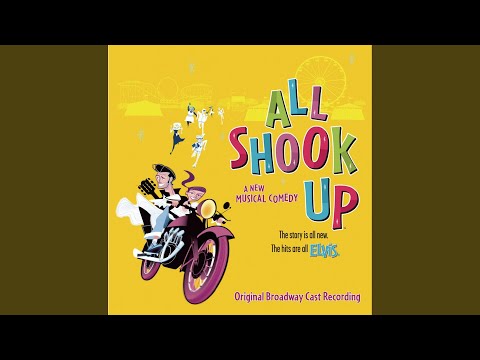
- Work: All Shook Up (Broadway jukebox musical, book by Joe DiPietro), built from songs associated with Elvis Presley.
- Where it appears: late Act Two, when the town heads to the chapel and Natalie stays behind.
- Who sings it: Natalie with company support, usually shaped as a moment of self-definition, not heartbreak.
- What this version does: it turns a doo-wop era warning into a young woman choosing her own road.
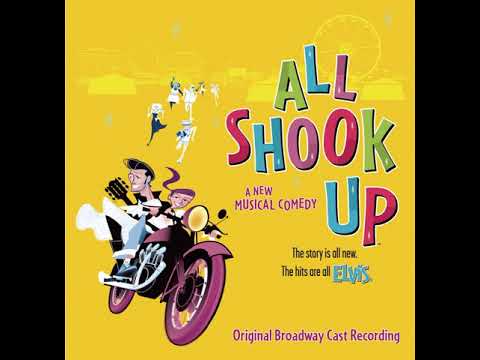
All Shook Up (2005) - stage musical number - non-diegetic. As everyone but Natalie goes off toward a triple-wedding frenzy, she stays with her father and insists she is better off alone. The placement matters because the show briefly stops chasing pairings and lets one character refuse the neat ending - at least for the length of a verse. In a score packed with pursuit, this is the rare sound of a person stepping out of the scrum.
On paper, the song is a cautionary little engine: quick phrases, bright harmonies, a lyric that keeps its chin up. In performance, it can be played three ways. First, as defensive banter - Natalie talking fast to keep anyone from seeing the bruise. Second, as a manifesto - not coldness, but clarity. Third, as a quiet dare aimed at the town: you can marry if you want, but do not pretend it is the only kind of freedom. I lean toward the second, especially with Jenn Gambatese on the cast track, who sounds less wounded than resolved. The number lands best when the staging is simple: let the chorus frame her, not drown her.
Key takeaways
- Character turn: Natalie claims agency at the exact moment the plot tries to herd everyone into matching pairs.
- Tone control: doo-wop bounce keeps the scene from turning sour, while the subtext stays firm.
- Story hinge: it sets up the next chapel scene by clarifying what Natalie will not accept.
Creation History
The song began life in 1957 with the Drifters, written by Jerry Leiber and Mike Stoller, and it charted on both R and B and pop measures. The Broadway use is a clever kind of repurposing: a brisk warning about rushing love becomes a theatrical refusal to be rushed by the town’s expectations. The show-linked digital sheet music credits Stephen Oremus as arranger and spells out backup parts, which hints at the real stage job here: a featured lead framed by a small crowd that behaves like a Greek chorus with better hair.
Song Meaning and Annotations
Plot
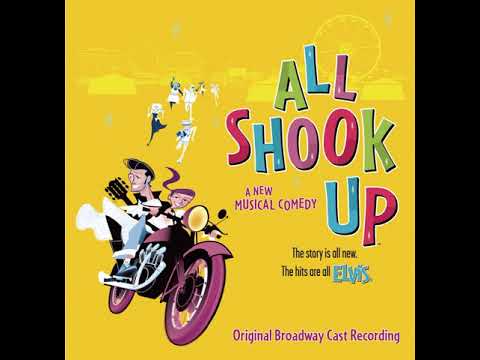
By this point in Act Two, revelations have been flying: Jim and Sylvia finally name what they want, Sandra shifts her attention, and Chad has been shaken by the discovery that his feelings for Ed have real consequences. The town, hungry for ceremony, rushes toward the chapel. Natalie pauses the stampede. She stays with her father, holds her ground, and tells him she is fine on her own. The song functions as a breather and a thesis: love may be in the air, but it does not get to rewrite her identity.
Song Meaning
In this staging, the meaning is not "love is foolish." It is "love is not a substitute for selfhood." The lyric’s quick-fire warnings read as a mask for a deeper truth: Natalie is afraid of giving up her independence, and she is tired of being told what a girl is supposed to want. The emotional arc moves from breezy certainty to a flicker of vulnerability, then back to certainty, because she has decided the argument she is going to win is with herself.
Annotations
"As everyone but Natalie heads off to the chapel to be wed, she assures her father that she’s better off alone."
The staging note is built into the story. The ensemble exits toward ritual; Natalie stays in plain daylight. The song is her refusal to let romance become a crowd-control device.
"This version ... features a vocal arrangement from the broadway musical ... with two male and two female backup vocal parts."
That detail is not trivia. It explains the intended sound: not a solitary diary entry, but a lead voice arguing with the town’s chorus of assumptions.
Style, rhythm, and touchpoints
The groove nods to late-1950s R and B and early rock and roll, with doo-wop style backing that can be staged as either teasing support or pressure. The musical is set in 1955, so the show is knowingly loose with strict chronology, but the style lands because it feels era-adjacent and theatrically readable. As stated in Playbill’s production record, the Broadway version leaned on crisp orchestration and clear diction, and this number benefits from that clean theatrical mix.
Technical Information (Quick Facts)
- Song: Fools Fall in Love
- Artist: Jenn Gambatese, All Shook Up Ensemble
- Featured: Natalie and company
- Composer: Jerry Leiber; Mike Stoller
- Producer: Jay David Saks
- Release Date: May 31, 2005
- Genre: R and B pop; musical theatre ensemble feature
- Instruments: Lead vocal with two male and two female backup parts; pit band (licensed orchestration varies)
- Label: Masterworks Broadway
- Mood: Bright, defiant, lightly guarded
- Length: PT2M21S
- Track #: 25
- Language: English
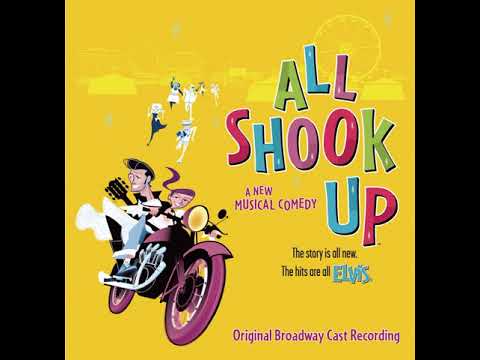
- Album: All Shook Up - Original Broadway Cast Recording
- Music style: Doo-wop flavored lead-and-chorus framing
- Poetic meter: Accentual, hook-led phrasing
Frequently Asked Questions
- Who sings it in the musical?
- Natalie leads it with company support, typically framed as her speaking plainly to her father as everyone else heads to the chapel.
- Where does it land in Act Two?
- Near the end of Act Two, after the love-pairings start snapping into place and right before the chapel scene that follows.
- What is the dramatic purpose of the number?
- It gives Natalie a moment of agency and slows the plot long enough to make her independence a story fact, not a costume choice.
- Is it a solo or an ensemble feature?
- It is a lead feature framed by backup parts. The show-linked sheet music specifies multiple harmony lines around the lead.
- Who wrote the original song?
- Jerry Leiber and Mike Stoller wrote it. The first hit recording was by the Drifters in 1957.
- Did the original Drifters single chart?
- Yes. It is documented as reaching No. 10 on the R and B chart and No. 69 on the Billboard Hot 100.
- Did Elvis Presley record it?
- Yes. He recorded an up-tempo version in 1966, later used as the B-side to "Indescribably Blue" in early 1967.
- Why does the song fit Natalie’s character?
- Because the lyric sounds like a warning, and Natalie is trying to warn herself as much as anyone else: do not rush, do not fold, do not vanish into somebody else’s plan.
- What key and range do performers often start from?
- A common show-linked piano-vocal-guitar edition lists F major and prints a lead range of A3 to D5, with harmony parts in the same neighborhood.
- What is the main performance trap?
- Playing it as bitterness. It works better as a bright refusal that still lets a sliver of vulnerability show through.
Awards and Chart Positions
Broadway production awards context
| Award | Category | Nominee | Result |
|---|---|---|---|
| Drama Desk Awards | Outstanding Set Design of a Musical | David Rockwell | Nominee |
| Outer Critics Circle Awards | Outstanding New Broadway Musical | All Shook Up | Nominee |
| Theatre World Awards | Award | Cheyenne Jackson | Winner |
Original song chart snapshot
| Artist | Year | Chart | Peak |
|---|---|---|---|
| The Drifters | 1957 | R and B chart | 10 |
| The Drifters | 1957 | Billboard Hot 100 | 69 |
How to Sing Fools Fall in Love
The trick is to keep the bounce while letting the text land as thought. The show-linked sheet music lists F major and prints a lead range of A3 to D5, plus multiple harmony lines. That is a musical way of saying: you are the point, but you are never alone.
- Tempo: rehearse with a steady click so the doo-wop feel stays buoyant. Do not slow down to "act."
- Diction: crisp consonants on the warning phrases. You are delivering policy to yourself.
- Breathing: take quick, quiet breaths between short lines. The number wants momentum.
- Flow: keep the phrases connected, even when the lyric sounds like separate aphorisms.
- Harmony: if you have backup singers, drill entrances and cutoffs. Tight chords sell the period flavor.
- Acting choice: decide whether Natalie is performing confidence or inhabiting it. Let a flicker of doubt show once, then cover it.
- Mic technique: aim for clear speech-forward tone, light vibrato, and a bright placement that reads as youth.
- Pitfalls: over-singing, dragging the groove, or playing the lyric as sarcasm. The song is a boundary, not a sneer.
Additional Info
This song has a useful double life beyond Presley-world. It belongs to the Leiber and Stoller catalog, and it has been staged in another jukebox setting, Smokey Joe's Cafe, in both up-tempo and ballad forms. That flexibility is why it works here. The show does not need the song to be one thing. It needs it to be a tool - a bright wrapper around a serious decision.
One small casting note: Natalie is often treated as the grease-under-the-nails heroine, but this number asks for vocal poise. The character can keep her toughness and still sing with polish. That contrast is a theatrical pleasure, the kind you notice only when it is done well.
Key Contributors
| Entity | Type | Relationship statement |
|---|---|---|
| Jerry Leiber | Person | Jerry Leiber co-wrote the song used in the score. |
| Mike Stoller | Person | Mike Stoller co-wrote the song used in the score. |
| Joe DiPietro | Person | Joe DiPietro wrote the book that assigns the song to Natalie late in Act Two. |
| Stephen Oremus | Person | Stephen Oremus is credited as arranger on the show-linked sheet music edition. |
| Jenn Gambatese | Person | Jenn Gambatese originated Natalie on Broadway and performs the cast recording track. |
| Jay David Saks | Person | Jay David Saks produced the original Broadway cast recording. |
| Masterworks Broadway | Organization | Masterworks Broadway released the cast recording and topic-track uploads. |
Sources
Sources: Masterworks Broadway cast-recording track notes, Musicnotes digital sheet music listing, IBDB production record, Playbill production page, Wikipedia pages for the song and related releases