
If I Can Dream Lyrics
If I Can Dream
There must be lights burning brighter somewhereGot to be birds flying higher in a sky more blue
If I can dream of a better land
Where all my brothers walk hand in hand
Tell me why, oh why, oh why can't my dream come true
There must be peace and understanding sometime
Strong winds of promise that will blow away
All the doubt and fear
If I can dream of a warmer sun
Where hope keeps shining on everyone
Tell me why, oh why, oh why won't that sun appear
We're lost in a cloud
With too much rain
We're trapped in a world
That's troubled with pain
But as long as a man
Has the strength to dream
He can redeem his soul and fly
Deep in my heart there's a trembling question
Still I am sure that the answer gonna come somehow
Out there in the dark, there's a beckoning candle
And while I can think, while I can talk
While I can stand, while I can walk
While I can dream, please let my dream
Come true, right now
Let it come true right now
Oh yeah
Song Overview
Review and Highlights
Quick summary
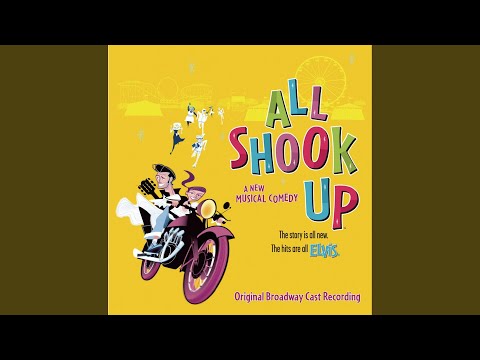
- Work: All Shook Up (jukebox musical, book by Joe DiPietro), using songs associated with Elvis Presley.
- Where it appears: Act Two, as Dean and Lorraine decide not to run and instead stand their ground.
- Who sings it: Chad with Dean, Lorraine, and company, staged like a town-wide change of weather.
- What this version does: it takes a late-1960s plea and uses it as a plot lever, pushing characters from hiding to confrontation.
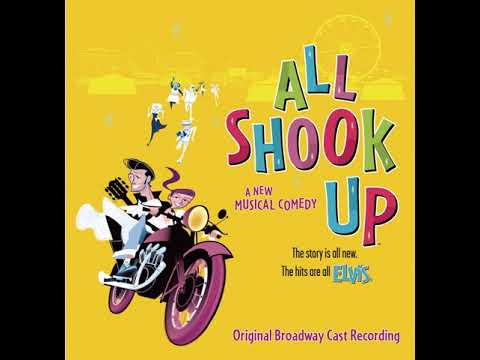
All Shook Up (2005) - stage musical number - non-diegetic. Act Two: Dean and Lorraine plan to bolt, then collide with Chad, who talks them into staying and fighting for each other. The placement matters because it converts romance into civic action. A jukebox show can coast on familiar hooks, but this is one of the moments that tries to mean something in-story: a town that polices bodies and feelings gets briefly outvoted by its own desire for change.
Theatrically, the number plays like a rally that still remembers it is a love story. Chad is not delivering policy, he is lending courage. Dean and Lorraine are not suddenly fearless, but the melody gives them a spine. I hear it as the show borrowing the vocabulary of anthem without turning stiff. The best productions keep it grounded: fewer poses, more listening, more faces turning toward each other as the arrangement grows.
Key takeaways
- Plot function: the song pushes the lovers back into the fight, setting up the confrontation with Matilda.
- Character function: Chad becomes more than a catalyst for flirting; he is a catalyst for courage.
- Stagecraft: it works when the ensemble feels like a community deciding, not a chorus showing off.
Creation History
The song was written by Walter Earl Brown and recorded by Elvis Presley in June 1968 for the television special commonly called the 1968 Comeback Special, then issued as a single in December 1968. Its public identity is tied to that moment: late-1960s unrest, a performer returning to relevance, and a lyric that sounds like an address to a nation. The musical repurposes it as a turning-point ensemble scene, with a published digital arrangement credited to Stephen Oremus that reflects Broadway needs: clear part-writing, clean harmonic lift, and a build that can carry a staged decision. As stated in licensed-version plot summaries, the number lands just before the final confrontation that forces Matilda to loosen her grip.
Song Meaning and Annotations
Plot
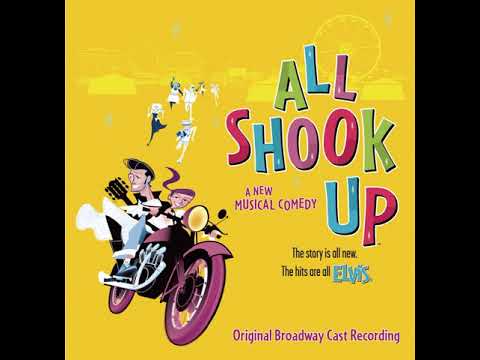
Act Two is already a mess of disguise and misread desire. After the fairgrounds confusion, Dean and Lorraine make a practical plan: leave town and stop getting punished for being in love. Chad intercepts them and reframes the problem. Instead of escaping, he argues for staying and forcing the town to change. The song becomes the bridge between those positions. By the end of the number, the lovers are no longer only reacting to Matilda. They are choosing a stance.
Song Meaning
In this staging, the core meaning is not abstract hope. It is conditional hope, spoken as a dare to the status quo: if there is a better world, act like it can exist. The emotional arc moves from yearning to decision. The lyric imagery of light and freedom is direct, almost sermon-like, and that directness is useful in the show because it cuts through farce. For a few minutes, the story stops winking and speaks plainly.
Annotations
"Dean and Lorraine plan to leave town, but they run into Chad, who convinces them to stay and fight for their love."
The song is not an add-on. It is the mechanism of persuasion. Chad is not winning by force; he is winning by giving them language they can stand inside.
"Released as a single in December 1968 ... peaking at No. 12 in the United States."
That chart detail matters because it explains why audiences hear the number as more than a deep cut. It carries cultural weight into the theatre, then gets reassigned to a plot about decency laws and small-town control.
Style, rhythm, and touchpoints
Musically it leans soul-gospel in its lift and phrasing, with a slow pulse that invites long lines and public declaration. Historically, it is linked to the 1968 television event and its context of national grief and anger. The musical keeps the shape of an anthem but narrows the target: the dream is not a nation, it is a town that needs to stop policing love.
Metaphors and staging choices
The central metaphor is light. Onstage, that can be handled literally or psychologically. A lighting cue that warms and opens the space is the obvious tool, but the stronger choice is behavioral: people who were hiding start standing in sight-lines, turning outward, taking up room. The number does not need complicated movement. It needs a visible change in who is allowed to be seen.
Technical Information (Quick Facts)
- Song: If I Can Dream
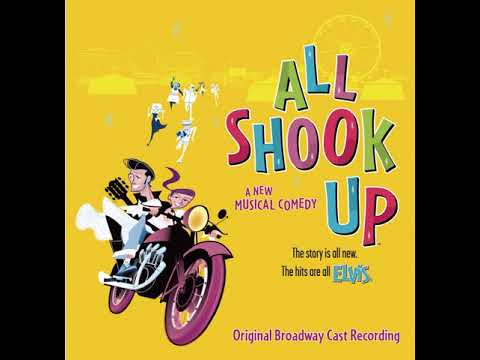
- Artist: Original Broadway Cast of All Shook Up
- Featured: Chad, Dean, Lorraine, ensemble
- Composer: Walter Earl Brown
- Producer: Jay David Saks
- Release Date: May 31, 2005 (Original Broadway Cast Recording)
- Genre: Musical theatre; soul-gospel influenced pop
- Instruments: Voices with pit band (licensed orchestration varies)
- Label: Masterworks Broadway
- Mood: Resolute, pleading, communal
- Length: PT3M11S
- Track #: 24
- Language: English
- Album: All Shook Up - Original Broadway Cast Recording
- Music style: Anthem build with choir-like lift and theatre diction
- Poetic meter: Accentual, speech-led phrasing with sustained vowels
Frequently Asked Questions
- Who sings the number in the musical?
- Chad leads it with Dean, Lorraine, and the ensemble, staged as a communal turning point.
- Where does it land in the story?
- It appears in Act Two right after Dean and Lorraine consider leaving town and right before the confrontation that forces Matilda to relent.
- What is the dramatic job of the song?
- It converts private love into public resolve, giving the characters language to stand their ground.
- Is it a dance number?
- It is typically staged as an anthem scene, with movement used to show solidarity rather than choreography for its own sake.
- Who wrote the original song?
- Walter Earl Brown wrote it for Elvis Presley in 1968.
- What recording event made the song famous?
- It is associated with Elvis Presley’s 1968 television special, where it functioned as a closing statement.
- How did it perform on major charts?
- It reached No. 12 on the US Billboard Hot 100 and No. 11 on the UK singles chart run documented by the Official Charts Company.
- Why does a 1968 anthem fit a 1955-set story?
- The show uses it as a moral argument against a decency law. The anachronism is purposeful: the lyric speaks beyond period detail.
- What tempo and range should singers expect in common published editions?
- One widely used piano-vocal-guitar edition lists a slow tempo around quarter note equals 64 and a printed vocal range of G3 to G5, while the show-linked digital arrangement credits Stephen Oremus and is commonly presented in Eb major.
- What is the main performance trap?
- Treating it like a parade. It lands better as persuasion and listening, with the sound growing because the choice grows.
Awards and Chart Positions
This number carries its own history, and the show borrows that gravity. In chart terms it is one of Elvis Presley’s most durable late-1960s singles, and in theatre terms it is one of the score’s few places where the town speaks as one.
| Item | Market | Chart or award | Peak or result | Notes |
|---|---|---|---|---|
| Original single | United States | Billboard Hot 100 | 12 | Late 1968 to early 1969 chart run |
| Original single | United Kingdom | Official Singles Chart | 11 | Ten weeks on chart in 1969 |
| Broadway production context | United States | Theatre World Award | Winner | Cheyenne Jackson for All Shook Up |
How to Sing If I Can Dream
This is not a sprint. It is a sustained argument. Common published editions describe it as slow, and singers should treat slow as a test of breath and focus, not an excuse to drift. A frequently referenced piano-vocal-guitar edition lists a metronome around quarter note equals 64 with a range of G3 to G5, while the show-linked digital arrangement is credited to Stephen Oremus and is commonly published in Eb major.
- Tempo: rehearse at quarter note equals 64 with a click. Slow exposes every wobble, especially in long vowels.
- Diction: keep consonants clean without chopping the line. The lyric needs clarity, not percussive overacting.
- Breathing: mark breaths early. Plan where you will refill so the phrases feel inevitable rather than survived.
- Line and lift: aim the sound forward and keep the pitch centered on sustained notes. Do not let volume replace support.
- Build: treat each section as a step in persuasion. Save the biggest sound for the last third, when the ensemble or the orchestration opens.
- Vowel strategy: unify vowels on words like "dream" and "somewhere" so the tone stays consistent across range.
- Ensemble discipline: if sung with company, decide who leads each entrance and lock cutoffs. The anthem effect comes from unity.
- Pitfalls: dragging tempo, shouting the climax, or turning the number into a concert showcase. The scene is decision-making in public.
Additional Info
Outside the musical, the song has a long afterlife because it keeps inviting reinterpretation. Cover versions have charted in the United Kingdom, and the tune has re-entered public conversation through prominent performances, including Maneskin’s 2022 rendition that later appeared on a film soundtrack tied to Elvis. The show benefits from that broader cultural memory: audiences arrive already hearing it as a statement, so the script can deploy it as a turning point with minimal setup.
And there is a quieter theatre point. A jukebox score often struggles to justify its biggest titles. This one has a clean justification: it is sung precisely when the plot asks characters to stop running. The number is not a finale. It is a hinge.
Key Contributors
| Entity | Type | Relationship statement |
|---|---|---|
| Walter Earl Brown | Person | Walter Earl Brown wrote the composition and lyric. |
| Elvis Presley | Person | Elvis Presley recorded the 1968 single associated with the television special. |
| Joe DiPietro | Person | Joe DiPietro wrote the book that assigns the number to Chad, Dean, Lorraine, and company. |
| Stephen Oremus | Person | Stephen Oremus is credited as arranger on a show-linked digital sheet music edition. |
| Jay David Saks | Person | Jay David Saks is credited as producer of the original Broadway cast recording. |
| Cheyenne Jackson | Person | Cheyenne Jackson originated Chad on Broadway and leads the cast-recording track. |
| Masterworks Broadway | Organization | Masterworks Broadway released the cast recording that includes this track. |
Sources
Sources: Masterworks Broadway album page and track list, IBDB production record, Official Charts Company chart history, Billboard Hot 100 chart page, Musicnotes sheet music metadata (show-linked edition), Wikipedia entries for the musical and the original single