
Love Me Tender Lyrics
Love Me Tender
Love me tender,love me sweet,
never let me go.
You have made my life complete,
and I love you so.
Love me tender,
love me true,
all my dreams fulfilled.
For my darlin' I love you,
and I always will.
Love me tender,
love me long,
take me to your heart.
For it's there that I belong,
and we'll never part.
Love me tender,
love me dear,
tell me you are mine.
I'll be yours through all the years,
till the end of time.
(When at last my dreams come true
Darling this I know
Happiness will follow you
Everywhere you go).
Song Overview
Review and Highlights
Quick summary
- What it is: A short ballad scene in Act I of the jukebox musical, performed in character rather than as a stand-alone pop cover.
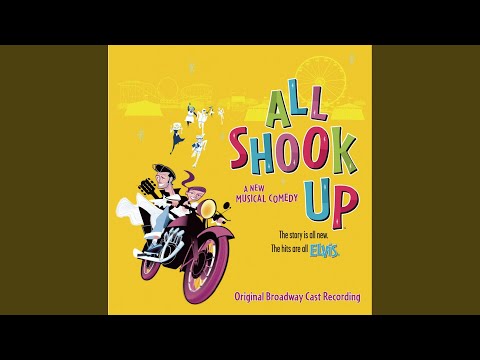
- Who sings on the 2005 cast album: Jenn Gambatese with Mark Price.
- Stage function: A disguise-and-desire pivot - Natalie steps into a new persona, and the town’s romantic geometry starts to tilt.
- How this version differs from the Elvis single: It is quicker, more theatrical, and shaped to land a plot beat instead of lingering on croon.
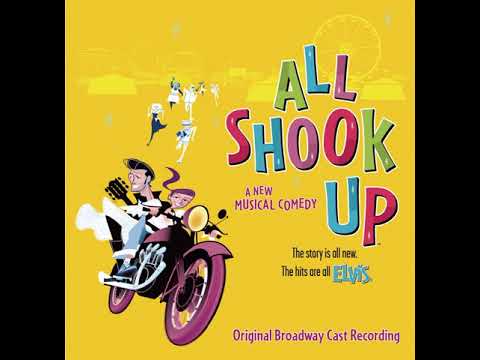
All Shook Up (2005) - musical - non-diegetic. Act I, early-to-mid section: Natalie, aching for Chad’s attention, chooses an answer only theatre can supply - she makes a man. She sings while building the disguise (and, depending on staging, Dennis hovers nearby as confidant or comic foil). The ballad becomes a private workshop scene: costume, voice, and nerve, all in one go.
There is a trap with this material: the audience arrives with Elvis in their ear. The show sidesteps imitation and aims for narrative usefulness. In the cast album cut, the line is not “be still, my heart,” but “move, plot.” That gives the number a briskness that would feel rude in a living-room serenade, yet onstage it reads as cunning. The tune’s familiar hush acts like camouflage while a character commits to a risky performance choice.
Key takeaways
- Character first: The song is used as an acting tactic - a soft melody carrying a hard decision.
- Style fusion: A 1950s ballad shape filtered through Broadway pacing and scene architecture.
- Emotional arc: Longing to agency - Natalie stops waiting and starts constructing.
Creation History
The underlying song began as a 1956 film-linked single: new lyrics fitted to the older melody of "Aura Lea," with credit lines shaped by music publishing practice of the era. In the stage musical, Joe DiPietro’s book reframes the ballad as a disguise anthem, while the Broadway production’s music team (with Stephen Oremus credited for music direction and orchestrations in production documentation) adapts the catalog into scene-ready form. Playbill’s cast-album coverage positioned the recording as a major-label Broadway release in 2005, part souvenir, part calling card for the arrangements.
Song Meaning and Annotations
Plot
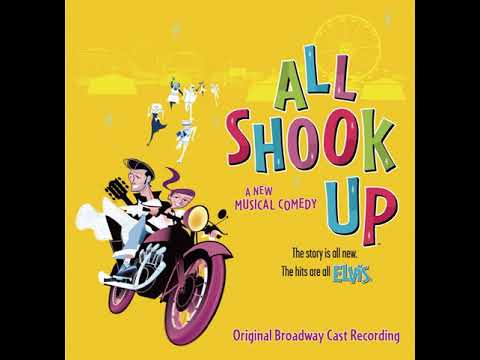
In Act I, Natalie wants Chad and cannot get him to look her way. The town already has rules about who gets to speak, flirt, and lead. So she cheats the system: she invents "Ed," a bearded persona that can enter Chad’s orbit without asking permission. The song sits at the hinge of that choice, turning a romantic standard into a piece of stagecraft.
Song Meaning
In this musical setting, the ballad is less a plea to be loved and more a rehearsal for courage. The tenderness is real, but it is also a tool - a gentle surface that lets Natalie try out a new posture, a new vocal mask, and a new kind of proximity. The number quietly argues that identity can be performed into existence, one choice at a time.
Annotations
On the 2005 cast album, the track is credited to Jenn Gambatese and Mark Price and runs about 1:22.Recording note
That runtime tells you a lot: this is a scene song, trimmed to fit narrative timing. The show does not ask it to carry a full radio-style dramatic swell - it asks it to get us from "wish" to "act."
In the show synopsis, Natalie disguises herself as a bearded man named "Ed" to get closer to Chad, and the song accompanies that turn.Story note
Jukebox writing lives and dies on these pivots. A familiar ballad becomes a plot device: the melody keeps the audience comfortable while the story makes a sharp choice. I have seen productions stage it like a quiet DIY makeover, almost like a backstage ritual done in plain view.
The original 1956 release credits the lyrics to "Elvis Presley and Vera Matson," with later histories noting Ken Darby as the principal lyric adaptor.Authorship note
Even without dragging the legal history onstage, the song carries a built-in theme: borrowed materials, re-authored. That resonates with a character borrowing a look and a voice to rewrite her own prospects.
Instrumentation and staging logic
The melody’s roots in "Aura Lea" give it a hymnlike steadiness. Broadway orchestration tends to underline that steadiness with supportive harmony rather than showy riffing, because the actor has business to do. You can hear the arrangement keep space around the vocal line - the band behaves like a practical partner, not a spotlight hog.
Key phrases and symbols
"Tender" and "true" carry an old-fashioned vow tone, which the scene bends into something sly. Natalie is not only offering devotion - she is testing what devotion sounds like when it comes from a different face. The disguise is a literal beard, but the deeper mask is social permission.
Technical Information (Quick Facts)
- Song: Love Me Tender
- Artist: Jenn Gambatese, Mark Price
- Featured: None
- Composer: George R. Poulton (melody source)
- Producer: Jay David Saks (cast recording)
- Release Date: May 31, 2005
- Genre: Musical theatre; rock and roll ballad
- Instruments: Voice; theatre orchestra and band
- Label: Masterworks Broadway (Sony BMG Music Entertainment)
- Mood: Intimate; conspiratorial
- Length: 1:22
- Track #: 2
- Language: English
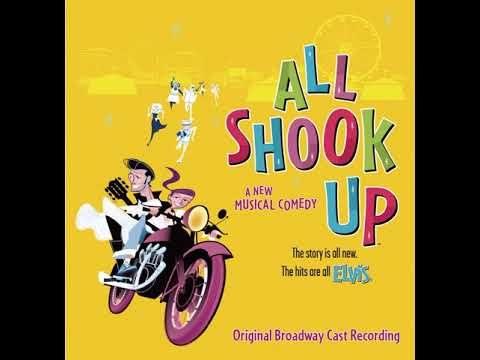
- Album (if any): All Shook Up - Original Broadway Cast Recording (2005)
- Music style: 1950s ballad vocabulary reframed as Broadway scene score
- Poetic meter: Mostly iambic-leaning lyric stresses (song tradition), with performance-driven flexibility
Frequently Asked Questions
- Who sings the number in the Broadway story?
- It is associated with Natalie as she creates the "Ed" disguise, often staged with Dennis nearby as observer or helper, depending on production choices.
- Why use a famous Elvis-era ballad for a disguise moment?
- Because the melody reads as safe and familiar, which lets the book land a risky character move without making the audience fight the song at the same time.
- Is the cast album credit the same as the stage pairing?
- The album credits Jenn Gambatese and Mark Price. Some plot summaries describe the moment as Natalie’s transformation with Dennis present, so the exact onstage emphasis can vary by staging while the recording credit stays fixed.
- Does the song keep the original melody?
- Yes. The tune traces back to "Aura Lea," and the 1956 ballad kept that melodic spine while changing the words.
- What is the dramatic point of the scene?
- It marks Natalie’s shift from passive yearning to deliberate performance, using tenderness as a cover for strategy.
- Is it sung diegetically, like a character performing for an audience?
- Typically it plays as inner-scene music rather than a public performance inside the story world.
- How does the arrangement avoid sounding like an impersonation act?
- By prioritizing clear theatre diction and scene pacing over Elvis vocal mannerisms, and by supporting the vocal line with stage-friendly orchestration.
- What is the historical credit story behind the original song?
- The original release credited Elvis Presley and Vera Matson for lyrics, while later histories discuss Ken Darby’s role in adapting the words to the older melody.
- Does this track have pop chart history?
- The cast recording track is a theatre album cut. The major chart story belongs to the 1956 single version.
Awards and Chart Positions
The Broadway track itself is not a pop single, so the measurable chart story lives in the song’s 1956 life. The Elvis Presley single reached the top of Billboard’s songs charts in 1956 and also hit the UK singles chart, where Official Charts listings show a peak position of 11. The RIAA database lists "LOVE ME TENDER/ANY WAY YOU WANT ME" as a certified single at 3 million units. According to Billboard’s historical overview of Presley’s pre-Hot 100 chart era, the title’s 1956 run sits among the defining early hits that shaped his chart legacy.
| Version | Release context | Noted chart or certification markers |
|---|---|---|
| Elvis Presley single (1956) | Film-linked release; published through Elvis Presley Music | No. 1 on Billboard songs charts (1956 era listings); UK peak 11; RIAA single certified 3 million units |
| All Shook Up cast recording track (2005) | Original Broadway Cast Recording, track 2 | Listed as a cast album cut (theatre distribution rather than singles chart campaign) |
How to Sing Love Me Tender
Reliable practice data tends to cluster around a slow 3/4 feel (often treated as a gentle waltz), with many references placing the original key in G major and a moderate-low range. Treat tempo as flexible: ballads breathe, and stage versions may move slightly quicker to serve the scene.
- Tempo: Start around 72-76 BPM in 3/4 for practice, then adjust so your phrases can finish without squeezing consonants.
- Diction: Keep "t" and "d" clean but light. A heavy final consonant breaks the lullaby spell.
- Breath: Plan breaths before the longer vow-like lines. Aim for quiet inhalations, as if you are not trying to be heard across a club, but across a room.
- Flow and rhythm: Count three, not six. The danger is turning it into a march. Let beat one settle, then let beats two and three carry you forward.
- Accents: Stress the vow words, not every noun. In theatre terms, play the intention, not the dictionary.
- Ensemble and doubles: If you are singing the musical version with scene partners, keep your dynamic under their dialogue energy. The song supports action.
- Mic technique: If amplified, back off slightly on sustained vowels to avoid a "big ballad" sound. This material likes intimacy.
- Pitfalls: Rushing the waltz, over-scooping into pitches, and dragging the ends of phrases. If you are tempted to imitate Elvis phrasing, steal the calm, not the mannerisms.
Additional Info
The jukebox-musical trick here is elegant: it takes a song born as a film tie-in and turns it into a costume-change of the soul. That is not just clever dramaturgy; it is also a practical lesson in how catalog shows can earn their own identity. When this number works, the audience laughs a little at the beard and then catches themselves taking the vow seriously. That double reaction is theatre catnip.
One more footnote worth keeping in your pocket: the song’s ancestry in "Aura Lea" means it has lived many lives before Presley and will live many after. That historical layering makes it unusually suited to stage repurposing, where old material constantly gets new jobs.
Key Contributors
| Entity | Type | Relationship (S-V-O) |
|---|---|---|
| Joe DiPietro | Person | DiPietro wrote the book for All Shook Up. |
| Christopher Ashley | Person | Ashley directed the Broadway production. |
| Stephen Oremus | Person | Oremus shaped the Broadway production’s music direction and orchestrations. |
| Jay David Saks | Person | Saks produced the 2005 Original Broadway Cast Recording. |
| Jenn Gambatese | Person | Gambatese performs the song on the cast album as Natalie. |
| Mark Price | Person | Price performs the song on the cast album as Dennis. |
| George R. Poulton | Person | Poulton composed the melody that later underpins the 1956 ballad. |
| Ken Darby | Person | Darby is widely cited as the principal lyric adaptor behind the 1956 release’s words. |
| Masterworks Broadway | Organization | Masterworks Broadway released and distributed the cast recording catalog entry. |
| Sony BMG Music Entertainment | Organization | Sony BMG issued the 2005 cast recording release. |
Sources
Sources: Masterworks Broadway album page, YouTube audio release (Masterworks Broadway), Playbill cast-album coverage, Wikipedia entries for All Shook Up (musical) and Love Me Tender (song), Official Charts Company listings, RIAA Gold and Platinum database, Billboard historical feature