
Let Yourself Go Lyrics
Let Yourself Go
Well baby I'm gonna teach you what love's all about tonightTrust me honey everything's gonna be all right
You gotta do like I do there ain't nothing to it
Listen to me baby anybody can do it
All you gotta do is just let yourself go
Now don't be afraid just relax and take it real slow
Cool it baby you ain't got no place to go
Just put your arms around me real tight
Enjoy yourself baby don't fight
All you gotta do is just let yourself go
All you need is just a little rehearsal
The first thing that you know
You'll be ready for the grand finale
So come on baby let's go
Let's go, let's go' let's go
Let's go
Take a real deep breath and put your warm red lips on mine
Just do like I tell you, everything's gonna be just fine
Kiss me nice and easy, take your time
Baby I'm the only one here in line
All you gotta do is just let yourself go
Let yourself go right now Yeh! let yourself go
Let yourself go right now Yeh! let yourself go
Yeh! let yourself go
All you gotta do is just let yourself go
Song Overview
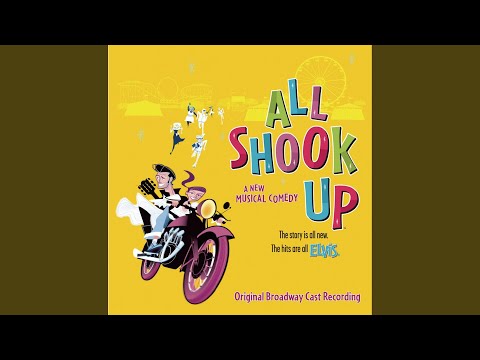
Review and Highlights
Quick summary
- What it is: A museum seduction scene turned into a choreographic stunt - flirtation plus moving scenery.
- Who sings on the 2005 cast album: Leah Hocking with the All Shook Up Ensemble.
- Where it appears: Act I, after Ed delivers the Shakespeare sonnet and tries to escape, while Sandra decides he is not leaving yet.
- How this version plays: A film-song pickup repurposed as a comic power play, with bodies (and often "statues") doing the punchlines.
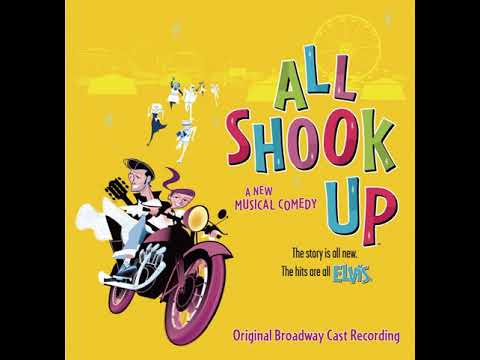
All Shook Up (2005) - musical - non-diegetic. The book sets up Sandra as a brainy romantic with a taste for literary bait, and then gives her a new toy: a man who can quote a sonnet. The licensed synopsis puts it plainly - Ed tries to leave, and Sandra is intent on seducing him. That is the scene, and the number is the method. No moral lesson, no subtlety, just an escalating pursuit that plays like a museum exhibit coming to life.
The pleasure is in watching Sandra take control without becoming a villain. She is not cruel, she is decisive. In a town where decency rules are used to keep everyone stiff, her invitation lands like a small revolution. Some productions lean into a "statues" concept, letting the museum literally animate around her, which turns the seduction into a visual joke: art objects becoming accomplices. I have seen it staged as flirtation, as farce, and as a full-on dance showcase - it survives all three when the performer keeps the intention clear.
Key takeaways
- Driving rhythm: A stomping, party-ready groove that encourages physical comedy.
- Scene function: Sandra flips the status game - Ed arrives confident, then loses the room.
- Character beat: Sandra reveals her appetite for risk, which pays off later when the town starts shedding its rules.
Creation History
The parent song was written by Joy Byers for Elvis Presley's film Speedway, released as a single in May 1968 with "Your Time Hasn't Come Yet, Baby" on the other side. The Broadway score borrows several Presley film songs, and Peter Filichia notes that this catalog choice is part of the show's palette: movie material and radio staples side by side, arranged to serve scene needs. Here, the need is speed and heat: Sandra has a target, and the band hands her the fuel.
Song Meaning and Annotations
Plot
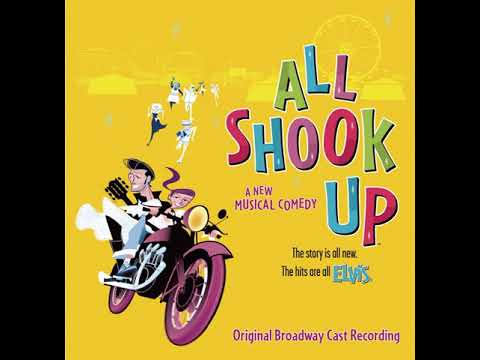
Ed arrives at the museum with borrowed poetry and borrowed courage. It works too well. Sandra responds not with polite appreciation, but with focused interest. Ed tries to retreat, partly from surprise and partly from fear of being seen as the person she thinks he is. The number captures that chase: Sandra advances, Ed backpedals, and the room (sometimes literally, via ensemble "statues") conspires to keep him in her orbit.
Song Meaning
In this staging, the meaning is consent framed as invitation, not pressure. Sandra is saying: stop performing decency, stop overthinking, stop treating desire like a court case. The lyric becomes a permission slip, but the action is the point - she is the one granting permission, and she is also the one taking the risk of asking. That is why it reads as comic confidence rather than soft romance.
Annotations
Flustered, Ed tries leaving, but Sandra is intent on seducing him.Synopsis cue
The word "flustered" is doing heavy work. The show needs Ed rattled so his later choices feel earned, and this is where the mask starts slipping.
Some production breakdowns list the number for Miss Sandra and "statues."Staging note
This is not a random gimmick. It is a director's shortcut to make the museum scene theatrical: bodies freeze, unfreeze, frame her, block him, and turn seduction into stage geometry.
The cast album credits the track to Leah Hocking and the All Shook Up Ensemble, and the official listing places it at track 15 with a 2:34 runtime.Recording note
That credit tells you the scene is not only a solo star turn. The ensemble can be the room's temperature, raising the pressure with every echo and response.
Rhythm, arc, and cultural touchpoints
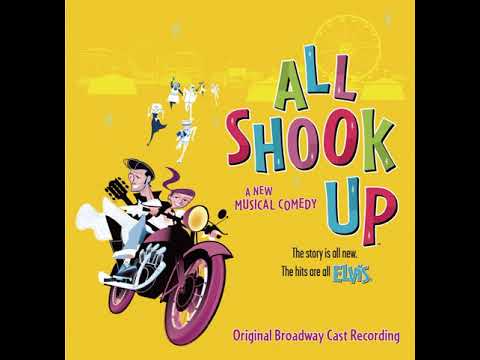
Musically, this number is a useful hybrid: rock-and-roll drive with a touch of late-1960s soul punch. That matters because Sandra is a character who thinks quickly and moves quickly, and the groove gives her a runway. Dramaturgically, it is also a little postcard from the Presley film era - Filichia points out that several of the show's picks come from those movies, and this is one of the clearest examples. The musical is using a film-song flirtation engine to propel a stage farce beat.
Technical Information (Quick Facts)
- Song: Let Yourself Go
- Artist: Leah Hocking; All Shook Up Ensemble
- Featured: Ensemble
- Composer: Joy Byers
- Producer: Jay David Saks (cast recording)
- Release Date: May 31, 2005
- Genre: Musical theatre; rock and roll
- Instruments: Voices; theatre orchestra and band
- Label: Masterworks Broadway
- Mood: Flirtatious; assertive; comic heat
- Length: 2:34
- Track #: 15
- Language: English
- Album (if any): All Shook Up - Original Broadway Cast Recording (2005)
- Music style: Museum seduction scene built as a dance-forward character showcase
- Poetic meter: Accent-driven pop phrasing with punchy hook repetition
Frequently Asked Questions
- Who sings this number in the musical?
- Miss Sandra leads it, and the cast album credits Leah Hocking with the All Shook Up Ensemble.
- What is the scene situation?
- Ed tries to leave the museum after delivering a Shakespeare sonnet, and Sandra keeps him there by escalating the flirtation.
- Why do some productions involve "statues"?
- It is a staging device that makes the museum theatrical: frozen figures can frame Sandra, block Ed, and turn the scene into choreographed comedy.
- Is it played as diegetic performance?
- Usually no. It is scene music that heightens action and intention.
- Is the song an Elvis film title?
- Yes. It comes from Speedway, and was written by Joy Byers.
- Where does it sit on the cast album?
- Track 15, with a listed length of 2:34.
- What is the main acting action for Sandra?
- Invite and test. She invites Ed into risk, then tests whether he will stay present or retreat behind manners.
- What is the main acting action for Ed?
- Resist while wanting. The comedy plays best when his retreat is sincere, not smug.
- Why does the groove matter for the storytelling?
- The beat gives Sandra control of tempo. She can speed the scene up until Ed has to choose honesty over escape.
- Does this number change the plot?
- It tightens the romantic knot around Ed and Sandra, which later feeds the show’s identity games and misunderstandings.
Awards and Chart Positions
The Broadway cut is a cast-album track rather than a single release. The underlying 1968 Elvis Presley single has documented chart history: it peaked at 71 on the US Billboard Hot 100, and reached 19 in Australia on the retrospective Kent Music Report listings.
| Version | Year | Marker | Notes |
|---|---|---|---|
| Elvis Presley single | 1968 | US Hot 100 peak 71 | Released with "Your Time Hasn't Come Yet, Baby" on the other side |
| Elvis Presley single | 1968 | Australia peak 19 (retrospective) | Kent Music Report historical listing |
| All Shook Up cast album | 2005 | Track 15, 2:34 | Museum seduction scene for Miss Sandra |
How to Sing Let Yourself Go
For stage prep, published and database metrics vary by arrangement and recording. A Musicnotes piano vocal guitar edition lists an original published key of A minor with a vocal range of E3 to E5, while a tempo database lists the Elvis recording at about 122 BPM with a minor-mode feel. Use those as a starting map, then transpose to fit your Sandra.
- Tempo: Rehearse first at 100 BPM to lock diction and footwork, then build toward about 122 BPM so the number reads as pursuit, not ponder.
- Diction: Keep the invitation words clean. Sandra is not mumbling a thought, she is landing a proposal.
- Breathing: Place quick breaths before hook repeats and any dance-heavy pickups. If you wait for air, you will look as winded as Ed feels.
- Flow and rhythm: Stay slightly forward on the beat. The character is driving the room, and the groove should feel like she is steering.
- Accents: Punch the imperatives and let the end of phrases relax, like a confident wink that never turns into smugness.
- Ensemble and doubles: If "statues" animate, coordinate your sightlines. Your voice should cue their timing as much as the choreographer does.
- Mic: If amplified, keep the tone conversational and bright. This scene wins with clarity, not volume.
- Pitfalls: Turning it into a nightclub belt-off, or playing Sandra as predatory. Keep it playful, keep it mutual, keep it funny.
Additional Info
Peter Filichia points out that the jukebox selection pulls heavily from Presley films, and this number is a neat specimen of that strategy: a movie dance-floor engine turned into a stage seduction mechanism. It also explains why some listeners describe the cast-album arrangement as Motown-leaning: it is a theater-band solution for making a late-1960s song pop in a 1950s fantasy town.
One practical staging note, drawn from recent amateur and regional reviews: the "statues" concept can be a gift or a problem. When the choreography fits the score, the museum becomes a comic partner. When it does not, you can feel the idea fighting the music. Keep the movement crisp, keep the intention readable, and let the beat do the heavy lifting.
Key Contributors
| Entity | Type | Relationship (S-V-O) |
|---|---|---|
| Leah Hocking | Person | Hocking performs the cast recording track as Miss Sandra. |
| All Shook Up Ensemble | Organization | The ensemble supports the museum scene and can stage "statues" movement. |
| Joy Byers | Person | Byers wrote the song for the Speedway soundtrack. |
| Jay David Saks | Person | Saks produced the Original Broadway Cast Recording. |
| Joe DiPietro | Person | DiPietro places the song to advance the Ed and Sandra romance through farce. |
| Masterworks Broadway | Organization | Masterworks Broadway documents track credits, runtime, and album release details. |
| Peter Filichia | Person | Filichia describes the score's mix of Presley film songs and hits in Masterworks Broadway writing. |
Sources
Sources: All Shook Up - Original Broadway Cast Recording 2005 (Masterworks Broadway album page and synopsis), Let Yourself Go official audio release (Masterworks Broadway on YouTube), All Shook Up (musical) synopsis (licensed version reference), Let Yourself Go (Elvis Presley song) reference entry, Masterworks Broadway essay All Shook Up Over Elvis Presleys 90th (Peter Filichia), StageAgent show song list note about statues, Musicnotes sheet music listing for Let Yourself Go (A minor; E3-E5), SongBPM listing for Let Yourself Go (tempo), Recent regional production review notes on choreography