
I Don't Want To Lyrics
I Don't Want To
I don't want to, I don't want toI don't want to let you know how much I want you
Don't come near me, I don't trust you
I don't trust the way you thrill me when I touch you
I was happy free and easy, I could go around
And do the things that please me
I don't want to get tied down with a girl like you
I don't want to ... love you, but I do
I was happy free and easy, I could go around
And do the things that please me
I don't want to get tied down with a girl like you
I don't want to ... love you, but I do
I don't want to love you, but I do
Song Overview
Review and Highlights
Quick summary
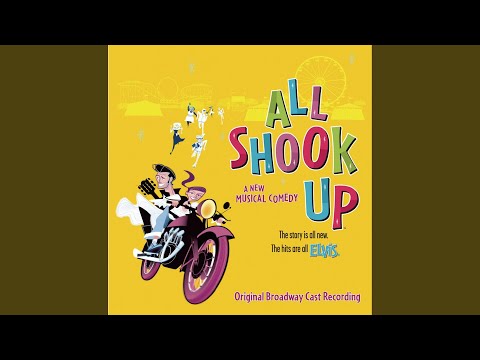
- Work: All Shook Up (Broadway jukebox musical, book by Joe DiPietro), built from songs associated with Elvis Presley.
- Where it appears: Act Two at the abandoned fairgrounds, immediately after Chad watches Jim and Sandra collide and realizes his own problem is bigger.
- Who sings it: Chad (solo), typically staged as a private argument that the audience gets to overhear.
- What this version does: it turns a pop torch into a comic panic attack - desire arriving like a surprise subpoena.
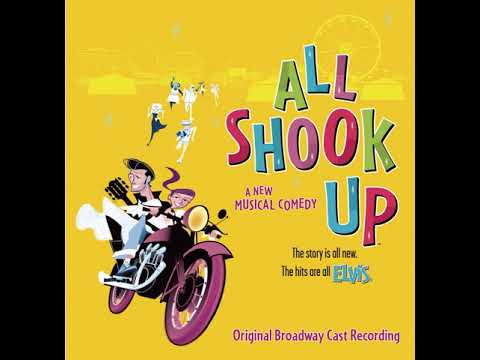
All Shook Up (2005) - stage musical number - non-diegetic. Act Two, abandoned fairgrounds: Chad confronts the fact that he cannot talk himself out of wanting Ed. The placement matters because the show stops pretending this is just farce. It is still funny, yes, but now the laugh catches in the throat. The hero is terrified of what he is learning about himself, and the band gives that fear a pulse.
This is a compact theatre scene masquerading as a song. The lyric is a series of denials that instantly betray themselves. Onstage, that is gold: a performer can play each "no" as a new tactic, then let the melody expose the tactic as useless. Cheyenne Jackson, on the cast track, keeps the phrasing clean and forward, like a man trying to stay in control while his body votes otherwise. The number is also a structural gift. Right before it, the plot is a maze of pursuit; right after it, Chad has an emotional fact he cannot ignore.
Key takeaways
- Character turn: Chad shifts from swagger-as-armor to vulnerability-as-truth.
- Comic tension: the song is funny because it is specific - he is not abstractly confused, he is caught mid-rationalization.
- Story clarity: it tells the audience exactly what the disguise plot has triggered.
Creation History
The original song was written by Fred Spielman and Janice Torre and recorded by Elvis Presley for the Girls! Girls! Girls! sessions in March 1962. In the musical, the song is repurposed as a character soliloquy, with a published arrangement credit to Stephen Oremus that matches the show’s needs: direct text, steady motion, and a frame that lets an actor sound like he is thinking in real time. As stated in Masterworks Broadway’s track-by-track synopsis, the number is placed precisely where Chad has to admit that his feelings for Ed cannot be denied.
Song Meaning and Annotations
Plot
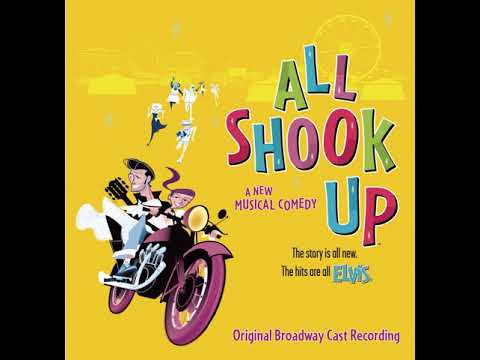
The fairgrounds sequence is a carousel of misdirected attraction. Natalie, disguised as Ed, has accidentally provoked Chad into genuine feelings for Ed. Chad then stumbles into Jim pursuing Sandra, while Sandra declares her own attraction to Ed. Jim bolts in embarrassment. Chad tries to confront Jim but cannot bring himself to fight Ed. At that point, the story narrows to one man alone with an unwanted truth, and the song is his attempt to argue the truth out of existence.
Song Meaning
In this staging, the meaning is blunt: denial is labor, and Chad is exhausted. He is not singing to win someone. He is singing to stop himself from wanting. That twist makes the number more than romantic hesitation. It becomes a portrait of a guy whose self-image is cracking. The emotional arc moves from insistence (I will not) to exposure (I cannot help it). The rhythm keeps pushing forward, like the body refusing to wait for permission.
Annotations
"Chad realizes that, like it or not, his feelings - for Ed - cannot be denied."
That line is the whole stage job. The song is not a confession of love; it is a confession of inevitability, which is a different kind of fear.
"Chad, caught off guard, discovers that he has feelings for Ed ... cannot bring himself to fight Ed."
The comedy here is timing. The show makes Chad discover his heart while he is trying to perform masculinity. The refusal to fight is not softness, it is recognition arriving too fast.
Style, rhythm, and touchpoints
In pop terms, this is early 1960s rock and roll shading into a cleaner, film-era sound. In theatre terms, it plays like a patter-adjacent inner monologue: short phrases, quick reversals, a hook that repeats because the character is stuck in a loop. The show’s Shakespeare borrowings are in the wiring: disguise creates desire, desire creates panic, panic creates a soliloquy.
Key phrases and staging tactics
The repeated "I don't want to" is a gift to directors. Each repetition can get a new action: step away, reach out, catch yourself, lie to yourself, then admit the lie. If the actor treats each line as a fresh attempt at control, the number plays. If the actor sings it as a generic love tune, the scene loses its teeth.
Technical Information (Quick Facts)
- Song: I Don't Want To
- Artist: Cheyenne Jackson
- Featured: Solo (Chad)
- Composer: Fred Spielman; Janice Torre
- Producer: Jay David Saks
- Release Date: May 31, 2005
- Genre: Rock and roll; musical theatre solo
- Instruments: Vocal with pit band (licensed orchestration varies)
- Label: Masterworks Broadway
- Mood: Panicked restraint, comic denial
- Length: PT1M43S
- Track #: 21
- Language: English
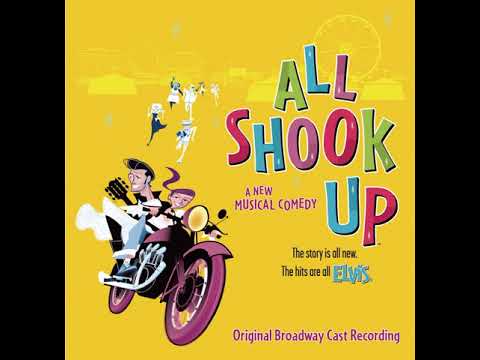
- Album: All Shook Up - Original Broadway Cast Recording
- Music style: Phrase-driven solo built for acting beats
- Poetic meter: Accentual, speech-led (denial loop phrasing)
Frequently Asked Questions
- Where does the number sit in Act Two?
- It follows "The Power of My Love" in the fairgrounds sequence, when Chad realizes he has feelings for Ed and tries to talk himself out of them.
- Who sings it in the licensed version?
- Chad sings it as a solo, typically staged as a private argument with himself.
- What is the dramatic point of the song?
- It states the new emotional fact: Chad wants Ed, and denial is no longer convincing.
- Is it played for comedy or sincerity?
- Both at once. The comedy comes from the frantic logic, while the sincerity comes from how quickly the logic collapses.
- Who wrote the original song?
- Fred Spielman and Janice Torre are credited as composer and lyricist in standard music publishing listings.
- Was it originally written for All Shook Up?
- No. Elvis Presley recorded it in 1962 for the Girls! Girls! Girls! soundtrack, and the musical later repurposed it as a character solo.
- What tempo and key are common in published sheet music used by performers?
- A widely used piano-vocal-guitar edition lists F major and marks the feel as "Sweetly, in 2" with half note equals 80.
- What vocal range should singers expect?
- That same published edition prints a range of D4 to G5, though many stage productions transpose as needed.
- Why does the song work well in a disguise plot?
- Because it is denial in motion. Disguise creates confusion, and the song is a clear window into the confusion.
Awards and Chart Positions
Musical awards context (Broadway production)
| Award | Category | Nominee | Result |
|---|---|---|---|
| Theatre World Awards | Outstanding Broadway Debut | Cheyenne Jackson | Winner |
Original recording context (not a cast-album chart line)
| Release | Context | Notes |
|---|---|---|
| Girls! Girls! Girls! (1962) | Film soundtrack album track | Recorded March 26, 1962 as part of the soundtrack sessions. |
How to Sing I Don't Want To
This is a denial song, and denial lives in rhythm. The common published piano-vocal-guitar edition lists F major, "Sweetly, in 2," half note equals 80, and a printed range of D4 to G5. Treat those details as acting instructions: keep the pulse moving and let the text do the flailing.
- Tempo: set a click to half note equals 80 and practice speaking the lyric in time. The song fails when it drifts.
- Diction: make the word "don't" precise without punching it. You are resisting, not grandstanding.
- Breathing: take quick, quiet breaths between denials. Avoid big sighs that make the character sound satisfied.
- Flow: keep phrases connected. Even when the character stalls, the line should feel like thought continuing.
- Accents: pick a few stress words that reveal the crack in the armor (want, know, you). Do not accent everything.
- Range: if the top feels tight near G5, transpose early. Tension reads as fear, but not the right kind.
- Style: use a speech-forward tone with controlled vibrato. Too much croon turns panic into lounge.
- Pitfalls: slowing down for drama, swallowing consonants, or playing the scene as purely cute. The scene is conflict.
Additional Info
What I enjoy about this placement is how the musical borrows a familiar pop device - repetition - and gives it a theatrical reason. Chad is not repeating the hook because it is catchy; he is repeating it because he is stuck. That is an actor’s dream: the structure supplies behavior.
The publishing trail is also revealing. Musicnotes lists the arrangement as coming from All Shook Up with Stephen Oremus credited, which is a small reminder that jukebox theatre does not survive on memory alone. Someone has to shape the catalog into playable scenes. According to Wikipedia’s licensed-version synopsis, this song is the moment Chad admits the truth to himself, before the story forces him to admit it out loud.
Key Contributors
| Entity | Type | Relationship statement |
|---|---|---|
| Fred Spielman | Person | Fred Spielman co-wrote the song credited in publishing listings. |
| Janice Torre | Person | Janice Torre co-wrote the song credited in publishing listings. |
| Joe DiPietro | Person | Joe DiPietro wrote the book that places the song as Chad’s Act Two realization. |
| Stephen Oremus | Person | Stephen Oremus is credited as arranger on a widely used published edition tied to the show. |
| Cheyenne Jackson | Person | Cheyenne Jackson originated Chad on Broadway and performs the cast recording track. |
| Jay David Saks | Person | Jay David Saks is credited as cast recording audio producer on standard release listings. |
| Masterworks Broadway | Organization | Masterworks Broadway released the Original Broadway Cast Recording album. |
Sources
Sources: Masterworks Broadway track synopsis and album details, Musicnotes digital sheet music metadata (Hal Leonard), Wikipedia synopsis for the licensed version, Wikipedia entry for Girls! Girls! Girls! soundtrack sessions, Discogs track listing for the 1962 soundtrack