
Power of My Love Lyrics
Power of My Love
Crush it, kick it, you can never winI know baby you can`t lick it
I`ll make you give in
Every minute, every hour you`ll be shaken
By the strength and mighty power of my love
Oh break it, burn it, drag it all around
Twist it, turn it, you can`t tear it down
Cos? every minute, every hour you`ll be shaken
By the strength and mighty power of my love
Baby I want you, you`ll never get away
My love will haunt you yes haunt you night and day
Touch it, pound it, what good does it do
There`s just no stoppin` the way I feel for you
Cos` every minute, every hour you`ll be shaken
By the strength and mighty power of my love
Yeh, yeh, baby I want you, you`ll never get away
My love will haunt you yes haunt you night and day
Touch it, pound it, what good does it do
There`s just no stoppin` the way I feel for you
Cos` every minute, every hour you`ll be shaken
By the strength and mighty power of my love
I said every minute, every hour you`ll be shaken
By the strength and mighty power of my love
Every minute, every hour you`ll be shaken
By the strength and mighty power of my love
Song Overview
Review and Highlights
Quick summary
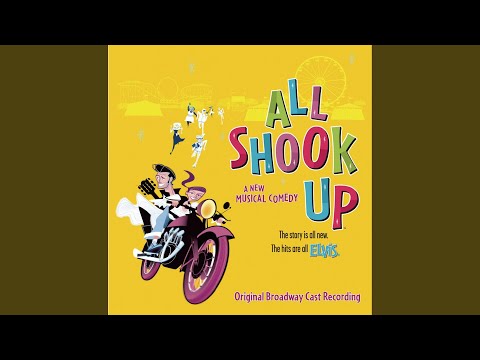
- Work: All Shook Up (Broadway jukebox musical, book by Joe DiPietro), built from songs associated with Elvis Presley.
- Where it appears: Act Two at the abandoned fairgrounds, in the middle of the disguise chaos.
- Who sings it: Chad, Jim, and Miss Sandra, with the staging often treating it like overlapping confessions.
- What changes from the pop life: the lyric becomes a three-way collision of desire, not a single-singer boast.
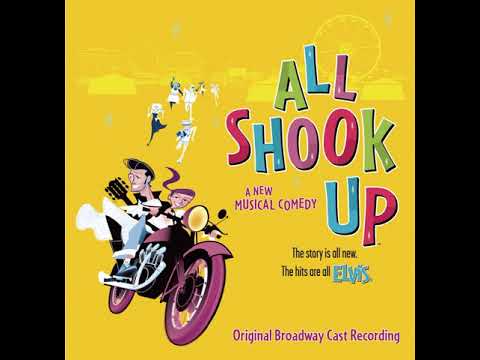
All Shook Up (2005) - stage musical number - non-diegetic. Act Two, abandoned fairgrounds: Chad is reeling from realizing he is drawn to "Ed" and then stumbles onto Jim pursuing Miss Sandra, while Sandra is busy declaring her own obsession - with Ed. The placement matters because the song turns the fairgrounds into a hall of mirrors. Everyone is certain, everyone is wrong, and the music makes that certainty feel irresistible anyway.
This is one of those jukebox moments where the show gets cheeky about what it is doing. The groove is blunt, physical, and a little nasty - a bluesy stomp that demands hips, not philosophy. In the original Elvis recording, the innuendo is practically a character. Onstage, the innuendo becomes a comic weapon. Jim sings like a man convincing himself he is dangerous; Sandra sings like a woman who refuses to be ignored; Chad, caught between swagger and surprise, reacts as if the band has pushed him into a corner. The number is funny, but it is also a plot accelerant: it tightens the triangle, then snaps it.
Key takeaways
- Ensemble dramaturgy: three characters use the same text for three different goals, and the clash is the scene.
- Rhythm as behavior: the pulse encourages pursuit, interruption, and the kind of near-contact that makes farce feel risky.
- Tone shift: the show briefly leans into grown-up lust, which sharpens the stakes of the disguise story.
Creation History
The song comes from Elvis Presley’s American Sound Studio era and was recorded in February 1969, later appearing on the 1969 album From Elvis in Memphis. That album is often cited as a comeback in studio terms, and a Rolling Stone magazine review praised the record’s strength in language that still gets repeated in fan culture. The musical version, credited in published arrangements to Stephen Oremus, keeps the song’s grit but clarifies the theatrical traffic: the band hits hard, the vocal lines land cleanly, and the scene can keep moving without losing the joke.
Song Meaning and Annotations
Plot
The abandoned fairgrounds sequence is where the show’s mistaken identities start paying interest. Chad has just realized his feelings are pointed at Ed, not Natalie. He tries to get his head straight and instead finds Jim chasing Miss Sandra. Sandra, in turn, declares her attraction toward Ed. Jim panics at what he has revealed about himself and bolts. Chad confronts Jim but cannot bring himself to fight Ed, setting up the next beat where Chad has to admit what he feels.
Song Meaning
In this staging, the lyric is less about romance and more about momentum. Each singer is saying, in their own way, "You cannot stop me now." That insistence is the engine of the farce: once desire is in motion, the town cannot pretend it is calm and proper. The emotional arc inside the number is escalation. It starts as appetite, turns into pursuit, and ends as public exposure. The melody stays tough; the scene underneath it becomes increasingly fragile.
Annotations
"He comes across Jim pursuing Miss Sandra, who also declares her love for Ed. Jim runs off, aghast at his own foolishness."
The line tells you why the number works theatrically: the song is not a confession in private. It is a confession overheard, misread, and weaponized by the plot within seconds.
"Side two begins with ... a blues-based sound ... backed by a brass section ... organ."
That sonic description matters onstage. Brass and organ are not just color, they are posture. They give the characters a swagger they have not earned, which is exactly why the scene is funny.
Style, rhythm, and a key cultural touchpoint
The beat sits in a blues-rock pocket, the kind of thing that makes a chorus feel like a dare. American Sound era material often fused soul grit with pop structure, and the show uses that fusion as a shortcut to adult tension. The fairgrounds may look like teen comedy scenery, but the band tells you the characters are playing for real.
Symbols and verbal tactics
The text is built from physical verbs: break, burn, twist, turn. Those words are not poetry, they are impulses. In performance, each verb can be staged as a new attempt at control: Jim tries to dominate the room, Sandra tries to dominate the gaze, and Chad tries to dominate his own reaction. Nobody fully succeeds, which is the point.
Technical Information (Quick Facts)
- Song: The Power of My Love
- Artist: Original Broadway Cast of All Shook Up
- Featured: Cheyenne Jackson; Jonathan Hadary; Leah Hocking
- Composer: Bill Giant; Bernie Baum; Florence Kaye
- Producer: Jay David Saks
- Release Date: May 31, 2005
- Genre: Rock and roll; blues-rock (stage arrangement)
- Instruments: Vocal trio; pit band with brass and woodwinds (licensed orchestration varies)
- Label: Masterworks Broadway
- Mood: Swaggering, comic, slightly predatory
- Length: PT2M14S
- Track #: 20
- Language: English
- Album: All Shook Up - Original Broadway Cast Recording
- Music style: Dirty blues drive with theatre-forward clarity
- Poetic meter: Accentual, hook-led phrasing
Frequently Asked Questions
- Where does the number occur in the musical?
- It appears in Act Two at the abandoned fairgrounds during the disguise chaos, when Chad stumbles onto Jim pursuing Miss Sandra and Sandra declares her attraction toward Ed.
- Who performs it on the original Broadway cast recording?
- The cast track is credited to Cheyenne Jackson, Jonathan Hadary, and Leah Hocking.
- Is this number played as comedy or menace?
- Both. The groove is tough and the lyric is forceful, but the scene reads as comic because every character aims that force in the wrong direction.
- Why does the show choose this song for the fairgrounds?
- The lyric is built from physical verbs and commands, which gives directors playable actions: pursue, corner, interrupt, and double back.
- What is the musical function of the brass-and-organ sound?
- It supplies instant swagger. In this scene, swagger is a mask that lets the characters act braver than they feel.
- Is the song originally from a film soundtrack?
- No. Elvis Presley recorded it during the 1969 American Sound Studio sessions and it appears on From Elvis in Memphis.
- What key and tempo are commonly printed in a stage-friendly sheet music edition?
- A commonly used piano-vocal-guitar edition lists F major, a "Dirty Blues" feel, and a metronome of quarter note equals 120.
- What is the dramatic payoff that follows this scene?
- Jim runs off in embarrassment, and Chad cannot bring himself to fight Ed, setting up Chad’s later admission that his feelings for Ed cannot be denied.
- Does the number need choreography?
- It needs pursuit staging more than dance: entrances, cutoffs, and who claims the center of the space on each refrain.
Awards and Chart Positions
Broadway production awards (context for the cast album era)
| Award | Category | Nominee | Result |
|---|---|---|---|
| Drama Desk Awards | Outstanding Set Design of a Musical | David Rockwell | Nominee |
| Theatre World Awards | Theatre World Award | Cheyenne Jackson | Winner |
Origin recording context
| Release | Type | Notable chart note |
|---|---|---|
| From Elvis in Memphis (1969) | Studio album | Reached No. 13 on the Billboard 200 and No. 1 in the United Kingdom (album performance, not a single chart line). |
How to Sing The Power of My Love
If you sing this like a polite theatre number, it turns into mush. The sheet-music edition commonly used by performers lists F major, a "Dirty Blues" feel, and quarter note equals 120, which is basically an instruction to act on the beat and let the band do the swagger.
- Tempo: lock the pulse at 120 and practice speaking the text on the beat first. If the spoken rhythm bites, the sung line will bite.
- Diction: attack the opening consonants. The verbs should land like taps on the shoulder that become shoves.
- Breathing: plan short breaths after the verb lists. Keep air low and steady so the groove does not sag.
- Flow and rhythm: do not rush the hook. Let the band’s backbeat carry you; your job is precision and intent.
- Accents: choose one word per phrase to hit harder. Too many accents flatten into noise.
- Ensemble balance: if you are in a trio, decide who has the lead line at each moment. The scene reads when the audience knows where to look.
- Mic and color: aim for forward placement and controlled grit. If you push volume, you lose clarity and stamina.
- Pitfalls: smiling through the threats, dragging the tempo, or making it a concert break. This is plot, dressed as a jam.
Additional Info
There is a slightly wicked irony in how the musical uses this material. In the 1969 studio context, the song’s reputation rests partly on its double-entendre punch and brass-and-organ muscle. In the show, those same qualities become theatrical pressure. The lyric is not only sexy, it is socially loud - the kind of loud that forces a small town to admit what it wants. The fairgrounds, a place meant for games, becomes the one place where truth keeps slipping out.
One more technical footnote I enjoy: the cast-album YouTube metadata lists both Michael Gibson (orchestrator) and Stephen Oremus (conductor, keyboards, arranger credit in published sheet music), which hints at the division of labor that makes jukebox theatre survive. Someone has to protect the original vibe, and someone has to make the story readable at a glance. According to IBDB, the Broadway run that produced this recording also marked a major career moment for its leading man, which helps explain why the cast track hits with such forward drive.
Key Contributors
| Entity | Type | Relationship statement |
|---|---|---|
| Bill Giant | Person | Bill Giant co-wrote the composition used in the musical number. |
| Bernie Baum | Person | Bernie Baum co-wrote the composition used in the musical number. |
| Florence Kaye | Person | Florence Kaye co-wrote the composition used in the musical number. |
| Joe DiPietro | Person | Joe DiPietro wrote the book that places the song in the Act Two fairgrounds sequence. |
| Stephen Oremus | Person | Stephen Oremus is credited as arranger in a commonly used published edition and served as a conductor on the cast recording credits list. |
| Michael Gibson | Person | Michael Gibson is credited as orchestrator in the cast-track metadata. |
| Jay David Saks | Person | Jay David Saks is credited as producer and mixing engineer for the cast recording track metadata. |
| Cheyenne Jackson | Person | Cheyenne Jackson performed as Chad on Broadway and on the cast recording track. |
| Jonathan Hadary | Person | Jonathan Hadary performed as Jim on Broadway and on the cast recording track. |
| Leah Hocking | Person | Leah Hocking performed as Miss Sandra on Broadway and on the cast recording track. |
| Elvis Presley | Person | Elvis Presley recorded the 1969 studio version that fed the jukebox score’s repertoire. |
Sources
Sources: Masterworks Broadway track notes and Act Two synopsis, YouTube auto-generated track metadata (Masterworks Broadway), Musicnotes digital sheet music metadata, IBDB production record, Wikipedia entries for All Shook Up and From Elvis in Memphis, Rolling Stone magazine review reprint