That Ain't Right Lyrics — Ain't Misbehavin'
That Ain't Right Lyrics
Baby, Baby, What is the matter with you?
Oh, Oh, Baby, Baby, What is the matter with you?
You've got the world in your arms, and you've got nothin to lose.
Well, you know I always told ya, that you'd be the death of me?
And when I'm always with ya, I get the third degree!
Now that a'int right, no that a'int right at all.
That you're takin all my money, and goin out, havin yourself a ball.
Boy:
Last night I called your number,
and I got this big hello.
Now, I know you got a big voice,
but I swear it a'int that low!
That a'int right,
no, that a'int right at all.
That you're takin all my lovin',
and goin out, havin yourself a ball.
Girl:
I went to a frtune teller,
and I had my fortune told.
She said you didn't love me!
You just want me for my gold.
That a'int right,
no, that a'int right at all.
That your takin all my money,
and goin aout, havin yourself a ball.
[Thanks to Jenny for lyrics]
Song Overview
Review and Highlights
Quick summary
- What it is: A 1942 song credited to Nat King Cole and Irving Mills, later pulled into the 1978 Broadway revue as a crisp Act 2 feature.
- Who carries it in the cast album: Common credits list Andre DeShields and Armelia McQueen with the ensemble and band.
- What it does in the show: A relationship quarrel sketched with nightclub economy - funny, sharp, and a little bruising.
- Why it plays: The complaint is specific enough to feel true, but the groove stays light enough to keep the evening moving.
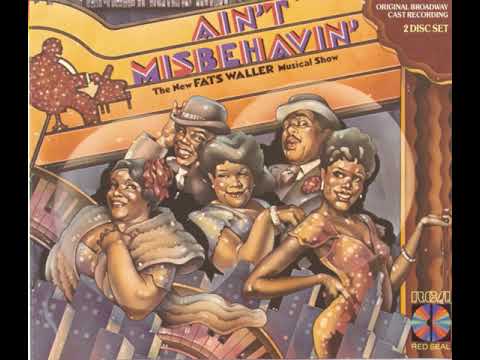
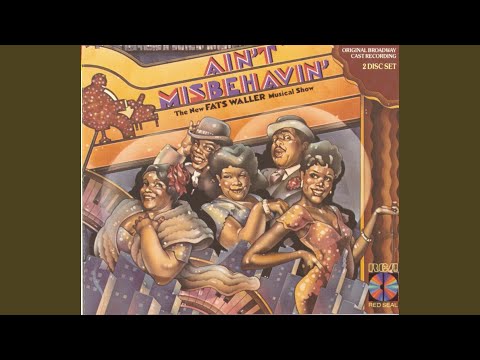
Ain't Misbehavin (1978) - stage revue - non-diegetic (presented as nightclub performance). On the Legacy Recordings 2-CD track list, it lands in Act 2 and sits right before "Keepin' Out of Mischief Now," a placement that makes dramaturgical sense: first you air the grievance, then you pivot back into self-control and charm.
This number is a scolding delivered with a dancer's posture. The singer is not pleading. The singer is prosecuting - but with style. The lyric is built from everyday indignities (money, nights out, the uneven commute home), and the trick is to make those details land like punchlines without turning the character into a clown. The New Yorker review of the cast recording admired how the production invested "charm" in these rediscovered vehicles, and that comment fits here: the song is not deep plot, but it becomes theatrical because the performers play it as lived experience, not as a novelty.
Key takeaways:
- Make the complaint precise: specificity is the joke and the sting.
- Keep the bounce: anger that swings is harder, funnier, and more watchable.
- Play the partner across the room: even in a revue, this is a two-person situation.
Creation History
The songwriting credit is widely given to Nat King Cole with Irving Mills, and the tune is documented as the King Cole Trio's debut single, a notable early hit in 1942. It later turned up in the 1943 film Stormy Weather in a performance by Ada Brown and Fats Waller, which is one reason the song sits comfortably inside a Waller-centered revue even though it is not a Waller composition. According to uDiscoverMusic, the record reached the top of Billboard's Harlem Hit Parade for a week, giving it the aura of a real-world success story before Broadway ever touched it.
Song Meaning and Annotations
Plot
A miniature domestic scene: one partner lays out a bill of particulars, the other is implied (or teased) as the cause, and the room gets to enjoy the spectacle of truth-telling set to a band that refuses to mope. In a revue, this is plot by implication - the audience fills in the rest.
Song Meaning
The meaning is simple and sharp: the speaker is done being taken for granted. But the delivery complicates it. The band keeps things buoyant, which suggests the singer has been here before and has learned how to weaponize humor. In the Ain't Misbehavin frame, the number also becomes a comment on nightlife itself: the club is full of laughter, but somebody still has to take the subway home.
Annotations
The work is credited to Nat King Cole and Irving Mills, and is documented as the King Cole Trio's debut single.
That credit line matters in this show. It signals that the revue is not a strict Waller anthology. It is a Harlem-adjacent nightlife collage, curated for theatrical variety.
Billboard chart history notes the song hit number one on the Harlem Hit Parade for one week.
A one-week peak is still a peak, and for staging it is a gift: you can play the singer like someone who knows the room will listen, because history says the room did.
The song appears in the 1943 film Stormy Weather, performed by Ada Brown and Fats Waller.
This is the connective tissue that makes the selection feel inevitable in a Waller-flavored evening. The song already lives in the same cinematic neighborhood as Waller's most famous screen moment.
On the 2-CD reissue track list, it is Disc 2, track 7, and Discogs and Presto Music list a work length of 3:03.
Three minutes is a tight acting assignment: establish the relationship, land the details, then exit before the joke turns into a rant.
Style and rhythmic drive
The musical feel is blues-adjacent but staged as swing: the lyric is a gripe, the rhythm is a grin. That mismatch is the point. It lets performers play irritation without dragging the room down. I have always thought the best versions treat the band like a co-conspirator, answering the singer's lines with little instrumental asides.
Technical Information (Quick Facts)
- Song: That Ain't Right
- Artist: Original Broadway Cast of Ain't Misbehavin
- Featured: Andre DeShields; Armelia McQueen; Ain't Misbehavin Ensemble; Ain't Misbehavin Band
- Composer: Nat King Cole
- Lyricist: Irving Mills
- Producer: Thomas Z. Shepard (cast-album credit line in discography sources)
- Release Date (cast recording context): 1978 (original Broadway cast recording era)
- Genre: Blues standard; swing-staged musical theatre
- Instruments: Voice; piano; reeds; brass; bass; drums
- Label: Reissue listings appear under Legacy Recordings; digital track uploads appear under Masterworks Broadway on YouTube
- Mood: Wry; indignant; quick-footed
- Length: 3:03
- Track #: Disc 2, track 7 (Legacy 2-CD track list)
- Language: English
- Album: Ain't Misbehavin (Original Broadway Cast Recording)
- Music style: Swing revue delivery with blues bite
- Poetic meter: Accentual, speech-driven stresses aligned to swing accents
Frequently Asked Questions
- Is this song actually by Waller?
- No. Reference sources credit Nat King Cole and Irving Mills, and critics have noted it as an extra-Waller selection in the revue.
- Why does it still fit inside a Waller-centered show?
- Because the song appears with Waller on screen in Stormy Weather (1943), so it already carries his nightlife aura even without his authorship.
- Who sings it on the cast recording?
- Common credits list Andre DeShields and Armelia McQueen with the ensemble and band.
- Where does it appear in the show?
- Song lists place it in Act 2, in the run leading into "Keepin' Out of Mischief Now."
- How long is the cast-recording track?
- Discography listings commonly give it as 3:03.
- What is the central acting objective?
- Make the complaint sound like a choice, not a meltdown: you are calling the partner out while keeping your dignity intact.
- Is it a comedy number or a serious one?
- It is both. The details are funny, but the situation is real enough to sting.
- What is the biggest musical pitfall?
- Dragging the tempo to "sell" the hurt. The number lands best when it keeps moving.
- Does the original have a chart history?
- Yes. The standard is documented as reaching number one on Billboard's Harlem Hit Parade for one week.
- Is there a famous cover?
- Reference listings note a Frankie Laine recording among later versions.
Awards and Chart Positions
The chart story belongs to the pre-Broadway life: the King Cole Trio record is documented as hitting number one on Billboard's Harlem Hit Parade for one week. The awards story belongs to the revue that adopted it: Ain't Misbehavin won the Tony Award for Best Musical in 1978, and its wins for direction and a featured performance explain why numbers like this can feel like compact scenes rather than disconnected tunes.
| Item | Year | Result |
|---|---|---|
| Billboard Harlem Hit Parade | 1943 (chart period) | Number one for one week (King Cole Trio) |
| Tony Awards | 1978 | Best Musical (Ain't Misbehavin) - Won |
How to Sing That Ain't Right
Reliable public sources do not consistently publish a single official vocal range, and the piece is often transposed for the cast and arrangement. What is consistent is the performance problem: you must deliver irritated text while staying buoyant in swing time.
- Tempo: Keep it brisk enough to feel conversational. If your pit chart is moderate swing, rehearse slightly under tempo first, then bring it up until the complaints land as punchlines.
- Diction: Prioritize the everyday nouns (money, taxi, subway) so the audience hears the injustice without you shouting it.
- Breathing: Breathe before the key accusations. The breath is part of the attitude - a controlled inhale reads as judgment.
- Flow and rhythm: Sit in the pocket and let the band do the propulsion. If you rush the text, you sound frantic. If you drag, you sound defeated.
- Accents: Choose two or three words per verse to punch. Everything else should ride smoothly, like you have rehearsed this argument in your head for months.
- Partner work: Even when sung out front, aim lines at a specific partner. The audience is eavesdropping, which is why the comedy lands.
- Mic technique: If amplified, keep it intimate. A smaller tone reads as more dangerous than a big one.
- Pitfalls: Avoid turning it into pure anger. Let the humor show, then let the frustration peek through.
Additional Info
The show benefits from this number in a purely theatrical way: it widens the palette. The revue is often described as a Waller celebration, but critics have pointed out that a few key tunes are not Waller compositions, and that variety helps the evening avoid monotony. The New Yorker review singled out this title among the revived pieces that gained unexpected charm in performance. Also, the film connection is not just trivia. When audiences recognize Stormy Weather as a cultural touchpoint, the song carries a faint cinematic glow into the theatre, like a borrowed spotlight.
Key Contributors
| Entity | Type | Relationship (S-V-O) |
|---|---|---|
| Nat King Cole | Person | Cole wrote the credited music for the standard and recorded it with the King Cole Trio. |
| Irving Mills | Person | Mills is credited as co-writer and publisher-lyricist in reference sources. |
| King Cole Trio | Organization | The trio released the song as a debut single documented as a chart-topper on the Harlem Hit Parade. |
| Ada Brown | Person | Brown performed the song on screen in Stormy Weather (1943). |
| Thomas "Fats" Waller | Person | Waller performed the song on screen in Stormy Weather (1943), linking it to the revue's world. |
| Andre DeShields | Person | DeShields is credited as a featured cast-recording vocalist for the revue track. |
| Armelia McQueen | Person | McQueen is credited as a featured cast-recording vocalist for the revue track. |
| Thomas Z. Shepard | Person | Shepard produced the Broadway cast recording in common discography listings. |
Sources
Sources: Legacy Recordings track list, Discogs release listing, Presto Music cast recording credits, Tony Awards archive, Wikipedia work page for the 1942 single, uDiscoverMusic feature on Nat King Cole chart history, The New Yorker cast-album review, YouTube (Masterworks Broadway upload), Stormy Weather film clip upload
Music video
Ain't Misbehavin' Lyrics: Song List
- Act 1
- Honeysuckle Rose
- Black And Blue
- Fat And Greasy
- Mean To Me
- Keepin' Out Of Mischief
- The Joint Is Jumpin'
- Ain't Misbehavin'
- Cash for your Trash
- Find out What They Like
- Handful Of Keys
- How Ya Baby
- I Can't Give You Anything But Love
- I'm Gonna Sit Right Down & Write Myself a Letter
- Its A Sin To Tell A Lie
- I've Got A Feeling I'm Falling
- I've Got My Fingers Crossed
- Act 2
- Spreadin' Rhythm Around
- Reefer Song
- Jitterbug Waltz
- Ladies Who Sing wtih the Band
- Lookin' Good But Feelin' Bad
- Lounging at the Waldorf
- Viper's Drag
- Off-Time
- Squeeze Me
- 'Tain't Nobody's Bizness if I Do
- That Ain't Right
- When the Nylons Bloom Again
- Two Sleepy People
- Yacht Club Swing
- Your Feet's Too Big