I've Got A Feeling I'm Falling Lyrics — Ain't Misbehavin'
I've Got A Feeling I'm Falling Lyrics
ohhh honey.
you're driving me crazy.
i don't know my elbow from my....ear.
It's funny, so funny
me goin crazy.
you're working too fast.
how long can i last?
I'm flying high but i've got a feelin i'm falling.
alling for nobody else, but you.
ohh no body but you
You cought my eye
and i've got a fellin' i'm fallin'.
show me the ring and i'll jump right through
I used to travel single O, We chanced to mingle O,
Now I'm a tingle Over you.
Say! Mister Parson, you'd better stand by, For I've got a feeling I'm falling,
Falling for nobody else but you.
I used to travel single O, We chanced to mingle O,
Now I'm a tingle Over you. (i'm a tingle over you. oh oh oh oh.)
Say! Mister Parson, stand by, For I've got a feeling I'm falling,
Falling for nobody else but yoooooooouuuu.
Song Overview
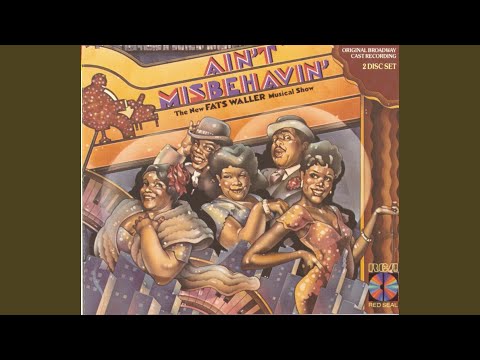
Review and Highlights
Quick summary
- What it is: A 1929 popular song with music credited to Thomas "Fats" Waller and Harry Link, and lyrics credited to Billy Rose.
- Where it sits in the revue: An Act I number, placed after "Handful of Keys" in the common song list and in the original Broadway production documentation.
- What the cast recording spotlights: A featured vocal (often Nell Carter) with ensemble support, built around a hook that reads as both confession and tease.
- Why it lands onstage: The lyric turns falling in love into a comic emergency, while the rhythm stays steady enough to dance on.
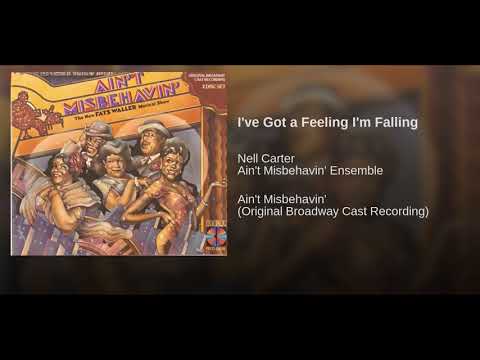
Ain't Misbehavin' (1978) - stage revue - not diegetic. This tune is an early sign that the evening is not only nostalgia. It is craft. In the show, the number follows a piano bravura moment, and that placement is smart: the audience has just watched virtuosity; now they get personality. The singer steps forward like a regular at the club, not a star at a ceremony. The line is plain, the beat is sure, and suddenly the room is invited into the private panic of a crush.
The song does not need heavy staging. It needs intention. Treat it like a confident admission that surprises even the person saying it. That is the theatrical motor: the character thinks they are in control, then realizes they are not. When it is done well, the laugh comes from recognition, not mugging.
- Key takeaways: A hook-driven standard, a featured-vocal showcase that stays conversational, and a structure that rewards crisp timing over volume.
- Highlight to listen for: The handoff between lead and ensemble. When the responses are tight, the number reads like a scene partner chiming in.
- Performance note: Let the band keep the pulse steady. Do not slow down for sentiment. The confidence is part of the romance.
Creation History
Reference catalogs credit the song to Waller and Link (music) with Billy Rose (lyric) and date it to 1929. The Masterworks Broadway notes fold it into Waller's miraculous late-1920s run and call out the lyric credit to Rose, which is worth saying plainly because the tune often gets discussed as if it were a straight Waller-Razaf item. The history is also practical: a 1929 song built to circulate quickly, recorded widely, and later repurposed as a clean Act I moment in a Broadway revue built on timing and swing.
Song Meaning and Annotations
Plot
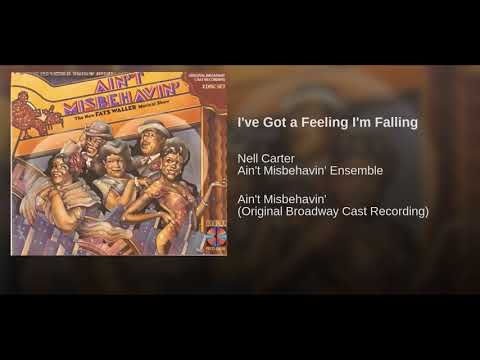
A speaker confesses they are falling hard and fast, trying to keep it light while the lyric admits the situation is getting out of hand. The song alternates between playful self-talk and direct address, as if the character is warning themselves and flirting at the same time.
Song Meaning
The meaning is love as sudden loss of balance. The lyric frames attraction as a physical event you cannot quite steer, and that framing is perfect for stage work. A performer can play the tug-of-war between composure and impulse without changing costume or setting. The emotional arc is quick: confidence, surprise, surrender. The rhythm stays steady underneath, which makes the confession sound brave rather than needy.
Annotations
Music by Harry Link and Thomas "Fats" Waller; lyrics by Billy Rose.
It changes how you frame the number in the revue. This is not only "Fats being Fats." It is the show demonstrating how Waller lived in a wider commercial ecosystem, collaborating and trading material in a fast-moving 1920s song market.
Act I placement in Broadway production documentation.
In practice, that means it is a tone-setter. It arrives early enough to teach the audience the show's favorite trick: treat a standard like a scene, not like a recital.
Published vocal edition lists original key Eb major and a brisk metronome marking.
That matters for performance. At a quick tempo, the lyric reads as witty panic. At a slow one, it turns into a sigh. The show prefers wit.
Style and rhythm
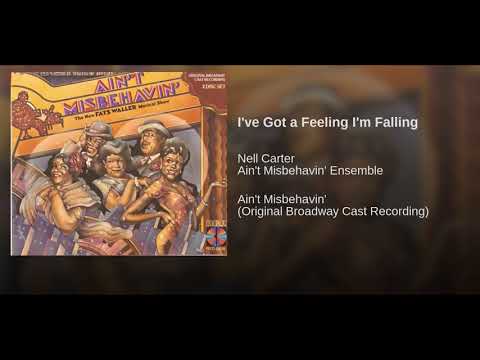
The style is swing with talk-first phrasing. The drive comes from placement, not force: short lines that land on the beat, then a hook that pops because the consonants stay clean. The number can carry a little comic exaggeration, but the best versions keep it grounded in real attraction.
Technical Information (Quick Facts)
- Song: I've Got a Feeling I'm Falling
- Artist: Ain't Misbehavin' Original Broadway Cast (featured vocal with ensemble)
- Featured: Nell Carter; Ain't Misbehavin' Ensemble
- Composer: Thomas "Fats" Waller; Harry Link
- Producer: Thomas Z. Shepard (cast recording release metadata)
- Release Date: 1929
- Genre: Jazz standard; swing; show tune
- Instruments: Voice; piano; small jazz ensemble
- Label: Masterworks Broadway (cast recording catalog branding)
- Mood: Flirtatious, lightly frantic, bright
- Length: 3:36 on the Masterworks Broadway track listing
- Track #: Track 7 on the Masterworks Broadway track listing
- Language: English
- Album (if any): Ain't Misbehavin' (Original Broadway Cast Recording)
- Music style: Swing phrasing with featured lead and ensemble replies
- Poetic meter: Conversational accents shaped for swing subdivision
Frequently Asked Questions
- Who wrote the song?
- Major references credit music to Thomas "Fats" Waller and Harry Link, with lyrics credited to Billy Rose.
- Is it in Act I or Act II of the revue?
- It appears in Act I in common song lists and Broadway production documentation.
- Who is featured on the cast recording track listing?
- The Masterworks Broadway listing credits Nell Carter with the Ain't Misbehavin' Ensemble.
- How long is the cast recording track?
- The Masterworks Broadway track listing shows a length of 3:36.
- What is the dramatic action while performing it?
- Admit the crush while pretending you are still in control. The comedy lives in that gap.
- Is it a belt moment or a timing moment?
- Timing. The range is manageable; the challenge is crisp words at pace.
- What key and range are common in a published vocal edition?
- One widely used edition lists Eb major with a vocal range of C4 to Eb5.
- What tempo is suggested in that edition?
- The same edition lists a metronome marking of quarter note equals 164, with a "Freely" feel note for phrasing choices.
- Why does the show include songs with non-Razaf lyric credits?
- The revue is a portrait of Waller's world, and the Masterworks Broadway notes highlight that some songs carry different lyric credits, including this one.
Awards and Chart Positions
The song is a standard with a long recorded life, so the more relevant milestone here is the stage vehicle. Music Theatre International notes that Ain't Misbehavin' won the 1978 Tony Award for Best Musical, the first time a revue won that top category.
| Work | Year | Award | Result |
|---|---|---|---|
| Ain't Misbehavin' | 1978 | Tony Award - Best Musical | Won |
How to Sing I've Got a Feeling I'm Falling
A practical published baseline comes from a common piano-vocal edition: original key Eb major, vocal range C4 to Eb5, and a brisk metronome marking of quarter note equals 164. The note "Freely" is your permission slip to keep it conversational, not rigid.
- Tempo: Rehearse under tempo first, then build toward 164 once the text stays crisp.
- Diction: Treat consonants like rhythm instruments. If the words blur, the scene disappears.
- Breathing: Plan short breaths between thoughts. Avoid breathing mid-hook, or the confidence breaks.
- Rhythm: Keep swing placement steady and let small rubs happen only on chosen punchline words, then snap back.
- Range: C4 to Eb5 sits well for many singers, but do not muscle the top. Keep it speech-like and forward.
- Intention: Play surprise. You are confessing to yourself as much as to the other person.
- Ensemble cues: If the group answers you, leave space for them. Treat their replies as scene partner reactions.
- Pitfalls: Do not slow down for sweetness. This number wins when it stays bright and slightly frantic.
Additional Info
The revue is often described as a party, but numbers like this show the real engine is structure. Put the tune right after an instrumental display and you get contrast. Give it to a performer with comic instincts and you get a scene. That is why the song survives the medley culture of revues: it contains its own little setup and payoff.
Masterworks Broadway also makes a small but useful historical point in its notes by naming the lyric credit to Billy Rose. In the theater, credits can feel like fine print. In a piece like this, they also tell you what kind of lyric you are delivering: Tin Pan Alley professionalism with a sharp grin, not autobiography.
Key Contributors
| Entity | Type | Relationship (S-V-O) |
|---|---|---|
| Thomas "Fats" Waller | Person | Waller co-composed the music and anchors the revue's repertoire. |
| Harry Link | Person | Link co-composed the music for the 1929 song. |
| Billy Rose | Person | Rose is credited as lyricist for the 1929 song. |
| Nell Carter | Person | Carter is credited as featured vocalist on the cast recording listing. |
| Luther Henderson | Person | Henderson shaped the revue's arrangements and cast recording framework. |
| Masterworks Broadway | Organization | Masterworks Broadway provides track listing metadata for the cast recording. |
| IBDB | Organization | IBDB documents the Broadway production credits and song listing. |
| Music Theatre International | Organization | MTI summarizes the show's Tony Award history and the first-revue note. |
Sources
Sources: Masterworks Broadway album page, IBDB production record, Musicnotes digital sheet music metadata, Wikipedia (song and revue pages), Music Theatre International show page, YouTube track upload page
Music video
Ain't Misbehavin' Lyrics: Song List
- Act 1
- Honeysuckle Rose
- Black And Blue
- Fat And Greasy
- Mean To Me
- Keepin' Out Of Mischief
- The Joint Is Jumpin'
- Ain't Misbehavin'
- Cash for your Trash
- Find out What They Like
- Handful Of Keys
- How Ya Baby
- I Can't Give You Anything But Love
- I'm Gonna Sit Right Down & Write Myself a Letter
- Its A Sin To Tell A Lie
- I've Got A Feeling I'm Falling
- I've Got My Fingers Crossed
- Act 2
- Spreadin' Rhythm Around
- Reefer Song
- Jitterbug Waltz
- Ladies Who Sing wtih the Band
- Lookin' Good But Feelin' Bad
- Lounging at the Waldorf
- Viper's Drag
- Off-Time
- Squeeze Me
- 'Tain't Nobody's Bizness if I Do
- That Ain't Right
- When the Nylons Bloom Again
- Two Sleepy People
- Yacht Club Swing
- Your Feet's Too Big