Honeysuckle Rose Lyrics — Ain't Misbehavin'
Honeysuckle Rose Lyrics
When they see you out with me.
I don't blame them, goodness knows,
Honeysuckle Rose.
When you're passin' by flowers droop and sigh,
And I know the reason why.
You're much sweeter, goodness knows,
Honeysuckle Rose.
Don't buy sugar,
You just have to touch my cup,
You're my sugar,
It's sweet when you stir it up.
When I'm takin' sips from your tasty lips,
Seems the honey fairly drips,
You're confection, goodness knows,
Honeysuckle Rose.
Song Overview
Review and Highlights
Quick summary
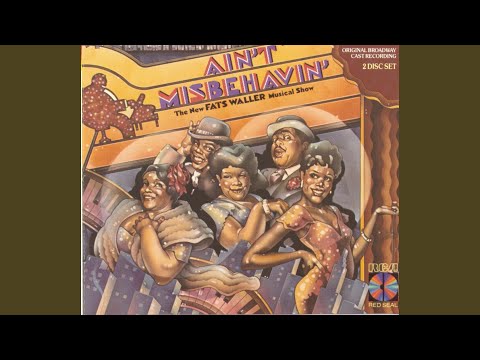
- A jazz standard (music: Thomas "Fats" Waller; words: Andy Razaf) folded into the 1978 Broadway revue Ain't Misbehavin'.
- On the Original Broadway Cast Recording, it appears as a full number and a reprise, a neat little programming wink.
- In the show, it plays like a flirtation with manners on - sweet talk with sharp timing.
- The cast arrangement leans into swing-era bounce, with vocal polish that still leaves room for nightclub bite.
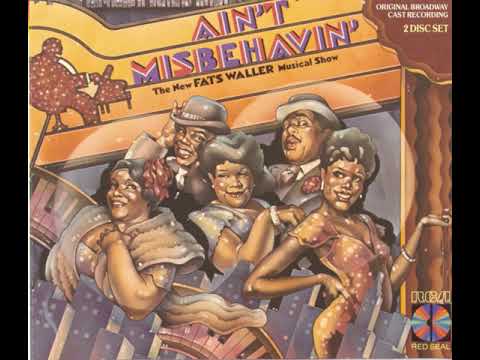
Ain't Misbehavin' (1978) - musical revue - non-diegetic in the sense that the revue frames performance as performance. On the cast album, the number sits early (and returns quickly as a reprise), functioning like a calling card: charm first, complications later. The repetition matters - it turns a compliment into a motif, the way a good host repeats your name so the room remembers you.
Creation History
"Honeysuckle Rose" predates Broadway glitz by decades: it was published in 1929 and introduced in the Off-Broadway revue Load of Coal, with Waller and Razaf writing in the swing-adjacent world where dance steps and punchlines traded places. Ain't Misbehavin' later recontextualized Waller's catalog for a late-1970s theater audience, with arrangements associated with Luther Henderson and a cast that could sell both velvet phrasing and sly comedy - as stated in the Masterworks Broadway release notes.
Song Meaning and Annotations
Plot
In Ain't Misbehavin', a plot is less a storyline than a sequence of social poses: the cast steps through Waller's world of nightlife, romance, and survival with the ease of people who know the room. "Honeysuckle Rose" usually lands as the overt flirt - a spotlight on courtship, dressed up as compliment and delivered with rhythmic confidence.
Song Meaning
At face value, it is praise: the singer treats a lover as the rare bloom in a city garden of distractions. Underneath, the number is a performerly negotiation - how much sweetness to offer before it turns into salesmanship. The best readings keep it playful: the lyric flatters, but the rhythm smirks, and the harmony keeps the feet moving so nobody has time to overthink the promise.
Annotations
-
Ev'ry honey bee fills with jealousy when they see you out with me.
That opening image is not just cute - it establishes a crowded social field. The singer is not alone with a beloved; the beloved is a public event, and the song instantly becomes about status, display, and the performance of romance.
-
You are my sugar, you are my sweetie, you are my honeysuckle rose.
Notice the escalation: three pet names, then the title image. In performance, that sequence invites variations - a quickened patter, a held note, a gesture - giving the actor a menu of choices rather than a single fixed mood.
-
I don't need a sugar daddy - all I need is you.
Depending on delivery, this line can be sincere, comic, or pointed. In a revue built around club culture and economic hustle, it can read as a teasing refusal of transactional romance - or as a joke that knows the audience has heard better bargains.
Style and rhythmic engine
Musically, the number thrives on swing phrasing: the melody invites behind-the-beat placement, and the lyric begs for consonants that snap rather than smear. The refrain is built for call-and-response energy, which is why it can feel equally at home as a solo turn or a shared spotlight moment.
Cultural touchpoints
The song carries the sheen of Harlem nightlife and the broader 1920s-1930s entertainment circuit where Tin Pan Alley craft met club immediacy. A later theatrical revue like Ain't Misbehavin' turns that history into dramaturgy: you are not just hearing a tune, you are watching a style of American performance walk back into the room.
Technical Information (Quick Facts)
- Song: Honeysuckle Rose
- Artist: Original Broadway Cast of Ain't Misbehavin' (notably Nell Carter and Ken Page on the cast-album track credit)
- Featured: Nell Carter; Ken Page (cast recording credit grouping varies by distributor listing)
- Composer: Thomas "Fats" Waller
- Lyricist: Andy Razaf
- Release Date: July 11, 1978 (first LP release of the Original Broadway Cast Recording)
- Genre: Jazz; swing; musical theatre (revue)
- Instruments: Voice; piano-led rhythm section; jazz ensemble (cast recording presentation)
- Label: RCA Victor (Original Broadway Cast Recording release)
- Mood: Flirtatious; buoyant; lightly knowing
- Length: About 3:59 on common cast-album listings (performance length varies by cut)
- Track #: Early-program placement on major tracklists; also appears as a reprise on some editions
- Language: English
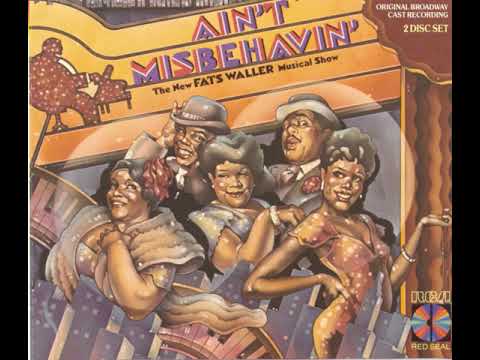
- Album (if any): Ain't Misbehavin' (Original Broadway Cast Recording)
- Music style: Swing-era standard interpreted through Broadway revue staging
- Poetic meter: Accentual, conversational lyric writing with internal stresses shaped for swing syncopation
Frequently Asked Questions
- Is this number original to Ain't Misbehavin'?
- No. It is a 1929 standard by Thomas "Fats" Waller and Andy Razaf that the revue repurposes as part of its Waller-centered songbook.
- Why does the cast album list the number more than once?
- Some editions include a reprise, which fits revue logic: a familiar hook returns like a running gag, resetting the room's temperature.
- What makes it read as flirtation rather than a love ballad?
- The lyric is praise, but the swing pulse and the compact phrasing keep it mobile. It is courtship in motion, not devotion at rest.
- Does the song belong to a character in the show?
- In this revue format, identity is shared. Performers slide between persona and ensemble voice, so the number functions as a featured turn rather than a fixed character confession.
- What is the core image the lyric keeps returning to?
- A lover as a rare flower in public view. The metaphor is simple, but the surrounding details (jealous onlookers, status signals) make it theatrical.
- Is it more jazz club or Broadway?
- Both, by design. Ain't Misbehavin' frames stage performance as a nightclub act, letting Broadway projection carry jazz timing without sanding off the edges.
- What should a performer avoid in interpretation?
- Over-sentiment. The charm is in wit and rhythmic ease; too much earnestness can make the compliments sound like pleading.
- How is tempo treated across versions?
- Lead sheets often suggest a moderately slow pace, while cast and concert renditions can sit anywhere from relaxed swing to brisk showcase, depending on staging and dance needs.
- Why is this number so frequently covered?
- The form is friendly, the hook is memorable, and the lyric invites personality. It is a standard that welcomes rearrangement without losing its identity.
Awards and Chart Positions
As a song, "Honeysuckle Rose" is a long-lived standard rather than a modern chart single. The awards story here belongs to the container: Ain't Misbehavin' won the Tony Award for Best Musical, with major performance and direction honors for its original Broadway production. The cast recording is also widely credited as a Grammy winner for Best Cast Show Album in the period, a reminder that this revue did not just revive Waller's material - it made it market-present again, which is a different kind of theatrical success, and one producers understand very well.
| Item | Recognition | Notes |
|---|---|---|
| Ain't Misbehavin' (Broadway production) | Tony Award - Best Musical (1978) | Key wins also include Featured Actress (Nell Carter) and Direction (Richard Maltby, Jr.). |
| Ain't Misbehavin' (cast recording) | Grammy Award - Best Cast Show Album (1979) | Often cited in production histories and reference listings. |
How to Sing Honeysuckle Rose
For a practical baseline, published lead sheets commonly place the song in F major and show a vocal range around D4 to Eb5, which sits comfortably for many voices but still demands control in the passaggio. Tempo markings vary by edition and performance: some lead sheets suggest a slower swing, while cast-album and stage renditions may ride a brighter groove for dance clarity.
- Tempo first: Choose a swing pocket you can sustain. If your band pushes, do not chase - sit back and let the time feel confident.
- Diction: Treat consonants as percussion. Clean "t" and "d" sounds keep the lyric witty rather than mushy.
- Breathing: Plan breaths around the joke, not the barline. A clipped inhale before a key phrase can make it land like a punchline.
- Flow and rhythm: Practice speaking the lyric in time, then add pitch. This keeps the swing from turning into stiff marching.
- Accents: Lean on the internal stresses - "honey bee", "jealousy", "out with me" - so the story pops without extra volume.
- Ensemble awareness: If sung as a duet or shared feature, trade the spotlight deliberately. Leave space for the other singer's inflection.
- Mic and placement: If amplified, avoid pushing high notes. Let the microphone do its job so the tone stays conversational.
- Pitfalls: Do not oversell sweetness. A hint of irony reads as sophistication, and sophistication reads as confidence.
Additional Info
One delightful irony: a song born in a 1929 revue becomes, half a century later, one of the calling cards of a 1978 revue that is itself an argument for the form. Ain't Misbehavin' did not pretend to be a book musical; it leaned into craft, persona, and pace. That is why this number works so well there - it is built for direct address and quick chemistry. A historical footnote worth keeping close: Waller's 1934 recording was later inducted into the Grammy Hall of Fame, which helps explain why the tune keeps returning in new wardrobes.
Key Contributors
| Entity | Type | Relationship (S-V-O) |
|---|---|---|
| Thomas "Fats" Waller | Person | Waller - composed - "Honeysuckle Rose". |
| Andy Razaf | Person | Razaf - wrote lyrics for - "Honeysuckle Rose". |
| Original Broadway Cast of Ain't Misbehavin' | Organization | Cast - performed - the song in the 1978 cast recording context. |
| Nell Carter | Person | Carter - performed - featured vocals on cast-album listings. |
| Ken Page | Person | Page - performed - featured vocals on cast-album listings. |
| Masterworks Broadway | Organization | Masterworks Broadway - documented - first LP release date and track context. |
| RCA Victor | Organization | RCA Victor - released - the Original Broadway Cast Recording (first LP era). |
Sources
Sources: Masterworks Broadway release notes, IBDB production record, Legacy Recordings track listing, Musicnotes lead sheet listing, Wikipedia reference summaries, SecondHandSongs work entry, Tony Awards winners archive
Music video
Ain't Misbehavin' Lyrics: Song List
- Act 1
- Honeysuckle Rose
- Black And Blue
- Fat And Greasy
- Mean To Me
- Keepin' Out Of Mischief
- The Joint Is Jumpin'
- Ain't Misbehavin'
- Cash for your Trash
- Find out What They Like
- Handful Of Keys
- How Ya Baby
- I Can't Give You Anything But Love
- I'm Gonna Sit Right Down & Write Myself a Letter
- Its A Sin To Tell A Lie
- I've Got A Feeling I'm Falling
- I've Got My Fingers Crossed
- Act 2
- Spreadin' Rhythm Around
- Reefer Song
- Jitterbug Waltz
- Ladies Who Sing wtih the Band
- Lookin' Good But Feelin' Bad
- Lounging at the Waldorf
- Viper's Drag
- Off-Time
- Squeeze Me
- 'Tain't Nobody's Bizness if I Do
- That Ain't Right
- When the Nylons Bloom Again
- Two Sleepy People
- Yacht Club Swing
- Your Feet's Too Big