Lookin' Good But Feelin' Bad Lyrics — Ain't Misbehavin'
Lookin' Good But Feelin' Bad Lyrics
From grievein' over you,
Lookin' good to hide those bitter blues.
Weary days and lonely nights
I'm waiting here for you,
Hopin' that my love you won't refuse.
Roh doh doh doh doh doh doh
Roh doh doh doh doh
Roh doh doh doh doh doh doh
Bah bah bah bah bah bah bah
When I'm feelin' blue
And needin' you.
Song Overview
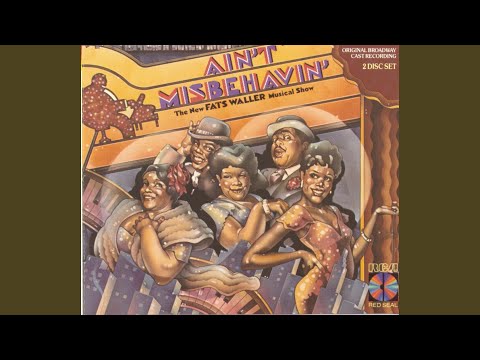
Review and Highlights
Quick summary
- What it is: A 1929 song credited to Fats Waller (music) and Lester Santly (lyrics), first recorded in September 1929.
- How it appears in the show: In Ain't Misbehavin it is typically heard as part of the opening medley with "Ain't Misbehavin'" and "T Ain't Nobody's Biz-ness If I Do" on the cast recording.
- Why it works theatrically: The title is a ready-made character mask - sparkle on the outside, trouble underneath.
- What the revue does to it: The arrangement treats it like a quick-change scene: a few sharp beats of personality, then a clean handoff to the next tune.
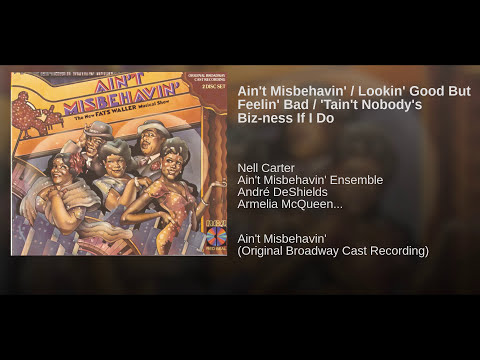
Ain't Misbehavin (1978) - stage revue - non-diegetic (presented as nightclub performance). On the Legacy Recordings track list, the opening track bundles "Ain't Misbehavin' / Lookin' Good But Feelin' Bad / T Ain't Nobody's Biz-ness If I Do" into a single run, which tells you the staging job: introduce the world fast, with three postcards instead of one. As stated in the Masterworks Broadway notes, the revue leans on Waller material shaped for stage pace rather than plotted scenes.
The title alone is a director's gift. It implies posture, costume, and a practiced grin. But the number is not merely a gag about vanity - it is a small study in performance under pressure, the kind of wink that belongs in a room where everyone is selling something. Onstage, I like it best when the performers do not "act sad" at us. They keep the shine. The joke is that the shine is the strategy. When the band stays jaunty and the singer stays composed, the subtext gets louder without any extra volume.
Key takeaways:
- It is character writing in miniature: you can sketch a whole nightlife persona in a verse.
- The comedy is dry: the best versions let the audience discover the crack in the smile.
- In revue form, it is a pacing tool: short, pointed, and designed to pivot into the next number.
Creation History
The song belongs to the late-1920s Waller universe where comedy, hustle, and resignation coexist in the same bar. SecondHandSongs documents the credit pair (Waller and Santly) and notes the first recording date in September 1929, a useful anchor when a stage show later repurposes the material. The revue reinvents that history as present tense: not a lecture about 1929, but a nightclub now where the performer needs the audience on their side within seconds. According to IBDB, Ain't Misbehavin was built as a musical revue, which is why this kind of compact character number is its natural currency.
Song Meaning and Annotations
Plot
No plot machinery, just a situation: the singer presents themselves to the room as polished and in control, then admits (or hints) that the inside story is rougher. In a revue, that is plenty. It offers a slice of life, a social pose, and a reason for the band to keep the night moving.
Song Meaning
The meaning is the split between appearance and reality - a public face worn like a costume. In the show, it plays as a nightclub survival skill: you look sharp because the gig demands it, and you keep the rhythm because stopping would invite questions. The tune is jaunty enough to keep the room buoyant while the title tells the truth in plain daylight.
Annotations
The standard credit line pairs Fats Waller (music) with Lester Santly (lyrics), with first recording documentation pointing to September 30, 1929.
That date is more than trivia. It places the song inside a world where "looking good" could be both pleasure and armor - a detail performers can use without changing a single note.
The cast recording frames it inside a three-song opener, not as a stand-alone track.
That framing nudges performance choices. You are not delivering a complete monologue. You are firing a flare: a quick, vivid character beat that helps launch the evening.
Arrangers and band librarians commonly circulate charts in concert keys from E flat major up to F major.
This is practical theatre information. The number transposes easily, and that flexibility is one reason it keeps showing up in revues and jazz sets - it adapts to the cast, not the other way around.
Rhythm and delivery
In the cast-recording medley, audio-analysis listings often peg the tempo around 128 BPM in a minor key area for the combined track, which helps explain why the number reads like brisk patter rather than slow confession. Use that as a rehearsal handle, then follow your production's chart. The secret is keeping the lyric conversational while the band stays bright.
Images and subtext
The title sells a contradiction, and the performer sells the reason the contradiction exists. Play it as someone who has done this before: quick scan of the room, quick adjustment of the mask, then straight into the groove.
Technical Information (Quick Facts)
- Song: Lookin' Good But Feelin' Bad
- Artist: Original Broadway Cast of Ain't Misbehavin
- Featured: Company (heard inside the opening medley on the cast recording)
- Composer: Thomas "Fats" Waller
- Lyricist: Lester A. Santly
- Release Date (cast recording context): 1978 (album release listings for the Original Broadway Cast Recording)
- Genre: Jazz; swing; musical theatre revue
- Instruments: Voice; piano; ensemble band
- Label (digital catalog page): Masterworks Broadway
- Mood: Bright surface, sour undercurrent
- Length (cast recording context): Part of the opening medley track
- Track #: Disc 1, track 1 (as part of the medley on Legacy Recordings track list)
- Language: English
- Album: Ain't Misbehavin (Original Broadway Cast Recording)
- Music style: Swing-era songcraft staged with revue pacing
- Poetic meter: Accentual, speech-leaning stresses over swing rhythm
Frequently Asked Questions
- Is this a stand-alone number in the cast album? On common releases it is folded into the opening medley track rather than separated as its own track.
- Who wrote it? Credits typically list Fats Waller for music and Lester Santly for lyrics.
- When did it first enter the recorded world? Documentation points to a first recording date of September 30, 1929.
- Why does it play well in a revue? The title is instant character, and the structure is compact enough to serve pacing.
- What is the core idea a performer should play? The mask: you stay polished because you need the room, even when you feel awful.
- Does it require big vocals? Not as much as it requires timing and clarity - the band is your partner, not your opponent.
- What kind of movement fits? Small, controlled steps and gestures that show "composed" even when the lyric admits strain.
- Is there a common key? Charts circulate in several keys; some band libraries list concert keys from E flat major to F major.
- What tempo should I practice at? If you are using the cast-recording medley as reference, some listings place it around 128 BPM, but your production chart should decide.
Awards and Chart Positions
For this title, the meaningful trophies live with the show. IBDB lists Ain't Misbehavin as a 1978 Tony winner for Best Musical, with additional major wins including Best Direction of a Musical (Richard Maltby Jr.) and a featured performance win for Nell Carter. That awards profile explains why an opener can be built from a medley of standards: Broadway honored the revue's craft of pacing, staging, and performance variety rather than any single chart moment.
| Award | Year | Category | Result (selected) |
|---|---|---|---|
| Tony Awards | 1978 | Best Musical | Won |
| Tony Awards | 1978 | Best Direction of a Musical (Richard Maltby Jr.) | Won |
| Tony Awards | 1978 | Best Featured Actress in a Musical (Nell Carter) | Won |
How to Sing Lookin' Good But Feelin' Bad
Because the cast recording uses it inside a fast opener, the technique is less about "big singing" and more about precision under swing. Some band libraries circulate arrangements in concert keys from E flat major up to F major, and audio-analysis listings for the cast medley commonly place the combined track around 128 BPM. Use these as rehearsal starting points, then lock to the chart in your production.
- Tempo: Practice first at a comfortable medium swing, then work up toward the pace of your reference recording or pit chart.
- Diction: Lead with crisp consonants, then let vowels ride the beat. The title phrase must read cleanly every time.
- Breathing: Breathe before thoughts, not after jokes. If you run out of air, the mask slips in the wrong way.
- Flow and rhythm: Stay conversational. Place words slightly behind the beat when needed, but never lose the pocket.
- Accents: Pick a few spotlight words per phrase. Too many accents and it sounds frantic.
- Ensemble: In a medley, rehearse transitions like scene changes. Know exactly how your last consonant sets up the next entrance.
- Mic: If amplified, keep it intimate - this number reads as nightclub truth-telling, not sermon.
- Pitfalls: Do not telegraph sadness. Let the band stay bright and let the title carry the contradiction.
Additional Info
The number is a nice example of why Waller material survives stage translation: it is built for a live room. Even in 1929, the song speaks like an entertainer addressing people at tables, not a singer trapped inside a studio mood. The revue simply restores that original ecosystem and lets the audience hear the craft of keeping a party afloat while admitting you are not floating.
Key Contributors
| Entity | Type | Relationship (S-V-O) |
|---|---|---|
| Thomas "Fats" Waller | Person | Waller composed the music credited for the song. |
| Lester A. Santly | Person | Santly wrote the credited lyrics for the song. |
| Original Broadway Cast of Ain't Misbehavin | Organization | The cast performs the number within the opening medley on the cast recording. |
| Masterworks Broadway | Organization | Masterworks Broadway hosts the digital catalog page for the cast recording release. |
| Legacy Recordings | Organization | Legacy Recordings publishes a track list showing the opening medley packaging. |
| IBDB | Organization | IBDB documents the 1978 production and its awards history. |
Sources
Sources: Legacy Recordings track list, Masterworks Broadway album notes, IBDB production record, SecondHandSongs work page, Tunebat track analysis listing, BSCJB arrangement notes, YouTube (Masterworks Broadway upload)
Music video
Ain't Misbehavin' Lyrics: Song List
- Act 1
- Honeysuckle Rose
- Black And Blue
- Fat And Greasy
- Mean To Me
- Keepin' Out Of Mischief
- The Joint Is Jumpin'
- Ain't Misbehavin'
- Cash for your Trash
- Find out What They Like
- Handful Of Keys
- How Ya Baby
- I Can't Give You Anything But Love
- I'm Gonna Sit Right Down & Write Myself a Letter
- Its A Sin To Tell A Lie
- I've Got A Feeling I'm Falling
- I've Got My Fingers Crossed
- Act 2
- Spreadin' Rhythm Around
- Reefer Song
- Jitterbug Waltz
- Ladies Who Sing wtih the Band
- Lookin' Good But Feelin' Bad
- Lounging at the Waldorf
- Viper's Drag
- Off-Time
- Squeeze Me
- 'Tain't Nobody's Bizness if I Do
- That Ain't Right
- When the Nylons Bloom Again
- Two Sleepy People
- Yacht Club Swing
- Your Feet's Too Big