Handful Of Keys Lyrics — Ain't Misbehavin'
Handful Of Keys Lyrics
I like to play it in a subtle mannah.
I get a lot o' pleasure
With a spano' keys
Underneath my finger tips.
Tricklin' off o' my lips.
A handful o' keys
And a song to sing,
Now how could you ask for more?
Than ticklin' the ivory,
Singin' jive,
I repeat what I said before.
I like to sing a little tune that's mellah.
I like to vocalize,
There's nothin' swellah.
I love to have a supple melody
Just tricklin' off o' my lips.
A handful o' keys
And a song to sing,
Now how could you ask for more?
Than ticklin' the ivory,
Singin' jive,
I repeat what I said before.
I like to tinkle on an old piana.
I like to play it in a subtle mannah.
I know I'll always be the top banana
With a handful o' keys
Song Overview
Review and Highlights
Quick summary
- What it is: A stride piano signature credited to Thomas "Fats" Waller, most often dated to 1929-1930 across catalogs and recording references.
- What it does in the musical: In Ain't Misbehavin', it functions as an instrumental flex - a palate cleanser and a dare, reminding you the show is as much about musicianship as vocals.
- How it differs from a recital performance: The revue frames it theatrically: a spotlight, a grin, and a band that knows when to get out of the way.
- Why it lands: It is bravura without bombast, a storm of clean details that still reads like dance music.
Ain't Misbehavin' (1978) - stage revue - not diegetic. This is where the show stops talking and starts proving. A songbook revue can survive on charm, but it wins loyalty on craft, and this number is craft made audible. The left hand lays down stride punctuation like a dancer hitting marks, while the right hand throws out runs that feel improvised even when they are nailed to the floor. If you have ever wondered why Waller is not only a composer but a performing myth, this is the Exhibit A that does not need narration.
On the original Broadway cast album, it shows up early (Disc 1, track 4), which feels like a statement of intent: yes, there will be stories, jokes, romance - and there will also be piano playing that could stop traffic. According to Legacy Recordings and Discogs listings, it runs a little over three minutes on that album track, long enough to build tension and short enough to keep the evening moving.
- Key takeaways: A keyboard feature that plays like choreography, an arrangement that invites silence around the piano, and a theatrical use of virtuosity as character.
- Staging idea that pays off: Keep bodies still and eyes on the pianist. When the room looks disciplined, the music sounds even wilder.
- Performance note: Do not rush the swagger. The confidence is part of the rhythm.
Creation History
Catalog dates vary, but a commonly circulated recording reference points to a March 1, 1929 performance by Waller, and a major sheet-music listing places the publication date in 1930. Those two facts can coexist easily in this era: recorded life and published life did not always line up neatly. Either way, the piece sits squarely in the stride tradition - built for a player who can make the left hand sound like a rhythm section and the right hand sound like a one-person orchestra. According to Musicnotes, the published piano edition is marked "Bright" with a metronome of half note equals 75, a tidy clue to the intended snap.
Song Meaning and Annotations
Plot
There is no lyric narrative, but there is a clear dramatic arc. The performer states the groove, piles on variations, stretches the register, then lands back on the home base with the satisfaction of a well-told joke.
Song Meaning
As theater, the meaning is simple: skill becomes persona. The piece performs confidence. In a revue built from Waller's world, that confidence is not abstract. It is social. It is the sound of a room being won, not begged. The stride bounce keeps it grounded in dance culture, while the flashier runs flirt with show-off territory and then pull back just in time. That balance is the point.
Annotations
Bright - Metronome: half note equals 75.
That marking is more than tempo. It is attitude. In performance, "bright" reads as forward motion and clean edges, not frantic speed. Keep it buoyant and the audience hears humor in the syncopation.
Instrumental solo, piano.
The power move in a Broadway revue is to stop the singing and still hold the room. A piano solo can do that if it has a hook. Here, the hook is rhythmic authority: the left hand tells the audience where to sit in the beat, and the right hand tells them why they should stay seated.
Recorded in early 1929, then codified in later publications.
Even when dates wobble across sources, the practical takeaway is steady: this is early stride craft built for a player who can make time feel elastic without losing it. Theatrically, that reads as ease under pressure, which is always fun to watch.
Style and rhythm
The style is stride with swing instincts. The driving rhythm comes from the left hand leap-and-land pattern, while the right hand rides over it with quick phrases that feel like spoken asides. The emotional arc is joyful bravado, but the best performances keep the joy in the groove rather than in exaggerated rubato.
Technical Information (Quick Facts)
- Song: Handful of Keys
- Artist: Thomas "Fats" Waller
- Featured: Piano solo
- Composer: Thomas "Fats" Waller
- Producer: Not applicable (composition); cast recording production varies by release
- Release Date: 1929 (recording reference); 1930 (sheet music catalog date)
- Genre: Stride, jazz piano standard
- Instruments: Piano
- Label: Cast recording catalog brand varies; the 1978 Broadway cast album is distributed via Legacy Recordings listings
- Mood: Bright, showy, controlled
- Length: 3:17 on the original Broadway cast album track listing
- Track #: Disc 1 track 4 on a prominent reissue track list
- Language: Instrumental
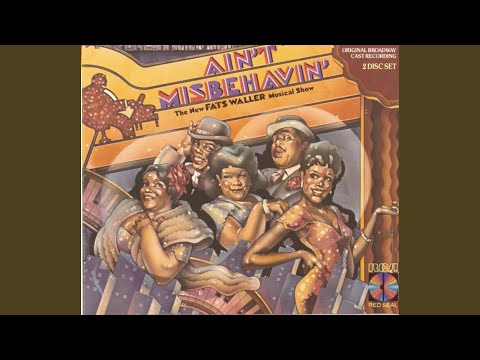
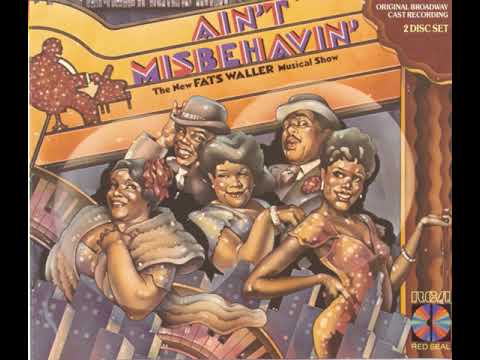
- Album (if any): Ain't Misbehavin' (Original Broadway Cast Recording)
- Music style: Stride left hand with riffing right hand variations
- Poetic meter: Not applicable
Frequently Asked Questions
- Is this number sung in the revue?
- No. It is typically presented as a piano feature, which is part of its appeal in a vocal-heavy evening.
- Why is it included in a musical at all?
- Because the show is a portrait of Waller as a performer, not only a songwriter. A piano showpiece makes that portrait concrete.
- Where does it sit on the original cast album?
- Legacy Recordings lists it as Disc 1 track 4 on a major reissue track list.
- How long is the cast album track?
- Discogs listings put it at about 3:17.
- What tempo is suggested in a common sheet music edition?
- A Musicnotes piano edition marks it "Bright" with half note equals 75.
- What key is typical for that edition?
- Musicnotes lists the published piano edition in G major and notes it is transposable.
- Is it dated to 1929 or 1930?
- Both appear in reliable catalogs: 1929 shows up in recording references, while 1930 is used in a major sheet music catalog entry.
- What is the main performance risk?
- Letting virtuosity turn heavy. The groove must stay danceable or the piece becomes a technical demonstration instead of a scene.
- Does the revue that features it have major awards?
- Yes. The Tony Awards site lists Ain't Misbehavin' as the 1978 winner for Best Musical.
Awards and Chart Positions
This instrumental is not a charts-first story. The more meaningful public marker is the Broadway frame that kept the repertoire circulating. According to the Tony Awards winners list, Ain't Misbehavin' won Best Musical in 1978, a rare top-category win for a revue and a major reason the score, including its instrumental features, stayed visible to theater audiences.
| Work | Year | Award | Result |
|---|---|---|---|
| Ain't Misbehavin' | 1978 | Tony Award - Best Musical | Won |
How to Sing Handful of Keys
This is an instrumental feature, so treat the guidance as "how to perform" on piano. A widely used sheet music edition suggests a bright feel with half note equals 75 in G major (transposable). The goal is not raw speed, it is rhythmic authority.
- Tempo: Start slower than printed, then build. Keep the left hand steady before adding right hand sparkle.
- Time feel: Make the left hand land like a bass player and drummer combined. If it wobbles, nothing else matters.
- Articulation: Keep right hand runs crisp and lightly detached where needed. Blurred passages read as panic, not flair.
- Voicing: Let melody notes pop above the texture. The audience should hear a tune inside the fireworks.
- Dynamics: Shape choruses with clear builds. A flat dynamic profile makes virtuosity feel long.
- Stride leaps: Practice leaps as choreography: same motion, same landing point, minimal extra effort.
- Stage presence: In a theatrical setting, keep the body calm. Let the hands look busy while the face stays in control.
- Pitfalls: Do not accelerate when the material gets hard. Stay on the groove and let difficulty sound effortless.
Additional Info
The revue has a useful habit: it treats instrumental skill as character, not decoration. That is why this piece belongs here. On a cast album, it is a track. In a theater, it is a moment when the room remembers the band is not background. In my book, that is the kind of programming that separates a pleasant evening from a real night out.
If you want additional reference points, there are multiple official cast-recording and anniversary-cast releases that include the title in some form, plus archival uploads of Waller's own performance. Each version can teach a different lesson: pacing, touch, or how to make the final cadence land like a curtain line.
Key Contributors
| Entity | Type | Relationship (S-V-O) |
|---|---|---|
| Thomas "Fats" Waller | Person | Waller composed and performed the stride piano showpiece. |
| Ain't Misbehavin' Band | MusicGroup | The band performs the number on the original Broadway cast recording upload. |
| Legacy Recordings | Organization | Legacy Recordings lists the cast album track placement for the number. |
| Discogs | Organization | Discogs documents the cast album track duration and sequencing. |
| Musicnotes | Organization | Musicnotes provides published key and tempo metadata for the piano edition. |
| Tony Awards | Organization | The Tony Awards honored Ain't Misbehavin' with Best Musical (1978). |
Sources
Sources: Masterworks Broadway YouTube track upload, Legacy Recordings cast album track list, Discogs release track list, Musicnotes piano edition metadata, Tony Awards winners list
Music video
Ain't Misbehavin' Lyrics: Song List
- Act 1
- Honeysuckle Rose
- Black And Blue
- Fat And Greasy
- Mean To Me
- Keepin' Out Of Mischief
- The Joint Is Jumpin'
- Ain't Misbehavin'
- Cash for your Trash
- Find out What They Like
- Handful Of Keys
- How Ya Baby
- I Can't Give You Anything But Love
- I'm Gonna Sit Right Down & Write Myself a Letter
- Its A Sin To Tell A Lie
- I've Got A Feeling I'm Falling
- I've Got My Fingers Crossed
- Act 2
- Spreadin' Rhythm Around
- Reefer Song
- Jitterbug Waltz
- Ladies Who Sing wtih the Band
- Lookin' Good But Feelin' Bad
- Lounging at the Waldorf
- Viper's Drag
- Off-Time
- Squeeze Me
- 'Tain't Nobody's Bizness if I Do
- That Ain't Right
- When the Nylons Bloom Again
- Two Sleepy People
- Yacht Club Swing
- Your Feet's Too Big