Its A Sin To Tell A Lie Lyrics — Ain't Misbehavin'
Its A Sin To Tell A Lie Lyrics
"I love you"
It's a sin to tell a lie
Millions of hearts have been broken
Just because these words were spoken
I love you
Yes I do
I love you
If you break my heart I'll die
So be sure that it's true when you say
"I love you"
It'a sin to tell a lie
Song Overview
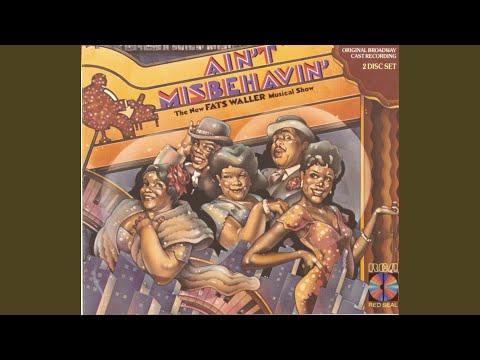
Review and Highlights
Quick summary
- What it is: A 1936 popular song written by Billy Mayhew, often treated as a waltz-leaning standard in published editions.
- How it appears in the musical: In Ain't Misbehavin', it is not staged as a stand-alone scene. It arrives inside the Act II finale medley, paired into the run-up to "Honeysuckle Rose."
- How the revue frames it: Fast moral comedy: a warning about false love lines, presented with the confidence of a performer who has heard them all before.
- What to listen for: The hook is a crisp declaration, not a sob story. The band keeps it buoyant so the lyric stays sharp.
Ain't Misbehavin' (1978) - stage revue - not diegetic. This is one of those revue moves I always admire: the show borrows a familiar standard, then refuses to treat it as museum glass. Masterworks Broadway lists the finale as a string of songs written by others that Fats Waller made into hits, and that curatorial idea is the dramatic reason this tune is here at all. The medley placement also changes the acting. You do not build a slow confession. You drop a truth in the room, let the laugh or recognition flicker, and then you are already on to the next number.
The lyric is a warning, but the tone should not be scolding. The performer is a seasoned witness, not a judge. If you keep it lightly conversational, the line reads like a bit of street-smart advice offered over music. According to a SecondHandSongs performance entry, Waller and His Rhythm recorded the song in June 1936 and it was released that month, which helps explain why the tune feels like a bandstand item: it is built to land quickly and keep moving.
- Key takeaways: A standards cameo with bite, a hook that wants direct address, and a medley context that rewards precision over stretching time.
- Staging idea that pays off: Aim the key warning line at one person, then widen to the full house on the repeat, like the room is being let in on a secret.
- Performance note: Keep the tempo steady and the consonants clean. The lyric is the punchline engine.
Creation History
Published catalogs credit Billy Mayhew as both composer and lyricist and date the song to 1936. A widely used Musicnotes edition even labels it "Tempo di valse," with a metronome marking that suggests a moderate, danceable pulse. The show does not lean on the song for plot. It uses it for color and for lineage: a song by another writer, carried into the Waller orbit through performance history, then folded into a Broadway finale that wants variety without losing its Harlem nightlife frame.
Song Meaning and Annotations
Plot
A speaker confronts someone who keeps making romantic claims that do not match their behavior. The lyric calls out the false vow, insists on truth, and keeps the tone light enough that the listener can dance while being corrected.
Song Meaning
The meaning is blunt: stop saying "I love you" if it is not true. But the delivery that works best is not anger. It is amused certainty, as if the speaker has outgrown the need to beg. In the revue, the medley placement compresses the emotional arc into a flash. You get the premise, the warning, and the exit. That compression is theatrical gold because it lets the cast shift colors rapidly without breaking the evening's momentum.
Annotations
It's a Sin to Tell a Lie appears in the Act II finale medley in the show song list.
The staging consequence is immediate: you must establish character in a few phrases. Treat it like a quick monologue in rhythm, not a full scene.
Tempo di valse, metronome q = 120, original published key C major.
This tells you why the line can sound so casual. A moderate waltz feel encourages clarity and sway. It does not want frantic drive, it wants steady insistence.
Recorded June 5, 1936 and released June 17, 1936 by Waller and His Rhythm in one catalog history.
That timeline fits the number's practicality. It is written to travel: easy to program, easy to recognize, and sturdy enough to survive hundreds of bandstand readings.
Style and rhythm
The style sits between standard ballad storytelling and dance-floor sway. Even when a production plays it with swing phrasing, the underlying waltz label in published editions encourages a gentle rocking pulse. The emotional arc is a warning that refuses to sulk: truth stated plainly, then the band moves you right along.
Technical Information (Quick Facts)
- Song: It's a Sin to Tell a Lie
- Artist: Ain't Misbehavin' Original Broadway Cast (finale medley segment)
- Featured: Principal cast with ensemble in the finale track
- Composer: Billy Mayhew
- Producer: Thomas Z. Shepard (cast recording release metadata)
- Release Date: 1936
- Genre: Standard; jazz; traditional pop
- Instruments: Voice; piano; small jazz ensemble
- Label: Masterworks Broadway (cast recording catalog branding)
- Mood: Wry, admonishing, danceable
- Length: Presented as a segment within the cast recording finale medley
- Track #: Part of the finale track listed on major cast recording listings
- Language: English
- Album (if any): Ain't Misbehavin' (Original Broadway Cast Recording)
- Music style: Standard phrasing with waltz-leaning sway in published editions
- Poetic meter: Conversational accents shaped for dance phrasing
Frequently Asked Questions
- Is this song written by Fats Waller?
- No. The standard credit is Billy Mayhew as composer and lyricist.
- Why is it in Ain't Misbehavin' if it is not a Waller original?
- The finale medley is curated as songs by other writers that Waller made into hits, according to the Masterworks Broadway listing.
- Where does it show up in the show?
- It appears in Act II as part of the finale medley, and the show song list includes it near the end of the evening.
- What is the main dramatic action while performing it?
- Call out the lie, then move on. The speaker is not begging, they are correcting the record.
- What key and vocal range are common in a published edition?
- One widely used Musicnotes edition lists C major with a vocal range of D4 to E5.
- What tempo does that edition suggest?
- It labels the feel "Tempo di valse" with a metronome marking of q = 120.
- Is there an early recording history connected to Waller?
- Yes. A catalog history entry notes Waller and His Rhythm recorded it on June 5, 1936 and released it on June 17, 1936.
- What is a common performance mistake?
- Making it too angry. The lyric warns, but the tune works best when it stays danceable and cool-headed.
- Does the revue itself have major awards?
- Yes. In 1978, Ain't Misbehavin' won the Tony Award for Best Musical, and it was the first revue to win that top category.
Awards and Chart Positions
The song is a standard, so its legacy is measured in recordings and reuse, not modern streaming-era charts. Still, one catalog history entry notes that the Waller and His Rhythm release was a No. 1 US hit, which helps explain why the tune remained a familiar late-night request. The big award marker in this context belongs to the stage vehicle: Music Theatre International notes that Ain't Misbehavin' won the 1978 Tony Award for Best Musical, the first revue to take that prize.
| Item | Year | Recognition |
|---|---|---|
| Ain't Misbehavin' | 1978 | Tony Award - Best Musical (first revue to win) |
| Waller and His Rhythm recording history note | 1936 | Catalog entry reports a No. 1 US hit for the release |
How to Sing It's a Sin to Tell a Lie
Published metrics give a clean starting point: C major, vocal range D4 to E5, and a "Tempo di valse" marking at q = 120 in one widely used edition. The real test is not the range, it is how calmly you deliver the accusation.
- Tempo: Start a shade under 120 until diction stays crisp, then settle into a steady sway.
- Diction: Put your energy into the key words, especially "sin" and "lie." The hook has to read instantly.
- Breathing: Breathe at thought breaks. If you breathe mid-warning, you sound uncertain.
- Rhythm: Keep the waltz pulse grounded, even if the band swings the phrasing. The sway is what keeps the tone cool.
- Range: D4 to E5 sits well for many voices. If you push, push the story, not the volume.
- Intention: Play it as correction, not revenge. The speaker is bored by the lie, not destroyed by it.
- Medley skill: If used in a finale medley, commit to character in the first line and exit cleanly. No lingering.
- Pitfalls: Do not turn it into sermon. The song wins when it sounds like a dance-floor truth.
Additional Info
There is a quiet theatrical joke in how the tune functions inside the show. The lyric scolds false "I love you" claims, but the revue itself is built on performers selling songs to an audience night after night. The difference is consent and craft. In a good staging, the number feels like a performer briefly stepping outside the romance game to remind everyone of the rules, then stepping right back in before the mood cools.
If you want the historian's angle, the show song list confirms the title sits late in Act II, tucked near other borrowed standards and then folded into the finale flow. That sequencing suggests the creators wanted the last stretch of the evening to widen the lens beyond Waller authorship and toward Waller impact. In other words, the byline matters, but so does the way a performer can change a song's public identity.
Key Contributors
| Entity | Type | Relationship (S-V-O) |
|---|---|---|
| Billy Mayhew | Person | Mayhew wrote the music and lyrics for the 1936 song. |
| Thomas "Fats" Waller | Person | Waller recorded the song in 1936 and is cited in the revue finale concept as a hit-making performer. |
| Luther Henderson | Person | Henderson provided music supervision and arrangements for the revue and cast recording. |
| Thomas Z. Shepard | Person | Shepard is credited as producer in cast recording release metadata. |
| Masterworks Broadway | Organization | Masterworks Broadway documents the cast recording track concept and credits. |
| Music Theatre International | Organization | MTI notes the show won the 1978 Tony for Best Musical and was the first revue to do so. |
Sources
Sources: Masterworks Broadway (Ain't Misbehavin' track listing), Wikipedia (Ain't Misbehavin' song list), SecondHandSongs (work and performance histories), Musicnotes (published key, tempo, range), Music Theatre International (show history note), YouTube (cast recording upload page)
Music video
Ain't Misbehavin' Lyrics: Song List
- Act 1
- Honeysuckle Rose
- Black And Blue
- Fat And Greasy
- Mean To Me
- Keepin' Out Of Mischief
- The Joint Is Jumpin'
- Ain't Misbehavin'
- Cash for your Trash
- Find out What They Like
- Handful Of Keys
- How Ya Baby
- I Can't Give You Anything But Love
- I'm Gonna Sit Right Down & Write Myself a Letter
- Its A Sin To Tell A Lie
- I've Got A Feeling I'm Falling
- I've Got My Fingers Crossed
- Act 2
- Spreadin' Rhythm Around
- Reefer Song
- Jitterbug Waltz
- Ladies Who Sing wtih the Band
- Lookin' Good But Feelin' Bad
- Lounging at the Waldorf
- Viper's Drag
- Off-Time
- Squeeze Me
- 'Tain't Nobody's Bizness if I Do
- That Ain't Right
- When the Nylons Bloom Again
- Two Sleepy People
- Yacht Club Swing
- Your Feet's Too Big