Ain't Misbehavin' Lyrics – All Songs from the Musical
Ain't Misbehavin' Lyrics: Song List
- Act 1
- Honeysuckle Rose
- Black And Blue
- Fat And Greasy
- Mean To Me
- Keepin' Out Of Mischief
- The Joint Is Jumpin'
- Ain't Misbehavin'
- Cash for your Trash
- Find out What They Like
- Handful Of Keys
- How Ya Baby
- I Can't Give You Anything But Love
- I'm Gonna Sit Right Down & Write Myself a Letter
- Its A Sin To Tell A Lie
- I've Got A Feeling I'm Falling
- I've Got My Fingers Crossed
- Act 2
- Spreadin' Rhythm Around
- Reefer Song
- Jitterbug Waltz
- Ladies Who Sing wtih the Band
- Lookin' Good But Feelin' Bad
- Lounging at the Waldorf
- Viper's Drag
- Off-Time
- Squeeze Me
- 'Tain't Nobody's Bizness if I Do
- That Ain't Right
- When the Nylons Bloom Again
- Two Sleepy People
- Yacht Club Swing
- Your Feet's Too Big
About the "Ain't Misbehavin'" Stage Show
TL;DR: The play was originally opened in the theatre named Club's East on 73rd Street in a cabaret in 1978, that is, almost 40 years ago. Maltby is the name of the director of this piece. After the resounding and expressive reception from the audience, it was decided to carry this play to Broadway. And then, three months later, in May of 1978, the Longacre Theatre had an opening. After 4 years and 1604 performances, in February 1982, production was shut down.Richard Maltby Jr. again was the chief director on Broadway and the choreographer was Arthur Faria. The musical adaptation was done by Luther Henderson, who rethought and adapted Waller's music for the show, also acted as a pianist on stage. The record company RCA Victor released the album songs from this musical.
Production was also given in the West End at Her Majesty's Theatre, which opened in 1979. Even in London in 1995 too. Production was resumed for a few shows in the Tricycle Theatre, then moved to the Lyric Theatre. Cast was a subject of constant change, due to the extent of the process of play and the diverse geographical locations of it. NBC was broadcasting play with the same actors who originally played on Broadway in 1982.
10 years after the original opening on Broadway, production was re-done in 1988 in the Ambassador Theatre and lasted for more than 176 performances. The audience greatly cooled to such a musical at a time when they have already become familiar with other productions, vastly superior in terms of this.
Productions, however, have been recognized by critics as successful and very eloquent, which were able to recreate the charm that was in the air between the two world wars. Largely thanks to the director and producer, who has once again made this show, Richard Maltby Jr.
In 1995 he began a national tour on the cities with this performance, which were not able to get to Broadway this year.
And many years later, in 2008 and 2009, it was re-launched as on 30-year-old tour across the cities with a new team of actors.
Release date: 1978
“Ain’t Misbehavin’: The New Fats Waller Musical Show (Original Broadway Cast Recording)” – Album Guide to Tracks and Key Scenes
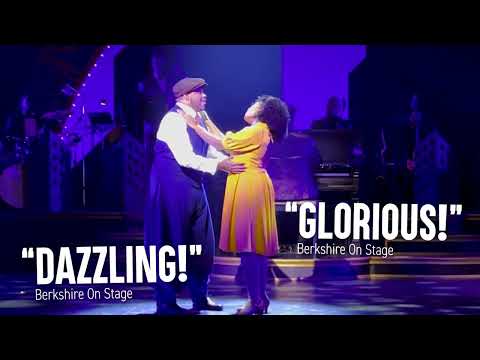
Review
How do you bottle the electricity of a 1930s Harlem nightclub and press it onto a 1978 cast album? The original Broadway recording of “Ain’t Misbehavin’: The New Fats Waller Musical Show” more or less pulls it off. Across two LPs, five singers and a compact jazz band turn Fats Waller standards into a theatrical night out you can drop a needle on. There is no linear plot here. Instead, the album moves like an evening in a club: flirtatious numbers, comic bits, slow burns, and a few songs that land like a gut punch, all stitched together by the band’s swing.
You hear a whole social world in these tracks. The opening medley tumbles from the title song into swaggering one-liners; later, “The Joint Is Jumpin’” practically answers the question of where we are and why everyone is dressed so sharp. Then, deep in Act Two, “Black and Blue” freezes the party and lets the racial reality beneath the glitter rise to the surface. The recording keeps enough crowd noise, patter, and transitions that you feel the shape of the live show, but trims it just enough to play as a tight listening experience at home.
Stylistically, the album is a tour of Black popular music between the 1920s and early swing era. Stride piano and hot jazz drive the up-tempo comedy numbers — that rolling left hand effectively stands in for Waller himself at the keyboard. Blues ballads signal hurt, memory, and resilience. Big-band flavored swing charts status fantasies (“Lounging at the Waldorf”) and high-society satire, while torch-song crooning lets the performers show vulnerability without losing cool. The revue’s trick is simple and clever: each style maps cleanly to a different emotional angle on pleasure, danger, race, and romance in Harlem.
How It Was Made
“Ain’t Misbehavin’” began as a cabaret piece at Manhattan Theatre Club in February 1978, conceived by Murray Horwitz and Richard Maltby Jr. as a tribute to Thomas “Fats” Waller and the Harlem Renaissance. The concept was straightforward but radical for Broadway at the time: no conventional book, just five performers and a band inhabiting Waller’s world through his songs. The response in that tiny room was so strong that the show jumped to Broadway’s Longacre Theatre in May 1978 and ultimately ran for more than 1,600 performances, winning the Tony Award for Best Musical.
The original cast album was recorded quickly, while the production was still new and hot. Sessions took place at RCA Studio C over several days in June 1978, with the show’s own musical team in charge. Luther Henderson, who had adapted and arranged the Waller material for the stage, supervised the music and served as pianist alongside jazz great Hank Jones. The rest of the pit band — brass, reeds, bass, and drums — was captured live in the studio, giving the album a roomy, slightly rough swing instead of a polished, studio-orchestra sheen. Released that July as a 2-LP gatefold on RCA Red Seal, the record set out to preserve almost the entire song stack from the show rather than a short “highlights” sampler.
Vocally, the album is really a star vehicle for its five original performers: Nell Carter, André De Shields, Armelia McQueen, Ken Page, and Charlayne (Charlaine) Woodard. Henderson’s arrangements lean into their individual strengths — Carter’s earthy comedic bite, De Shields’ sly swagger, Page’s booming warmth, McQueen’s velvet tone, and Woodard’s playful spark — while always foregrounding Waller’s sense of rhythm. Director Richard Maltby Jr. and choreographer Arthur Faria staged the musical numbers so precisely that many of those beats can still be heard on the album: laughter, little shouts, mock arguments, and that moment when the performers clap along with the band and you can almost see the choreography.

Tracks & Scenes
There is no traditional plot, but the album still traces a loose “night in the club” arc. Below are selected numbers — not the full tracklist — with how they function in the show and on the recording.
“Ain’t Misbehavin’ / Lookin’ Good but Feelin’ Bad / ’T Ain’t Nobody’s Biz-ness If I Do” (Company, led by André De Shields)
- Where it plays:
- Early in Act One, the piano recording of Fats Waller is joined by the live band and then the full company, who sweep onstage in 1930s nightclub finery. The medley works as an overture and character roll call, shifting from the title tune’s sly devotion into the brassy self-display of “Lookin’ Good but Feelin’ Bad” and finally the defiant shrug of “’T Ain’t Nobody’s Biz-ness If I Do.” It is fully diegetic: we’re inside the club, watching performers entertain the crowd that the audience effectively becomes.
- Why it matters:
- The medley establishes the rules: this is Fats’ world, where joy and survival tactics are sung out loud. Musically, it introduces the album’s core vocabulary — stride piano, close harmony, and deft shifts from romance to mischief — while giving each vocalist a first character sketch.
“Honeysuckle Rose” (Ken Page and Nell Carter with Company)
- Where it plays:
- Still early in the evening, the mood softens as Ken and Nell trade lines across the room like two regulars who flirt every weekend. The band leans into a relaxed swing; you can imagine drinks on tables, lights warming to amber, and the rest of the company drifting in and out like patrons adding ad-libs. The staging feels semi-diegetic — a song for the crowd, but also a private ritual between these two voices.
- Why it matters:
- The track turns a jazz standard into character work. You sense long history between the singers, and the recording captures that “old friends on the bandstand” energy. It is one of the album’s most accessible entry points if you are new to Waller.
“Squeeze Me” (Armelia McQueen)
- Where it plays:
- A bit later in Act One, the bustle pauses and Armelia steps forward for a slow, teasing plea. The band shrinks to a caressing rhythm section and piano, almost like last-call hour even though the night is still young. Onstage, the number often plays as a torch song to an unseen lover somewhere in the room; on record, you feel Armelia singing straight into your earphones.
- Why it matters:
- It shows the revue’s softer side. The sensuality here is tender rather than bawdy, and the album lets the vocal sit right on top of Henderson’s voicings, spotlighting how carefully the arrangements support each soloist.
“Handful of Keys” (Company)
- Where it plays:
- Midway through Act One, the show shifts focus to the keyboard. The band explodes into a stride showcase, with Henderson (or his stand-in) sprinting up and down the piano while the cast punctuates with riffs and shouts. Visually this is often staged as a mini-concert-within-the-concert; on record, you can hear the choreography in the way the voices pop in and out of the texture.
- Why it matters:
- It is the clearest salute to Waller the virtuoso pianist. The track reminds you that before these were theatre songs, they were vehicles for a monster instrumental talent, and the album refuses to treat the band as background.
“I’ve Got a Feeling I’m Falling” (Nell Carter and Company)
- Where it plays:
- Later in Act One, Nell steps into the spotlight with a number that starts like an easy love song and gradually reveals deeper stakes. The staging usually places her at or near the piano, with the others acting out glancing mini-stories around her: couples meeting, parting, circling. The track feels half interior monologue, half club standard, its tempo unhurried but insistent.
- Why it matters:
- This is one of Carter’s signature cuts, blending vulnerability with punchline timing. On the album, the way she leans into certain consonants and blues notes turns the song into a small master class in character-driven phrasing.
“The Joint Is Jumpin’” (Company)
- Where it plays:
- Near the end of Act One, the club reaches full boil. The band is roaring, the singers shout out to imaginary patrons, and you can hear doors slamming, phone calls, and the threat of a police raid baked into the staging. The number is entirely diegetic: it is literally about this club, this night, and these people refusing to quiet down.
- Why it matters:
- It is the show’s mission statement in miniature. The cast album locks in a specific groove and never lets up, making it one of the tracks that modern trailers still like to quote when they want instant “Harlem party” energy.
“Spreadin’ Rhythm Around” (Company)
- Where it plays:
- Act Two kicks off with a burst of choreographic swagger. The performers strut, trade licks with the band, and jokingly treat rhythm itself like contraband they are smuggling into uptight spaces. On audio, you can hear the staging in the way the ensemble “answers” the lead lines, as if different corners of the club are vying for attention.
- Why it matters:
- The song frames jazz and swing as both joy and resistance. The album emphasizes that by giving plenty of space to riffs and breaks, letting the rhythm section show off almost as much as the singers.
“Lounging at the Waldorf” (Armelia McQueen, Charlayne Woodard, Ken Page, Nell Carter)
- Where it plays:
- Early in the second act, the set briefly shifts from Lenox Avenue fantasy into uptown parody. The singers imagine themselves as hotel swells, gossiping about room service and high society habits. The band plays with a lighter, hotel-orchestra feel, underlining the joke that these Harlem artists know exactly how to send up white-glove glamour.
- Why it matters:
- It is a social-skewering number that the album captures through tone alone: clipped diction, mock-elegant tempos, and little breaks where you can practically see the raised eyebrows.
“The Viper’s Drag / The Reefer Song” (André De Shields and Company)
- Where it plays:
- Mid-Act Two, the lights often drop to a smoky green or blue and André glides onstage with an exaggerated, slow-motion walk. The number becomes a slinky character study of a jazz-age “viper” — a pot-smoker moving through the night in his own hazy rhythm. On the recording, the tempo crawls and the bass line prowls; you can hear other cast members reacting with giggles and asides, as though they’re regulars watching a familiar routine.
- Why it matters:
- It is one of the album’s most theatrical cuts. De Shields practically acts through the microphone, and Henderson’s orchestrations lean into the illicit mood, reminding listeners that Harlem nightlife always had a shadow side.
“Your Feet’s Too Big” (Ken Page)
- Where it plays:
- Later in Act Two, after some heavier material, Ken steps up with a pure comedy showstopper. The band hammers out a walking groove while he roasts an unseen partner’s enormous feet with increasingly outrageous images. Onstage, this is usually staged as direct address to the audience; on the album, you can feel Page grinning between phrases, milking every punchline.
- Why it matters:
- It showcases the revue’s vaudeville DNA and Page’s easy rapport with both band and crowd. The track has become one of the recording’s cult favorites, showing how Waller’s humor still lands decades later.
“Mean to Me” (Nell Carter)
- Where it plays:
- In the back half of Act Two, the volume dials down again. Nell plants herself center stage and pours out a ballad about a lover’s cruelty. The band mostly stays out of her way, offering brushed drums and sustained chords. On audio, there is almost a hush; you sense bodies in the theatre leaning forward.
- Why it matters:
- This is one of the album’s emotional peaks. Carter’s interpretation sells the idea that beneath the revue’s sparkle are real wounds and disappointments, and it prepares the ground for the much starker “Black and Blue.”
“Black and Blue” (Company)
- Where it plays:
- Near the climax of Act Two, the show drops all jokes. The company lines up, often facing out under stark lighting, and sings about feeling bruised, exhausted, and judged for the color of their skin. On the album, the arrangement is spare, with harmonies stacked in ways that feel almost hymn-like. You can hear the room go metaphorically still.
- Why it matters:
- This is the thematic heart of “Ain’t Misbehavin’.” The cast album catches that shift from party to protest, showing how Waller’s songs can voice both delight and deep hurt inside the same evening.
Finale Medley: “I’m Gonna Sit Right Down and Write Myself a Letter / Two Sleepy People / I’ve Got My Fingers Crossed / I Can’t Give You Anything but Love / It’s a Sin to Tell a Lie / Honeysuckle Rose (Reprise)” (Company)
- Where it plays:
- The finale plays like the club’s last half-hour before closing. Songs flow into each other without full stops, with the performers pairing off, swapping partners, and gradually gathering into a tight quintet near the bandstand. On the album this becomes a single long track, letting you hear the crowd-pleasing hits one after another, with the band vamping between snippets like they are reluctant to end the set.
- Why it matters:
- The medley both celebrates and historicizes Waller’s broader songbook, including pieces he popularized but did not always write. It sends the listener out on a high, while the reprise of “Honeysuckle Rose” quietly reminds you of the night’s earlier flirtations.
Trailer and promo usage (various tracks)
- Where it plays:
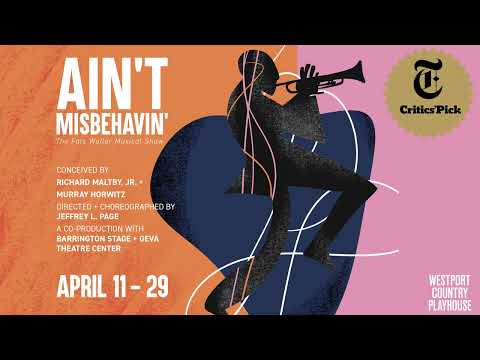
- Modern regional trailers — like the Westport Country Playhouse and Lyric Theatre promo clips — usually cut between dance footage and short bursts of “Ain’t Misbehavin’,” “The Joint Is Jumpin’,” and “Spreadin’ Rhythm Around.” Some marketing videos lean on original Waller recordings or generic jazz stings under voiceover, so not every cue you hear in trailers appears on this specific Broadway cast album.
- Why it matters:
- It is a reminder that the cast recording has become the de facto sound library for revivals. Even when a local production uses its own live band, the vibe in the advertising is clearly modeled on these 1978 arrangements.
Notes & Trivia
- The show’s “cast list” onstage uses the performers’ first names — Andre, Armelia, Ken, Nell, Charlaine — blurring the line between character and actor on the album as well.
- Luther Henderson’s orchestrations deliberately keep the ensemble small so it feels like a rent-party band, not a lush Broadway pit. That intimacy is obvious in the stereo spread of the record.
- While the StageAgent song list separates numbers by act, the LP track sequence folds several songs into medleys, trimming dialogue and reprises to keep both discs play-friendly.
- The entr’acte on the album functions as a mini-overture for Act Two, weaving themes you have already heard into a compact instrumental just before “Spreadin’ Rhythm Around.”
- Because the revue gained a television version in 1982, some fans first met the material through that broadcast and then worked backwards to the 1978 cast recording, noticing differences in pacing and applause.
Reception & Quotes
Onstage, “Ain’t Misbehavin’” was an instant critical and commercial success, winning the 1978 Tony Award for Best Musical and a raft of Drama Desk, Outer Critics Circle, and Theatre World honors. The cast album quickly became the canonical audio document of the show and a gateway into Waller’s catalogue for listeners who had never bought a 78 in their lives.
Critics at the time highlighted how closely the recording captured the zing of a live Waller performance, even without his physical presence. Later reviewers and revival companies still treat this album as the reference edition: arrangements are often copied, keys are rarely changed, and the vocal characterizations created by Carter, De Shields, McQueen, Page, and Woodard linger over every subsequent cast.
“Moves with the bright sparkle of a Waller recording, filled with jokes that land and melodies that never stop swinging.” – Paraphrased from early New York reviews
“A model of how to build a full-length musical out of a songwriter’s catalogue without losing their personality.” – Critic on the show’s original Broadway run
“The cast album sounds like a party you’ve somehow been invited to crash — and no one ever asks you to leave.” – Later retrospective on classic Broadway recordings
“Carter’s numbers on the record alone justify hunting this down; everything else is icing on the cake.” – Fan commentary in cast-album circles
Today, the original Broadway cast recording is widely available on CD and major streaming platforms in a remastered form, sometimes split across two discs but preserving the 2-LP running order.
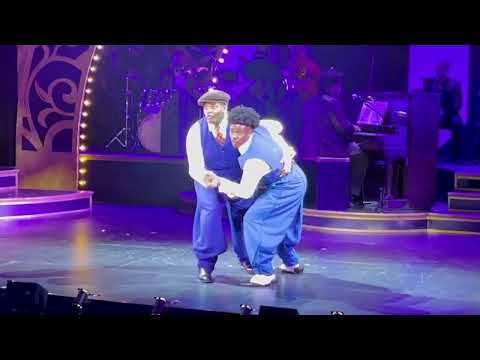
Interesting Facts
- The show is technically a musical revue, but it behaves like a stealth concept musical: one continuous night in and around a Harlem club.
- Two of Waller’s most famous standards, “Ain’t Misbehavin’” and “Honeysuckle Rose,” had already been inducted into the Grammy Hall of Fame long before many listeners discovered them through this album.
- The production helped spark a mini-wave of jazz-and-swing revues on Broadway and the West End, including “Eubie!” and “Sophisticated Ladies.”
- Henderson’s orchestrations have become so associated with the material that some listeners assume they are original Waller charts, even though they were created in the late 1970s.
- Murray Horwitz later co-created the Mark Twain Prize for American Humor; his Broadway breakthrough was, fittingly, a show built around wit and timing.
- Because the album captures “musical numbers only,” you can jump into it with no knowledge of the staging and still feel the arc of the evening.
- Regional and touring productions often tailor staging and costumes, but many keep the original cast recording in the rehearsal room as a baseline reference.
Technical Info
- Title: Ain’t Misbehavin’: The New Fats Waller Musical Show (Original Broadway Cast Recording)
- Year: 1978 recording; aligns with the 1978 Broadway premiere season.
- Type: Stage musical cast album (jukebox/revue, two-act).
- Primary composer/author of music: Thomas “Fats” Waller, with songs by various songwriters from his era.
- Devised by: Murray Horwitz and Richard Maltby Jr. (concept and book for the musical revue).
- Music supervision / orchestrations / arrangements: Luther Henderson.
- Vocal arrangements: William Elliott.
- Key performers on album: Nell Carter, André De Shields, Armelia McQueen, Ken Page, Charlayne Woodard, plus the Ain’t Misbehavin’ band led from the piano.
- Recording dates & origin: Studio sessions at RCA Studio C, New York, June 1978; commercial studio album capturing musical numbers from the Broadway production.
- Label / release format: Originally issued as a 2-LP gatefold set on RCA Red Seal (also released in multiple territories); later reissued on CD and digital platforms by RCA/Legacy / Masterworks Broadway.
- Release context: Recorded shortly after the Broadway opening at the Longacre Theatre and released in July 1978, while the show was becoming a breakout hit.
- Notable placements / signature numbers: “Ain’t Misbehavin’,” “Honeysuckle Rose,” “’T Ain’t Nobody’s Biz-ness If I Do,” “The Joint Is Jumpin’,” “Spreadin’ Rhythm Around,” “Your Feet’s Too Big,” “Black and Blue,” and the finale medley.
- Awards (show): Tony Award for Best Musical; Tonys for Nell Carter and Richard Maltby Jr.; Drama Desk Award for Outstanding Musical and other performance awards.
- Availability: Widely available on streaming services (often under “Ain’t Misbehavin’ – Original Broadway Cast Recording”) and on physical CD; original vinyl pressings remain collector’s items.
Key Contributors
| Subject | Relation | Object |
|---|---|---|
| Thomas “Fats” Waller | composed | original songs featured in the revue and on the album. |
| Murray Horwitz | conceived and co-wrote | the musical revue “Ain’t Misbehavin’.” |
| Richard Maltby Jr. | conceived and directed | the original Broadway production recorded on this album. |
| Luther Henderson | supervised and arranged | music and orchestrations for the show and recording. |
| Original Broadway Cast of “Ain’t Misbehavin’” | performed | vocals on the cast recording. |
| RCA Red Seal | released | the 2-LP original Broadway cast album in 1978. |
| Longacre Theatre, Broadway | hosted | the original 1978 Broadway run documented by this recording. |
| Masterworks Broadway / Legacy Recordings | reissued | the original cast album on CD and digital platforms. |
Questions & Answers
- Is “Ain’t Misbehavin’” a jukebox musical or a traditional book musical?
- It is a musical revue built from existing Fats Waller and period songs. There is no spoken book in the usual sense, just a carefully shaped nightclub-style evening.
- How complete is the original Broadway cast album compared with the stage show?
- Very close. The 2-LP set includes essentially all the major musical numbers, with some dialogue trims and medleys to keep the running time manageable.
- What is the difference between this album and the 1982 television version?
- The TV version preserves more applause and visual comedy beats, while the 1978 album focuses on audio clarity and flow. Song choices and arrangements are largely the same, but the feel is more “studio club date” than filmed performance.
- Where can I listen to the “Ain’t Misbehavin’” cast recording today?
- It is available on major streaming platforms under variations of “Ain’t Misbehavin’ – Original Broadway Cast Recording,” and in CD reissues from RCA/Legacy and Masterworks Broadway.
- Is this a good first album if I’m new to Fats Waller and Harlem stride?
- Yes. Purists may send you to Waller’s 1930s records first, but this cast album is an accessible, theatre-shaped “greatest hits” that still respects the original style.
Sources: Wikipedia; Masterworks Broadway; StageAgent; Music Theatre International; Discogs data via retail listings; Presto Music; Legacy Recordings and other label materials; Westport Country Playhouse and regional theatre press releases and study guides.