I Can't Give You Anything But Love Lyrics — Ain't Misbehavin'
I Can't Give You Anything But Love Lyrics
That's the only thing I've plenty of, baby
Dream a while scheme a while
We're sure to find
Happiness and I guess
All those things you've always pined for
Gee, I'd like to see you looking swell, baby
Diamond bracelets Woolworth doesn't sell, baby
Till that lucky day
You know darned well, baby
I can't give you anything but love
Song Overview
Review and Highlights
Quick summary
- What it is: A 1928 standard written by Jimmy McHugh (music) and Dorothy Fields (words), introduced in Blackbirds of 1928.
- How it appears here: In Ain't Misbehavin', it is not a standalone scene. It is one stop in the finale medley of songs not written by Waller, but closely linked to his performing legend.
- How the revue frames it: Less "torch song," more "smart encore": a romantic confession delivered with crisp swing timing, then passed along before sentiment can settle.
- What changes onstage: The show trades full story arc for a fast, bright cameo - a lyric that reads like a vow, presented like a wink.
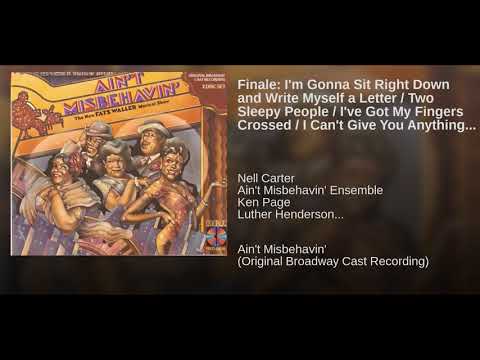
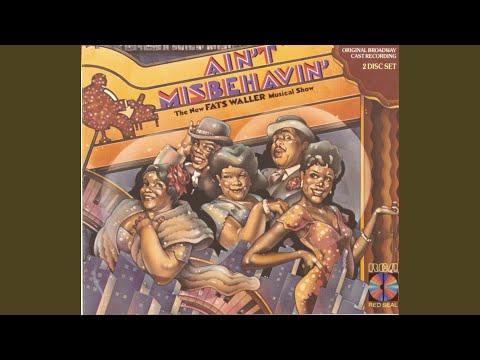
Ain't Misbehavin' (1978) - stage revue - not diegetic. This is a clever bit of programming. The show is a portrait of Fats Waller, but the finale admits a larger truth: a performer can make other people's tunes feel like personal property. Masterworks Broadway spells it out in plain terms: the finale is built from songs written by others that Waller made into hits. That is the dramaturgy. The revue is saying, "Listen to the style, not only the byline."
So the number lands as a capsule scene: a suitor who cannot buy the fantasy items the lyric names, but can offer a steady, rhythmic insistence that love is the real currency. The line has always played well in cabaret, but here the placement is the trick. It arrives inside a medley, which forces the singer to establish character quickly: one clean look, one confident phrase, then hand it off. The result is theatrical efficiency. According to the New York Public Library catalog entry for the cast album, the recording features the principal cast with ensemble under Luther Henderson's music supervision, a reminder that these "borrowed" songs are still arranged to serve the evening.
- Key takeaways: A standards cameo that shows Waller's reach, a lyric that needs direct address, and a medley context that rewards clarity over luxuriating.
- Highlight to watch for: The moment the band lays back and lets the vocal speak. This tune likes conversational swagger.
- Performance note: Avoid oversentiment. In this show, charm is the point, not pleading.
Creation History
The song was introduced in 1928 and is credited to McHugh and Fields, with early performance history tied to Blackbirds of 1928. SecondHandSongs identifies Adelaide Hall as the first performer and places the work squarely in that production lineage. Later, the tune developed a second identity as a jazz standard, passing through countless recordings and stage turns. Ain't Misbehavin' borrows it late in the evening as part of a finale medley, leaning into the idea that Waller's public persona could "translate" other writers' material into his own language of swing and showmanship.
Song Meaning and Annotations
Plot
A speaker admits financial limits while offering devotion. The lyric lists luxury objects as a kind of comic inventory, then returns to the only thing the speaker can honestly provide: love, framed as both consolation and strength.
Song Meaning
The meaning is romantic realism delivered with a grin. Desire is not denied, it is re-priced. In a full-length rendition, the tune can lean tender. In Ain't Misbehavin', the medley placement sharpens it into a bright little scene: the singer is not collapsing under poverty, they are using timing and confidence to keep the romance attractive. If you have ever seen a performer sell a hard truth by making it sound like a joke that still lands, this is that craft. As stated in the 2015 Masterworks Broadway essay, the lyric even carries period retail references that read differently now, which is part of the song's stage history: it ages in public.
Annotations
Finale medley placement, not a standalone scene.
This matters. A medley forces instant character. There is no time to build a slow confession, so the singer must choose a direct action: "win you over fast."
Written by Jimmy McHugh and Dorothy Fields, introduced in Blackbirds of 1928.
In this revue, that byline is part of the point. The song is used as evidence that Waller's world was porous: he could absorb outside material and still make the night feel coherent.
A standard with an unusually long recording tail.
Wikipedia notes the tune sits high on lists of frequently recorded songs in the early 20th-century canon. Onstage, that weight can be a gift: audiences already know the shape, so you can focus on timing and intent.
Style and rhythm
It is a standard that thrives on swing placement. The driving rhythm is not speed, it is conversational attack: consonants that sit forward, vowels that relax back. Even inside a medley, you want the phrase endings to feel casual, like the speaker has nothing to prove and everything to offer.
Technical Information (Quick Facts)
- Song: I Can't Give You Anything But Love
- Artist: Ain't Misbehavin' Original Broadway Cast (finale medley segment)
- Featured: Nell Carter; Andre DeShields; Armelia McQueen; Ken Page; Charlaine Woodard; Ain't Misbehavin' Ensemble
- Composer: Jimmy McHugh
- Producer: Thomas Z. Shepard (cast recording credit line in release metadata)
- Release Date: 1928
- Genre: Standard; vocal jazz; show tune
- Instruments: Voice; piano; small jazz ensemble
- Label: Masterworks Broadway (cast recording distribution and catalog branding)
- Mood: Warm, witty, grounded
- Length: Presented as a segment within the cast recording finale medley
- Track #: Part of the finale track in the cast recording listings
- Language: English
- Album (if any): Ain't Misbehavin' (Original Broadway Cast Recording)
- Music style: Swing phrasing with period-pop lyric clarity
- Poetic meter: Conversational accents shaped for swing subdivision
Frequently Asked Questions
- Is this a Fats Waller song?
- No. Standard references credit Jimmy McHugh (music) and Dorothy Fields (words), introduced in Blackbirds of 1928.
- So why is it in Ain't Misbehavin'?
- The show uses it in the finale medley as an example of songs written by others that Waller made into popular hits, according to the Masterworks Broadway album notes.
- Is it a standalone number in the revue?
- Not typically. Cast recording listings place it inside the finale medley rather than as its own track.
- Who performs it on the cast recording?
- The finale track is credited to the principal cast with ensemble, including Nell Carter, Andre DeShields, Armelia McQueen, Ken Page, and Charlaine Woodard.
- What is the core acting objective in a medley?
- State the premise fast and win the listener on confidence. You do not have time for a slow build.
- What is a common published key and tempo for practice?
- One widely used piano-vocal publication lists G major with a metronome around quarter note equals 112.
- What vocal range should singers expect?
- That same publication lists a practical range of D4 to E5, though singers often transpose.
- Does it have a modern chart footnote?
- Yes. A later recording by Tony Bennett and Lady Gaga is noted as reaching No. 1 on Billboard's Jazz Digital Songs chart in the US.
- What is the most common performance mistake?
- Overplaying the hardship. The lyric is frank, but the song works best when it stays light on its feet.
Awards and Chart Positions
The tune's reputation is less about trophies than endurance. Wikipedia notes it ranks among the most recorded songs in early 20th-century popular music, a statistic that explains why it keeps resurfacing in revues, jazz sets, and film. For a specific modern chart marker, the Cheek to Cheek album entry notes that Tony Bennett and Lady Gaga's recording reached No. 1 on Billboard's Jazz Digital Songs chart. The Ain't Misbehavin' production context is the other key milestone: the Tony Awards winners list records the 1978 Best Musical win for the revue that uses this song in its finale.
| Item | Year | Notes |
|---|---|---|
| Ain't Misbehavin' | 1978 | Tony Award - Best Musical (production milestone for the revue) |
| "I Can't Give You Anything But Love" (Tony Bennett and Lady Gaga) | 2014 | Reported No. 1 on Billboard Jazz Digital Songs chart (modern chart footnote) |
| Recording frequency | 1928 onward | Listed among the most recorded songs in reference histories |
How to Sing I Can't Give You Anything But Love
Published metrics offer a sensible baseline. A widely used piano-vocal publication lists G major, a vocal range of D4 to E5, and a metronome around quarter note equals 112 (Andante con moto). In a medley, you may take it slightly brighter so it reads as a quick scene.
- Tempo: Start near 112 and keep the groove steady. If you speed up, do it to match the medley energy, not to avoid vulnerability.
- Diction: Prioritize clarity on the list of luxury items. The comedy is in the specificity, so consonants matter.
- Breathing: Breathe after complete thoughts, not every bar. The lyric is spoken argument set to swing.
- Rhythm: Sit slightly behind the beat on longer vowels, then place key words forward. That push-pull reads as confidence.
- Range management: D4 to E5 is workable for many voices, but transpose if the top turns tight. This tune should sound easy.
- Intention: Make it an offer, not an apology. The character is selling love as a serious asset.
- Medley skill: Establish character in the first phrase. You have seconds, so commit early and exit cleanly.
- Pitfalls: Avoid dragging the tempo for sentiment. The song stays persuasive when it stays mobile.
Additional Info
There is a neat theatrical irony in this tune showing up inside a Waller revue. The lyric is about not having money. The show around it is about abundance: riffs, jokes, dance breaks, voices layered like confetti. Put together, it makes a small argument about American entertainment itself: style can make scarcity sound survivable. And because the number is a standard, every generation retools it. Some versions play it as gentle romance. Some play it as sly hustle. In Ain't Misbehavin', it leans toward hustle, because a finale needs forward motion.
If you want a critic's shorthand, this is the moment where the revue becomes a living mixtape. Masterworks Broadway even highlights the concept: the finale collects songs by other writers that Waller made famous. That one sentence explains the curatorial philosophy of the evening better than any plot summary could.
Key Contributors
| Entity | Type | Relationship (S-V-O) |
|---|---|---|
| Jimmy McHugh | Person | McHugh composed the music for the 1928 song. |
| Dorothy Fields | Person | Fields wrote the words for the 1928 song. |
| Blackbirds of 1928 | CreativeWork | The Broadway production introduced the song. |
| Ain't Misbehavin' Original Broadway Cast | MusicGroup | The cast performs the song as a segment within the finale medley. |
| Luther Henderson | Person | Henderson provided music supervision and arrangements for the cast recording. |
| Thomas Z. Shepard | Person | Shepard is credited as producer for the cast recording release metadata. |
| Tony Awards | Organization | The Tony Awards honored Ain't Misbehavin' as Best Musical in 1978. |
Sources
Sources: Masterworks Broadway (album notes and blog essay), Tony Awards (official 1978 winners list), SecondHandSongs (work credits and introduction), Musicnotes (published key, range, tempo), Wikipedia (song history notes), Discogs (cast recording tracklist), New York Public Library catalog record
Music video
Ain't Misbehavin' Lyrics: Song List
- Act 1
- Honeysuckle Rose
- Black And Blue
- Fat And Greasy
- Mean To Me
- Keepin' Out Of Mischief
- The Joint Is Jumpin'
- Ain't Misbehavin'
- Cash for your Trash
- Find out What They Like
- Handful Of Keys
- How Ya Baby
- I Can't Give You Anything But Love
- I'm Gonna Sit Right Down & Write Myself a Letter
- Its A Sin To Tell A Lie
- I've Got A Feeling I'm Falling
- I've Got My Fingers Crossed
- Act 2
- Spreadin' Rhythm Around
- Reefer Song
- Jitterbug Waltz
- Ladies Who Sing wtih the Band
- Lookin' Good But Feelin' Bad
- Lounging at the Waldorf
- Viper's Drag
- Off-Time
- Squeeze Me
- 'Tain't Nobody's Bizness if I Do
- That Ain't Right
- When the Nylons Bloom Again
- Two Sleepy People
- Yacht Club Swing
- Your Feet's Too Big