Ain't Misbehavin' Lyrics — Ain't Misbehavin'
Ain't Misbehavin' Lyrics
All by myself,
No one to walk with,
But I'm happy on the shelf
Ain't misbehavin',
I'm savin' my love for you
I know for certain,
The one I love,
I through with flirtin',
It's just you I'm thinkin' of.
Ain't misbehavin',
I'm savin' my love for you
Like Jack Horner in the corner
Don't go no where,
What do I care,
Your kisses are worth waitin' for
Be-lieve me
I don't stay out late,
Don't care to go,
I'm home about eight,
Just me and my radio
Ain't misbehavin',
I'm savin' my love for
Song Overview
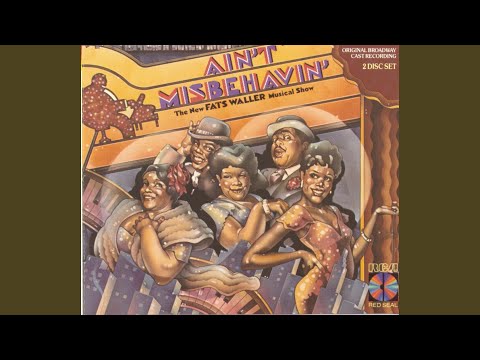
Review and Highlights
Quick summary
- What it is: A 1929 stride-leaning standard written for Connie's Hot Chocolates, credited to Thomas "Fats" Waller and Harry Brooks (music) with Andy Razaf (lyrics).
- What it does in the musical: In Ain't Misbehavin', it is the show title and the show thesis: "I can behave" sung by performers who clearly know how not to.
- How it differs from a club take: Broadway likes a clean arc, so arrangements often sharpen entrances, tighten tags, and make the punchy internal rhymes read like dialogue.
- Why it stays: The lyric sells self-control while the groove keeps suggesting options.
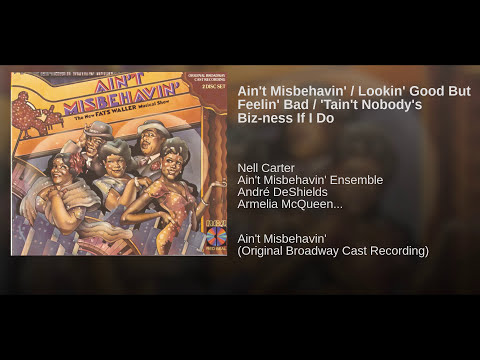
Ain't Misbehavin' (1978) - stage revue - not diegetic. The title song is the revue's handshake: it greets the room with a promise, then keeps testing that promise for the rest of the evening. That is smart theater. A songbook show has no plot to hide behind, so it needs a thesis that can keep changing shade. Here, the shade shifts in the phrasing. A held consonant becomes restraint. A delayed entrance becomes temptation politely ignored.
Musically, the number is built like a stage monologue. The line is singable, the harmony is friendly, and the hook lands with plain authority. But the real show is in the subtext. The lyric declares devotion, yes, but it also advertises the speaker's style: they are faithful, and they are proud of how good they look being faithful. According to JazzStandards.com, the earliest wave of recordings in 1929 included a charting version by Leo Reisman that reached No. 2, which tells you how quickly this "vow" turned into pop currency.
- Key takeaways: A vow that plays like flirtation, a melody that invites speech-like timing, and a chorus built to unify an ensemble without flattening personality.
- Staging idea that pays off: Keep the verse intimate, then let the company widen the room on the refrain, as if the promise suddenly has witnesses.
- Performance note: Treat each "no" as a choice made now, not as a moral badge already won.
Creation History
Written for Connie's Hot Chocolates and published in 1929, the song began life in a theatrical ecosystem where a catchy tune could move from revue stage to record shop at high speed. A historical aside worth keeping: sources describing the original production note that Louis Armstrong's performance of the song in the Broadway transfer became such a sensation that he was asked to play it onstage, blurring the line between pit and spotlight. That blur is the song's destiny. It keeps living where stage craft and bandstand craft meet, and Ain't Misbehavin' (the 1978 revue) is basically a Broadway-sized argument for that meeting place.
Song Meaning and Annotations
Plot
A speaker explains their current stance on romance and nightlife: no wandering, no chasing, no extra trouble. The lyric sketches the era's "flirting all the rage" atmosphere, then places the singer as an outlier who is choosing commitment.
Song Meaning
The meaning is devotion framed as self-control, with a theatrical twist: the singer is aware that self-control is a performance. In the revue context, the number becomes a character mask the cast can try on, trade, and challenge. One performer can sing it as sincere monogamy. Another can sing it as a public relations campaign. The audience will accept either, as long as the swing stays steady and the timing stays honest.
Annotations
Though it's a fickle age with flirting all the rage, here is one bird with self control.
This is an opening statement and a stage setup. It describes the world, then identifies the speaker as a specific kind of creature inside that world. The phrase "bird with self control" begs for a tiny acting choice: a calm smile that says, "Yes, I know what you think I will do."
I'm through with flirtin', it's just you I'm hurtin'.
The rhyme is sharp, and so is the psychology. The speaker admits that flirtation can be a form of harm, not only to others but to the relationship itself. Onstage, this is where the number can briefly stop being cute. One clean breath here can change the temperature.
Ain't misbehavin', I'm savin' my love for you.
The title line is not only a claim, it is a public stamp. In performance, land it like a fact and let the band do the sparkle. If you oversell it, it reads as protest. If you undersell it, it reads as boredom. The sweet spot is certainty with a little swing swagger.
Style and rhythm
Stride-era DNA is in the bones, even when the arrangement is modernized. The driving rhythm is not speed, it is placement: consonants that arrive early, vowels that relax late, and a refrain that feels like a roomful of people agreeing at once.
Technical Information (Quick Facts)
- Song: Ain't Misbehavin'
- Artist: Thomas "Fats" Waller (composer credit); also a signature number for the Ain't Misbehavin' Broadway cast
- Featured: Andy Razaf (lyricist); Harry Brooks (co-composer)
- Composer: Thomas "Fats" Waller; Harry Brooks
- Producer: Varies by recording and reissue
- Release Date: 1929
- Genre: Stride jazz, early swing, standard
- Instruments: Voice; piano; small jazz ensemble
- Label: Victor (notable early hit recording release); Masterworks Broadway (cast recording catalog brand)
- Mood: Self-possessed, playful
- Length: 6:12 on one major cast-album listing for the title track medley
- Track #: Varies by edition
- Language: English
- Album (if any): Ain't Misbehavin' (Original Broadway Cast Recording)
- Music style: Swing phrasing with stride-rooted harmonic motion
- Poetic meter: Conversational accents shaped for swing subdivision
Frequently Asked Questions
- Was it written for the 1978 Broadway revue?
- No. It dates to 1929 and was written for Connie's Hot Chocolates, later adopted as the title song for the 1978 revue.
- Who wrote it?
- The standard credits Thomas "Fats" Waller and Harry Brooks for music, with lyrics by Andy Razaf.
- What is the lyric really doing?
- It sells restraint as a choice made in public. The speaker is not hiding from temptation, they are announcing their decision where everyone can hear it.
- Is it comedy or romance?
- Both. The romance is sincere, and the comedy comes from how stylishly the speaker describes refusing trouble.
- What key is common in published vocal editions?
- A frequently used piano-vocal publication lists Eb major as the original key.
- What tempo works for rehearsal?
- Many editions suggest a moderate feel. One common published metronome marking is quarter note equals 70, which supports clear lyric delivery.
- Did it have chart success outside theater?
- Yes. Early recordings charted in the US in 1929, and later UK pop versions by Johnnie Ray (1956) and Tommy Bruce and the Bruisers (1960) reached the Official Singles Chart.
- Why does it sound at home in jazz sets?
- The harmony is stable enough for improvisers, and the melody behaves like speech, so singers can shape it like a story without breaking the tune.
- Does it have major institutional honors?
- Yes. The Recording Academy lists the 1929 Fats Waller recording as a Grammy Hall of Fame inductee, and the Library of Congress placed it in the National Recording Registry.
Awards and Chart Positions
For a 1929 standard, the bragging rights are not streaming totals, they are institutional memory. As stated on the Grammy Hall of Fame Award page, the 1929 Victor single "Ain't Misbehavin' (Piano Solo)" by Thomas "Fats" Waller was inducted in 1984. The Library of Congress later added that same recording to the National Recording Registry in 2004, praising it as a document of stride piano invention. The Broadway revue built on that legacy: the Tony Awards site lists Ain't Misbehavin' as the 1978 winner for Best Musical.
| Milestone | Year | Detail |
|---|---|---|
| US pop chart peak (early era) | 1929 | Leo Reisman recording reached No. 2 (reported in jazz standard histories) |
| UK Official Singles Chart peak | 1956 | Johnnie Ray version peaked at No. 17 |
| UK Official Singles Chart peak | 1960 | Tommy Bruce and the Bruisers version peaked at No. 3 |
| Grammy Hall of Fame Award | 1984 | Fats Waller "Piano Solo" (Victor, 1929) inducted |
| National Recording Registry | 2004 | Fats Waller 1929 recording selected |
| Tony Award | 1978 | Broadway revue Ain't Misbehavin' won Best Musical |
How to Sing Ain't Misbehavin'
Published editions give practical anchors. One widely used piano-vocal arrangement lists Eb major as the original published key, a vocal range of Eb4 to F5, and a metronome marking of quarter note equals 70. Use that as your baseline, then adjust for character and room size.
- Tempo: Start at 70 and let the groove breathe. If you speed up, do it because the character is excited, not because you are nervous.
- Diction: Treat consonants like tap steps. Crisp on "flirtin'" and "misbehavin'," then let vowels relax into swing.
- Breath: Plan breaths at thought breaks, not bar lines. The lyric is a speech, and interruptions should feel chosen.
- Rhythm: Keep swing subdivision consistent. Tiny delays are welcome, but drifting time will make the vow sound unsure.
- Range management: Eb4 to F5 asks for forward placement in the upper phrases. If F5 feels like a reach, transpose and protect the story.
- Style: Use ornament sparingly. One tasteful slide can read as charm; constant decoration reads as avoidance.
- Ensemble: If staged, decide who joins on the refrain. A clean chorus entrance is more effective than extra ad-libs.
- Pitfalls: Avoid shouting the title line. Let the band and the harmony provide size while you provide clarity.
Additional Info
The number has a second life as film seasoning and cultural shorthand. A well-known later screen appearance is the 1943 film Stormy Weather, where Waller performs it in a way that feels like the tune is returning to its theatrical roots. For a different kind of cameo, the Library of Congress essay on the 2004 registry selection emphasizes the value of the 1929 solo piano recording as a preserved document of stride craft, a reminder that the song is not only something you sing, it is something you can build a piano identity around.
One more Broadway footnote: the revue itself became a televised event. A widely circulated broadcast record notes that NBC aired the original Broadway cast production on June 12, 1982, which helps explain why so many theater fans know specific staging beats as if they were handed down in the family.
Key Contributors
| Entity | Type | Relationship (S-V-O) |
|---|---|---|
| Thomas "Fats" Waller | Person | Waller composed the music and recorded a 1929 solo version later honored by major institutions. |
| Harry Brooks | Person | Brooks co-composed the song for the 1929 stage context. |
| Andy Razaf | Person | Razaf wrote the lyric for the song. |
| Connie's Hot Chocolates | CreativeWork | The revue introduced the song in 1929. |
| Louis Armstrong | Person | Armstrong performed the song in the Broadway transfer and helped popularize it early. |
| The Recording Academy | Organization | The Recording Academy inducted the 1929 recording into the Grammy Hall of Fame. |
| Library of Congress | Organization | The Library of Congress selected the 1929 recording for the National Recording Registry. |
| Tony Awards | Organization | The Tony Awards honored the 1978 revue Ain't Misbehavin' with Best Musical. |
Sources
Sources: Grammy Hall of Fame Award (Recording Academy), Library of Congress National Recording Registry (2004), Official Charts Company, JazzStandards.com, Tony Awards (official winners list), Musicnotes (published key, range, tempo), Masterworks Broadway catalog notes
Music video
Ain't Misbehavin' Lyrics: Song List
- Act 1
- Honeysuckle Rose
- Black And Blue
- Fat And Greasy
- Mean To Me
- Keepin' Out Of Mischief
- The Joint Is Jumpin'
- Ain't Misbehavin'
- Cash for your Trash
- Find out What They Like
- Handful Of Keys
- How Ya Baby
- I Can't Give You Anything But Love
- I'm Gonna Sit Right Down & Write Myself a Letter
- Its A Sin To Tell A Lie
- I've Got A Feeling I'm Falling
- I've Got My Fingers Crossed
- Act 2
- Spreadin' Rhythm Around
- Reefer Song
- Jitterbug Waltz
- Ladies Who Sing wtih the Band
- Lookin' Good But Feelin' Bad
- Lounging at the Waldorf
- Viper's Drag
- Off-Time
- Squeeze Me
- 'Tain't Nobody's Bizness if I Do
- That Ain't Right
- When the Nylons Bloom Again
- Two Sleepy People
- Yacht Club Swing
- Your Feet's Too Big