I'm Gonna Sit Right Down & Write Myself a Letter Lyrics — Ain't Misbehavin'
I'm Gonna Sit Right Down & Write Myself a Letter Lyrics
And make believe it came from you
I'm gonna write words, oh, so sweet
They're gonna knock me off my feet,
A lotta kisses on the bottom,
I'll be glad I got 'em
I'm gonna smile and say:
"Gee, I hope you're feeling better."
And close "with love" the way you .
I'm gonna sit right down and write myself a letter
And make believe it came,
(Make believe)
I'm gonna make believe it came from you.
Song Overview
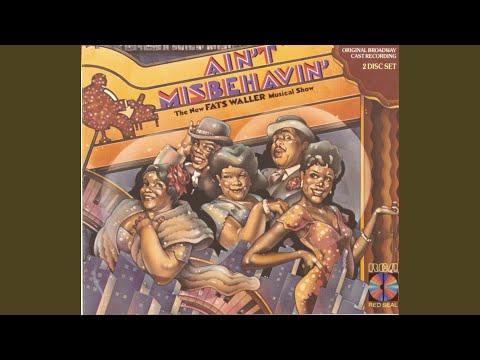
Review and Highlights
Quick summary
- What it is: A 1935 popular song with music by Fred E. Ahlert and lyrics by Joe Young.
- How it appears in the revue: In Ain't Misbehavin', it shows up inside the finale medley, part of the show’s salute to songs written by others that Waller helped make famous.
- Why it plays well onstage: The premise is a joke you can sing: loneliness turned into self-address, with a hook that lands like a curtain quip.
- What the cast recording emphasizes: Clean diction and quick turns, because the medley format does not let you linger.
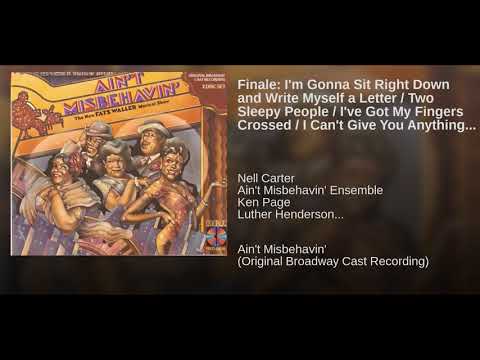
Ain't Misbehavin' (1978) - stage revue - not diegetic. This number is a reminder that a revue can be curatorial without getting academic. The song is not a Waller original, but the show positions it as part of his performing footprint. Masterworks Broadway says the finale is made from songs by other writers that Waller made hits, and you can hear that logic in the arrangement: the band treats the tune like house repertoire, not a guest import.
In performance, the trick is tone. The lyric is built on a comic strategy: you keep the pain at arm’s length by turning it into mail. If you lean too hard into melancholy, the joke collapses. If you play it only for laughs, it turns brittle. The sweet spot is casual determination, the kind you hear in a good club singer when the microphone feels like a confidant and a shield at the same time.
- Key takeaways: A premise that reads instantly, a chorus engineered for direct address, and a medley context that rewards precision over luxuriating.
- Highlight to watch for: The first time the singer commits to the bit - the moment the imaginary letter becomes real enough to send.
- Performance note: Land the consonants like punchlines, then let the vowels swing behind the beat.
Creation History
The song dates to 1935 in major reference catalogs, with Ahlert and Young credited as authors, and early documentation points to Waller as the first recording artist to release it. A University of Wisconsin song-sheet entry also places it in 1935 with publisher DeSylva, Brown and Henderson, anchoring the Tin Pan Alley lineage. In the revue, the tune is reframed as part of a larger story about performance ownership: the night argues that a great entertainer can make a song feel like it was written for their hands and voice, regardless of the byline.
Song Meaning and Annotations
Plot
A speaker, tired of waiting for affection, decides to write themselves a letter and pretend it arrived from the person they miss. The scenario is playful, but the motive is clear: create comfort where the world is not providing it.
Song Meaning
The meaning is self-soothing with a grin. You could call it a coping mechanism set to swing: take the absence, turn it into an action, and keep moving. In the finale medley, the song becomes even more theatrical. There is no time for a slow spiral, so it reads as a quick character sketch: a person who refuses to be left sitting in silence, even if it means staging their own little romance. According to the Syncopated Times column on composer credits, this is also a useful case study in how often audiences misattribute standards to star performers, which makes the revue’s framing feel knowingly meta.
Annotations
The finale is made up of songs written by others that Waller made hits.
This one sentence explains why the tune belongs in this show at all. It is not a detour, it is evidence: the revue is mapping influence, not only authorship.
Tempo marking: Moderately, metronome q = 150 (published vocal edition).
That is brisk enough to keep the concept comic. If you drag it, the letter turns into a diary entry. Keep it moving and it stays a bit of stage business.
Original published key: C major; vocal range: D4 to E5 (published vocal edition).
The range sits comfortably for many voices, which is why the song has lived so long in cabaret and jazz sets. The real challenge is not the notes, it is the rhythmic clarity at tempo.
Style and rhythm
It is swing-first phrasing with a conversational spine. The drive comes from how quickly the lyric can be articulated without sounding rushed. Think of it as spoken comedy that happens to be pitched.
Technical Information (Quick Facts)
- Song: I'm Gonna Sit Right Down and Write Myself a Letter
- Artist: Ain't Misbehavin' Original Broadway Cast (finale medley segment)
- Featured: Principal cast with ensemble in the finale track
- Composer: Fred E. Ahlert
- Producer: Thomas Z. Shepard (cast recording credit line in release metadata)
- Release Date: 1935
- Genre: Standard; swing; vocal jazz
- Instruments: Voice; piano; small jazz ensemble
- Label: Masterworks Broadway (cast recording distribution and catalog branding)
- Mood: Wry, self-possessed, lightly flirtatious
- Length: Presented as a segment within the cast recording finale medley
- Track #: Part of the finale track listed on major reissue track lists
- Language: English
- Album (if any): Ain't Misbehavin' (Original Broadway Cast Recording)
- Music style: Swing diction with punchline pacing
- Poetic meter: Conversational accents shaped for swing subdivision
Frequently Asked Questions
-
Who wrote it?
It is credited to Fred E. Ahlert (music) and Joe Young (lyrics), dated 1935 in major reference catalogs.
-
Is it a Fats Waller original?
No. Waller is closely associated through recordings and performance history, but the authorship belongs to Ahlert and Young.
-
Why is it in Ain't Misbehavin'?
The revue uses it in the finale medley as part of its point that Waller could make other writers’ songs into hits.
-
Where is it placed in the show?
It appears inside the finale medley track on the cast recording reissue track lists.
-
What is the main acting action?
Turn loneliness into activity. You are not waiting for love, you are manufacturing a message to keep yourself moving.
-
What key and range are common for practice?
A widely used published vocal edition lists C major with a vocal range of D4 to E5.
-
What tempo should I start with?
A published marking lists "Moderately" with q = 150. Start slower until diction stays clean, then build.
-
What is the most common performance mistake?
Dragging it for pathos. The premise works when it stays light, fast, and spoken in rhythm.
Awards and Chart Positions
The tune itself is a repertory standard, so the landmark in this context is the show that frames it. The Tony Awards winners list records Ain't Misbehavin' as the 1978 Best Musical winner. That win matters here because it helped keep deep-cut finale medley material in the public ear, not only the headline Waller hits.
| Work | Year | Award | Result |
|---|---|---|---|
| Ain't Misbehavin' | 1978 | Tony Award - Best Musical | Won |
How to Sing I'm Gonna Sit Right Down and Write Myself a Letter
A practical published baseline: C major, vocal range D4 to E5, tempo marking "Moderately" with q = 150. Use the numbers as guardrails, then let the scene lead.
- Tempo: Rehearse under tempo first, then climb toward 150 once the words stay crisp.
- Diction: Treat consonants like tap steps. The lyric is the comedy engine, so every syllable has to land.
- Breathing: Breathe at thought breaks, not every measure. The song should sound like talking with swing.
- Rhythm: Keep the beat steady and let tiny delays happen only on punchline words, then snap back.
- Range: D4 to E5 is friendly, but do not push volume at the top. Keep it conversational and forward.
- Intention: Play the action: you are writing. Small physical choices (pen, paper, a desk corner) can focus the timing.
- Band relationship: Leave space for fills to answer you. A piano response can function like a scene partner.
- Pitfalls: Avoid slowing down to sound "serious." The lyric already contains the ache - your job is to keep it airborne.
Additional Info
This is one of those standards that teaches theater people a useful lesson: premise is not plot, but premise can still stage itself. The idea is so concrete that a performer can build blocking from it without clutter. That is why it survives in cabaret rooms and audition rooms: the audience understands the game instantly, and then they watch you play it.
As stated in the Masterworks Broadway notes, the finale’s borrowed-song structure also functions as a history of how stardom reshapes credit in public memory. The Syncopated Times piece even warns how often Waller gets named as the composer in casual announcements, which is a reminder to keep your program notes clean while still honoring the performer who carried the tune into the culture.
Key Contributors
| Entity | Type | Relationship (S-V-O) |
|---|---|---|
| Fred E. Ahlert | Person | Ahlert composed the music for the 1935 song. |
| Joe Young | Person | Young wrote the lyrics for the 1935 song. |
| Thomas "Fats" Waller | Person | Waller recorded and popularized the song, which the revue cites as part of his hit-making reach. |
| Masterworks Broadway | Organization | Masterworks Broadway documents the finale medley concept and distributes the cast recording. |
| Thomas Z. Shepard | Person | Shepard is credited as producer for the cast recording release metadata. |
| Luther Henderson | Person | Henderson shaped the revue's musical framework and cast recording approach. |
| Tony Awards | Organization | The Tony Awards recognized Ain't Misbehavin' as Best Musical in 1978. |
Sources
Sources: Musicnotes (published key, tempo, range, credits), SecondHandSongs (authorship and first release note), Masterworks Broadway (finale concept note), Legacy Recordings (cast recording track list), Tony Awards (1978 winners list), University of Wisconsin Popular Music Project entry, Syncopated Times column on composer credit
Music video
Ain't Misbehavin' Lyrics: Song List
- Act 1
- Honeysuckle Rose
- Black And Blue
- Fat And Greasy
- Mean To Me
- Keepin' Out Of Mischief
- The Joint Is Jumpin'
- Ain't Misbehavin'
- Cash for your Trash
- Find out What They Like
- Handful Of Keys
- How Ya Baby
- I Can't Give You Anything But Love
- I'm Gonna Sit Right Down & Write Myself a Letter
- Its A Sin To Tell A Lie
- I've Got A Feeling I'm Falling
- I've Got My Fingers Crossed
- Act 2
- Spreadin' Rhythm Around
- Reefer Song
- Jitterbug Waltz
- Ladies Who Sing wtih the Band
- Lookin' Good But Feelin' Bad
- Lounging at the Waldorf
- Viper's Drag
- Off-Time
- Squeeze Me
- 'Tain't Nobody's Bizness if I Do
- That Ain't Right
- When the Nylons Bloom Again
- Two Sleepy People
- Yacht Club Swing
- Your Feet's Too Big