Mean To Me Lyrics — Ain't Misbehavin'
Mean To Me Lyrics
Why must you be mean to me?
Gee, honey, it seems to me
You love to see me cryin'
I don't know why
I stay home each night
When you say you phone
You don't and I'm left alone.
Sing the blues and sighin'
You treat me coldly each day in the year
You always scold me
Whenever somebody is near, dear
I must be great fun to be mean to me
You shouldn't, for can't you see
What you mean to me
Song Overview
Review and Highlights
Quick summary
- What it is: A 1929 popular standard with music by Fred E. Ahlert and lyrics by Roy Turk, later adopted by jazz and cabaret singers.
- Why it fits Ain't Misbehavin': The revue is a nightlife scrapbook, and this song supplies the tender corner - a torch-song posture that lets a performer stop joking and start telling the truth.
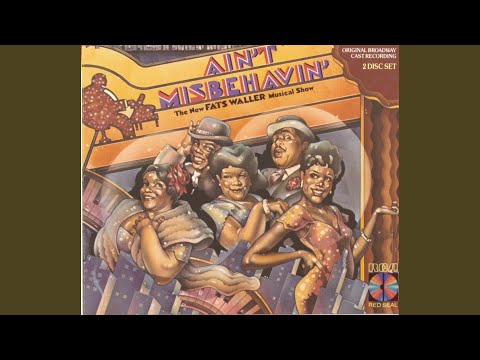
- How the show uses it: On the original Broadway cast album, the number is performed by Nell Carter, and the staging tradition follows that lead: a featured spotlight with the band kept on a short leash.
- What audiences hear: A melody that leans forward like a confession, then pulls back at the last moment to protect its pride.
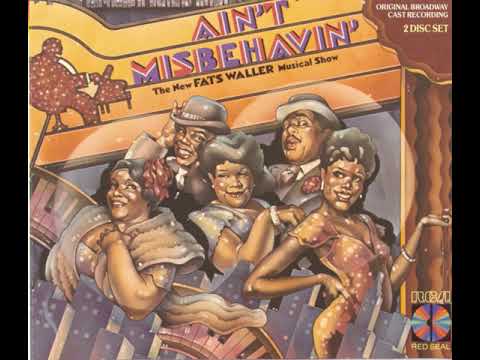
Ain't Misbehavin' (1978) - stage revue - not diegetic. The number usually lands as a set-piece ballad: the room narrows, the performer stands stiller than you expect, and the lyric does the walking. In a show that thrives on comic bounce, the restraint reads as daring. You can feel the audience shift from clapping on the beat to listening between the beats.
As theater material, the hook is not a big chorus, it is the emotional negotiation. The speaker keeps asking for basic decency while admitting attraction they cannot explain. That push-pull is prime acting fuel. The best performances do not sell sadness as a costume; they treat the lyric like a hard conversation spoken in tune.
- Key takeaways: A spotlight ballad that rewards clean diction, controlled breath, and a willingness to underplay.
- Best onstage trick: Let the band fill the silences, then take your time re-entering - like you are choosing whether to keep talking.
- What audiences remember: The final turns of phrase, when dignity and need sit in the same mouthful.
Creation History
Published in 1929, the song traveled quickly through early hit recordings and then into the standard repertoire. According to SecondHandSongs, an early recording was made by Ben Bernie and His Hotel Roosevelt Orchestra in 1929, a reminder that the tune was born in the world of dance bands as much as late-night laments. Decades later, Ain't Misbehavin' borrowed it into a Broadway songbook frame, where a "standard" becomes a character monologue the moment a spotlight hits.
Song Meaning and Annotations
Plot
A speaker addresses a lover who treats them badly, yet remains irresistibly attractive. The lyric cycles through complaint, fascination, and a low-stakes ultimatum: be kinder, or at least be honest about what you are doing to me.
Song Meaning
This is not a breakup song. It is the song before the breakup, when the speaker is still bargaining with their own appetite for trouble. In the revue setting, that nuance matters: the show invites charm, then shows the cost of chasing it. The emotional arc is quiet but sharp: the singer begins with wounded observation and ends in a plea that tries to sound casual, as if asking for decency were not a life-or-death request.
Annotations
You always hurt the one you love.
Even when a singer does not quote this exact line, the song circles the idea. The theatrical choice is whether to treat the hurt as surprise or as habit. Surprise makes the number fragile; habit makes it bitter. Either can work, but bitterness needs stricter control of tempo so the performance does not curdle.
Why must you be mean to me?
It is a simple question, which is why it stings. In performance, the trick is to avoid rhetorical flourish. Ask it like you still expect an answer, then let the band answer with a chord that refuses to explain anything.
I love you, yet you make it hard.
This is the song's engine: desire that does not justify itself. A performer can play it as a confession slipped out accidentally, which fits the revue's nightclub attitude - a crowd is present, but the confession is private.
Style and rhythm
The tune lives comfortably as a slow swing or a ballad. The phrasing wants rubato at the edges, but it also wants a steady center so the words can land cleanly. In Ain't Misbehavin', the number usually stays closer to a theater ballad shape: fewer vocal ornaments, more attention to consonants and breath.
Technical Information (Quick Facts)
- Song: Mean to Me
- Artist: Original Broadway cast performance associated with Nell Carter
- Featured: Nell Carter (cast recording track performer)
- Composer: Fred E. Ahlert
- Producer: Varies by release; cast recording production credited to its label editions
- Release Date: 1929 (published)
- Genre: Popular standard; jazz and cabaret repertory
- Instruments: Voice; piano; small jazz ensemble (common practice)
- Label: Masterworks Broadway (cast recording distribution credit in streaming releases)
- Mood: Tender, wary
- Length: About 3:03 on the original Broadway cast recording track listing
- Track #: Track 5 on several published track lists for the original cast album
- Language: English
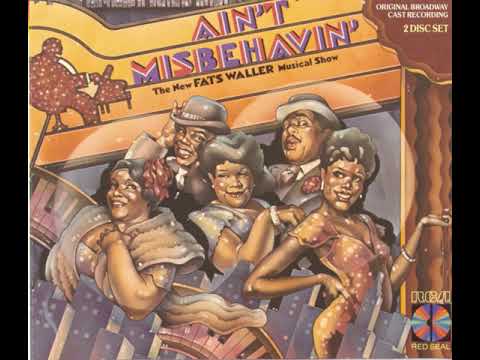
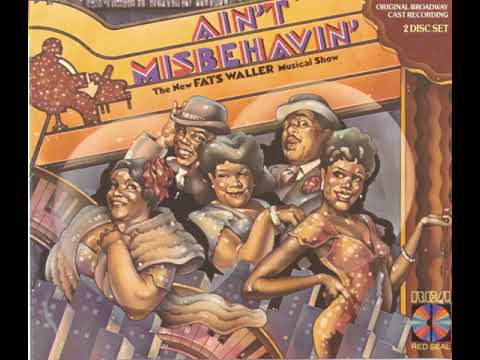
- Album (if any): Ain't Misbehavin' (Original Broadway Cast Recording)
- Music style: Standard ballad craft with flexible tempo and conversational phrasing
- Poetic meter: Conversational accent patterns, shaped for legato line endings
Frequently Asked Questions
- Is this song by Fats Waller?
- No. The revue includes material beyond Waller's songwriting, and this standard is credited to Fred E. Ahlert and Roy Turk.
- Who sings it on the original Broadway cast recording?
- Nell Carter is credited as the featured performer on the track.
- Where does it sit in the cast album sequence?
- Several published track lists place it as track 5, following "The Viper's Drag" segment.
- What is the singer trying to do, dramatically?
- Get an answer without losing face. The lyric is a negotiation between pride and longing.
- Is it better as a ballad or a slow swing?
- Either works. A ballad emphasizes confession; a slow swing emphasizes coping through style.
- Why does it work in a songbook musical?
- Because the lyric is a complete monologue. It does not need plot to create stakes.
- What is the main performance risk?
- Over-sentiment. The lyric is already direct, so extra sobbing tone can flatten the tension.
- Are there notable early recordings?
- Yes. Reference discographies and histories of the tune cite multiple 1929 hit recordings and dance-band versions from the song's first year.
Awards and Chart Positions
The song's reputation is repertory-based rather than chart-driven in the modern sense. Its Broadway platform, however, arrived with major recognition: according to the official Tony Awards record for 1978, Ain't Misbehavin' won Best Musical, an unusual crown for a revue and a powerful amplifier for every number in its set list.
| Work | Year | Award | Result |
|---|---|---|---|
| Ain't Misbehavin' | 1978 | Tony Award - Best Musical | Won |
Additional Info
There is a neat theatrical irony here: a song born in the dance-band era ends up, decades later, as a Broadway soliloquy. That is the revue's quiet skill. It turns standards into scenes without changing a syllable, then trusts the performer to supply the backstory with timing and breath.
For singers, practical materials exist beyond sheet music. PianoTrax sells audition-style accompaniment tracks for this number in two keys (B and C), which is a useful hint about common transpositions in contemporary rehearsal rooms. The cast recording itself remains a reference point for phrasing choices, especially in how the line endings are allowed to taper rather than land like punchlines.
Key Contributors
| Entity | Type | Relationship (S-V-O) |
|---|---|---|
| Fred E. Ahlert | Person | Ahlert composed "Mean to Me". |
| Roy Turk | Person | Turk wrote lyrics for "Mean to Me". |
| Nell Carter | Person | Carter performs the song on the original Broadway cast recording. |
| Ain't Misbehavin' | CreativeWork | The revue stages the song as a featured ballad number. |
| Masterworks Broadway | Organization | Masterworks Broadway distributes the cast recording releases in digital catalogs. |
| Tony Awards | Organization | The Tony Awards honored Ain't Misbehavin' with Best Musical (1978). |
Sources
Sources: Masterworks Broadway (YouTube audio release metadata), Legacy Recordings (cast album track list), Discogs (track timing), SecondHandSongs (work history), Mean to Me (1929) song history reference, PianoTrax (accompaniment keys)
Music video
Ain't Misbehavin' Lyrics: Song List
- Act 1
- Honeysuckle Rose
- Black And Blue
- Fat And Greasy
- Mean To Me
- Keepin' Out Of Mischief
- The Joint Is Jumpin'
- Ain't Misbehavin'
- Cash for your Trash
- Find out What They Like
- Handful Of Keys
- How Ya Baby
- I Can't Give You Anything But Love
- I'm Gonna Sit Right Down & Write Myself a Letter
- Its A Sin To Tell A Lie
- I've Got A Feeling I'm Falling
- I've Got My Fingers Crossed
- Act 2
- Spreadin' Rhythm Around
- Reefer Song
- Jitterbug Waltz
- Ladies Who Sing wtih the Band
- Lookin' Good But Feelin' Bad
- Lounging at the Waldorf
- Viper's Drag
- Off-Time
- Squeeze Me
- 'Tain't Nobody's Bizness if I Do
- That Ain't Right
- When the Nylons Bloom Again
- Two Sleepy People
- Yacht Club Swing
- Your Feet's Too Big