'Tain't Nobody's Bizness if I Do Lyrics — Ain't Misbehavin'
'Tain't Nobody's Bizness if I Do Lyrics
Or nothing I can say
That folks don't criticize me
But I'm gonna do what I want to anyway
And I don't care just what people say
If I should take a notion to jump into the ocean
'T ain't nobody's bizness if I do
If I go to church on Sunday then cabaret all day Monday
'T ain't nobody's bizness if I do
If my man ain't got no money and I say take all mine honey
'T ain't nobody's bizness if I do
If I give him my last nickel and it leaves me in a pickle
'T ain't nobody's bizness if I do
I'd rather my man would hit me
Than for him to jump up and quit me
'T ain't nobody's bizness if I do
I swear I won't call no coppa if I'm beat up by my poppa
'T ain't nobody's bizness if I do
Nobody's bizness, ain't nobody's bizness
Nobody's bizness if I do
Song Overview
Review and Highlights
Quick summary
- What it is: A 1922 blues standard (Grainger and Robbins) built around a defiant personal boundary: my life, my choice.
- How the show uses it: In Ain't Misbehavin it typically arrives inside the opening medley, a quick dose of attitude that tells the audience what kind of room they are in.
- What the arrangement emphasizes: Forward motion and snap - the band swings, the singers toss the message like a cocktail napkin, and the evening is off to the races.
- Why it lands onstage: It is not a sermon. It is a grin with teeth.
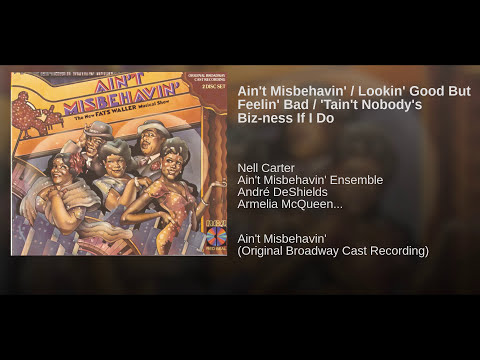
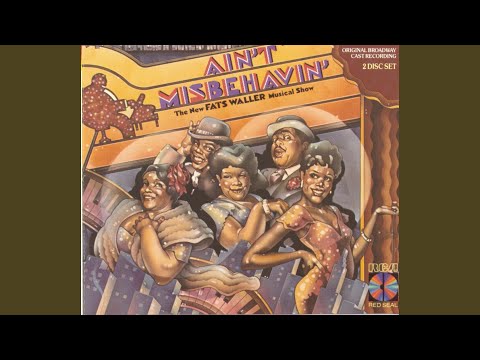
Ain't Misbehavin (1978) - stage revue - non-diegetic (presented as nightclub performance). On the Legacy Recordings track list, the first cut bundles "Ain't Misbehavin' / Lookin' Good But Feelin' Bad / Tain't Nobody's Biz-ness If I Do" into one continuous opening, which is basically a staging note: establish the world fast, with three angles of personality in a single breath.
This tune has always been a boundary line drawn in public. That is why it works so well in a revue opener. The performers do not need backstory. They need posture. The lyric stakes out autonomy with a casualness that is almost cheeky: if I do something rash, or tender, or self-destructive, keep your hands off my steering wheel. In a theatre, that message can play as comedy, bravado, or bruised experience, depending on who sings it and how the band underlines it. I prefer the version that smiles first and lets the steel show later - the audience discovers the bite, and that discovery is a small thrill.
Key takeaways:
- Play it as social behavior: a performer setting the rules of the room.
- Do not over-explain the rebellion: the charm is how breezily it is delivered.
- In a medley, make the handoff clean: the number succeeds when it feels inevitable, not pasted in.
Creation History
The song was published in 1922, credited to Porter Grainger and Everett Robbins, and first recorded that year by Anna Meyers backed by the Original Memphis Five. That origin matters because it frames the lyric as a working-life statement, not a Broadway invention. The revue version leans into the history without turning it into a museum label. As stated on the official Tony Awards site, Ain't Misbehavin won Best Musical in 1978 - and you can hear why in this opener: it treats vintage material as living stage business, not as antique wallpaper.
Song Meaning and Annotations
Plot
There is no plot engine, just a situation with heat: the singer answers real or imagined judgment and shuts it down. In a revue, it plays like a mini scene of confrontation - not an argument, a dismissal. Then the show moves on, because the show is a party and the party does not wait.
Song Meaning
The central meaning is autonomy, stated in street-level language. The speaker refuses policing, even when the behavior in question looks risky or contradictory. In the Ain't Misbehavin frame, the song also becomes a thesis for the whole night: this is a room where pleasure, vice, discipline, and mess can coexist, and nobody gets to write your rules but you.
Annotations
The work was published in 1922 (Grainger and Robbins) and is documented as one of the early blues standards.
This is why the lyric feels so direct. It is built for a public audience, yes, but it is not polite about it. Blues writing has a long tradition of telling the room to mind its own business.
The first recording is tied to Anna Meyers with the Original Memphis Five, recorded in New York City in October 1922.
That detail is a reminder that this song started as a commercial record in the early recording industry. When a Broadway revue revives it, it is not "adapting" so much as restoring the song to an audience-facing job.
On the cast-recording medley page, the composition credit lists Porter Grainger and Everett Robbins, and the producer credit lists Thomas Z. Shepard.
The revue keeps the credit line clean. It honors the original authorship while letting the Broadway production values - and Shepard's recording craft - frame it as a modern listening experience.
Track-metadata services list the medley at about 127 BPM.
That tempo explains the staging impulse: the number is not meant to sit and brood. It is meant to stride through the room, toss the message, and keep moving.
Style fusion and rhythmic drive
The song sits at a crossroads: blues DNA with vaudeville-wise punchlines, and a swing-ready chassis that makes it easy to stage. In a revue, that fusion is gold. You can sing it like confession, or toss it like gossip, and the band will still make it dance.
Technical Information (Quick Facts)
- Song: Tain't Nobody's Biz-ness If I Do
- Artist: Original Broadway Cast of Ain't Misbehavin (opening medley performance credit on common releases)
- Featured: Andre DeShields; Nell Carter; Armelia McQueen; Ken Page; Charlaine Woodard; Ain't Misbehavin Ensemble
- Composer: Porter Grainger
- Lyricist: Everett Robbins
- Producer: Thomas Z. Shepard
- Release Date (album edition listing): July 14, 1987
- Genre: Blues standard; staged swing in revue form
- Instruments: Voice; piano; reeds; brass; bass; drums
- Label (album edition listing): Masterworks Broadway
- Mood: Defiant; amused; self-possessed
- Length (medley listing): About 6:12 to 6:14, depending on edition
- Track #: Disc 1, track 1 (as part of the opening medley on common track lists)
- Language: English
- Album: Ain't Misbehavin (Original Broadway Cast Recording)
- Music style: Blues-to-swing crossover arranged for stage pacing
- Poetic meter: Accentual, speech-led stresses aligned to swing phrasing
Frequently Asked Questions
- Is this presented as a stand-alone track on the cast album?
- On widely circulated editions, it appears inside the opening medley rather than as a separate track line.
- Who wrote the song?
- Standard references credit Porter Grainger and Everett Robbins, with publication dated to 1922.
- What is the central idea of the lyric?
- Autonomy: the singer refuses judgment and claims the right to make choices, wise or otherwise.
- When was it first recorded?
- Documentation ties an early recording to Anna Meyers with the Original Memphis Five in 1922.
- Why does it work so well in a revue opener?
- It establishes attitude immediately. The show is not asking permission; it is setting terms.
- Is it blues or swing?
- Historically it is a blues standard, but the revue frames it with swing-era momentum and stage-forward patter energy.
- What is the biggest acting pitfall?
- Turning it into a lecture. The line lands best when it sounds like a casual rule of the room.
- What does the tempo feel like in the cast-recording medley?
- Metadata services list the medley around 127 BPM, which supports a walking-through-the-crowd staging style.
- Does the show treat it as a character song?
- Yes, but in shorthand. In a few phrases, a performer can suggest experience, humor, and a hard-earned boundary.
- Is there a famous later revival title for the tune?
- Later versions often appear under the shorter phrasing "Ain't Nobody's Business," especially in postwar blues revivals.
Awards and Chart Positions
The tune is a standard with a long life, but the awards story that matters here belongs to the revue that frames it. According to the official Tony Awards record, Ain't Misbehavin won Best Musical in 1978. IBDB also lists key wins for Nell Carter (Featured Actress) and Richard Maltby Jr. (Direction), along with major off-Tony honors.
| Award | Year | Category | Result (selected) |
|---|---|---|---|
| Tony Awards | 1978 | Best Musical | Won |
| Tony Awards | 1978 | Featured Actress in a Musical (Nell Carter) | Won |
| Tony Awards | 1978 | Direction of a Musical (Richard Maltby Jr.) | Won |
How to Sing Tain't Nobody's Biz-ness if I Do
Reliable public sources do not consistently publish a single canonical vocal range for this standard, because it is routinely transposed for the singer and, in the revue, it is embedded in a medley. What is published is the cast-recording medley tempo estimate (about 127 BPM) and the performance credits, which are more useful for staging technique than for fixed pitch specs.
- Tempo: Rehearse at a brisk swing pulse. If your version follows the cast recording feel, start near 127 BPM, then match your chart.
- Diction: Make the key phrase land cleanly. The audience should catch the boundary without you underlining it.
- Breathing: Take breaths before punch lines, not after them. The delivery should feel effortless, even when it is not.
- Flow and rhythm: Sit in the pocket, then place a few words slightly behind the beat for attitude. Too much drag and the number loses sparkle.
- Accents: Choose one or two words per phrase to pop. Let the rest ride the band.
- Ensemble: In medley context, rehearse transitions like scene changes. Your last consonant should set up the next entrance.
- Mic: If amplified, keep it intimate. This is club talk projected to the balcony, not a belt contest.
- Pitfalls: Avoid playing anger as the only color. A lightly amused tone can carry more authority.
Additional Info
One of the shrewdest things the revue does is let the song serve as a public mission statement. The show is set in a Harlem-nightlife imagination, but the lyric is universal: everybody knows what it is to be judged, and everybody likes to watch somebody shut that down with style. The standard also carries a long recording afterlife, from classic blues singers to later jump-blues revivals, which is why it feels instantly familiar even to audiences who cannot name where they heard it first. According to the Masterworks Broadway album note, the tune was among the early titles tied to Waller's recording fame, which makes its placement at the start of a Waller-celebrating revue feel like a wink from the creators.
Key Contributors
| Entity | Type | Relationship (S-V-O) |
|---|---|---|
| Porter Grainger | Person | Grainger wrote the credited composition for the 1922 standard. |
| Everett Robbins | Person | Robbins wrote the credited lyric for the 1922 standard. |
| Anna Meyers | Person | Meyers recorded an early 1922 version backed by the Original Memphis Five. |
| Original Memphis Five | Organization | The band backed the 1922 recording session credited in standard references. |
| Thomas Z. Shepard | Person | Shepard produced the Broadway cast recording listed on track metadata pages. |
| Luther Henderson | Person | Henderson is credited as conductor for the cast-recording medley. |
| Original Broadway Cast of Ain't Misbehavin | Organization | The cast performs the song as part of the opening medley on common releases. |
Sources
Sources: Legacy Recordings track list, Shazam track credits and BPM listing, Masterworks Broadway album notes, IBDB production record and awards block, Tony Awards winners archive, Wikipedia work page for the 1922 standard, SecondHandSongs performance listing, YouTube (Masterworks Broadway topic upload)
Music video
Ain't Misbehavin' Lyrics: Song List
- Act 1
- Honeysuckle Rose
- Black And Blue
- Fat And Greasy
- Mean To Me
- Keepin' Out Of Mischief
- The Joint Is Jumpin'
- Ain't Misbehavin'
- Cash for your Trash
- Find out What They Like
- Handful Of Keys
- How Ya Baby
- I Can't Give You Anything But Love
- I'm Gonna Sit Right Down & Write Myself a Letter
- Its A Sin To Tell A Lie
- I've Got A Feeling I'm Falling
- I've Got My Fingers Crossed
- Act 2
- Spreadin' Rhythm Around
- Reefer Song
- Jitterbug Waltz
- Ladies Who Sing wtih the Band
- Lookin' Good But Feelin' Bad
- Lounging at the Waldorf
- Viper's Drag
- Off-Time
- Squeeze Me
- 'Tain't Nobody's Bizness if I Do
- That Ain't Right
- When the Nylons Bloom Again
- Two Sleepy People
- Yacht Club Swing
- Your Feet's Too Big