
Vor langer Zeit / Long Ago Lyrics
Arthur, Guinevere, EnsembleVor langer Zeit / Long Ago
Guinevere:Schon vor ewig langer Zeit
Sie scheint mir heute endlos weit
Da träumte ich von dir
Und vor ewig langer Zeit
Schwor ich vor Gott in Freud und Leid
Ich bleibe stets bei dir
Du warst lange für mich nur ein Traum
Der am Morgen zerrann wie Sand
Eine Zuflucht, nach der ich stets suchte
Und doch niemals fand
Artus:
Es scheint heute endlos weit
Vor einer halben Ewigkeit
Kamst du zu mir, Guinevere
Damals glaubte ich blind an das Glück
Meine Hoffnung war noch so groß
Lässt der Schmerz, der erwacht
Wenn die Unschuld entflieht, uns je los?
Artus & Guinevere:
Doch eins scheint nun klar
Im Spiel dieser Welt
Bleibt Liebe die stärkste Macht
Bleibt Liebe die stärkste Macht
Und nach endlos langer Zeit
Es ist nun endlich heut soweit
Und du bleibst hier bei mir
Ensemble:
Ein Fürst, ein Land, ein Herz, ein Ziel
Heute Nacht fängt es an
Ein Eid, ein Wunsch, ein neuer Beginn
Heute Nacht fängt es an
Ein Fürst, ein Ziel ist uns gemein
Wir sind vereint durch das Schwert aus dem Stein
Heute Nacht fängt es an
Heute Nacht fängt es an
Heute Nacht fängt es an
ENGLISH LYRICS:
Guinevere:
Already so long ago,
It seems endless today,
I dreamed of you.
And so long ago,
I swore before God in joy and sorrow,
I would always stay by your side.
For so long, you were just a dream to me,
That dissolved like sand in the morning.
A refuge I always sought,
Yet never found.
Arthur:
It seems endless today,
Half an eternity ago,
You came to me, Guinevere.
Back then, I believed blindly in happiness,
My hope was still so great.
Does the pain that awakens
When innocence flees ever leave us?
Arthur & Guinevere:
But one thing now seems clear,
In the game of this world,
Love remains the strongest power,
Love remains the strongest power.
And after an endless time,
Finally, today has come,
And you stay here with me.
Ensemble:
One prince, one land, one heart, one goal,
Tonight it all begins.
One oath, one wish, a new start,
Tonight it all begins.
One prince, one goal is shared by all,
We are united by the sword from the stone.
Tonight it all begins,
Tonight it all begins,
Tonight it all begins.
Song Overview
Review and Highlights
Quick summary
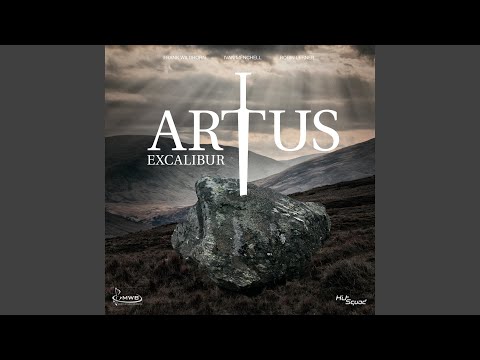
- Work: Artus - Excalibur (world premiere: March 15, 2014, Theater St. Gallen)
- Song role: Arthur and Guinevere with ensemble, used as a late Act II memory-and-vow coda
- Recorded voices: Annemieke van Dam and Patrick Stanke (with cast context)
- Sound: gentle ballad writing that re-opens the first promise, then lets it fade like a candle at dawn
- Why it lands: it frames the tragedy as something that did not start with betrayal - it started with hope
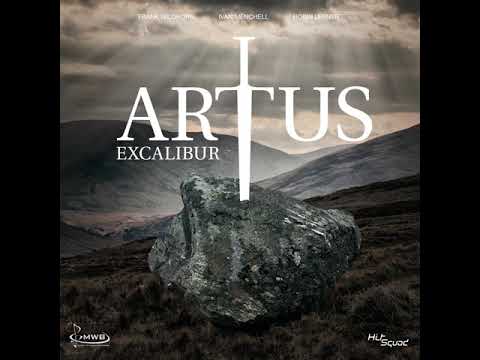
Artus - Excalibur (2014) - stage musical - non-diegetic. After the argument quartet that blows Camelot apart, this song arrives like a delayed breath. It does not pretend the damage can be reversed. Instead, it rewinds the tape. Guinevere remembers the long-ago dream of Arthur. Arthur answers from the other side of the same memory, as if both of them are trying to locate the exact day love stopped being a shelter and became a duty.
The craft is in the restraint. Wildhorn does not write it as a victory lap. He writes it as a soft spotlight on two people who once believed the crown could protect what they felt. The melody keeps a simple line, leaving room for text to do the heavy lifting. You can hear the point without needing plot recap: promises are easy to say in a bright hall, harder to keep when war turns the air metallic.
If you have listened through the album in one sitting, this number also functions like a moral aftertaste. The show spends Act II on momentum and fallout. This track slows everything down, then lets the listener walk out carrying a quieter question: what does a kingdom cost when it is built on vows?
Creation History
The St. Gallen production introduced the German-language version with music by Frank Wildhorn and lyrics by Robin Lerner, translated by Nina Schneider. Major streaming listings place the album release on April 4, 2014 via HitSquad Records, and "Vor langer Zeit" appears as the closing track. Theatre press also documented that the concept recording was released on April 3, 2014 and performed strongly on German platform charts, which helps explain why songs like this quickly traveled beyond the venue, according to Playbill magazine.
Song Meaning and Annotations
Plot
By the time this track lands, Camelot has already cracked. Secrets have surfaced, loyalties have snapped, and the ideal of a clean, heroic reign is no longer believable. The song steps away from the public mess and returns to the private origin story of the marriage: the day Guinevere dreamed of Arthur, the moment she vowed to stay, and the warm certainty that once made the future look simple. In published song lists, it sits at the very end of Act II as a coda.
Song Meaning
The meaning is a backward glance that hurts because it is honest. "Long ago" is not nostalgia as decoration. It is evidence. The couple once had a shared language of faith and devotion, and the song replays that language after it has been broken. Guinevere is not rewriting history. She is measuring distance. Arthur is not defending himself. He is acknowledging what was lost.
Annotations
"Schon vor ewig langer Zeit"
The opening works like a camera pullback. Time becomes a character. The distance is not just emotional - it is chronological, as if their best selves live in a past that cannot be revisited.
"Schwor ich vor Gott in Freud und Leid"
This is not casual romance language. It is ritual language, and that is why the later collapse feels like more than a breakup. The vow is bigger than the couple, so its fracture echoes.
"Du warst lange fuer mich nur ein Traum"
A classic theatre move: make the hero a dream first. Once you establish that, the audience understands why the fall is not just scandal - it is disillusionment.
Sound, rhythm, and imagery
Driving rhythm: a steady, slow-moving pulse that keeps the song from floating away. It feels like walking through ruins carefully, one step at a time.
Style fusion: pop ballad clarity with musical-theatre diction, built for narrative delivery rather than vocal tricks.
Emotional arc: recollection - vow - realization. The chorus does not solve anything, it simply names the size of the gap.
Technical Information (Quick Facts)
- Song: Vor langer Zeit (alternate title: Long Ago)
- Artist: Annemieke van Dam and Patrick Stanke
- Featured: Arthur, Guinevere, Ensemble
- Composer: Frank Wildhorn
- Lyricist: Robin Lerner
- Book: Ivan Menchell
- German translation: Nina Schneider
- Arrangements and orchestrations: Koen Schoots
- Release Date: April 4, 2014
- Genre: Musical theatre; ballad
- Instruments: band and orchestral layers (cast recording context)
- Label: HitSquad Records
- Mood: reflective, tender, bittersweet
- Length: 3:39
- Track #: 14 (album sequence)
- Language: German
- Album: Artus Excalibur - Das Musical
- Music style: memory coda and vow recall
- Poetic meter: accentual, speech-led phrasing with refrain repetition
Frequently Asked Questions
- Who sings this song in the musical?
- It is listed for Arthur and Guinevere with ensemble support in published song lists, and the album credits pair Annemieke van Dam and Patrick Stanke.
- Where does it land in the shows structure?
- It appears at the end of Act II as a coda that looks back on the vows after the triangle has already exploded.
- What is the core image of the lyric?
- Time as distance. "Long ago" becomes a measuring stick for how far the marriage has drifted from its first promise.
- Is it a reconciliation scene?
- No. It is recognition. The song does not repair the damage, it names what was lost with calm clarity.
- Why does it reference vows and faith language?
- Because the story treats marriage as a public bond, not only a private feeling, so the break carries political and personal weight.
- Is there an official English recording?
- The English title is commonly used in song lists and translations, while the documented 2014 release is in German.
- How long is the recorded track?
- Major streaming listings show a 3:39 runtime.
- Does the song connect to a reprise on physical releases?
- Some CD track lists bundle it with a short reprise in the final slot, depending on edition.
- Why does it work as a closer?
- It reframes the tragedy as the collapse of an ideal, not just a scandal, leaving the listener with memory rather than noise.
Awards and Chart Positions
There is no widely documented, separate singles-chart history for this track. The clearer chart story sits with the release: according to Playbill magazine, the concept recording tied to the St. Gallen production was released on April 3, 2014 and entered the No. 1 slot on Amazon and iTunes in Germany.
| Item | Metric | Date | Scope |
|---|---|---|---|
| Artus - Excalibur (concept recording) | No. 1 on German Amazon and iTunes (reported) | April 3, 2014 | Platform charts (album), not an official national singles chart |
Additional Info
There is a neat irony in how the track is credited across platforms. Song lists present it as a shared Arthur-Guinevere moment with ensemble framing, but some storefront listings spotlight a single principal name. That split mirrors the songs purpose: it is both personal and public. It is a private memory sung at the edge of a kingdom, with the crowd hovering just outside the door.
Key Contributors
| Entity | Type | Relationship (S-V-O) |
|---|---|---|
| Frank Wildhorn | Person | Wildhorn composed the score for Artus - Excalibur. |
| Robin Lerner | Person | Lerner wrote the lyrics for Artus - Excalibur. |
| Ivan Menchell | Person | Menchell wrote the book for Artus - Excalibur. |
| Nina Schneider | Person | Schneider translated the musical into German for the St. Gallen production. |
| Koen Schoots | Person | Schoots created arrangements and orchestrations for the production build. |
| Annemieke van Dam | Person | van Dam performed Guinevere and is credited on the recorded track. |
| Patrick Stanke | Person | Stanke performed Arthur and is credited on the recorded track. |
| Theater St. Gallen | Organization | Theater St. Gallen premiered Artus - Excalibur on March 15, 2014. |
| HitSquad Records | Organization | HitSquad Records released the 2014 album. |
| Rebeat Digital GmbH | Organization | Rebeat Digital GmbH is credited on the official audio distribution to YouTube. |
How to Sing Vor langer Zeit
Practice sites that analyze the MusicalSoundsDE upload often tag the piece around 103 BPM in F. Treat that as your rehearsal anchor. The real trick is not speed or range. It is acting on a quiet line without making it small.
- Tempo: Rehearse the verse under tempo first, then settle into the steady pulse (about 103 BPM) once phrasing is clean.
- Diction: Keep the consonants clear on time-words (lange, ewig) and vow-words (Gott, Treu). They carry the meaning.
- Breathing: Mark breaths before long vow lines. Avoid gasping mid-thought, it breaks the memory spell.
- Flow and rhythm: Let the verse sit close to spoken cadence, then widen vowels in the refrain so the line opens without pushing volume.
- Blend: When the two voices meet, match vowel shapes. The closer the blend, the more the past feels shared.
- Dynamics: Build intensity by adding focus, not loudness. The song reads best as a confession, not a speech.
- Pitfalls: Do not over-sell the sadness. Calm delivery makes the distance feel heavier.
Sources
Sources: Playbill, Apple Music, English Wikipedia, LyricTranslate, Chordify, YouTube (Provided to YouTube by Rebeat Digital GmbH), Discogs