
Schwert und Stein / Sword and Stone Lyrics
ArthurSchwert und Stein / Sword and Stone
Woher wisst Ihr das? Wer ich wirklich bin?Ich weiß, wer ich bin
Nur der Sohn eines redlichen Manns
Ich entstamme nicht Schein und Trug
Ihr sprecht voller List und Verschlagenheit
ich hab nur ein Schwert aus dem Stein befreit
Doch Euren Wahn
Und törichten Plan teil ich nicht
Wer seid Ihr? Ein obskurer Zaub’rer
Bringer von Übel und Pein
Ich tat nichts
Ich zog nur das Schwert aus dem Stein
Spart Euch Tricks oder dunkle Reden
Denn damit fangt Ihr mich nicht
Euer Werk werd ich nie vollenden
Da leist ich gerne Verzicht
Spart Euch bloß jedes weit’re Wort
Lasst mich endlich wieder allein
Ihr verhext mich nicht
So wie Schwert und Stein
Das „erhabne“ Ziel bringt nur Streit und Mord
Denn allein durch mich
Starb heut ein Mann, ganz ohne Sinn
Sagt mir, wohin das führt
Ich bestimm über meine Zukunft
Diese Wahl raubt Ihr mir nicht
Ich bau nicht auf die Gier
Die mich nur zerbricht
Spart Euch Tricks oder Illusionen
Denn damit fangt Ihr mich nicht
Euer Werk werd ich nie vollenden
Da leist ich gerne Verzicht
Seid verdammt, seid verdammt auf ewig
Wir haben gar nichts gemein
Ihr verhext mich nicht
So wie Schwert und Stein
Drum lasst mich allein
Lasst mich allein
Lasst mich allein
ENGLISH LYRICS:
How do you know this? Who I truly am?
I know who I am,
Just the son of an honest man,
I come from no deceit or sham.
You speak with guile and cunning tone,
I merely pulled a sword from stone.
But your delusion,
And foolish plan, I disown.
Who are you? An obscure sorcerer,
Bringer of pain and foul distress,
I did nothing more
Than draw the sword from the stone’s caress.
Save your tricks and dark discourse,
For with them, you cannot ensnare,
I will never complete your course,
I gladly renounce your snare.
Save every further word,
Leave me finally alone.
You won’t enchant me,
Like the sword and the stone.
The "noble" aim brings strife and war,
For through me alone,
A man died today, without any sense,
Tell me where this leads, hence.
I determine my future’s path,
This choice, you will not seize,
I won't build on greed,
That only leads to my unease.
Save your tricks or illusions,
For with them, you cannot ensnare,
I will never complete your course,
I gladly renounce your snare.
Be damned, be damned forever,
We have nothing in common, indeed.
You won’t enchant me,
Like the sword and the stone.
So leave me alone,
Leave me alone,
Leave me alone.
Song Overview
Review and Highlights
Quick summary
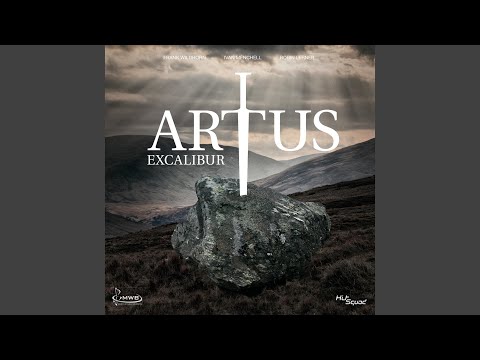
- What it is: Arthur's pushback song in Artus - Excalibur, right after Merlin reveals the truth about his origin.
- Who made it: Music by Frank Wildhorn, lyrics by Robin Lerner, book by Ivan Menchell.
- Where it appears: Act I, after the forest confrontation and just before Morgana's vow turns the plot darker.
- How it sounds: A tight, defiant burst, written like a young man trying to cut destiny down to size.
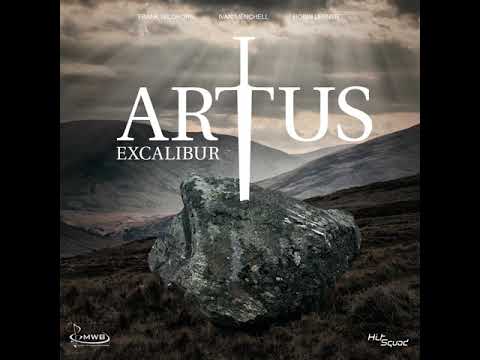
Artus - Excalibur (2014) - stage musical - non-diegetic. Act I rejection moment, set in the woods as Arthur refuses the crown and tries to throw away the role that just landed on him. The placement matters because it is the first time the show lets the hero say, out loud, that the legend feels like a trap.
This number is small on paper and sharp onstage. Wildhorn and Lerner keep the writing lean, because the scene is basically a verbal grapple: Merlin insists the path is set, Arthur insists he is being used. The melody stays close to speech, then spikes where anger takes over. It is not a victory aria. It is a refusal with teeth, the kind that makes the audience think, for a second, "Yeah, why should he accept this?"
- Key takeaway: The song frames kingship as coercion, not reward.
- Key takeaway: Arthur's defiance makes the myth feel human and fragile.
- Key takeaway: Its compact structure keeps the drama urgent, like a door slammed mid-argument.
Creation History
Artus - Excalibur premiered at Theater St. Gallen on March 15, 2014. The recording project around the premiere circulated quickly in the German-speaking market, with the concept release and the cast album listed through major digital platforms in early April 2014. The song's role in the plot is documented in published story summaries: it is the moment Arthur tries to reject fate after learning he is not Ector's biological son.
Song Meaning and Annotations
Plot
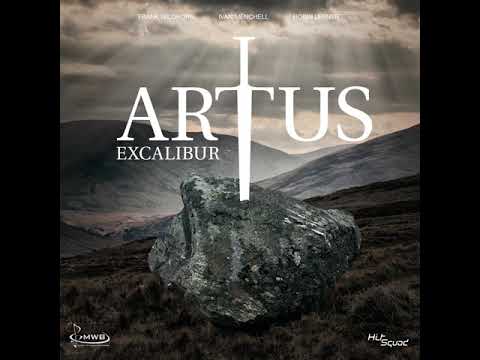
Arthur has pulled the sword, the crowd has crowned him, and then Merlin drops the private bomb: Arthur was placed with Ector as an infant. In the forest, Merlin explains that the whole situation was arranged long ago. Arthur does not take it as reassurance. He takes it as manipulation. This is where the song happens: Arthur throws the sword away and tries to walk out of the story.
Song Meaning
The meaning is blunt, almost confrontational: Arthur rejects the idea that a public miracle makes him a ruler. The text leans on identity language - who am I, who decides, what is true - because the real conflict is not the blade, it is authorship. Merlin is writing history in real time, and Arthur is pushing back like a person who does not want his life signed over. If the musical is asking "What makes a king?", this song answers with a grim alternative: sometimes a king is made by pressure.
Annotations
No official, creator-published annotations for the individual track were located in the consulted sources. The most useful anchors are the documented story beat and a few lyric lines that show Arthur's logic in the moment.
"I only freed a sword from the stone, but I do not share your delusion and your foolish plan."
That is Arthur drawing a boundary. He admits the miracle, then refuses the interpretation. It is a neat dramatic move: the show does not let him deny what happened, only what it is supposed to mean.
"Who are you? An obscure sorcerer, bringer of evil and agony."
Arthur is not debating policy, he is attacking motive. Calling Merlin dangerous is the fastest way to justify walking away, and the song lets that fear feel credible for a moment.
Driving rhythm and scene force
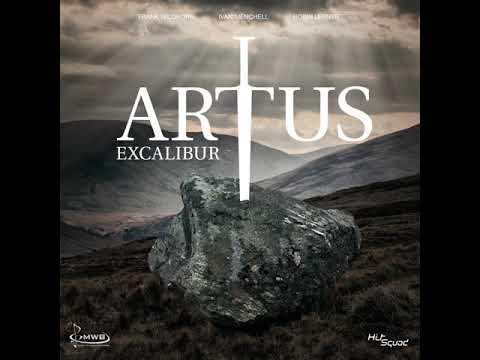
The rhythm pushes forward like an argument that will not slow down. Instead of sprawling chorus writing, the focus stays on direct phrasing and quick emotional turns. That keeps the scene alive: Merlin is steady, Arthur is volatile, and the music tracks the volatility.
Emotional arc
It starts in disbelief, flashes into anger, and ends in a hard no. The release is not relief, it is separation: Arthur tries to put distance between himself and the myth.
Symbols and touchpoints
The sword and the stone are symbols of legitimacy, but in this moment they also become symbols of confinement. The miracle that crowned him is the same miracle that cages him. The song makes that contradiction the point.
Technical Information (Quick Facts)
- Song: Schwert und Stein (Sword and Stone)
- Artist: Patrick Stanke
- Featured: Arthur
- Composer: Frank Wildhorn
- Producer: Not reliably confirmed in the consulted sources
- Release Date: April 4, 2014
- Genre: Musical theatre
- Instruments: Theater orchestration (arrangements and orchestrations credited to Koen Schoots for the production)
- Label: HitSquad Records
- Mood: Defiant; unsettled; urgent
- Length: 2:56
- Track #: 4
- Language: German
- Album (if any): Artus Excalibur - Das Musical
- Music style: Narrative theater-pop with a tense, scene-driven pulse
- Poetic meter: Mixed accentual (speech-led phrasing shaped for dramatic clarity)
Frequently Asked Questions
- Who performs the song on the 2014 recording?
- Digital and video listings credit the track to Patrick Stanke.
- Where does the song sit in Act I?
- It comes right after Merlin shows Arthur his origin in the forest, and it marks Arthur's attempt to reject the crown.
- What is Arthur's main argument in the song?
- He accepts that he pulled the sword, but he rejects the claim that the act proves he should rule.
- Is Merlin treated as trustworthy here?
- No. The text lets Arthur accuse Merlin of manipulation, which makes the mentor figure feel morally complicated.
- Does the number function like a solo aria?
- Yes, it reads as a character-focused burst, built to keep the plot moving rather than to expand into a large ensemble set piece.
- What happens immediately after this moment?
- The story turns to Morgana, who embraces darker forces and sets the larger conflict in motion.
- Is there a known alternate version in other productions?
- Fan documentation around the Korean adaptation Xcalibur suggests the Arthur refusal material exists under a different English reference title.
- Is there reliable chart data for this specific track?
- No track-level weekly chart peaks were found in the consulted catalog sources.
- Is the song's duration consistent across editions?
- Physical-release listings show it at 2:56, while some playlists and uploads vary slightly due to trimming or combined-track indexing.
Awards and Chart Positions
Track-level chart reporting for this specific number is not widely documented. However, the recording project around the premiere period did post a clear sales milestone. According to Playbill, the concept recording tied to Artus - Excalibur reached No. 1 on German iTunes and Amazon charts on April 3, 2014.
| Item | Date | Result | Notes |
|---|---|---|---|
| Concept recording (project tied to the St. Gallen premiere) | April 3, 2014 | No. 1 on German iTunes and Amazon | Reported during the premiere period |
Additional Info
This is the song where the legend almost breaks. Many Arthur versions treat the sword pull like a coronation selfie. Here, the musical makes it feel like a public accident followed by a private crisis. That is why the argument hits: Arthur is not refusing glory, he is refusing a life he never agreed to live.
According to Playbill, the early recording release performed strongly on German storefront charts, which helps explain why official audio versions keep resurfacing across platforms. The material has a clear dramatic hook, and it travels well even when the staging is not in the room.
Key Contributors
| Entity | Type | Relationship (S-V-O) |
|---|---|---|
| Schwert und Stein | Work (song) | Shows - Arthur rejecting kingship after the forest revelation |
| Frank Wildhorn | Person | Composed - Artus - Excalibur score |
| Robin Lerner | Person | Wrote lyrics for - Artus - Excalibur |
| Ivan Menchell | Person | Wrote book for - Artus - Excalibur |
| Patrick Stanke | Person | Performed - Arthur role track on the 2014 album |
| Koen Schoots | Person | Created arrangements and orchestrations for - Artus - Excalibur |
| Theater St. Gallen | Organization | Premiered - Artus - Excalibur on March 15, 2014 |
| HitSquad Records | Organization | Released - Artus Excalibur - Das Musical |
Sources
Sources: Playbill, Wikipedia, YouTube, Discogs, Spotify, LyricTranslate