Morgen triffst du den Tod / Tomorrow, You Meet Death Lyrics — Artus Excalibur
Morgen triffst du den Tod / Tomorrow, You Meet Death Lyrics
– Arthur, Morgana, Loth, Guinevere, EnsembleSag der Welt adieu, denn dein Ende ist nah
Und die Frage ist nur noch, wann
Denn die Erde weint Blut und der Mond färbt sich schwarz
Durch all das Morden, das mit dir begann
Doch du wirst schon sehr bald meine Rache spür’n
Und dann fährst du zur Hölle hinab
Lot:
Eine Schlacht steht an, ein Gemetzel, ein Kampf
Ich vernichte sein Heer, Mann für Mann
Er hat keine Chance in dem Spiel um den Thron
Das noch niemand mit Fairness gewann
Und der Drache wird bald schon erschlagen sein
Und der Löwe genießt den Triumph
Artus & Lot:
Ich werd dich zu Staub zermalmen
Bald siehst du dein letztes Morgenrot
Bald ist all dein Leid vergessen
Fort alle irdische Not
Denn morgen schon triffst du den Tod
Morgana:
Alles Wolfsgeheul macht mich gar nicht bang
Es macht sie blind für das wahre Ziel
Ihre Mordlust kocht und das passt mir gut
Ich besieg sie im eig’nen Spiel
Denn der Drache wird bald schon erschlagen sein
Und der Löwe genießt den Triumph
Morgana & Lot:
Ich werd dich zu Staub zermalmen
Bald siehst du dein letztes Morgenrot
Bald ist all dein Leid vergessen
Fort alle irdische Not
Denn morgen schon triffst du den Tod
Guinevere:
Lass es nicht Rache sein, die dir den Sinn betört
Sie hat schon manchen Mann vernichtet und zerstört
Artus, Morgana & Lot:
Ich werd dich zu Staub zermalmen
Bald siehst du dein letztes Morgenrot
Bald ist all dein Leid vergessen
Fort alle irdische Not
Denn morgen schon triffst du den Tod
Ja, morgen schon triffst du den Tod
Ja, morgen schon triffst du den Tod
ENGLISH LYRICS:
Arthur:
Say farewell to the world, for your end is near,
And the question now is just when.
For the earth weeps blood and the moon turns black
From all the killing that you began.
But soon you will feel my revenge,
And then you will descend to hell.
Lot:
A battle looms, a massacre, a fight,
I will destroy his army, man by man.
He has no chance in the game for the throne,
A game no one has ever won with fairness.
And the dragon will soon be slain,
And the lion will relish the triumph.
Arthur & Lot:
I will crush you to dust,
Soon you'll see your last dawn,
Soon all your suffering will be forgotten,
Gone is all earthly pain,
For tomorrow you will meet death.
Morgana:
All their howling does not scare me,
It blinds them to the true goal.
Their lust for murder boils, and that suits me well,
I'll defeat them at their own game.
For the dragon will soon be slain,
And the lion will relish the triumph.
Morgana & Lot:
I will crush you to dust,
Soon you'll see your last dawn,
Soon all your suffering will be forgotten,
Gone is all earthly pain,
For tomorrow you will meet death.
Guinevere:
Let it not be revenge that clouds your mind,
It has destroyed and ruined many a man.
Arthur, Morgana & Lot:
I will crush you to dust,
Soon you'll see your last dawn,
Soon all your suffering will be forgotten,
Gone is all earthly pain,
For tomorrow you will meet death.
Yes, tomorrow you will meet death.
Yes, tomorrow you will meet death.
Song Overview
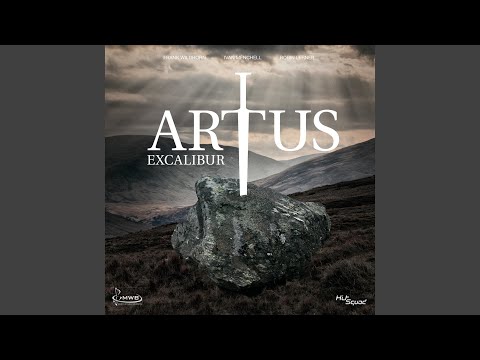
Review and Highlights
Quick summary
- Work: Artus - Excalibur (world premiere: March 15, 2014, Theater St. Gallen)
- Song role: Act II war-declaration set piece where both sides sharpen the knives
- Who leads: Artus, Morgana, Loth, Guinevere, plus ensemble (as listed in official song lists)
- Sound: marching pulse and choral blasts, built like a duel in alternating verses
- Recorded version credit: Mark Seibert, Sabrina Weckerlin, Patrick Stanke, Annemieke van Dam, Eric Papilaya and chorus
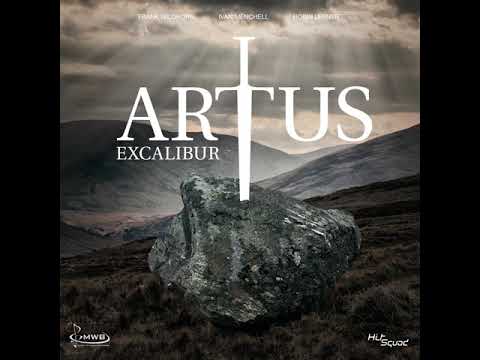
Artus - Excalibur (2014) - stage musical - non-diegetic. The wedding has barely survived its own chaos: Ector is dead, Artus is raw with grief, and the idea of Camelot as a peace project starts slipping through his fingers. This song is where the show admits what it has been circling since Act I - unification is hard, vengeance is easy, and power loves a shortcut.
The number plays like a split-screen: Artus spits prophecy back as threat, while Morgana and Loth treat war as a clean business plan. The lyric does not bother with polite metaphor. It goes straight for apocalypse images - earth bleeding, the moon darkening - because the characters are trying to sound like fate, not people. That is the trick and the warning. When leaders start talking like myth, somebody ends up dead for real.
Creation History
The musical was developed for Theater St. Gallen with music by Frank Wildhorn, lyrics by Robin Lerner, and German translation by Nina Schneider. The concept recording tied to the premiere followed in early April 2014, and the score was promoted as pop-rooted musical theatre with folk color in the larger sonic palette. This track sits in the darker lane of that palette: less romance, more iron and drums, arranged to let rival declarations collide.
Song Meaning and Annotations
Plot
Act II escalates fast. After the wedding celebration turns violent and Ector dies, Artus swears revenge and declares war on Loth. Guinevere tries to keep him steady, Merlin warns him that Excalibur was forged to unite rather than destroy, but rage wins the argument. In parallel, Morgana and Loth marshal their forces and talk themselves into certainty. This song is the hinge: the story stops being court intrigue and becomes a campaign.
Song Meaning
The meaning is blunt: everyone is gambling with death, and they are doing it with a smile they will regret later. Artus is no longer speaking as a young king learning the job. He is speaking as a weapon, aiming at Loth. Morgana and Loth answer with the language of conquest, framing cruelty as inevitability. The mood is militant, with a nasty edge of triumph - the kind of triumph that arrives before the first casualty report.
Annotations
"Sag der Welt adieu, denn dein Ende ist nah"
Artus opens with a curse, not a command. That matters: a king who cannot grieve safely will try to turn sorrow into verdict. The line is less strategy and more eruption.
"Denn die Erde weint Blut und der Mond faerbt sich schwarz"
These are end-times images, the kind you hear in legends when history wants to sound bigger than it is. Here, the imagery also shows Artus taking on Merlin's language, but twisting it. Prophecy becomes a threat.
"Eine Schlacht steht an, ein Gemetzel, ein Kampf"
Loth is chillingly practical. The triple hit of battle, slaughter, fight is a salesman pitch for violence. No mourning, no hesitation, just momentum.
"Im Spiel um den Thron ... gewann noch keiner gerecht"
This is the cynic thesis in one breath: power is never fair, so stop pretending. It frames Loth as a villain who thinks he is a realist, which is always the more dangerous type.
Musical mechanics
Driving rhythm: a steady march feel around the chorus, built to sound like troops assembling. It is the show turning choreography into pressure.
Style fusion: pop-rock urgency with theatrical chorus writing, the kind of blend the release notes for the recording highlight as a signature of the score.
Emotional arc: wrath (Artus), certainty (Loth), manipulation (Morgana), then the ensemble seals it like a stamp on a war order.
Technical Information (Quick Facts)
- Song: Morgen triffst du den Tod (alternate title: Tomorrow, You Meet Death)
- Artist: Mark Seibert, Sabrina Weckerlin, Patrick Stanke, Annemieke van Dam, Eric Papilaya and chorus
- Featured: Artus; Morgana; Loth; Guinevere; Ensemble
- Composer: Frank Wildhorn
- Lyricist: Robin Lerner
- Book: Ivan Menchell
- German translation: Nina Schneider
- Release Date: April 4, 2014 (digital album listing)
- Genre: Musical theatre; pop-rock ensemble number
- Instruments: Band and orchestral layers, chorus
- Label: HitSquad Records
- Mood: Militaristic, confrontational, prophecy-tinged
- Length: 3:49
- Track #: 10 (on Artus Excalibur - Das Musical)
- Language: German
- Music style: call-and-response threats with ensemble reinforcement
- Poetic meter: accentual, speech-led verse moving into a regularized refrain
Frequently Asked Questions
- Who sings the number in the musical?
- It is listed for Artus, Morgana, Loth, Guinevere, plus ensemble.
- Where does it sit in Act II?
- Right after Artus declares war, while Morgana and Loth assemble their army and talk themselves into victory.
- Is it a villain song or a hero song?
- Both. The structure is a duel: Artus threatens, Loth counters, and the ensemble turns threats into inevitability.
- Why does Artus use apocalyptic imagery?
- Because he is trying to make revenge sound like justice and fate. The lyric inflates grief into prophecy.
- What does Guinevere contribute here?
- Her presence underlines the human cost. The song is not only about armies. It is also about a marriage already living under siege.
- Is the title "Tomorrow, You Meet Death" an official translation?
- It is commonly used as the English alternate title in song lists and summaries for the show.
- How long is the recording on the 2014 release?
- Major digital listings for the album show 3:49.
- What is the track number on the concept release?
- It appears as Track 10 in multiple album track lists.
- What makes the lyric feel so combative?
- Short, declarative threats and repeated war nouns. It is written like a verdict being read out loud.
- Does the song foreshadow later collapse?
- Yes. It frames the throne as a rigged contest, which primes the story for betrayal and moral erosion.
Awards and Chart Positions
There is no widely documented, separate single-chart run for this track. The bigger story is the album launch: according to Playbill, the concept recording tied to the St. Gallen production hit No. 1 on both German iTunes and Amazon charts at release in early April 2014. That platform surge is a useful snapshot of how quickly the show travelled beyond the theatre walls.
| Item | Metric | Date | Scope |
|---|---|---|---|
| Artus - Excalibur (concept recording) | No. 1 on German iTunes and Amazon (reported) | April 3, 2014 | Platform charts (album), not an official national singles chart |
Additional Info
The clever sting of this song is that it makes two incompatible ideas sound equally convincing. Artus frames war as moral accounting. Loth frames it as politics without fairy tales. Morgana acts like the accelerant, keeping the tempo of hatred high enough that nobody stops to think. When the chorus enters, it sounds like history voting, which is exactly how disasters get permission.
Key Contributors
| Entity | Type | Relationship (S-V-O) |
|---|---|---|
| Frank Wildhorn | Person | Wildhorn composed the score for Artus - Excalibur. |
| Robin Lerner | Person | Lerner wrote lyrics for Artus - Excalibur. |
| Ivan Menchell | Person | Menchell wrote the book for Artus - Excalibur. |
| Nina Schneider | Person | Schneider translated the show into German for the St. Gallen production. |
| Koen Schoots | Person | Schoots is credited for orchestrations and arrangements for the production build. |
| Mark Seibert | Person | Seibert is credited as a principal vocalist on the recorded track. |
| Sabrina Weckerlin | Person | Weckerlin is credited as a principal vocalist on the recorded track. |
| Patrick Stanke | Person | Stanke originated Artus in the St. Gallen premiere cast and appears on the recording. |
| Annemieke van Dam | Person | van Dam originated Guinevere in the St. Gallen premiere cast and appears on the recording. |
| Eric Papilaya | Person | Papilaya is credited as a vocalist on the recorded track. |
| Theater St. Gallen | Organization | Theater St. Gallen premiered Artus - Excalibur on March 15, 2014. |
| HitSquad Records | Organization | HitSquad Records released the 2014 digital album listing. |
How to Sing Morgen triffst du den Tod
For a piece that sounds like a battlefield, the hardest part is control. The recorded listings commonly tag the tempo around 99 BPM, and data services frequently place it in A sharp minor territory. Treat those as practical landmarks, then build the performance around clarity: you are delivering threats that must land like legal statements.
- Tempo first: Practice the lyric at a slow count-in, then move toward the recorded pace (about 99 BPM) once diction stays crisp.
- Diction: Keep consonants clean on the hard words (Tod, Kampf, Thron). Think percussion, not drama class.
- Breathing: Mark breaths before the long declarations. Do not wait for panic. War songs punish late breathing.
- Flow and rhythm: In the verse, ride the speech rhythm. In the refrain, lock into the marching grid so the chorus can sit on top.
- Accents: Hit the nouns. The text is built from objects and actions, so stress should follow meaning, not only melody.
- Ensemble awareness: If you sing Artus, leave space for the counter-voices. If you sing Loth or Morgana, sharpen the edges and avoid warmth.
- Mic discipline: Keep distance consistent in the loudest threats. The intensity should grow without distortion.
- Pitfalls: Over-singing the anger. The threat is scarier when it is steady, not screamed.
Sources
Sources: Playbill (concept recording chart note), Wikipedia (Artus-Excalibur song list and Act II plot), Apple Music (album track listing and duration), LyricTranslate (lyrics), YouTube (official audio upload), JPC (track list)
Music video
Artus Excalibur Lyrics: Song List
- Act I
- Das Feld der Ehre / The Field of Honor
- Der Heiler / The Healer
- Excalibur
- Fern von dieser Welt / In This World
- Schwert und Stein / Sword and Stone
- Sünden der Väter / Sins of the Fathers
- Ein wahrer Held / A True Hero
- Was macht einen Konig aus / What Makes A King?
- Die ruhmreiche Schlacht / The Glorious Battle
- Was will ich hier / What I Want
- Ein neuer Tag / A New Day
- Heute Nacht fängt es an / It Begins Tonight
- Act II
- Sogar der Regen schweigt still heut Nacht / Even the Rain is Silent Tonight
- Vater und Sohn / Father and Son
- Morgen triffst du den Tod / Tomorrow, You Meet Death
- Die Rose / The Rose
- Wo ging die Liebe hin? / How Do You Make Love Stay?
- Begehren / Desire
- Nur sie allein / Her Alone
- Der Kreis der Menschheit / The Circle of Humanity
- Alles ist vorbei / The End
- Vor langer Zeit / Long Ago