Ein neuer Tag / A New Day Lyrics — Artus Excalibur
Ein neuer Tag / A New Day Lyrics
– GuinevereDa wartet er auf mich
Wie die Rose auf das Licht
Ein heller Strahl der Hoffnung
Den ich vorher niemals sah
Dabei war er schon so nah
Und manches Mal in tiefer Nacht
Konnt’ ich in spüren
Ein neuer Tag, der naht sacht heran
Und die Nacht hört nun endlich auf
Ich seh am Horizont ein Licht
Die Wolken brechen auf
Wie Engelsflügel zieh’n sie vorbei
Ich hör in ihrem schweren Schlag
Es naht ein Neubeginn
Und ein neuer Tag
Ich werde ihm zur Seite steh’n
Für alle Zeit, mein Leben lang
Und ich schwör, es gibt nichts
Nichts, das uns trennen kann
Ein neuer Tag, der naht sacht heran
Und die Nacht hört nun endlich auf
Mit ihm erwacht ein neues Licht
Die Wolken brechen auf
Wie Engelsflügel zieh’n sie vorbei
Ich hör in ihrem schweren Schlag
Mein Traum wird endlich wahr
Mit dem neuen Tag
ENGLISH LYRICS:
Somewhere out there, far away,
He waits for me, I know,
Like the rose awaits the light,
A bright beam of hope,
That I had never seen before,
Yet he was always near.
And sometimes in the deep of night,
I could feel him, so clear.
A new day softly approaches,
And the night finally ends,
I see a light on the horizon,
The clouds begin to rend.
Like angel wings, they pass me by,
In their heavy beat I hear,
A new beginning draws nigh,
And a new day is here.
I will stand by his side,
For all time, my whole life long,
And I swear, there’s nothing,
Nothing that can keep us apart, so strong.
A new day softly approaches,
And the night finally ends,
With him awakens a new light,
The clouds begin to rend.
Like angel wings, they pass me by,
In their heavy beat I hear,
My dream is finally real,
With the new day so near.
Song Overview
Review and Highlights
Quick summary
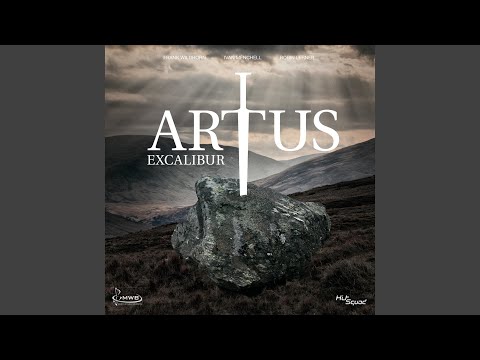
- What it is: Guinevere's Act I solo from Artus - Excalibur, written as a letter-to-heart moment rather than a court spectacle.
- Who sings it on the 2014 release: Annemieke van Dam.
- Where it appears: After Arthur refuses Morgana's claim and then sends a letter to Guinevere, asking her to come to Camelot.
- What changes in the story: Guinevere stops being a name in the distance and becomes a decision - she chooses hope, and she chooses him.
- How it differs from the surrounding numbers: It trades argument and battlefield heat for a private sunrise, the calm before a very sharp turn.
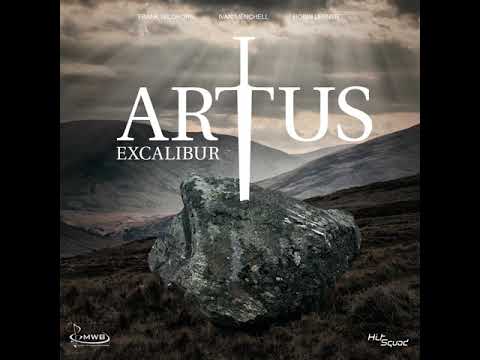
Artus - Excalibur (2014) - stage musical - non-diegetic. Letter scene, played away from Camelot's noise. Guinevere reads Arthur's invitation and sees him as a symbol of hope for a battered country. The placement matters because the show lets love arrive as belief first. Romance is not the headline yet - resolve is.
This song works because it does not oversell. Wildhorn keeps the melody open and patient, like someone trying to talk themselves into bravery without turning it into a speech. Guinevere is not claiming power. She is choosing movement: leaving where she is, walking toward something uncertain, betting that the new king means what he writes. In a score full of prophecy and threats, the tenderness here is not decoration. It is a risk, stated quietly.
- Key takeaway: The number frames love as an act of trust, not a reward for heroics.
- Key takeaway: It sets up the ambush sequence that follows by giving the audience something to fear losing.
- Key takeaway: The vocal line favors clarity over fireworks, which suits a character making a real-world choice.
Creation History
Artus - Excalibur premiered at Theater St. Gallen on March 15, 2014, with music by Frank Wildhorn, lyrics by Robin Lerner, and a book by Ivan Menchell. Nina Schneider is credited for the German translation. The cast album released in early April 2014 lists this as Guinevere's solo, and it plays like a deliberate breather: the score steps back from swords and spells long enough to let the audience hear what hope sounds like in one human voice.
Song Meaning and Annotations
Plot
Arthur has stabilized Camelot, founded the Round Table, and survived a direct challenge from Morgana. After refusing her demand, he realizes he has fallen in love with Guinevere and writes to her, calling her to Camelot. Guinevere reads the letter and feels something larger than romance: she sees a chance for the country to heal, and she steps into that possibility. Immediately after, danger closes in - Morgana sends knights to ambush Guinevere and Lucan, and the story pivots toward loss and divided loyalty.
Song Meaning
The meaning is built on contrast. The world around Guinevere is still violent, still unstable, still full of men with weapons and grudges. Yet she is moved by the idea of a new start that is not naive, just necessary. The song reads like a vow spoken to oneself: if hope is real, I will walk toward it; if love is real, I will risk it. That mix of civic belief and private longing is what makes the number feel specific. It is not only a love song. It is a decision to leave safety behind.
Annotations
No creator-published annotation set for this individual track was located in the consulted sources. The most reliable anchors are the documented plot beat (Guinevere reading Arthur's letter and falling in love) and a few lyric fragments that show her mindset without flattening it into slogans.
"Dort irgendwo, weit draussen, da wartet er auf mich."
She frames Camelot as distance and promise in the same breath. The line is not about certainty. It is about direction.
"Wie die Rose auf den Morgen, so wart ich auf mein Licht."
This is the song's central image: patience that hurts, but still holds. It also foreshadows how quickly that light gets threatened once she starts the journey.
Driving rhythm and sound
The pulse is steady, almost like footsteps. The arrangement leaves space around the vocal, which helps the lyric land as thought rather than proclamation. That spaciousness is doing dramatic work: Guinevere is alone with the letter, alone with the choice, alone with the risk.
Emotional arc
It begins in distance, turns into belief, and settles into commitment. The ending does not feel like a curtain-call finish. It feels like a door opening, which is exactly why the following ambush scene hits so hard.
Symbols and touchpoints
The "new day" idea can be cheap in weaker writing. Here it is earned by context: Britain is torn apart by war, and a young king is trying to unite it. Guinevere choosing hope is a political act as much as a romantic one. According to Playbill, the related concept recording drew major attention in Germany at release, and numbers like this explain why: they are story-first, not just pretty.
Technical Information (Quick Facts)
- Song: Ein neuer Tag (A New Day)
- Artist: Annemieke van Dam
- Featured: Guinevere
- Composer: Frank Wildhorn
- Producer: Martin Boehm; Ludwig Coss
- Release Date: April 4, 2014
- Genre: Musical theatre
- Instruments: Theater orchestration (arrangements and orchestrations credited to Koen Schoots for the production)
- Label: HitSquad Records
- Mood: Hopeful; intimate; quietly determined
- Length: 4:06
- Track #: 7 on many digital editions; 9 on some physical tracklists that index combined tracks differently
- Language: German
- Album (if any): Artus Excalibur - Das Musical
- Music style: Modern musical-theater ballad writing with story-driven pacing
- Poetic meter: Mixed accentual (speech-led phrasing shaped for stage diction)
Frequently Asked Questions
- Who sings this number in the musical?
- It is Guinevere's solo, and the 2014 recording credits Annemieke van Dam.
- When does it happen in Act I?
- After Morgana is refused at Camelot and after Arthur writes Guinevere a letter inviting her to Camelot.
- Is this a love song or a political song?
- Both. The lyric treats love as belief, and belief as a choice with consequences for the country around her.
- Why does the song feel like a calm scene in a violent story?
- Because it is the story giving you something to protect. The calm makes the following ambush and loss land harder.
- Does the plot confirm what Guinevere decides after reading the letter?
- Yes. She accepts Arthur as a symbol of hope and commits to traveling toward Camelot.
- What comes right after this moment?
- Lucan is sent to escort her, Morgana orders an ambush, and Lancelot rescues them, with Lucan dying from his wounds.
- Why do some releases list different track numbers?
- Some physical editions index combined tracks differently, which can shift numbering even when the audio itself matches.
- What is the listed runtime on common digital editions?
- Many listings show 4:06.
- Is there a known official video for this track?
- The most consistent official online reference is the auto-generated audio upload credited as "Provided to YouTube by Rebeat Digital GmbH."
- Is there track-level chart history for this song?
- Standalone weekly chart peaks for the individual track are not commonly documented in the consulted sources.
Additional Info
One underrated thing this number does is timing. The show places Guinevere's hope right before the road turns dangerous, almost like it is daring the audience to believe in Camelot for a second. That is a classic theater move: give the heart something bright, then test how long it can stay bright once the knives come out.
Another detail worth cataloging is the credit trail. Some platforms list the producers for the recording, which helps when you are mapping different editions of the album. It is also a reminder that cast recordings are not just documentation - they are constructed objects, shaped to make story beats read clearly without staging.
Key Contributors
| Entity | Type | Relationship (S-V-O) |
|---|---|---|
| Ein neuer Tag | Work (song) | Shows - Guinevere choosing hope after reading Arthur's letter |
| Annemieke van Dam | Person | Performs - Guinevere solo on the 2014 recording |
| Frank Wildhorn | Person | Composed - Artus - Excalibur score |
| Robin Lerner | Person | Wrote - lyrics for the musical |
| Ivan Menchell | Person | Wrote - book for the musical |
| Nina Schneider | Person | Translated - German version of the show |
| Koen Schoots | Person | Provided - arrangements and orchestrations for the production |
| Martin Boehm | Person | Produced - the 2014 recording releases |
| Ludwig Coss | Person | Produced - the 2014 recording releases |
| Theater St. Gallen | Organization | Premiered - Artus - Excalibur on March 15, 2014 |
| HitSquad Records | Organization | Released - Artus Excalibur - Das Musical recording (2014) |
Sources
Sources: Playbill, Wikipedia, YouTube, Qobuz, Discogs, Apple Music, LyricsTranslate
Music video
Artus Excalibur Lyrics: Song List
- Act I
- Das Feld der Ehre / The Field of Honor
- Der Heiler / The Healer
- Excalibur
- Fern von dieser Welt / In This World
- Schwert und Stein / Sword and Stone
- Sünden der Väter / Sins of the Fathers
- Ein wahrer Held / A True Hero
- Was macht einen Konig aus / What Makes A King?
- Die ruhmreiche Schlacht / The Glorious Battle
- Was will ich hier / What I Want
- Ein neuer Tag / A New Day
- Heute Nacht fängt es an / It Begins Tonight
- Act II
- Sogar der Regen schweigt still heut Nacht / Even the Rain is Silent Tonight
- Vater und Sohn / Father and Son
- Morgen triffst du den Tod / Tomorrow, You Meet Death
- Die Rose / The Rose
- Wo ging die Liebe hin? / How Do You Make Love Stay?
- Begehren / Desire
- Nur sie allein / Her Alone
- Der Kreis der Menschheit / The Circle of Humanity
- Alles ist vorbei / The End
- Vor langer Zeit / Long Ago