Then We Are Decided Lyrics — Jesus Christ Superstar
Then We Are Decided Lyrics
We've been sitting on the fence for far too long.
ANNAS
Why let him upset us?
Caiaphas, let him be.
All those imbeciles will see,
He really doesn't matter.
CAIAPHAS
Jesus is important,
We've let him go his way before.
And while he starts a major war,
We theorize and chatter.
ANNAS
He's just another scripture thumping hack from Galilee.
CAIAPHAS
The difference is they call him King,
The difference frightens me!
What about the Romans?
When they see King Jesus crowned,
Do you think they'll stand around,
Cheering, and applauding?
What about our people?
If they see we've lost our nerve,
Don't you think that they deserve,
Something more rewarding.
ANNAS
They've got what they want,
They think so, anyway.
If he's what they want,
Why take their toy away?
He's a craze!
CAIAPHAS
Put yourself in my place,
I can hardly step aside.
Can not let my hands be tied.
I am law and order.
What about our priesthood?
Don't you see that we could fall?
If we are to last at all,
We can not be divided.
ANNAS
Then say so to the council,
But don't rely on subtlety.
Frighten them, or they won't see.
CAIAPHAS
Then we are decided?
ANNAS
Then we are decided.
Song Overview
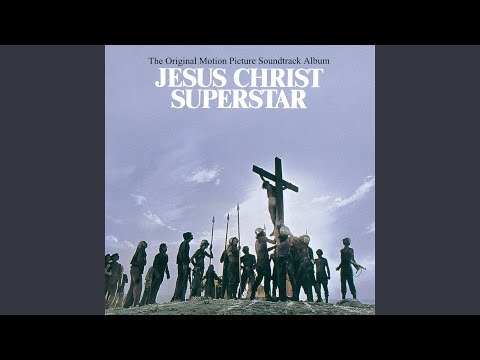
Review and Highlights
Quick summary
- What it is: A film-only council scene for Annas and Caiaphas, written by Andrew Lloyd Webber and Tim Rice for the 1973 screen version.
- Where it lives: On the 1973 original motion picture soundtrack (Track 5), later reissued on CD (1993) and as a 25th anniversary edition (1998).
- Who performs it on the film recording: Bob Bingham (Caiaphas) and Kurt Yaghjian (Annas).
- Why it matters: It turns rumor into policy: a backroom argument that snaps into a public decision, setting up the next escalation.
Jesus Christ Superstar (1973) - film - not diegetic. A stylized, sung debate among the high priests (shot at Herodium) that lands early in the film at about 0:13:30, then funnels straight into the machinery of the next number. The placement is surgical: it takes the crowd noise outside and translates it into a vote-counting panic inside.
If you have spent years with stage recordings, this cue can feel like a missing puzzle piece suddenly clicking into place. The writing is terse, almost bureaucratic, but the groove is not polite: the rhythm pushes like a committee meeting with a ticking clock under the table. Annas needles, Caiaphas computes, and the music keeps them from ever fully pausing to breathe - which is the point. When power argues, it rarely sounds like poetry. It sounds like a plan.
Creation History
The number was created for the 1973 film adaptation, one of the soundtrack additions that did not exist on the 1970 concept album. As stated on Andrew Lloyd Webber's official site, the movie soundtrack folds in extra material, and this scene is the leanest kind of narrative engineering: two authorities in a tight space, sharpening their fear into a single sentence. Filmed at Herodium in the West Bank, it ties politics to place in a way that the stage cannot quite replicate - desert air, hard stone, and the sense that history is watching from the hills.
Song Meaning and Annotations
Plot
Annas opens with dismissal: let the preacher burn out, the crowd will move on. Caiaphas answers like an administrator with a nightmare spreadsheet - public frenzy invites imperial scrutiny, and scrutiny invites punishment. The argument pivots from theology to optics, from doctrine to crowd control. By the end, even the skeptic wants the council frightened into line. The title phrase is not triumph. It is paperwork stamped in red ink.
Song Meaning
The scene is about fear wearing a robe. On the surface, the leaders talk about law, order, and protecting the priesthood. Underneath, it is the familiar logic of any institution under pressure: protect legitimacy, manage the mob, avoid giving an occupying power an excuse. The hook is its bluntness. No mysticism, no sermon - just a debate over consequences, and a decision that arrives because hesitation has become more dangerous than action.
Annotations
"And while he starts a major war"
Caiaphas treats the word "king" like a lit match near spilled oil. In this reading, the risk is not only spiritual dissent but political misinterpretation: Rome does not need certainty, it needs a pretext.
"Something more rewarding?"
That question is a quiet threat disguised as public service. Caiaphas argues that if the authorities look weak, the crowd will demand a stronger show of control. He is not flattering the people - he is warning that they can become a problem to be managed.
"What about our priesthood?"
This is the lever that finally moves Annas. The debate stops being about the preacher and becomes about status. The line also foreshadows the coming clash around the Temple economy: authority is not only theological, it is structural, and structures hate surprises.
Style and rhythm
Rock is doing stagecraft here. The pulse keeps the dialogue moving, like a drumline escorting a verdict down a hallway. The vocal writing leans into contrast: Annas throws jabs and shrugs, Caiaphas answers with longer, heavier lines that sound built to persuade a room. The tension is not in big melodic leaps but in how quickly certainty replaces debate.
Cultural and historical touchpoints
The scene echoes a real political anxiety of occupied Judea: charismatic claimants could invite retaliation. The script does not need a lecture. It just lets the officials say what empires force local leaders to think: "How will this look to the occupier, and what happens to us if it looks bad?"
Technical Information
- Artist (release billing): Andrew Lloyd Webber (soundtrack catalog listings often credit the composer as the primary album artist)
- Featured: Bob Bingham (as Caiaphas), Kurt Yaghjian (as Annas)
- Composer: Andrew Lloyd Webber
- Lyricist: Tim Rice
- Music conducted by: Andre Previn
- Release Date: June 1973 (original soundtrack issue); U.S. theatrical release for the film followed on August 15, 1973; later CD reissue in 1993 and anniversary reissue in 1998
- Genre: Rock; soundtrack; rock opera
- Instruments: Rock band foundation with orchestral scoring typical of the film recording
- Label: MCA
- Mood: Wary, urgent, calculating
- Length: About 2:32-2:34 depending on edition
- Track #: 5
- Language: English
- Album (key edition): Jesus Christ Superstar: The Original Motion Picture Soundtrack (reissued 1998)
- Music style: Through-sung dialogue with rock drive and cinematic orchestration
- Poetic meter: Mostly iambic speech-rhythm with mixed feet in the longer Caiaphas lines
Questions and Answers
- When was the recording first released?
- The film soundtrack issue dates to June 1973, with later reissues on CD in 1993 and an anniversary edition in 1998.
- Who wrote the number?
- Music is by Andrew Lloyd Webber and lyrics are by Tim Rice.
- Is it part of the original 1970 concept album?
- No. It was created for the 1973 film soundtrack, expanding the high-priest thread before the larger council sequence.
- Who is singing in the film recording?
- Bob Bingham voices Caiaphas and Kurt Yaghjian voices Annas.
- What is the central conflict inside the scene?
- Annas argues for dismissal and delay, while Caiaphas argues that delay invites crackdown - and that optics, not belief, can trigger disaster.
- Why does Caiaphas keep bringing up Rome?
- Because the leaders fear that a public "king" narrative will be read as revolt, and empires do not wait for nuance.
- What does "Then we are decided" mean dramatically?
- It is the moment talk becomes policy. The phrase lands like a gavel, and the story stops drifting.
- How does the music support the power dynamic?
- The rhythm keeps pushing forward, giving Annas no room to stall and giving Caiaphas a steady platform to persuade.
- Is the scene diegetic?
- Not in a literal sense. The film treats sung debate as its storytelling language, more like heightened speech than a performance for an in-world audience.
- Why do fans call it a key addition?
- It clarifies motive. Instead of jumping straight to conspiracy, it shows the internal bargaining that makes conspiracy feel, to them, like self-defense.
Awards and Chart Positions
The track itself was not pushed as a standalone pop single, but the film and its soundtrack had a real commercial afterlife. According to the Official Charts Company, the original soundtrack album reached the UK albums chart with a documented peak and a long run across the autumn of 1973. On the film side, the adaptation score earned an Academy Award nomination, while major industry bodies recognized the movie for its sound and presentation of the material.
| Release | Chart | Peak | First chart date or peak week |
|---|---|---|---|
| Jesus Christ Superstar (Original Motion Picture Soundtrack) | US Billboard Top LPs and Tape | 21 | Week of September 15, 1973 |
| Jesus Christ Superstar (Original Soundtrack) | UK Official Albums Chart | 23 | First chart date September 22, 1973 |
| Jesus Christ Superstar (film soundtrack) | Australia (Kent Music Report) | 25 | 1973 to 1974 run |
| Body | Recognition | Year |
|---|---|---|
| Academy Awards | Nomination for adaptation score (Andre Previn, Herbert W. Spencer, Andrew Lloyd Webber) | 1974 |
| Golden Globe Awards | Nominations for the film and leading performances | 1974 |
| BAFTA | Best Soundtrack win (film credit) | 1974 |
Additional Info
One detail I always enjoy sharing: the singer playing Annas on the 1973 soundtrack, Kurt Yaghjian, later described the Herodium shoot with the kind of specificity only location work gives you. It is not trivia, it is atmosphere - stone underfoot, heat in the throat, the odd calm between takes while you are recreating a turning point in a story everyone thinks they already know.
"We shot that particular scene on the top of Herodium, which was Herod’s lavish retreat."
That is the film in a nutshell: theatrical argument staged against real terrain. It is also a reminder that the movie is not trying to be a museum piece. It is a troupe performance dropped into landscape, with the landscape pushing back.
There is also a small casting footnote that matters for collectors: Yaghjian has noted that this film recording is a rare official document of Annas singing this specific cue, because many stage versions fold or streamline the moment. In the film, the number gets its own space to breathe, then slams the door shut with that final phrase.
Key Contributors
| Entity | Type | Relationship (S-V-O) |
|---|---|---|
| Andrew Lloyd Webber | Person | Andrew Lloyd Webber composed the music for the film recording. |
| Tim Rice | Person | Tim Rice wrote the lyrics for the number. |
| Bob Bingham | Person | Bob Bingham performed as Caiaphas on the soundtrack track. |
| Kurt Yaghjian | Person | Kurt Yaghjian performed as Annas on the soundtrack track. |
| Andre Previn | Person | Andre Previn conducted the film music recording. |
| Norman Jewison | Person | Norman Jewison directed the 1973 film adaptation. |
| Herodium | Place | The film staged the scene at Herodium. |
| MCA | Organization | MCA released the original motion picture soundtrack album. |
| Jesus Christ Superstar (1973 film) | CreativeWork | The film introduced the number as an added plot scene. |
Sources: Andrew Lloyd Webber official site feature, Official Charts Company album page, IMDb soundtrack and awards pages, Oscars ceremony listing, Wikipedia film and soundtrack entries, Jerusalem Post location article, Jesus Christ Superstar Zone interview and discography notes, YouTube Topic upload metadata
Music video
Jesus Christ Superstar Lyrics: Song List
- Act 1
- Overture
- Heaven On Their Minds
- What's The Buzz
- Then We Are Decided
- Strange Thing Mystifying
- Everything's Alright
- This Jesus Must Die
- Hosanna
- Simon Zealotes
- Poor Jerusalem
- Pilate's Dream
- The Temple
- I Don't Know How To Love Him
- Damned For All Time / Blood Money
- Act 2
- The Last Supper
- Gethsemane (I Only Want To Say)
- The Arrest
- Peter's Denial
- Pilate And Christ
- King Herod's Song (Try It And See)
- Could We Start Again Please?
- Judas' Death
- Trial Before Pilate
- Superstar
- The Crucifixion
- John Nineteen: Forty-One