Strange Thing Mystifying Lyrics — Jesus Christ Superstar
Strange Thing Mystifying Lyrics
It seems to me a strange thing, mystifying
That a man like you can waste his time on women of her kind.
SIMON
Hey, cool it man.
JUDAS
Yes, I can understand that she amuses,
But to let her kiss you, stroke your hair, that's hardly in your line.
It's not that I object to her profession,
But she doesn't fit in well with what you teach and say.
It doesn't help us if you're inconsistent.
hey only need a small excuse to put us all away.
JESUS
Who are you to criticise her?
Who are you to despise her?
Leave her, leave her, let her be now.
Leave her, leave her, she's with me now.
If your slate is clean, then you can throw stones.
If your slate is not, then leave her alone.
I'm amazed that men like you can be so shallow, thick and slow
There is not a man among you who know or cares if I come or go.
ALL (save Judas and Jesus)
No, you're wrong!
You're very wrong!
No, you're wrong!
You're very wrong!
No, you're wrong!
You're very wrong!
No, you're wrong!
You're very wrong!
How can you say that?
How can you say that?
How can you say that?
How can you say that?
JESUS
Not one, not one of you!
Song Overview
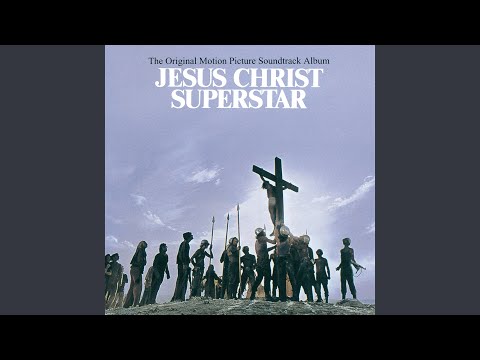
Review and Highlights
Quick summary
- Where it lands: Act I, immediately after "What's the Buzz" in Jesus Christ Superstar, when the room is still warm and the politics are already turning cold.
- Who drives it: Judas pushes the argument, Jesus fires back, and the Apostles echo the discomfort like a chanting crowd.
- What it does dramatically: It converts a private irritation into a public fracture - the moment you can hear a movement starting to split.
- How this soundtrack version differs: The 1973 film breaks the longer stage medley into discrete tracks, giving this confrontation a sharper, stand-alone punch.
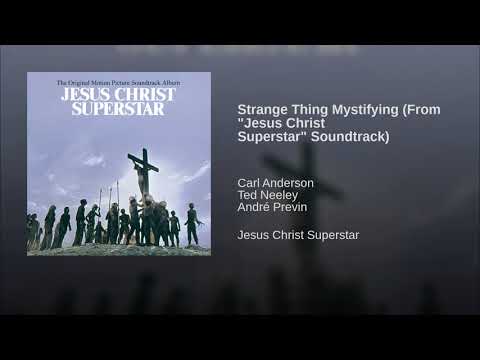
Jesus Christ Superstar (1973) - film soundtrack - not diegetic. Appears early in the film, following the camp banter of "What's the Buzz" and pivoting into Judas confronting Jesus over Mary Magdalene, around 0:11:30. The placement matters: it is the first time the story stops flirting and starts litigating, with loyalty and optics becoming the real currency.
As a critic, I have always liked how this number refuses to sprawl. It is compact, prickly, and staged like a cross-examination: Judas phrases his concern as strategy, but the subtext is status. The groove keeps moving while the trust slips sideways, and that contrast is the little trick that makes the scene sting. One minute you are in a communal pulse, the next you are watching a leader get told he is off-message.
The writing is blunt on purpose. Judas talks like a man trying to keep a campaign alive, not a disciple seeking clarity. Jesus replies with moral glare, yes, but also with fatigue: the line about nobody caring if he comes or goes is less sermon than diagnosis. According to Billboard magazine, the 1973 film soundtrack has had a long afterlife on the charts and in reissues, and moments like this are why - the drama is delivered in hooks you remember the next day.
Creation History
The song comes from the Andrew Lloyd Webber and Tim Rice rock opera that began as a studio concept album (1970), reached the stage in the early 1970s, and then hit cinemas in Norman Jewison's 1973 film. The movie soundtrack is a fresh recording for that adaptation, conducted by Andre Previn, and later reissued on CD (including a 25th anniversary edition). In the film, the desert setting and handheld grit make the confrontation feel less like a polite theological disagreement and more like a band argument that got too real, too fast.
Song Meaning and Annotations
Plot
Judas confronts Jesus for letting Mary Magdalene show physical tenderness, warning that public inconsistency will hand the authorities an excuse. Jesus snaps back, insisting she be left alone and turning the accusation outward: if anyone is morally spotless, fine, throw stones - otherwise stop pretending to be clean. The Apostles pile on with shouted disagreement, and Jesus ends by calling out their shallowness and their wavering commitment.
Song Meaning
This is a song about optics disguised as morality. Judas is not only worried about Rome or the police; he is worried about the story people will tell. He frames Mary as a liability, then tries to pass that framing off as realism. Jesus refuses the premise and exposes the mechanism: the movement is already addicted to scapegoats, and Judas is trying to pick one early. The mood is confrontational, but the deeper current is paranoia - the fear that a tiny crack will be enough to "put us all away."
Annotations
"It doesn't help us if you're inconsistent - They only need a small excuse to put us all away"
Rewritten from a provided note
This is Judas speaking like a strategist. The key detail is not the insult, it is the threat model: under occupation, the margin for error feels microscopic. One messy headline, one scene that can be spun as disorder, and the whole circle becomes a target.
"It's not that I object to her profession"
Rewritten from a provided note
The line leans on a stereotype about Mary Magdalene that has been popular in Western tradition, but it is not stated in the New Testament texts in that simple way. Modern scholarship and church commentary frequently note the lack of direct textual basis for calling her a sex worker, which makes Judas's jab feel even more like a smear tactic: label her, then dismiss her.
"If your slate is clean, then you can throw stones"
Rewritten from a provided note
Jesus answers with an allusion to the story of the woman accused of adultery, the famous "without sin" challenge. There is a wrinkle that suits the show: many modern Bible editions flag that the longer passage (John 7:53-8:11) is absent from some early manuscripts. In other words, the musical borrows a well-known ethical grenade, whether or not it began life exactly where later readers expect it.
Genre and rhythm
Even when the track is labeled pop on later releases, the engine is rock theater: tight drums, electric guitar bite, and a vocal line that argues rather than floats. The pacing is relentless, and the score marking keeps the pulse from relaxing - which is exactly what you want when a friendship is turning into a feud in real time.
Key phrases and subtext
"Women of her kind" is a class-coded insult, and "in your line" is a reputation warning. Judas is not only policing behavior; he is policing branding. Jesus, on the other hand, makes the argument personal and communal at once: the hypocrite is not a single person, it is the crowd instinct in all of them.
Why the scene keeps getting staged
This confrontation remains one of the show’s repeatable pressure points. Different productions can tilt it toward jealousy, political fear, or moral disgust, and it still works. That flexibility is why the number survives in medleys across cast recordings, from the early concept album to later televised events.
Technical Information
- Artist: Jesus Christ Superstar Cast (featured vocals: Ted Neeley, Carl Anderson)
- Featured: Ensemble (Apostles)
- Composer: Andrew Lloyd Webber
- Lyricist: Tim Rice
- Producer: Film soundtrack production credited to the 1973 motion picture team; music conducted by Andre Previn
- Release Date: June 26, 1973 (original motion picture soundtrack release); later CD reissues include a 1998 anniversary edition
- Genre: Rock theater (often tagged pop on streaming metadata)
- Instruments: Lead and rhythm electric guitars, bass, drums, keyboards, orchestral layers
- Label: Originally issued via MCA for the film soundtrack; later catalog releases appear under UMG family labels on streaming
- Mood: Accusatory, tense, fast-moving
- Length: 1:51
- Track #: 4 (on the 1973 film soundtrack sequence)
- Language: English
- Album: Jesus Christ Superstar (Original Motion Picture Soundtrack)
- Music style: Rock opera with dramatic recitative phrasing
- Poetic meter: Conversational accentual lines, closer to speech-rhythm than strict metrical verse
Questions and Answers
- When was this track first issued on the film soundtrack?
- It appears on the 1973 original motion picture soundtrack release, and it has also been reissued in later catalog editions, including a 1998 anniversary CD release.
- Who wrote it?
- Andrew Lloyd Webber composed the music and Tim Rice wrote the lyrics.
- Why does Judas focus on Mary Magdalene?
- He frames her as a reputational risk, using social stigma as leverage. Dramatically, it shows how quickly a political fear can turn into personal policing.
- Is the "profession" line historically grounded?
- It reflects a long-running tradition that labeled Mary Magdalene as sexually immoral, but many modern sources stress that the canonical gospels do not state this directly. The musical uses the rumor because it is theatrically useful, not because it is airtight history.
- What Bible moment is echoed by "throw stones"?
- It alludes to the well-known admonition about being without sin before condemning another person, associated with the story of the woman accused of adultery.
- Why do some Bibles bracket the passage Jesus is echoing?
- Many modern editions note that John 7:53-8:11 is missing from some early manuscripts and appears in different locations in later textual traditions. The ethical message still circulates widely, which is why audiences recognize it instantly.
- Why do the Apostles chant "No, you're wrong"?
- It turns a two-person argument into a crowd event. Once the group weighs in, the conflict becomes social, not just personal, and that is when movements start to fracture.
- How does the film version change the pacing compared to stage medleys?
- The 1973 soundtrack separates the confrontation into its own track, making the argument feel like a hard cut rather than a gradual slide from party chatter to crisis.
- Are there notable modern recordings that keep this moment alive?
- Yes. The confrontation often appears inside the combined "What's the Buzz / Strange Thing Mystifying" track on major cast albums, including the 2018 televised concert soundtrack.
Awards and Chart Positions
The song itself was not pushed as a typical pop single, but the 1973 film and its soundtrack carried real awards momentum. The film received an Academy Award nomination for its adaptation score, and the Golden Globes recognized key performances connected to the movie.
| Item | Market | Peak or recognition |
|---|---|---|
| Jesus Christ Superstar (Original Motion Picture Soundtrack) | Billboard 200 | Peak No. 21 (historical reporting) |
| Jesus Christ Superstar (Original Motion Picture Soundtrack) | UK Official Albums Chart | Peak No. 23 (week shown in chart archive) |
| Jesus Christ Superstar (film) | Academy Awards | Nominee - Music (Scoring: Original Song Score and Adaptation or Scoring: Adaptation) |
| Jesus Christ Superstar (film) | Golden Globes | Nominations for Ted Neeley and Carl Anderson (acting categories for the film) |
How to Sing Strange Thing Mystifying
This number is a two-lead argument that moves fast, sits in rock phrasing, and demands crisp diction. Treat it like sung dialogue with a backbeat.
- Tempo: Many audio-feature listings place it around 107 BPM for the film soundtrack track. Practice first at 90 BPM so the consonants land cleanly.
- Key center: Often indexed as C minor for this soundtrack recording. If that key drags your top notes into strain, transpose early and keep the attitude.
- Range target: For the Judas tessitura, audition references commonly cite D3 to E flat5 (with an optional E5). For Jesus, role guides often cite a wider rock-tenor span down to A2 and up to G5. In performance, the real challenge is not the extremes, it is switching gears between speechy bite and sung line.
- Diction: Drill the clustered phrases ("inconsistent", "small excuse") on a metronome. Rock theater needs clean consonants without chewing the beat.
- Breath: Mark your inhalations before accusations. Judas lines can feel like one long sentence; plan two quick refuels and you will stay in control.
- Flow and rhythm: Keep the groove forward. Think of the band as a conveyor belt: your job is to throw the words onto it, not stop it to admire them.
- Accents: Lean into stressed words that carry the argument ("waste", "inconsistent", "excuse"). That is where the character reveals intent.
- Ensemble moments: When the Apostles enter, do not fight the wall of sound. Either cut through with bright placement or step back and let the crowd be the weapon.
- Mic and tone: Use a slightly drier, more spoken tone for Judas to keep the threat credible. Jesus can widen the vowel on the rebuke lines, but avoid shouting on pitch.
- Pitfalls: The biggest mistake is acting it like a ballad. It is a courtroom scene with a drum kit.
Additional Info
The history of this moment stretches across recordings. The show began life on record, with early versions combining "What's the Buzz" and this confrontation into a single track flow. There were also single-era releases and international variations tied to that first wave of popularity, including non-English market singles and later remasters. In modern times, televised events such as the 2018 live concert soundtrack kept the sequence in circulation for listeners who do not live in cast-album land.
One more detail I like, almost as a private aside: the line about inconsistency is theatre people arguing about theatre. Judas is basically saying, "Your blocking is going to get us arrested." That meta-edge is part of the show’s charm.
Key Contributors
| Entity | Type | Relationship (S-V-O) |
|---|---|---|
| Andrew Lloyd Webber | Person | Andrew Lloyd Webber composed the music for the work. |
| Tim Rice | Person | Tim Rice wrote the lyrics for the work. |
| Ted Neeley | Person | Ted Neeley performs the role of Jesus on the 1973 film soundtrack. |
| Carl Anderson | Person | Carl Anderson performs the role of Judas on the 1973 film soundtrack. |
| Andre Previn | Person | Andre Previn conducted the music for the film soundtrack recording. |
| Norman Jewison | Person | Norman Jewison directed the 1973 film adaptation. |
| Jesus Christ Superstar | Work | The rock opera contains this duet confrontation in Act I. |
| Universal Pictures | Organization | Universal Pictures presented the 1973 film production. |
| MCA Records | Organization | MCA Records originally issued the film soundtrack on vinyl (historical release). |
Sources: Apple Music track listing for the 1973 film soundtrack, Official Charts Company archive, Billboard reporting, Oscars ceremony database, Golden Globes film page, BibleGateway (NET, NIV, ESV notes), Vatican News saint profile, National Geographic feature on Mary Magdalene, ALW Show Licensing song list, Jesus Christ Superstar Zone discography, SecondHandSongs work page
Music video
Jesus Christ Superstar Lyrics: Song List
- Act 1
- Overture
- Heaven On Their Minds
- What's The Buzz
- Then We Are Decided
- Strange Thing Mystifying
- Everything's Alright
- This Jesus Must Die
- Hosanna
- Simon Zealotes
- Poor Jerusalem
- Pilate's Dream
- The Temple
- I Don't Know How To Love Him
- Damned For All Time / Blood Money
- Act 2
- The Last Supper
- Gethsemane (I Only Want To Say)
- The Arrest
- Peter's Denial
- Pilate And Christ
- King Herod's Song (Try It And See)
- Could We Start Again Please?
- Judas' Death
- Trial Before Pilate
- Superstar
- The Crucifixion
- John Nineteen: Forty-One