Peter's Denial Lyrics — Jesus Christ Superstar
Peter's Denial Lyrics
I think I've seen you somewhere.
I remember.
You were with that man they took away.
I recognize your face.
PETER
You've got the wrong man lady.
I don't know him,
And I wasn't where he was tonight
Never near the place.
SOLDIER
That's strange, for I am sure I saw you with with him.
You were right by his side, and yet you denied.
PETER
I tell you I was never with him.
OLD MAN
But I saw you too.
He looked just like you.
PETER
I don't know him!
MARY MAGDALENE
Peter, don't you know what you have said.
You've gone and cut him dead.
PETER
I had to do it, don't you see?
Or else they'd go for me.
MARY MAGDALENE
It's what he told us you would do.
I wonder how he knew.
Song Overview
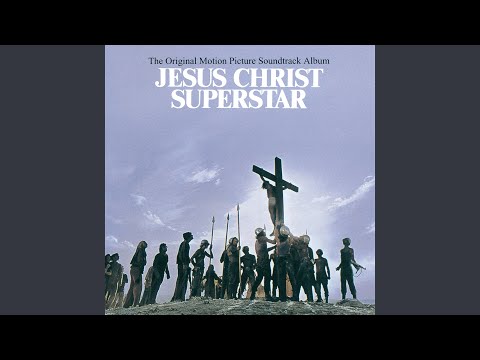
Review and Highlights
Quick summary
- What it is: A 90-second rock-opera confession where fear wins, fast.
- Who is centered: Peter, pressed by bystanders and a soldier, with Mary arriving as the sober witness.
- Where it sits: Direct fallout from the arrest sequence, a hinge that turns "we will fight" into "I do not know him."
- Film placement: In the 1973 screen version, the scene lands at about 01:11:24 (movie timestamp).
- What makes it sting: The writing is conversational, almost casual, which is exactly why the betrayal feels so human.
Jesus Christ Superstar (1973) - film soundtrack - diegetic. Courtyard aftermath of the arrest: strangers test Peter's loyalty line by line until he snaps into full denial, then Mary arrives to remind him that Jesus predicted it. Screen & Media Placements: the clip is indexed at 01:11:24 in the movie; the denials begin immediately, and Mary enters near the end of the 92-second segment. The scene matters because it shrinks big ideals into street-level survival: one man with an accent, one soldier with authority, and a friend who folds.
Creation History
This number is built like a cutaway, but it does heavy lifting. The 1973 film soundtrack (a fresh recording distinct from the 1970 concept album) treats it as dialogue with melody: short phrases, little ornament, no room to posture. The result is a miniature drama that plays like a documentary microphone accidentally left on. According to Variety, the film version can feel both impressive and frustrating in the same breath, and this scene is a neat example of the method: sharp staging, blunt psychology, and no time wasted getting to the point.
Song Meaning and Annotations
Plot
After Jesus is taken, bystanders identify Peter as one of his followers. Peter denies knowing Jesus, again and again, escalating from polite dismissal to panic. Mary arrives and names what just happened: Peter did exactly what Jesus said he would do.
Song Meaning
The track is not interested in villainy. It is interested in the sound a person makes when the ground drops out. Peter is not preaching, not debating, not making a theological argument. He is trying to stay alive. The show frames that instinct as both understandable and devastating: the denial is small-scale, but the ripple is huge, because it confirms how isolated Jesus has become.
Annotations
"You've got the wrong man, lady. I don't know him."
The first denial is almost conversational, which is the trap. It starts as a tactic, a quick sidestep, the kind you tell yourself does not count. In the film scene, the words arrive before Peter has time to think, like a reflex.
"I tell you, I was never, ever with him."
Now it is not just denial, it is revision. The line switches from "I do not know him" to "that version of me never existed." The doubled emphasis ("never, ever") is the sound of fear discovering its own voice.
"That's what he told us you would do. I wonder how he knew."
Mary supplies the moral spine, but she also supplies the prophecy angle. The musical borrows the Gospel idea that Jesus predicted three denials before the rooster crowed, and condenses it into one stunned question. In the Bible accounts, the rooster and the bitter weeping complete the arc; here, the shock is carried by Mary, which keeps the scene tight and immediate.
Style, rhythm, and the quiet pressure
For a rock score, this is intentionally plain. The hook is not a chorus, it is repetition under scrutiny: accusation, denial, accusation, denial. The momentum is social rather than musical, like a crowd leaning in. When Mary enters, the harmony does not suddenly comfort you. It simply clarifies what you just watched.
Technical Information
- Artist: Jesus Christ Superstar Cast
- Featured: Yvonne Elliman; Paul Thomas
- Composer: Andrew Lloyd Webber
- Lyricist: Tim Rice
- Release Date: June 26, 1973 (film soundtrack album); March 24, 1998 (25th anniversary reissue)
- Genre: Rock
- Instruments: Rock rhythm section, orchestra support, close vocal interplay
- Label: Verve (current catalog listing for the film soundtrack)
- Mood: Tense, exposed, defensive
- Length: 1:28 (streaming album listing)
- Track #: 18 (common film soundtrack sequencing)
- Language: English
- Album (if any): Jesus Christ Superstar (Original Motion Picture Soundtrack)
- Music style: Rock-opera recitative with short melodic cells
- Poetic meter: Mixed, speech-driven phrases with repeated stress patterns for urgency
Questions and Answers
- How many times does Peter deny Jesus in the scene?
- Three times, matching the well-known Gospel pattern: a first deflection, a stronger denial, and a final break into outright refusal.
- Why does the song feel so short compared to other numbers?
- It is written as a cutaway that lands like a punch. The brevity mirrors Peter's quick thinking and quicker fear.
- What does Mary contribute that the crowd does not?
- Recognition without aggression. She names the act as betrayal, then connects it to Jesus' prediction, turning panic into consequence.
- Is the rooster detail present in this version?
- The musical leans on the prophecy but does not need the literal rooster moment to make the point. Mary carries the "how did he know" shock in one line.
- Is Peter portrayed as a coward?
- He is portrayed as a human being in a dangerous city. The show lets you understand his instinct while still judging the result.
- Why do bystanders recognize him?
- Because movements have a social footprint. People notice faces, accents, and who stands near whom, especially after a public arrest.
- How does this scene prepare the next one with Pilate?
- It demonstrates that Jesus' circle is already cracking, which makes the later political machinery feel even more inevitable.
- Does the number have major cover history?
- Yes, but mainly inside the franchise ecosystem: concept album versions, later cast recordings, and televised event soundtracks rather than pop singles.
- What is the hidden irony in Mary asking "how he knew"?
- It is both admiration and grief. Prophecy sounds impressive until you realize it means the betrayal was always on schedule.
Awards and Chart Positions
The track itself was not pushed as a standalone single, so the measurable accolades sit with the 1973 film and its soundtrack. The film earned an Oscar nomination for adaptation scoring, and BAFTA lists a Soundtrack win. In the UK, the film soundtrack album reached a reported peak of 23 on the Official Albums Chart.
| Item | Work | Result | Details |
|---|---|---|---|
| UK Official Albums Chart | Jesus Christ Superstar - Original Soundtrack | Peak | 23 |
| Academy Awards (46th ceremony) | Jesus Christ Superstar (1973 film) | Nomination | Music (Scoring: Original Song Score and Adaptation or Scoring: Adaptation) |
| BAFTA Film Awards | Jesus Christ Superstar (1973 film) | Winner | Soundtrack (Les Wiggins, Gordon K McCallum, Keith Grant) |
How to Sing Peter's Denial
This is acting-first singing. If you treat it like a "song," you will miss the point. Treat it like someone answering questions while trying not to shake.
- Tempo (common listing): about 117 BPM.
- Key (common listing): G minor.
- Peter range (common casting guide): roughly G2 to G4, often described as rock-leaning tenor or baritone depending on production needs.
- Mary range (common casting guide): roughly F3 to Eb5, mezzo-soprano color with belt capability.
- Tempo: Speak the lines in rhythm at a slower pulse, then lock to tempo. The urgency should come from situation, not from rushing.
- Diction: Keep consonants hard and quick. In a short scene, a blurred "don't" or "know" can erase the whole story.
- Breathing: Plan small, silent inhales after each accusation. The phrasing is tight; do not let breath noise become the lead.
- Flow and rhythm: Let each denial get shorter and sharper. The arc is escalation.
- Accents: Put weight on the negations: "wrong," "don't," "never." That is where the fear shows.
- Ensemble and scene partners: The interrogators must sound confident, not loud. Peter should sound cornered, not heroic.
- Mic and space: If amplified, pull back slightly on the final denial so it does not turn into a shout. Panic can be quiet.
- Pitfalls: Avoid melodrama. The scene lands harder when it feels like a real lie told too fast.
- Practice materials: Drill the three denial beats as separate intentions (deflect, insist, break) and record yourself to confirm the differences are audible.
Additional Info
There is a neat franchise echo here. The 1970 concept album has its own version (with different surrounding texture and casting credits), and SecondHandSongs tracks how the piece travels through later cast recordings as a built-in narrative checkpoint. JesusChristSuperstarZone also notes an offbeat staging choice in a 1992 Australian revival: "King Herod's Song" was grafted onto the denial scene, an experiment that underlines how directors sometimes treat this moment as a pressure valve before the story turns darker again.
Key Contributors
| Entity | Type | Relationship (S-V-O) |
|---|---|---|
| Andrew Lloyd Webber | Person | Andrew Lloyd Webber - composed - the music |
| Tim Rice | Person | Tim Rice - wrote - the words |
| Yvonne Elliman | Person | Yvonne Elliman - performed - Mary Magdalene lines in the film soundtrack recording |
| Paul Thomas | Person | Paul Thomas - performed - Peter in the film soundtrack recording |
| Andre Previn | Person | Andre Previn - is credited with - adaptation score nomination for the film |
| Jesus Christ Superstar (1973 film) | Work | The film - stages - the denial scene at 01:11:24 |
| Jesus Christ Superstar (Original Motion Picture Soundtrack) | Work | The soundtrack album - includes - the track as Track 18 |
| Official Charts Company | Organization | Official Charts Company - reports - UK chart peak data for the soundtrack album |
| Academy of Motion Picture Arts and Sciences | Organization | The Academy - lists - the film's adaptation scoring nomination |
| BAFTA | Organization | BAFTA - records - the film Soundtrack award win |
Sources: Universal Music Group YouTube topic upload, Apple Music film soundtrack listing, AllMusic 25th anniversary reissue page, Clip.Cafe scene index and transcript, BibleGateway Gospel passages, Official Charts Company weekly chart page, Oscars.org ceremony page, BAFTA Soundtrack winners page, SecondHandSongs cover history, StageAgent role breakdowns, Musicstax tempo and key listing, JesusChristSuperstarZone FAQ, Variety film review
Music video
Jesus Christ Superstar Lyrics: Song List
- Act 1
- Overture
- Heaven On Their Minds
- What's The Buzz
- Then We Are Decided
- Strange Thing Mystifying
- Everything's Alright
- This Jesus Must Die
- Hosanna
- Simon Zealotes
- Poor Jerusalem
- Pilate's Dream
- The Temple
- I Don't Know How To Love Him
- Damned For All Time / Blood Money
- Act 2
- The Last Supper
- Gethsemane (I Only Want To Say)
- The Arrest
- Peter's Denial
- Pilate And Christ
- King Herod's Song (Try It And See)
- Could We Start Again Please?
- Judas' Death
- Trial Before Pilate
- Superstar
- The Crucifixion
- John Nineteen: Forty-One