Poor Jerusalem Lyrics — Jesus Christ Superstar
Poor Jerusalem Lyrics
Neither you, Simon, nor the fifty thousand,
Nor the Romans, nor the Jews,
Nor Judas, nor the twelve
Nor the priests, nor the scribes,
Nor doomed Jerusalem itself
Understand what power is,
Understand what glory is,
Understand at all,
Understand at all.
If you knew all that I knew, my poor Jerusalem,
You'd see the truth, but you close your eyes.
But you close your eyes.
While you live, your troubles are many, poor Jerusalem.
To conquer death, you only have to die.
You only have to die.
Song Overview
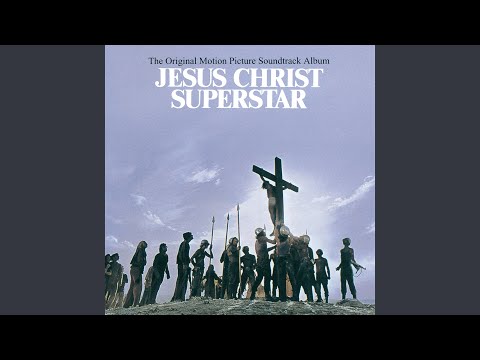
Review and Highlights
Quick summary
- Work: A brief Jesus solo from Jesus Christ Superstar, positioned as the cool afterburn to the crowd rush of "Simon Zealotes."
- Release trail: Issued on the 1973 film soundtrack, later packaged again as a 25th anniversary reissue dated March 24, 1998.
- Scene function: A warning disguised as a lullaby, with Jesus turning away from political theater toward the cost of sacrifice.
- Sound: Sparse rock-orchestral bed, the vocal sitting forward like a spoken prophecy that decided to sing.
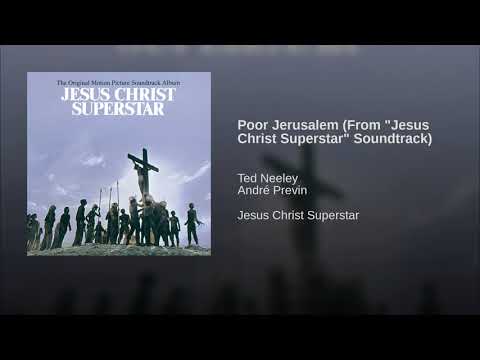
Jesus Christ Superstar (1973) - film soundtrack - not. Directly after "Simon Zealotes," Jesus steps out of the chanting and answers the city itself with a short, downward-facing sermon, around 00:34:46 in the film. The placement matters: it cuts the crowd fantasy with a private certainty that the story is already moving toward loss.
Creation History
The song comes from Andrew Lloyd Webber and Tim Rice's rock opera vocabulary: compressed scenes, hook-sized motifs, and dialogue that can pivot into melody without warning. The 1973 film recording (with Andre Previn credited as music conductor for the soundtrack album) frames the moment as a lean interlude, closer to a warning whispered into a microphone than a showstopper. According to AllMusic's reissue notes, the soundtrack was formally repackaged for its 25th anniversary in 1998, which helped keep the film cast performances in circulation for another generation.
Song Meaning and Annotations
Plot
After followers promise power and glory, Jesus refuses the deal. He addresses the city and the movement around him with a hard idea: nobody in the crowd, not even close allies, understands what "power" is meant to be. The lyric turns Jerusalem into a character - a place carrying its own fate - and then lands on the paradox at the center of the Passion story: to beat death, you first walk into it.
Song Meaning
This is the sound of a leader hearing applause and translating it into danger. Jesus is not rejecting people as people; he is rejecting the project of turning spiritual urgency into a conquest plan. The mood is restrained, almost conversational, which makes the message feel sharper: the city wants a victory banner, but he is talking about surrender, and not the kind anyone can wave at a rally.
Annotations
Understand what power is
Understand what glory is
Here, "power" is framed as the thing everyone claims to recognize, yet nobody can define without reaching for politics. The line plays like a rebuke to the chant logic of movements: loud agreement, fuzzy meaning. In this story, the word "glory" is the trap - a shiny version of dominance that misses the point of what is about to happen.
To conquer death, you only have to die
You only have to die
It is a brutal sentence because it refuses the crowd's preferred fantasy. The lyric compresses Christian theology into a dare: the victory is not achieved by winning the street, but by enduring the consequence. As stated in Billboard magazine coverage of the broader soundtrack's legacy, the film recording is part of a long-running ecosystem of versions that keep returning whenever the culture wants to argue about faith, authority, and spectacle.
Musical texture and delivery
The arrangement is all about subtraction. After the kinetic buildup around it, the pulse feels like it is still there, but held under the surface. That tension lets the vocal sit in a near-speech register, then open into held notes on the phrases that matter. The emotional arc is not a climb; it is a steady stare. The idiom of "close your eyes" appears elsewhere in the show, but here the city is the one being accused of refusing to look.
Technical Information
- Artist: Ted Neeley (Jesus Christ Superstar Cast credit line varies by platform)
- Featured: None
- Composer: Andrew Lloyd Webber
- Lyricist: Tim Rice
- Producer: Film soundtrack production credited across album notes; performance is tied to the 1973 film recording
- Release Date: June 26, 1973 (film soundtrack album release date on major digital listings); March 24, 1998 (25th anniversary reissue date)
- Genre: Rock
- Instruments: Lead vocal, rock rhythm section, orchestral color typical of the 1973 film soundtrack sessions
- Label: MCA (original UK chart listing); reissue distributed under Universal-era catalog on some platforms
- Mood: Somber, reflective, admonitory
- Length: 1:37
- Track #: 10 on the common 1998 soundtrack tracklists (position varies by platform indexing)
- Language: English
- Album: Jesus Christ Superstar: The Original Motion Picture Soundtrack
- Music style: Rock opera interlude, minimalistic vocal spotlight
- Poetic meter: Mixed conversational meter with repeated imperative phrasing
Questions and Answers
- Why does the song feel like a pause button? Because it is staged as a response, not an escalation. The score clears space so the message lands without percussion doing the persuading.
- Is Jesus addressing the city, the disciples, or himself? All three. Calling out "Jerusalem" is a way to talk to a crowd while sounding personal, like a prayer spoken out loud.
- What is the core warning in the text? That political victory is not the mission, and chasing it will misunderstand what is coming next.
- Why repeat "Understand"? Repetition turns the lyric into a sermon cadence. It is less about teaching details and more about exposing the gap between slogans and insight.
- How does it relate to "Simon Zealotes"? It is the hangover after the hype. Simon sells a revolution; Jesus replies that the crowd does not even know what it is asking for.
- Is this a typical rock ballad? Not quite. It borrows the intimacy of a ballad but keeps the spine of rock opera: character, plot, and argument over romance.
- Does the lyric suggest inevitability? Yes. The phrasing implies the route is set, and that the city is choosing blindness because the truth is costly.
- Why is it so short? In rock opera, length is a tool. The brevity makes it feel like a clipped telegram from the future: no extra flourishes, no debate.
- Which recording is most associated with the line delivery people quote? The 1973 film soundtrack performance by Ted Neeley is a major reference point, helped by the film's wide circulation and reissues.
Awards and Chart Positions
Nothing here was pushed as a standalone single in the usual pop sense, but the surrounding ecosystem did plenty of heavy lifting. The 1973 film soundtrack album reached the top 25 on the US Billboard album chart metrics for the period, and in the UK it logged a peak position of 23 on the official albums chart archive. The film itself collected major awards attention: it was an Academy Awards nominee for adaptation scoring, and it received multiple Golden Globe nominations, including for the lead performances.
| Category | Work | Result | Detail |
|---|---|---|---|
| UK Albums Chart | Jesus Christ Superstar (Original Soundtrack) | Peak | 23 |
| US Album Chart | Jesus Christ Superstar (1973 film soundtrack) | Peak | 21 |
| Academy Awards | Jesus Christ Superstar (film) | Nomination | Music scoring - adaptation |
| Golden Globes | Jesus Christ Superstar (film) | Nominations | Multiple categories, including acting nominations |
How to Sing Poor Jerusalem
This is not a fireworks aria. It is a controlled address that only works if you can sound calm while delivering a verdict. The broader role of Jesus is typically cast as a rock tenor (the licensing material frames it that way), but this particular song rewards restraint more than range.
- Tempo first: Set a click around 162 BPM, then practice half-time at 81 BPM until the phrasing stops feeling rushed.
- Diction: Treat "Understand" like a gavel. Clear consonants, no chewing the vowels.
- Breathing: Plan breaths before the repeated imperatives so the second and third statements do not sag.
- Flow and rhythm: Keep the line moving like speech. If you over-legato it, you lose the warning tone and drift into lullaby.
- Accents: Lean into "power," "glory," and "die" with slight weight, not volume. Let meaning do the work.
- Ensemble awareness: If your production places crowd sound behind you, do not compete. Sing like you are stepping out of noise, not trying to be noisier.
- Mic craft: Stay close and consistent. This piece likes intimacy. Save big projection for the larger role moments elsewhere.
- Pitfalls: The big mistake is acting it as despair. Play it as certainty with compassion - a warning that hurts to give.
Additional Info
The song has a long afterlife because it solves a staging problem: how do you pivot from mass movement to private meaning without stopping the show? This piece does it in under two minutes. In the 1973 film, it also functions as a kind of camera reset, letting the story turn its face toward the authorities and the coming trial. Later productions often pair it directly with "Simon Zealotes" as a single movement, and the 2018 televised live version kept that pairing intact, reinforcing that the two songs are a debate, not separate moments.
Key Contributors
| Entity | Type | Relationship (S-V-O) |
|---|---|---|
| Andrew Lloyd Webber | Person | Andrew Lloyd Webber - composed - the music |
| Tim Rice | Person | Tim Rice - wrote - the lyrics |
| Ted Neeley | Person | Ted Neeley - performed - Jesus in the 1973 film soundtrack recording |
| Andre Previn | Person | Andre Previn - conducted - the film soundtrack music |
| Jesus Christ Superstar (1973 film) | Work | The film - features - the song in sequence after "Simon Zealotes" |
| Jesus Christ Superstar (Original Motion Picture Soundtrack) | Work | The soundtrack album - includes - the track |
| Official Charts Company | Organization | Official Charts Company - documents - UK chart performance for the soundtrack album |
| MCA Records | Organization | MCA Records - released - the original soundtrack album in the 1970s catalog era |
Sources: Official Charts Company album stats page, AllMusic 25th anniversary reissue page, Apple Music album listing, IMDb soundtrack and awards pages, Academy Awards ceremony page, Golden Globes film database page, SecondHandSongs cover history page, Clip.Cafe scene timestamp page, SongBPM and Musicstax track metrics pages, Andrew Lloyd Webber Show Licensing cast requirements page
Music video
Jesus Christ Superstar Lyrics: Song List
- Act 1
- Overture
- Heaven On Their Minds
- What's The Buzz
- Then We Are Decided
- Strange Thing Mystifying
- Everything's Alright
- This Jesus Must Die
- Hosanna
- Simon Zealotes
- Poor Jerusalem
- Pilate's Dream
- The Temple
- I Don't Know How To Love Him
- Damned For All Time / Blood Money
- Act 2
- The Last Supper
- Gethsemane (I Only Want To Say)
- The Arrest
- Peter's Denial
- Pilate And Christ
- King Herod's Song (Try It And See)
- Could We Start Again Please?
- Judas' Death
- Trial Before Pilate
- Superstar
- The Crucifixion
- John Nineteen: Forty-One