Pilate's Dream Lyrics — Jesus Christ Superstar
Pilate's Dream Lyrics
I dreamed I met a Galilean;
A most amazing man.
He had that look you very rarely find:
The haunting, hunted kind.
I asked him to say what had happened,
How it all began.
I asked again, he never said a word.
As if he hadn't heard.
And next, the room was full of wild and angry men.
They seemed to hate this man.
They fell on him, and then
Disappeared again.
Then I saw thousands of millions
Crying for this man.
And then I heard them mentioning my name,
And leaving me the blame.
Song Overview
Review and Highlights
Quick summary
- Role and moment: Pontius Pilate enters early and frames the story with a private vision that later turns into public blame.
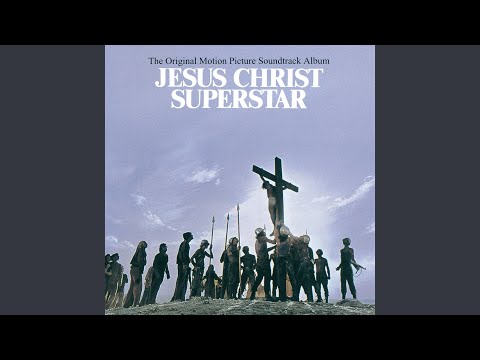
- Recording context: Best known through the 1973 film soundtrack (Barry Dennen, Andre Previn credited as music director), later reissued for an anniversary edition dated March 24, 1998.
- Form: A compact, triple-meter vignette - closer to a narrated nightmare than a rock aria.
- How it differs across releases: The film soundtrack is a fresh recording distinct from the earlier concept-album era, even when performers overlap.
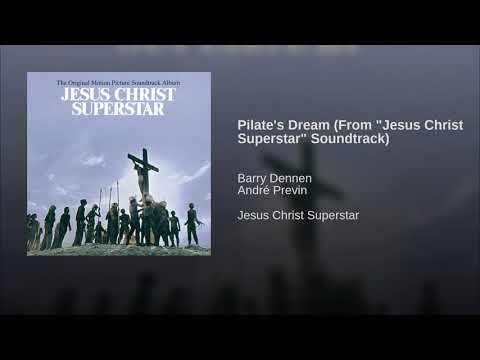
Jesus Christ Superstar (1973) - film soundtrack - not. The number arrives with Pilate's first appearance in Act I, between the street-level momentum of the crowd scenes and the machinery of state power. It works like a camera zoom: the show stops shouting for a minute and lets one official admit he already knows how this ends.
Creation History
Tim Rice and Andrew Lloyd Webber build this scene as an origin story for guilt: Pilate begins as a man trying to keep order, but the dream hands him the future and refuses to let him plead ignorance later. Barry Dennen had been tied to the role from the project’s earliest public life, and the 1973 film kept him in place, giving the warning a familiar voice across formats. The film soundtrack sessions, led by Andre Previn, lean into clarity and pacing rather than virtuoso fireworks - a choice that keeps Pilate credible as an administrator who suddenly sounds like a prophet against his will.
Song Meaning and Annotations
Plot
Pilate describes meeting a Galilean who will not answer questions. In a blink, the room fills with furious men, then empties again, and the vision jumps forward to a vast chorus of people who remember Pilate by name and attach blame to him. The plot is simple on paper, but it is strategic: Pilate is introduced not by policy, but by dread.
Song Meaning
The track is a study in responsibility arriving early. Pilate does not dream about empire, taxes, or promotions. He dreams about a silent defendant and a crowd that behaves like weather. The lyric turns him into the hinge character - the one who will claim neutrality later, while already sensing that neutrality will not survive contact with the mob. When a modern revival wants Pilate to feel less like a cartoon bureaucrat, directors often return to this moment; according to The Guardian's July 6, 2025 review of a UK staging, the song can be delivered as something closer to a nightmare than a tidy introduction.
Annotations
And next, the room was full
Of wild and angry men
They seemed to hate this man
They fell on him and then
Disappeared again
This is not a literal courtroom transcript. It is a foreshadow montage: the crowd materializes as force, then vanishes as if it never needed to justify itself. In story terms, it also explains why Pilate later looks trapped even when he holds the formal power - he has already pictured how quickly a crowd can demand blood and call it justice.
And then I heard them mentioning my name
And leaving me the blame
The twist is that the dream does not accuse Pilate of hatred. It accuses him of procedure. He is the kind of official who will ask for facts, get noise instead, and sign a decision anyway. That last line lands like a stamped document: short, final, impossible to appeal.
Style notes: rhythm, tone, and the little tricks
Musically, the number rides a steady triple pulse that suggests a slow march disguised as a lullaby. The melody keeps returning to Pilate's speaking register, which makes the language sound conversational, then suddenly memorable. The dramatic curve tightens with each jump cut in the dream: one man, then many, then millions. The cultural touchpoint is the political scapegoat story - the official who tries to remain above the fray, only to discover the crowd demands a named villain.
Technical Information
- Artist: Jesus Christ Superstar Cast (Barry Dennen)
- Featured: None
- Composer: Andrew Lloyd Webber
- Lyricist: Tim Rice
- Producer: Film soundtrack production (catalog listings credit MCA-era release; Andre Previn credited as music director/conductor on many editions)
- Release Date: June 26, 1973 (film soundtrack album date on major digital listings); March 24, 1998 (anniversary reissue date widely used in catalog references)
- Genre: Pop (catalog tag), stage and screen
- Instruments: Lead baritenor vocal, orchestral-rock accompaniment, emphasis on voice-forward narration
- Label: MCA (original), with later catalog distribution across Universal-era imprints depending on territory
- Mood: Somber, tense, reflective
- Length: About 1:45-1:49 (varies by mastering and listing)
- Track #: 11 (common film soundtrack sequencing)
- Language: English
- Album (if any): Jesus Christ Superstar: The Original Motion Picture Soundtrack
- Music style: Rock-opera vignette with triple-meter sway and spoken-sung phrasing
- Poetic meter: Mixed conversational meter with short, end-stopped lines and internal rhyme ("men" / "then" / "again")
Questions and Answers
- When was this track released?
- It is primarily associated with the 1973 film soundtrack release, with a widely cited catalog reissue date of March 24, 1998 for the anniversary edition.
- Who wrote it?
- Music by Andrew Lloyd Webber, words by Tim Rice.
- Why introduce Pilate through a dream instead of politics?
- Because the show wants you to meet his conscience first. Policy can be argued with; dread cannot.
- Is the "Galilean" meant to be heroic in this moment?
- He is presented as silent and unreadable. That silence forces Pilate to project his own fear onto the scene.
- What is the dramatic purpose of the crowd appearing and disappearing?
- It sketches a pressure tactic: a crowd does not need to stay present to control an outcome, it only needs to be remembered as a threat.
- Why is the song so short?
- It is a narrative fuse. The job is to plant guilt and move on before the audience can treat it like a showpiece.
- What is the core line that defines Pilate here?
- "Leaving me the blame" - a self-portrait of an official who already senses he will be written into the story as the responsible name.
- Does the piece work differently on stage than in the film soundtrack?
- On stage, it can feel like an aside to the audience. In the film ecosystem, it reads as interior monologue, and the orchestration can underline that private space.
- Are there notable later recordings?
- Yes. A high-profile television adaptation in 2018 included the number on its soundtrack, and multiple cast albums and concert versions keep returning to it.
Awards and Chart Positions
The number itself was not promoted as a conventional single, so its public milestones mostly ride on the larger releases that contain it. In the US, the 1973 film soundtrack reached a documented Billboard album peak, and in the UK the same release logged a clear run on the official albums chart. The film also gathered major awards attention for its music and production, including an Academy Awards nomination in the scoring categories. As stated on AndrewLloydWebber.com, the Broadway production also drew multiple Tony nominations, which helps explain why the score keeps returning to new casts and new recordings.
| Category | Work | Result | Detail |
|---|---|---|---|
| US album chart | 1973 film soundtrack album | Peak | 21 (Billboard) |
| UK albums chart | Original soundtrack (MCA) | Peak | 23; first chart date September 22, 1973 |
| UK soundtrack albums chart | Catalog re-entry | Peak | 13 (2012 listing) |
| Academy Awards | 1973 film | Nomination | Scoring: Original Song Score and Adaptation (Andre Previn, Herbert W. Spencer, Andrew Lloyd Webber) |
| Golden Globes | 1973 film | Nominations | Multiple categories including acting nominations |
| BAFTA | 1973 film | Award | Best Soundtrack (win listed in major film-awards summaries) |
How to Sing Pilate's Dream
This is baritenor storytelling: steady breath, clean diction, and the ability to sound controlled while describing chaos. Many casting references place Pilate in a range that sits low enough for spoken authority yet needs a reliable top when the score tightens.
- Commonly cited vocal range (role-based): A2 to B flat 4.
- Key and tempo (recording metrics listings): Often listed around A sharp or B flat minor at about 90 BPM, in a triple feel.
- Core challenge: Keeping the vocal line conversational without letting pitch sag, especially on repeated phrases and held words like "blame."
- Tempo: Practice at 90 BPM, then at 45 BPM to lock intonation on the longer syllables. Bring it back up without changing the calm tone.
- Diction: Treat each scene-shift as a new sentence. Crisp consonants on "dreamed," "asked," "heard" stop the line from turning into mush.
- Breathing: Mark breaths before "And next" and before "Then I saw" so the jump cuts feel intentional, not accidental.
- Flow and rhythm: Let the triple meter rock underneath you. Do not over-accent it like a waltz; think of it as a slow, inevitable roll.
- Accents: Slightly weight "wild," "hate," and "blame" without getting louder. The point is pressure, not volume.
- Mix and register: If your top notes sit near the edge, aim for a narrow vowel and a supported, speech-forward mix rather than a full belt.
- Mic technique: Stay close and consistent. This piece rewards intimacy more than projection.
- Pitfalls: Do not play it as melodrama. The scariest read is the calm official describing what he cannot prevent.
Additional Info
The track has an unusually wide footprint for such a short scene. SecondHandSongs logs multiple cover interpretations, including a 1994 recording by Dennis DeYoung and an orchestral take credited to Ethan Freeman with the National Symphony Orchestra conducted by Martin Yates. There is also a clear pattern of translated cast albums keeping Pilate's introduction intact: Discogs and discography references list "Pilatus Traum" on the 1973 German cast release, while Swedish editions include "Pilatus Drom." In 2018, the live television adaptation placed the number on its soundtrack with Ben Daniels as Pilate, which shows how reliably this scene still does its job: introduce the state, then crack it open.
Key Contributors
| Entity | Type | Relationship (S-V-O) |
|---|---|---|
| Andrew Lloyd Webber | Person | Andrew Lloyd Webber - composed - the music |
| Tim Rice | Person | Tim Rice - wrote - the words |
| Barry Dennen | Person | Barry Dennen - performed - Pontius Pilate in key early recordings and the 1973 film |
| Andre Previn | Person | Andre Previn - led - the film soundtrack music direction/credit line |
| Jesus Christ Superstar (1973 film) | Work | The film - includes - the number as Pilate's introduction |
| Jesus Christ Superstar (Original Motion Picture Soundtrack) | Work | The soundtrack album - contains - Track 11 |
| Official Charts Company | Organization | Official Charts Company - documents - UK chart performance for the soundtrack album |
| Billboard | Organization | Billboard - reported - US chart peak history for key releases |
Sources: Official Charts Company album stats page, Apple Music film soundtrack listing, Billboard chart-beat report (August 6, 2025), Golden Globes film database page, IMDb awards page, AndrewLloydWebber.com show timeline, SecondHandSongs cover history page, Discogs German cast and live-concert listings, SongBPM track metrics page, The Guardian review (July 6, 2025)
Music video
Jesus Christ Superstar Lyrics: Song List
- Act 1
- Overture
- Heaven On Their Minds
- What's The Buzz
- Then We Are Decided
- Strange Thing Mystifying
- Everything's Alright
- This Jesus Must Die
- Hosanna
- Simon Zealotes
- Poor Jerusalem
- Pilate's Dream
- The Temple
- I Don't Know How To Love Him
- Damned For All Time / Blood Money
- Act 2
- The Last Supper
- Gethsemane (I Only Want To Say)
- The Arrest
- Peter's Denial
- Pilate And Christ
- King Herod's Song (Try It And See)
- Could We Start Again Please?
- Judas' Death
- Trial Before Pilate
- Superstar
- The Crucifixion
- John Nineteen: Forty-One