Judas' Death Lyrics — Jesus Christ Superstar
Judas' Death Lyrics
My God! I saw him.
He looked three-quarters dead!
And he was so bad I had to turn my head.
You beat him so hard that he was bent and lame,
And I know who everybody's going to blame.
I don't believe he knows I acted for our good.
I'd save him all this suffering if I could.
Don't believe...our good...
And I'd save him if I could...
ANNAS
Cut the confessions, forget the excuses.
I don't understand why you're filled with remorse.
All that you've said has come true with a vengeance.
The mob turned against him, you backed the right horse.
CAIAPHAS
What you have done will be the saving of everyone.
You'll be remembered forever for this.
And not only that, you've been paid for your efforts.
Pretty good wages for one little kiss.
JUDAS
Christ, I know you can't hear me,
But I only did what you wanted me too.
Christ, I'd sell out the nation,
For I have been saddled with the murder of you.
I have been spattered with innocent blood.
I shall be dragged through the slime and the mud.
I have been spattered with innocent blood.
I shall be dragged through the slime and the mud!
I don't know how to love him.
I don't know why he moves me.
He's a man. He's just a man.
He is not a king. He is just the same
As anyone I know.
He scares me so!
When he's cold and dead will he let me be?
Does he love me too? Does he care for me?
My mind is in darkness.
God, God I'm sick. I've been used,
And you knew all the time.
God, God I'll never ever know why you chose me for your crime.
You're so bloody, Christ.
CHOIR
Poor old Judas. So long Judas.
JUDAS
You have murdered me.
Song Overview
Review and Highlights
Quick summary
- Work: A late-act rock opera scene from the 1973 film soundtrack of Jesus Christ Superstar, placing Judas in free fall after the betrayal.
- Voices in the scene: Judas (Carl Anderson), with Caiaphas (Bob Bingham) and Annas (Kurt Yaghjian) answering him like a tribunal.
- Sound: Hard-rock phrasing collides with choral commentary, a push-pull that turns remorse into public spectacle.
- Why it hits: The number weaponizes repetition - blame, blood, and that final accusation - until it feels like the walls are singing back.
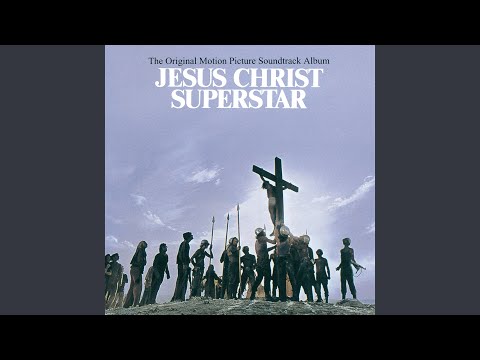
Jesus Christ Superstar (1973) - film - non-diegetic (performed within the story-world of the film's staged reenactment). The sequence sits around 01:23:28 as Judas confronts the priests, then intensifies through the suicide beat near 01:27:32. It matters because the film frames guilt as a crowd event: Judas is alone, yet never unobserved.
If you want the cleanest headline for Judas' Death: it is a confession that keeps getting interrupted by people who want it to sound like policy. Judas begins with a raw report from the torture aftermath - "he looked three-quarters dead" - and the music answers by tightening the screws. The priests do not deny the brutality; they rebrand it. Their lines land in a colder register, like administrators checking boxes while Judas bleeds all over the forms.
What makes the writing sly is how it turns the idea of memory into a curse. "You'll be remembered forever" is delivered as reassurance, but the audience knows the trap: fame as condemnation. Then comes the cruel mirror - Judas lifts Mary Magdalene's melodic language ("I don't know how to love him") and drags it into a darker room. Same vocabulary, different weather.
Creation History
Andrew Lloyd Webber and Tim Rice built Jesus Christ Superstar as a rock opera first, then watched it mutate into stage and screen. In the 1973 film, directed by Norman Jewison, the score is refitted for cinema pacing: tighter scene transitions, sharper contrasts, and a soundtrack polish that lets the voices cut like wire. Judas' Death is the moment where that approach pays off - the number is written like a dramatic cross-examination, so the film can stage it as both argument and breakdown without changing a note.
Song Meaning and Annotations
Plot
Judas arrives shaken after seeing Jesus beaten. He tries to reverse the betrayal by confronting Caiaphas and Annas, but they refuse remorse and sell him a story: what he did was necessary, even heroic. Judas answers with spiraling self-judgment, borrowing the musical's own motifs, until he reaches the breaking point and ends his life.
Song Meaning
The song is about guilt being denied its one request: privacy. Judas is trying to confess, to explain intention, to bargain with fate - and the authorities keep translating his pain into talking points. That clash makes the core message brutal: when a movement becomes a headline, individuals turn into scapegoats fast. Judas is not allowed to be complicated; he is only allowed to be useful.
Annotations
And he was so bad I had to turn my head
I like this detail because it plays two ways. On the surface it is simple revulsion. But it also echoes a long visual tradition in Last Supper art where Judas is angled away from Jesus, half outside the circle. In other words: the body turns before the soul admits it.
You'll be remembered forever for this
The priests deliver the line like a medal ceremony, and that is the gag. Memory here is not honor; it is a life sentence. In a rock opera built on fame, crowds, and rumor, "forever" is a threat disguised as reassurance.
I don't know how to love him
This is a deliberate callback to Mary Magdalene's musical vocabulary, but Judas uses it as self-indictment, not confession of tenderness. Same phrase, opposite gravity. It underlines how the score keeps linking outsiders: Mary is judged by gossip, Judas is judged by outcome, and both are trapped in narratives they cannot edit.
My mind is in darkness
That line reads like a negative photograph of earlier Judas moments where certainty is framed as clarity. Here, the language of "mind" stays, but the light goes out. The show is telling you something simple and nasty: intellect alone does not save you once panic takes the wheel.
Genre and rhythm
On paper it is rock, but it behaves like a courtroom cantata: Judas declaims, the priests respond, and the chorus arrives like public opinion taking the stand. The driving pulse keeps the scene from turning into a slow lament - it stays tense, procedural, and impatient, as if the world is already moving on to the next verdict.
Symbols and key phrases
"Innocent blood" is not just religious language; it is a political contaminant. Once Judas says it, the story stops being about strategy and becomes about stain. And when he repeats "murdered me", it flips the axis: Judas is not only accusing the system, he is accusing destiny, accusing God, accusing the machinery that asked for betrayal and then pretended it never did.
Technical Information
- Artist: Jesus Christ Superstar Cast
- Featured: Carl Anderson, Bob Bingham, Kurt Yaghjian
- Composer: Andrew Lloyd Webber
- Lyricist: Tim Rice
- Release Date: June 26, 1973
- Genre: Rock
- Instruments: vocals, electric guitar, bass, drums, orchestra, choir
- Label: MCA
- Mood: accusatory, frantic, confessional
- Length: 4:38
- Track #: 22
- Language: English
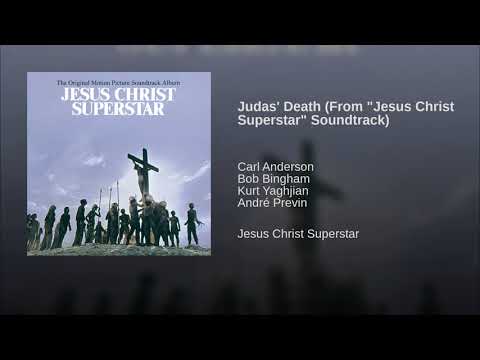
- Album: Jesus Christ Superstar: The Original Motion Picture Soundtrack
- Music style: rock opera, stage-and-screen crossover
- Poetic meter: mixed stress patterns (speech-like verse with repeated hook lines)
Questions and Answers
- Who is singing, and why does it matter?
- Judas is front and center, but Caiaphas and Annas function like a rebuttal chorus. The scene is not a solo confession - it is a debate where the loudest side wants guilt to sound like victory.
- Why does the song keep returning to "blame"?
- Because blame is the real currency of the moment. Judas senses the story is already being written, and he is about to become the footnote that carries the whole burden.
- What is the point of the priests praising him?
- It is persuasion and containment at once. They need Judas steady, obedient, and silent. Compliments are cheaper than mercy.
- How does the callback to "I Don't Know How to Love Him" function?
- It is the score turning back on itself. Judas borrows a phrase associated with intimate confusion and uses it as a self-diagnosis, showing how love and betrayal can share vocabulary in this story.
- Is the number more rock or more theatre?
- It is rock in attack, theatre in structure. The pacing and the back-and-forth are built for staging, but the vocal delivery wants the grit of a live mic and a tight band.
- Why is "innocent blood" so central?
- It raises the stakes from strategy to moral contamination. Once that phrase is spoken, no pragmatic justification feels clean anymore.
- What does "You have murdered me" actually mean?
- It is Judas accusing the machinery around him - leaders, crowd, fate, God - of scripting a role he cannot survive. It is also self-accusation turned outward, the mind trying to escape its own verdict.
- Did this song exist before the 1973 film?
- Yes. A version appears on the 1970 concept album, with different performers, before the stage and film interpretations reshaped details.
- Are there translated versions?
- Yes. SecondHandSongs lists Spanish-language adaptations titled "Muerte de Judas", among other later versions tied to different productions.
Awards and Chart Positions
The song itself was not pushed as a pop single, but it rides inside a very visible package: the 1973 film and its soundtrack. As stated in the Academy Awards database, the film received an Oscar nomination for its adaptation score. According to BAFTA, the film won in the Soundtrack category (crediting the sound team). And according to Playbill, the film soundtrack later reached Platinum certification status in the United States.
| Item | What happened | Date or week |
|---|---|---|
| Film soundtrack - UK Albums Chart | Peak position: 23 | Chart week dated December 9, 1973 |
| Film soundtrack - US Top LPs and Tape | Peak position: 21 | Week of September 15, 1973 |
| BAFTA Film Awards - Soundtrack | Winner - credited to Les Wiggins, Gordon K McCallum, Keith Grant | Listed on BAFTA Soundtrack winners page |
| Academy Awards - Music (Adaptation) | Nominee - Adaptation Score credited to Andre Previn, Herbert Spencer, Andrew Lloyd Webber | 46th Academy Awards (1974 ceremony year) |
| RIAA status (soundtrack) | Certified Platinum (as reported by Playbill) | December 7, 1995 |
How to Sing Judas' Death
Role context: Judas is typically cast as a rock tenor. StageAgent lists a common range of D3 to D5 for the role, which lines up with the part's need for both grit and altitude.
Tempo and key (recording reference): Audio-analysis listings commonly describe the 1973 soundtrack track at about 115 BPM in G major. Treat this as a rehearsal anchor, not a law - productions often shift keys to suit the singer.
- Tempo first: Practice spoken rhythm on a click around the listed BPM. The danger is rushing the confession lines and arriving breathless at the repeated hooks.
- Diction: Keep consonants sharp on the report-style lines ("blame", "blood", "murdered"). This number lives on clarity, not prettiness.
- Breath planning: Mark breaths before long runs of self-accusation. The song is written to feel relentless; your job is to survive the relentlessness.
- Flow and phrasing: Let the priests' interjections reset your posture. Think of it as three different engines: Judas (panic), priests (control), chorus (verdict).
- Accents: Lean into the pivot words - "forever", "innocent", "crime". They are the scene's trapdoors.
- Mic craft: On the "murdered me" repetitions, use distance and intensity instead of brute force. The point is escalation, not shouting from bar one.
- Pitfalls: Do not flatten the middle with one volume. Save a gear for the final accusation, or the ending lands with no room left to grow.
Additional Info
Two bits of context help the scene click. First, the film itself is staged as a modern troupe reenacting the Passion, and the desert setting makes Judas' isolation feel physical, not just psychological. Second, the song has a long paper trail: the concept album version predates the movie, and SecondHandSongs catalogs later stage and concert recordings, including the 2018 televised concert cast. If you follow the lineage, you can hear how each era reweights Judas: sometimes a skeptic, sometimes a victim, sometimes a warning label for movements that outgrow their own people.
One more side note, because it is too neat to ignore: the phrase "You'll be remembered forever" keeps proving true in the wrong direction. It is the show admitting, with a shrug, that history often preserves the culprit more clearly than the system that needed one.
Key Contributors
| Subject | Verb | Object | Notes |
|---|---|---|---|
| Andrew Lloyd Webber | composed | Judas' Death | Composer of the rock opera score. |
| Tim Rice | wrote lyrics for | Judas' Death | Lyricist; frames Judas as narrator and crisis case. |
| Carl Anderson | performed | Judas Iscariot | Film performer; also known for stage portrayals of Judas. |
| Bob Bingham | performed | Caiaphas | Priesthood voice of authority in the scene. |
| Kurt Yaghjian | performed | Annas | Provides the sharp, dismissive counterweight to Judas. |
| Norman Jewison | directed | Jesus Christ Superstar (1973 film) | Film staging shapes how the number lands on screen. |
| Universal Pictures | distributed | Jesus Christ Superstar (1973 film) | Film distributor credit. |
| MCA Records | released | 1973 film soundtrack | Original soundtrack label credit. |
Sources: Universal Music Group YouTube audio listing, Clip.Cafe transcript pages, Apple Music album page, Official Charts albums chart archive, BAFTA Soundtrack winners page, Academy Awards ceremony database, Wikipedia entries for the film and soundtrack, SecondHandSongs performance catalog, StageAgent character breakdown, Discogs soundtrack release listing, Playbill certification roundup
Music video
Jesus Christ Superstar Lyrics: Song List
- Act 1
- Overture
- Heaven On Their Minds
- What's The Buzz
- Then We Are Decided
- Strange Thing Mystifying
- Everything's Alright
- This Jesus Must Die
- Hosanna
- Simon Zealotes
- Poor Jerusalem
- Pilate's Dream
- The Temple
- I Don't Know How To Love Him
- Damned For All Time / Blood Money
- Act 2
- The Last Supper
- Gethsemane (I Only Want To Say)
- The Arrest
- Peter's Denial
- Pilate And Christ
- King Herod's Song (Try It And See)
- Could We Start Again Please?
- Judas' Death
- Trial Before Pilate
- Superstar
- The Crucifixion
- John Nineteen: Forty-One