
Woman In White Lyrics: Song List
- Act 1
- Prologue
- I Hope You'll Like It Here
- Perspective
- Trying Not to Notice
- I Believe My Heart
- Lammastide
- You See I Am No Ghost
- Gift for Living Well
- Holly and the Ivy
- All for Laura
- The Document
- Act I Finale
- Act 2
- If I Could Only Dream This World Away
- Nightmare
- Fosco Tells of Laura's Death/The Funeral/London
- Evermore Without You
- Lost Souls
- If Not for Me for Her
- You Can Get Away With Anything
- Seduction
- Asylum
- Back to Limmeridge
- Finale
About the "Woman In White" Stage Show
After the closure of the show ‘The Beautiful Game’ in London in 2001, its author Lloyd-Webber admitted on a television interview that he was out of current work. And declared a sort of competition to an interesting new musical idea.
Composer had a huge cloud of offers. Among them was the famous detective novel by W. Collins ‘The Woman In White’. The highlight of it is that the story is told in the form of testimonies of various individuals on the interrogation. The arrangement of this on music gives the novel a lot of interesting ideas. Lloyd-Webber was fueled with this work and attracted producer center Sonia Friedman Productions to the development, famous for its innovative approaches to the productions. Screenwriter became British C. Jones. D. Zippel was lyricist and director was famous T. Nunn. Decorator was W. Dudley. His work was a technical breakthrough in the scenography. He used images of real objects projected on screens for the scenery. This allowed changing the scene completely in an instant. Before the audience were raised authentic images of the railway station, the premises of the mansion, the natural scenery and streets of London.
Preliminaries began in London's Palace Theatre in 2004. Two weeks later, the show was launched for the public. Broadway premiere night took place in November 2005. Critics were divided. Some considered the musical complete failure, others – as the best show they’ve ever seen. On Broadway, this histrionics had not much success and was closed in February 2006. More successful it was in England, where it stayed on stage for a year and a half.
Release date of the musical: 2004
"The Woman in White" – The Musical Guide & Song Meanings
Review
Here’s the central tension of the 2004 "The Woman in White": the plot is a Victorian identity trap, but the score keeps leaning toward sincere romance. That is not a flaw by default. It becomes one when the lyrics try to behave like a police report. David Zippel is strongest when he writes emotional procedure instead: who believes whom, who doubts whom, who is willing to sign their name to a lie. The show’s best lines are less about fog and more about consent, reputation, and the cost of being thought “hysterical” in a world built to profit from your silence.
Listen to how often the lyric language turns on proof. “Perspective” is basically a mission statement: look again, notice what you missed, mistrust first impressions. “Trying Not to Notice” weaponizes denial as a social skill. And “I Believe My Heart” is not only a love duet, it is a formal argument in favor of feeling as evidence. That may sound soft, but it is the musical’s cleverest move: in a story about forged documents and swapped identities, the most dangerous claim is “I know you.”
Musically, Andrew Lloyd Webber writes in long, clean arcs, then spikes the scene with pulses of menace. The 2004 production’s staging leaned heavily on projected imagery, which meant the sound had to do the human-scale work: anchoring characters while the walls moved and the environment did its whirling-spooky thing. That is why the lyric writing keeps returning to direct statements of intent. If the room is visually unstable, the text has to plant a flag.
Listener tip: if you are coming in cold, start with Act I through “All for Laura” without skipping. The thriller mechanics can feel busy on first listen, but the early sequence is a neat ladder: mystery, attraction, denial, vow, and then Marian’s switch into full protective mode.
How It Was Made
The musical’s pre-history matters because it explains why the lyrics are obsessed with withholding and release. The piece was workshopped at Andrew Lloyd Webber’s Sydmonton Festival in July 2003, then opened in the West End in September 2004 under Trevor Nunn, with a book by Charlotte Jones and lyrics by David Zippel. The adaptation pulls from Wilkie Collins’s novel and folds in a railway-ghost framing device associated with Charles Dickens, which gives the opening its chill and gives the score permission to behave like a whispered warning.
There is also a very theatre-world kind of origin detail that shaped public conversation before anyone heard a note: producer Sonia Friedman cast her sister, Maria Friedman, in the leading role, and the press noticed. It is the sort of anecdote that sounds like gossip, until you remember what the show is about. Family ties, public judgment, women being “explained” by the people around them. The backstage story accidentally rhymed with the front-of-house premise.
On the technical side, the original production’s signature choice was projection-driven scenery, which critics debated loudly. That choice pushed the lyric writing toward clarity. When the environment is designed to unsettle you, the words have to tell you who is lying and why it hurts.
Key Tracks & Scenes
"Prologue" (Walter Hartright, Anne, Signalman)
- The Scene:
- Night. A remote railway cutting. Mist, distance, and a sense that the station itself is listening. A figure in white appears like a problem you cannot file away, then vanishes before you can ask the obvious questions.
- Lyrical Meaning:
- The lyric function is prophecy. It plants dread without naming the crime, and sets the show’s rule: your eyes are unreliable, but your fear is accurate.
"Trying Not to Notice" (Walter, Marian, Laura)
- The Scene:
- Limmeridge House. Polite rooms. Polite smiles. The triangle forms while everyone tries to pretend they are simply talking about art lessons and manners. The emotional temperature rises, but the posture stays Victorian.
- Lyrical Meaning:
- This is denial as choreography. The characters sing around what they want because saying it plainly would break the social contract. The rhyme scheme does what the characters cannot: admit the truth, then immediately cover it.
"I Believe My Heart" (Walter, Laura)
- The Scene:
- A hush inside the house. The outside world still exists, but the song stages a private courtroom: two people trying to persuade themselves that feeling is safe.
- Lyrical Meaning:
- In a story full of signatures and impersonation, this duet makes a risky claim: inner conviction can be more reliable than paper. That is romantic and terrifying, which is exactly the point.
"Lammastide" (Villagers, Ensemble)
- The Scene:
- A harvest celebration that looks cheerful until you notice who is being watched and who is being excluded. Folk ritual as social surveillance. Community as a pressure system.
- Lyrical Meaning:
- The show briefly zooms out to the machinery of reputation. It is not filler. It is a reminder that “society” is a character, and it always picks a side.
"A Gift for Living Well" (Fosco, Glyde, Laura, Marian, Walter)
- The Scene:
- Fosco enters like charm in human form. The room tilts. Compliments become leverage. The lighting tends to flatter him because he is selling comfort as captivity.
- Lyrical Meaning:
- This is the villain song that refuses to snarl. Its lyric power is seduction-by-reasoning: Fosco argues that indulgence is wisdom, and wisdom is obedience.
"All for Laura" (Marian, Anne)
- The Scene:
- Two women align across class and circumstance. The tone tightens. The staging often clears space, because the plot finally has a single goal: rescue.
- Lyrical Meaning:
- Marian’s lyric language stops circling and starts deciding. It is the show’s most important pivot from romance to action, and it defines Marian as the story’s moral engine.
"The Nightmare" (Company)
- The Scene:
- Act II fractures into overlapping images: threats, memories, and the sense of identity sliding off its foundation. Voices stack. Time behaves badly.
- Lyrical Meaning:
- The lyric technique becomes accumulation. Instead of explaining, it overwhelms. The point is to make you feel the terror of being narrated by someone else.
"You Can Get Away with Anything" (Count Fosco)
- The Scene:
- Fosco alone with his confidence. The tone is urbane and faintly comic, which makes the threat sharper. He is not angry. He is certain.
- Lyrical Meaning:
- Fosco’s thesis is that systems can be hacked if you understand appetites. The lyric is practically a user manual for corruption, delivered with a smile that assumes you might want in.
Live Updates
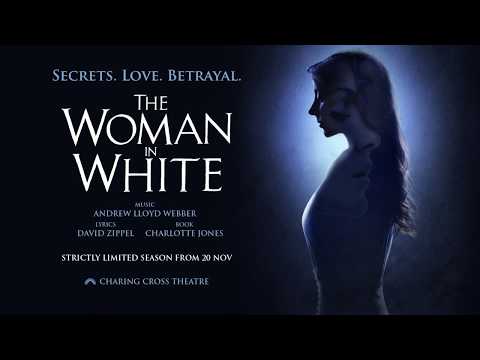
Information current as of 2 February 2026. There is no major commercial West End, Broadway, or large-scale touring production newly announced in 2025 or early 2026 in widely indexed theatre outlets during this research pass. The show’s most recent high-profile professional run remains the 2017 to 2018 London revival at Charing Cross Theatre, which presented a revised score and libretto in a smaller venue.
What is active right now is the show’s afterlife: professional licensing is available via Concord Theatricals, and smaller-scale productions continue to pop up. One documented example is a January 22 to 25, 2025 run at the Electric Theatre in Guildford (presented as an amateur production by arrangement).
Practical SEO note: many audience searches for “Woman in White” are actually aiming at film and TV adaptations of Wilkie Collins. On-page clarity helps: “Andrew Lloyd Webber,” “David Zippel,” “Original London Cast Recording,” and “I Believe My Heart” are the fastest disambiguators.
Notes & Trivia
- The show was workshopped at the Sydmonton Festival in July 2003 before its West End opening in 2004.
- The West End opening was 15 September 2004 at the Palace Theatre, directed by Trevor Nunn.
- The Original London Cast Recording was recorded live at the opening night performance on 15 September 2004.
- The scenic approach relied heavily on projected imagery rather than traditional built scenery, a choice that drew polarized reactions.
- "I Believe My Heart" also lived a parallel life as a 2004 commercial single by Duncan James and Keedie, peaking at number 2 on the UK Singles Chart.
- The musical draws not only from Wilkie Collins’s 1860 novel, but also incorporates elements associated with Charles Dickens’s railway-ghost storytelling.
- In 2017 to 2018, the show returned to London in a revised version at Charing Cross Theatre, where critics often argued the intimacy suited it better.
Reception
The 2004 critical response split along a familiar Lloyd Webber fault line: admiration for the craft of melody and theatrical effect, impatience with what some critics heard as generic or over-produced musical language. The lyric writing got a more specific kind of praise. Reviewers who were cool on the overall piece still flagged Zippel’s neatness and character-specific turns of phrase.
By 2017, the conversation shifted. In a smaller space, with a revised approach, critics were more willing to treat the show as a chamber thriller with romantic heat rather than a blockbuster that forgot to bring the block. The material did not fundamentally change its values. The frame changed how those values landed.
"Lloyd Webber's music and Trevor Nunn's assured and fluent production, with its dizzying whirl of video projections, impart an authentic spookiness to the encounter."
"In addition, David Zippels' lyrics are deft and neat."
"The Woman in White was always an intimate musical trapped in an overblown production. Now, shorn of its excess and trimmed of its narrative flab..."
Quick Facts
- Title: The Woman in White
- Year: 2004 (West End premiere)
- Type: Mystery thriller musical adaptation
- Composer: Andrew Lloyd Webber
- Lyricist: David Zippel
- Book: Charlotte Jones
- Director (original West End): Trevor Nunn
- Opening venue: Palace Theatre, London (opened 15 September 2004)
- Original cast album: Original London Cast Recording (2 discs; widely listed as a 24-track, 2h 24m release)
- Recording note: Recorded live on opening night (15 September 2004)
- Rights / label line (digital listings): LW Entertainment Limited under exclusive license to The Other Songs Records Limited
- Selected notable placements: “Prologue” (railway encounter), “All for Laura” (Marian commits to rescue), “The Nightmare” (identity collapse), “You Can Get Away with Anything” (Fosco’s credo)
Frequently Asked Questions
- Who wrote the lyrics for "The Woman in White"?
- David Zippel wrote the lyrics, with music by Andrew Lloyd Webber and a book by Charlotte Jones.
- Is "I Believe My Heart" part of the stage show or just a pop single?
- It originates in the stage musical as a duet for Walter and Laura, and it was later released commercially as a single by Duncan James and Keedie.
- Where does "Prologue" take place in the story?
- At a remote railway cutting at night, where Walter encounters the mysterious woman dressed in white and the plot’s warning system switches on.
- Is there a revised version of the show?
- Yes. A revised production played at Charing Cross Theatre in London in 2017 to 2018, often discussed as a better fit for the material’s intimate scale.
- Can theatres license the show in 2026?
- Professional licensing is available via Concord Theatricals, and smaller-scale productions have continued to mount the show in recent years.
Key Contributors
| Name | Role | Contribution |
|---|---|---|
| Andrew Lloyd Webber | Composer | Wrote the score, balancing romantic balladry with thriller tension. |
| David Zippel | Lyricist | Lyrics that foreground trust, proof, and social constraint as dramatic engines. |
| Charlotte Jones | Book writer | Stage adaptation shaping narrative structure from Collins and related influences. |
| Trevor Nunn | Director (2004) | Original staging that leaned into cinematic projection and visual spookiness. |
| William Dudley | Designer | Projection-forward scenic concept that became a major talking point in reviews. |
| Michael Crawford | Original cast (Fosco) | Created the role that many critics cited as the production’s scene-stealer. |
| Maria Friedman | Original cast (Marian) | Anchored the show’s emotional intelligence as Marian’s protective force. |
Sources: AndrewLloydWebber.com, Playbill, The Guardian, The Independent, WhatsOnStage, Wikipedia, Apple Music, Concord Theatricals, Free Library of Philadelphia catalog, Discogs, YouTube, Theatrefan.