
She Loves Me Lyrics: Song List
- Act 1
- Good Morning, Good Day
- Sounds While Selling
- Thank You, Madam
- Days Gone By
- No More Candy
- Three Letters
- Tonight At Eight
- I Don't Know His Name
- Perspective
- Goodbye, Georg
- Will He Like Me?
- Ilona
- I Resolve
- Romantic Atomsphere
- Tango Tragique
- Dear Freind
- Act 2
- Overture to Act II
- Try Me
- Where's My Shoe
- Vanilla Ice Cream
- She Loves Me
- A Trip To The Library
- Grand Knowing You
- Twelve Days To Christmas
-
Finale

About the "She Loves Me" Stage Show
The script for this histrionics was written by J. Masteroff. Music was created by J. Bock, lyrics – by S. Harnick. This project is the 3rd theatrical variant of the theatrical of Hungarian playwright M. Laszlo. Before it, the beholders have had the opportunity to see a motion picture with J. Stewart in the lead role & spectacular ‘In the Good Old Summertime’, under the direction of J. Johnson. The essence of the plot evolves in Budapest’s perfumery shop with people working in it. The greatest attention is given to Georg – shop employee who is in a romantic correspondence with a mysterious woman codenamed ‘Dear Friend’.
Broadway premiere took place in April 1963 in Eugene O'Neill Theatre. Prior to the closing, the audience saw 302 performances. H. Prince has directed all of them, without exception. He acted in the role of producer too. The team included: choreographer C. Haney, sound engineer H. Hastings, stage designers W. & J. Eckart, costume designer P. Zipprodt & conductor D. Walker.
Critics have commented favorably on the production, noting that it was made in too old-fashioned style & virtually was devoid of memorable & truly grandiose dance numbers. According to them, Eugene O'Neill Theatre’s scene was too small to provide the necessary scale. In 1964, the musical has received 5 nominations for the Tony Award. In one of them (Best Performance), it was able to win. In the same year, the record company MGM Records released an album, containing compositions played in the theatrical. In 1987, it was re-released on CD by Polydor label.
Release date of the musical: 1963
"She Loves Me" – The Musical Guide & Song Meanings
Review: the lyric engine that makes it last
“She Loves Me” survives because its lyrics are engineered like good retail: tidy displays, sharp labels, zero wasted motion. The show’s central joke is that two people can be eloquent on paper and incompetent in person. Sheldon Harnick’s lines do not merely decorate that idea. They run it, scene by scene, like a shop manager watching the till.
The musical is set in 1930s Budapest, but the writing is modern in its emotional math. Songs interrupt conversations to correct them. They contradict them. They admit what the dialogue refuses to say. That’s why the score feels “integrated” in the old-school sense: the music does story work that would be clunky if spoken. The opening even turns commerce into character. One review singled out how Harnick’s “delicious lyrics” define the shop’s identity right away, with the kind of specificity that makes a fictional workplace feel staffed, not merely populated.
Musically, Jerry Bock writes with an operetta-level attention to contour. Small melodic turns land like private thoughts. When the show finally goes big, it earns it, because it has spent the evening teaching you to listen for the slight shift in tone when a letter becomes a confession.
How it was made: Bock, Harnick, Masteroff, and a producer with a matchmaking habit
The source story is a chain of adaptations with unusually good taste: Miklós László’s play “Parfumerie,” then the Lubitsch film “The Shop Around the Corner,” then this musical, with Joe Masteroff turning the plot into a stage machine that runs on entrances, exits, and misunderstandings. The Broadway original opened April 23, 1963 at the Eugene O’Neill Theatre, directed by Harold Prince and choreographed by Carol Haney. The study guide credits producer Lawrence Kasha with bringing the writers together, and it reads like the rare producer note that actually matters: a romantic comedy needs a collaborative team that likes each other.
There is also a practical origin story hiding in plain sight: the writers followed the book. In a PBS “Great Performances” feature, Harnick explains that he wrote at least one song because Masteroff mentioned the moment in the script, and the lyricist used it. That detail is revealing. “She Loves Me” is not a score that floats above the story. It is a score that takes instructions from the story and then makes those instructions sing.
One more piece of context that helps explain the show’s afterlife: the original cast album won the Grammy for Best Score From an Original Cast Show Album at the 6th Annual Grammy Awards. That is not just hardware. It is evidence that the industry heard the craft even when the box office was cautious.
Key tracks & scenes: the lines that turn the plot
"Good Morning, Good Day" (Company)
- The Scene:
- Morning in Maraczek’s Parfumerie. Bright storefront light. Clerks arrive like clockwork, greeting customers and each other with a politeness that almost hides the shop’s social hierarchy.
- Lyrical Meaning:
- The lyric establishes the show’s signature move: everyday language turned rhythmic. It also sets the trap. In a world this orderly, a private letter feels like contraband, and therefore irresistible.
"Sounds While Selling" (Company)
- The Scene:
- Scene Two, the first real rush of customers. The staging is usually choreographed bustle: counters, sample bottles, receipts, and overlapping conversations that land like percussion.
- Lyrical Meaning:
- Harnick writes in fragments on purpose. The lyric captures a workplace as a collage of interruptions, which matters because it contrasts with the letters, where the characters finally get to finish a thought.
"Tonight at Eight" (Georg)
- The Scene:
- A romantic cafe arranged like a postcard. Candles. A violinist hovering nearby. Georg arrives with Sipos and a full-body case of nerves, because a letter has promised him a face-to-face meeting.
- Lyrical Meaning:
- The lyric is anticipation with rules. Georg is not singing “I’m in love.” He’s singing the schedule of being in love, which is exactly how a lonely-heart correspondence can feel: controlled, timed, and terrifying.
"Will He Like Me?" (Amalia)
- The Scene:
- Private space, usually a bedroom or small apartment. Softer lighting. Amalia rehearses courage the way other people rehearse speeches, because she’s about to test whether her inner voice matches her public self.
- Lyrical Meaning:
- This lyric is the show’s core anxiety rendered precise. It is not vanity. It’s epistemology: who am I when I’m not writing, and will that person be enough?
"Dear Friend" (Amalia)
- The Scene:
- Immediately after the cafe collapses into misunderstanding. The room feels suddenly too large. The waiter’s impatience becomes its own soundtrack. Amalia is left alone with the humiliation she cannot explain.
- Lyrical Meaning:
- The lyric turns romance into survival. Amalia is speaking to an unseen correspondent because the visible world has just embarrassed her. It is also the score’s thesis about letters: paper can be kinder than people.
"Try Me" (Arpad)
- The Scene:
- Act Two opens with damage control. Mr. Maraczek is in the hospital. Arpad arrives with errands and an opportunity. The lighting often shifts to clinical brightness, which makes Arpad’s optimism look brave rather than cute.
- Lyrical Meaning:
- Arpad’s lyric is ambition without cynicism. In a show full of secrets, his directness is moral relief, and it quietly raises the bar for the adults around him.
"Where's My Shoe?" (Amalia, Georg)
- The Scene:
- Amalia’s apartment, still morning, still messy. Georg arrives with news and tries to help. The comedy is physical and tense, with movement that says what the characters refuse to admit.
- Lyrical Meaning:
- The lyric treats a small problem as an emotional crisis, which is the point. The shoe is a proxy for dignity. The argument is a proxy for attraction.
"Vanilla Ice Cream" (Amalia)
- The Scene:
- Amalia alone, recovering, trying to write. Warm, intimate light. A spoon, a bowl, and the creeping realization that her feelings have changed faster than her self-image can update.
- Lyrical Meaning:
- The lyric is delight and fear in the same breath. “Vanilla ice cream” becomes a metaphor for letting yourself enjoy something uncomplicated, even when you’ve trained yourself to distrust happiness.
"She Loves Me" (Georg)
- The Scene:
- Georg alone, newly certain. The staging often clears the space like a reset button. The tempo lifts because his mind has lifted. For once, he is not strategizing, he’s celebrating.
- Lyrical Meaning:
- The lyric is the moment the show stops being about concealment and starts being about timing. He knows the truth. She almost knows it. The song lives in that delicious, dangerous gap.
Live updates (2025/2026): where it’s popping up now
“She Loves Me” is not a touring juggernaut right now. It behaves like a classic: constantly produced, rarely centralized. Licensing stays active through Music Theatre International, which keeps it in rotation for regional theaters, colleges, and community companies.
Two recent proof points for the evergreen SEO crowd: MTI’s own production listings show a February 2025 run in Crystal, Minnesota, and Stanford University’s Department of Music has scheduled performances in late January 2026 at Dinkelspiel Auditorium. That is the show’s present-day footprint: intimate venues, strong singers, and audiences hungry for romance that is smart enough to be funny.
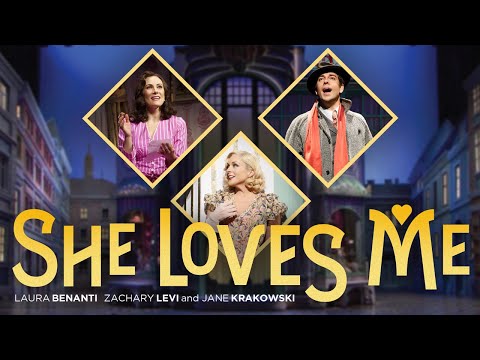
If you want the most accessible “current” version to hear and watch at home, the 2016 Roundabout production was broadcast live online on June 30, 2016, a Broadway first, and later aired via PBS “Great Performances.” Information current as of February 2026.
Notes & trivia
- The original Broadway production opened April 23, 1963 at the Eugene O’Neill Theatre. The MTI study guide lists Harold Prince as director and Carol Haney as choreographer.
- IBDB records the original run as April 23, 1963 to January 11, 1964, and a 2016 Broadway revival at Studio 54 (March 17 to July 10, 2016).
- The original cast recording was recorded April 28, 1963. Ovrtur also lists Harold Hastings as conductor, plus studio production credits.
- The show’s cast album won the Grammy for Best Score From an Original Cast Show Album at the 6th Annual Grammy Awards.
- Jack Cassidy won the Tony for Actor (Featured Role – Musical) for “She Loves Me” (1964 awards year).
- MTI’s synopsis places “Sounds While Selling” early as customers enter, and Act Two’s “Vanilla Ice Cream” and the title song around the reveal spiral that leads to the finale.
- The 2016 Roundabout revival was live streamed on June 30, 2016, billed as the first Broadway show broadcast live online.
Reception: critics then vs. now
In 1963, critics could praise the craft and still wonder if audiences would show up for a romantic comedy without spectacle. That tension never fully left the piece. It just flipped. Today, the show’s smallness reads like confidence, and the lyrics read like a clinic in how to make character speak in rhyme without sounding like a greeting card.
“The songs not only capture the gay, light spirit of the story but also add an extra dimension of magic to it.”
“We’re not a butcher shop or a hardware store,” as Sheldon Harnick’s lyrics point out in the opening number.
The joy is how the songs deepen and contradict the conversation.
Quick facts: show + album metadata
- Title: She Loves Me
- Year: 1963 (Broadway premiere)
- Type: Musical comedy
- Book: Joe Masteroff
- Music: Jerry Bock
- Lyrics: Sheldon Harnick
- Based on: “Parfumerie” by Miklós László
- Selected notable placements: “Sounds While Selling” (shop rush), “Dear Friend” (cafe fallout), “Vanilla Ice Cream” (private realization), “Twelve Days to Christmas” (holiday retail frenzy)
- Original Broadway venue: Eugene O’Neill Theatre
- Original cast album: “She Loves Me (The Original Cast Album)” (MGM Records, recorded April 28, 1963)
- Awards note: Cast album won the Grammy for Best Score From an Original Cast Show Album (6th Annual Grammys)
- Availability: The 1963 cast album is widely available on major streaming services in reissue form; the 2016 revival is available as a filmed performance via PBS “Great Performances” distribution windows.
Frequently asked questions
- Is “She Loves Me” the same story as “You’ve Got Mail”?
- Same DNA. Both trace back to “Parfumerie,” built around anonymous correspondence and mistaken identity in love.
- What’s the single best entry-point song if I’m new to the score?
- “Vanilla Ice Cream.” It’s funny, revealing, and it captures how the show turns small experiences into emotional turning points.
- Is there a filmed version I can watch?
- Yes. The 2016 Roundabout Broadway revival was streamed live online on June 30, 2016 and later aired via PBS “Great Performances.”
- Why do the songs feel like they land mid-scene instead of stopping the plot?
- Because that’s the design. The MTI study materials explicitly frame the show as a model of songs and scenes fitting naturally together, with musical segments that carry mood and character, not just applause cues.
- Does the show work for smaller theaters?
- Very well, if you cast strong actors and treat the shop as a character. The show’s biggest effects are conversational: timing, diction, and the contrast between public banter and private letters.
Key contributors
| Name | Role | Contribution |
|---|---|---|
| Joe Masteroff | Book | Built the stage structure and the letter-reveal mechanics |
| Jerry Bock | Composer | Wrote the score’s melodic architecture and character motifs |
| Sheldon Harnick | Lyricist | Wrote lyrics that pivot between shop chatter and private confession |
| Harold Prince | Director (1963 original) | Staged the original Broadway production at the Eugene O’Neill Theatre |
| Carol Haney | Choreographer (1963 original) | Shaped the movement language of the shop floor and ensemble moments |
| Lawrence Kasha | Producer (credited in MTI materials) | Brought the writers together, per the MTI study guide |
| Harold Hastings | Conductor (cast album) | Conducted the April 28, 1963 recording session, per Ovrtur |
Sources: IBDB, Music Theatre International (MTI) show page, MTI full synopsis, MTI study guide PDF, Roundabout Theatre Company interview with Sheldon Harnick, Variety, The Guardian, Ovrtur, Discogs, Stanford Live, Playbill, Grammy.com.