With So Little to Be Sure Of Lyrics — Anyone Can Whistle
With So Little to Be Sure Of Lyrics
With so little to be sure of,
If there's anything at all.
If there's anything at all.
I'm sure of here and now and us together.
All I'll ever be I owe you,
If there's anything to be.
Being sure enough of you
Makes me sure enough of me.
Thanks for everything we did,
Everything that's past,
Everything's that's over too fast.
None of it was wasted,
All of it will last:
Everything that's here and now and us together!
It was marvelous to know you
And it isn't really through.
Crazy business this, this life we live in-
Can't complain about the time we're given-
With so little to be sure of in this world,
We had a moment!
A marvelous moment!
FAY:
A marvelous moment!
A beautiful time.
I need you more than I can say.
I need you more than just today.
I guess I need you more than you need me.
And yet I'm happy.
All I'll ever be I owe you.
HAPGOOD:
The more I memorize your face,
FAY:
If there's anything to be.
HAPGOOD:
The more I never want to leave.
FAY:
Being sure enough of you
Made me sure enough of me.
HAPGOOD:
Come with me, Fay.
(The following is sung
SIMULTANEOUSLY)
FAY:
Thanks for everything we did,
...
Everything that's past,
Everything's that's over
Too fast.
None of it was wasted.
...
All of it will last:
...
HAPGOOD:
...
There's more to love
In me right now
Than all the bit of love
I've known before.
...
None of it was wasted.
...
All of it will last:
BOTH:
Everything that's here and now and us together!
It was marvelous to know you
And it's never really through.
Crazy business this, this life we live in-
Can't complain about the time we're given-
With so little to be sure of in this world,
FAY:
Hold me.
Hold me.
Song Overview
Review and Highlights
Quick summary
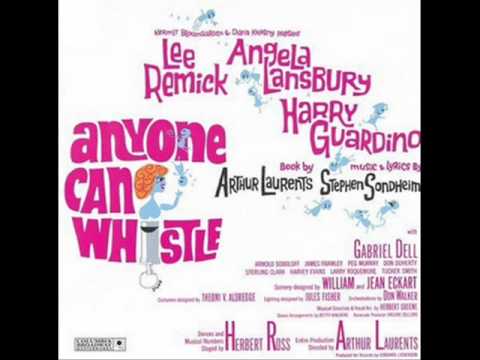
- Work: Late-show duet from Anyone Can Whistle (Broadway, 1964).
- Who sings it: Fay Apple and J. Bowden Hapgood in the stage story, with Lee Remick and Harry Guardino as the original recording voices.
- Where it appears: Near the end, after the town has turned brutal and the characters have stopped pretending they can fix it neatly.
- What it does: A farewell that sounds like a love song until you notice how carefully it avoids forever.
- Why it matters: The show’s satire pauses, then aims inward: two adults choosing honesty over victory.
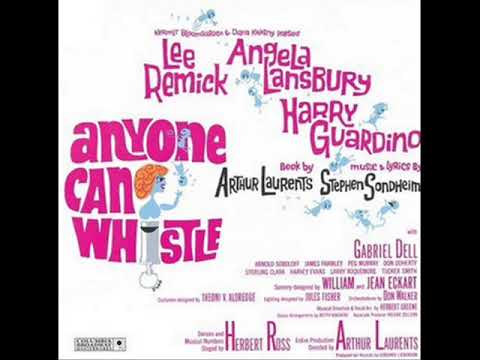
Anyone Can Whistle (1964) - stage musical - non-diegetic. The characters are not performing this to persuade the town. They are saying what they can say only when the plot has run out of tricks. Masterworks Broadway describes the number as the end-of-show duet that plays less like a promise and more like a goodbye, and that framing fits the writing: the melody leans toward warmth while the lyric keeps inserting caution, like a hand on the door handle.
Creation History
The score’s afterlife has been unusually rich for a short Broadway run, and this duet benefits from that attention. Masterworks Broadway notes that an earlier version existed with different melody and text, which hints at how carefully Sondheim kept refining the piece until it could hold contradiction without collapsing. Later recordings also re-cast its emotional temperature: the 1995 Carnegie Hall concert features Scott Bakula and Bernadette Peters, and Masterworks Broadway’s own blog singles out Bakula’s vocal authenticity as a gain for this number, suggesting the song can shift depending on how grounded the singer sounds.
Song Meaning and Annotations
Plot
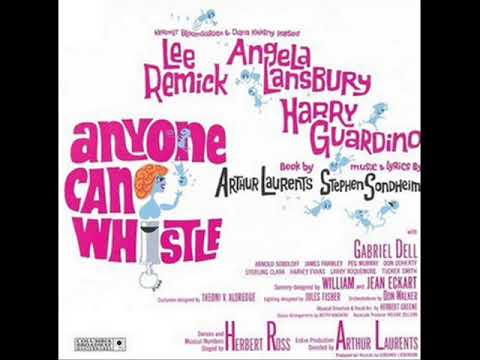
By the time the duet arrives, the miracle scheme has imploded, the town has shown its appetite for scapegoats, and the two central outsiders have exhausted their options. Fay has tried conscience; Hapgood has tried distance. The duet arrives as a final alignment: not a grand solution, but a shared recognition that the next step may be separation, and that separation can still carry respect.
Song Meaning
The title phrase is the thesis and the trap. The song argues that uncertainty is not a flaw to be conquered, but the condition of being alive and trying anyway. It is also a character diagnosis. Fay wants moral clarity; Hapgood wants safety from disappointment. The duet lets them meet without either one winning. That is why the best readings do not over-swell the final lines. The music is offering tenderness, not certainty.
Annotations
At the end of the show, she and Hapgood sing the duet, but instead of forever, it is farewell.
This is a staging note disguised as criticism, and it is dead-on. The duet is a handshake that could have been an embrace, and the choice is the point.
This makes "Everybody Says Don't" and especially this duet far more rewarding when the singer brings unmistakable authenticity.
That observation, aimed at a later concert casting, underlines how much the number relies on plain speech in song. The melody is beautiful, but it is not trying to seduce. It is trying to tell the truth without theatrics.
Driving rhythm and style
Unlike the show’s big public set-pieces, this duet sits in a calmer pocket. The pulse supports long phrases that feel conversational rather than showy. It is not a patter number. It is a sustained exchange, written to sound like two people thinking as they speak.
Emotional arc
The arc begins with guarded tenderness, opens into a brief flash of hope, then pulls back into realism. The most affecting performances keep the hope audible but temporary, like a candle in a windy room. The song does not punish hope. It simply refuses to lie for it.
Key phrases and symbols
The lyric treats certainty as something borrowed, not owned. That is a recurring Sondheim preoccupation, but here it is expressed with unusual simplicity. The duet’s power is that it does not need cleverness to cut.
Technical Information (Quick Facts)
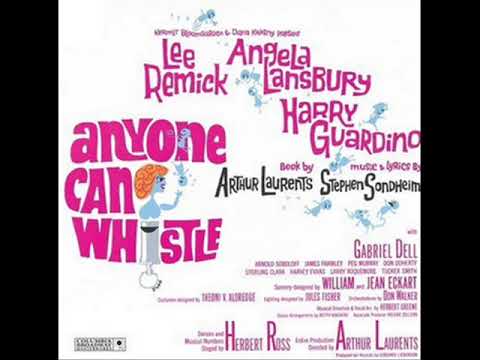
- Song: With So Little to Be Sure Of
- Artist: Lee Remick and Harry Guardino (Original Broadway Cast recording context)
- Featured: Fay Apple; J. Bowden Hapgood
- Composer: Stephen Sondheim
- Producer: Goddard Lieberson (cast album context)
- Release Date: April 1964 (cast recording era); July 18, 1995 (Carnegie Hall concert album release)
- Genre: Musical theatre
- Instruments: Vocal duet with orchestra; commonly published for piano-vocal
- Label: Columbia Masterworks; Masterworks Broadway (catalog and reissues)
- Mood: Tender; wary; unsentimental
- Length: 04:58 (1995 concert track listing)
- Track #: 27 (1995 concert album sequence, preceded by a short transition)
- Language: English
- Album (if any): Anyone Can Whistle (1964 cast album); Anyone Can Whistle (Carnegie Hall Concert Cast Recording - 1995)
- Music style: Intimate duet that resolves plot tension by admitting uncertainty
- Poetic meter: Mixed conversational scansion shaped for sustained lines
Frequently Asked Questions
- Who sings the duet in the original Broadway recording context?
- The cast album credits Lee Remick and Harry Guardino, corresponding to Fay Apple and J. Bowden Hapgood in the story.
- Is it a love duet or a farewell?
- It is both, but the writing leans toward farewell. Catalog commentary describes it as an end-of-show duet that avoids forever.
- Is there a notable concert version?
- Yes. The 1995 Carnegie Hall concert recording features Scott Bakula and Bernadette Peters and lists the track at 4:58.
- Why do some track lists show a transition before it?
- Because the score often moves through brief connective cues into the duet, and the concert release indexes that connective moment as its own short track.
- Did the song exist in another form during development?
- Masterworks Broadway notes an earlier version with different melody and text than the final incarnation.
- What is the published vocal range in a common digital edition?
- A widely sold piano-vocal arrangement lists the voice range as B3 to E5.
- What key is listed as the original published key in that edition?
- D major, with multiple transpositions offered.
- Why does this duet feel different from the show’s big set-pieces?
- It is written as sustained conversation rather than crowd mechanism, letting uncertainty sound like adulthood rather than defeat.
Additional Info
One reason the duet keeps resurfacing in Sondheim anthologies is that it makes restraint feel active. Masterworks Broadway highlights it in catalog writing about the score, and the label’s blog treats it as a place where a singer’s plain-spoken credibility pays off. That is a useful performance note: the song is less interested in vocal display than in believable thought.
The recording trail tells its own story. The 1995 Carnegie Hall concert indexes a tiny transition before the duet, and Discogs track lists reflect that micro-architecture. That may sound like trivia, but it reveals something about the score: it is built from seams, not just showpieces. The duet feels earned because it is approached carefully, not dropped from the ceiling.
According to Masterworks Broadway’s catalog page for the 1964 cast album, the show’s development included an alternate version of the duet with different melody and lyric. That tidbit suggests Sondheim was not polishing a hit. He was calibrating a moral temperature: how to end a show about public delusion with a private truth that does not pretend to fix anything.
Key Contributors
| Entity | Type | Relationship |
|---|---|---|
| Stephen Sondheim | Person | Wrote music and lyrics; revised the duet significantly during development, per catalog notes. |
| Arthur Laurents | Person | Book writer; shaped the ending context where the duet functions as farewell rather than triumph. |
| Lee Remick | Person | Original Fay Apple; credited vocalist on the 1964 cast recording. |
| Harry Guardino | Person | Original J. Bowden Hapgood; credited vocalist on the 1964 cast recording. |
| Scott Bakula | Person | Sang Hapgood on the 1995 Carnegie Hall concert recording. |
| Bernadette Peters | Person | Sang Fay on the 1995 Carnegie Hall concert recording. |
| Masterworks Broadway | Organization | Publishes catalog history and distributes concert and cast-album recordings. |
| Musicnotes | Organization | Publishes a commonly used piano-vocal edition listing range and key. |
| Carnegie Hall | Venue | Hosted the 1995 concert documented on the commercial recording. |
How to Sing With So Little to Be Sure Of
A common piano-vocal listing provides practical anchors: voice range B3 to E5 and original published key D major. Treat these as a starting point for craft, then let the scene lead the sound.
- Tempo and breath: Keep the line long. The duet works when phrases feel like complete thoughts, not like a singer showing control.
- Diction: Prioritize clarity on conditional language and qualifiers. The lyric lives in its careful wording, so do not blur consonants in the name of lush tone.
- Dynamic plan: Start contained, then allow warmth to grow only when the text opens. Save the fullest sound for the moments that sound like almost-hope.
- Duet balance: Listen more than you sing. The drama is in agreement that arrives cautiously, not in two voices competing for the spotlight.
- Vocal color: Favor speech-inflected tone on reflective lines, then let legato bloom briefly. The alternation mirrors the lyric: feeling, then caution.
- Common pitfalls: Avoid turning it into a grand romantic anthem. The song is strongest when it sounds like two people choosing honesty, even if it costs them comfort.
Sources
Sources: Masterworks Broadway catalog and blog posts, Apple Music track listing for the 1995 Carnegie Hall concert album, Discogs track list for the concert release, Musicnotes sheet music listing, YouTube audio uploads
Music video
Anyone Can Whistle Lyrics: Song List
- Act 1
- Prelude Act I
- I'm Like the Bluebird
- Me and My Town
- Miracle Song
- There Won't Be Trumpets
- Simple
- Act 2
- Entr'acte
- Hooray for Hapgood
- Come Play Wiz Me
- Anyone Can Whistle
- A Parade in Town
- Everybody Says Don't
- Act 3
- I've Got You To Lean On
- See What It Gets You
- The Cookie Chase
- With So Little to Be Sure Of
- Finale