There Won't Be Trumpets Lyrics — Anyone Can Whistle
There Won't Be Trumpets Lyrics
Those smug little men with their smug little schemes
They forgot one thing:
The play isn't over by a long shot yet!
There are heroes in the world,
Princes are heroes in the world,
And one of them will save us.
Wait and see!
Wait and see!
There won't be trumpets or bolts of fire
To say he's coming.
No Roman candles, no angels' choir,
No sound of distant drumming.
He may not be the cavalier,
Tall and graceful, fair and strong.
Doesn't matter, just as long as he comes along!
But not with trumpets or lightning flashing
Or shining armor.
He maybe daring, he may be dashing,
Or maybe he's a farmer.
We can wait, what's another day?
He has lots of hills to climb.
And a hero
Doesn't come till the nick of time!
Don't look for trumpets or whistles tooting
To guarantee him!
There won't be trumpets, but sure as shooting
You'll know him when you see him!
Don't know when, don't know where,
And I can't even say that I care!
All I know is, the minute you turn
And he's suddenly there,
There won't be trumpets!
There are no trumpets!
Who needs trumpets?
Song Overview
Review and Highlights
Quick summary
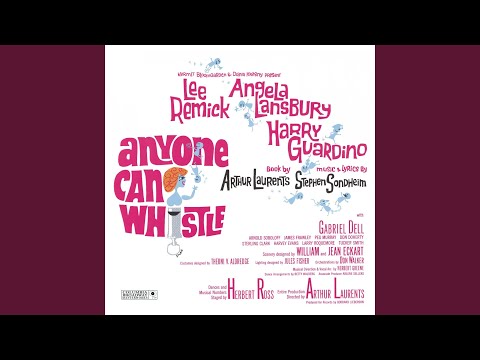
- Work: Fay Apple solo from Anyone Can Whistle (Broadway, 1964).
- Character moment: Fay, cornered and hiding, admits what she wants from the world: a hero, but not a hero who arrives with pageantry.
- In the score: A private prayer in a musical full of public noise.
- Recording history: Often discussed as a cut song from the original Broadway period, later embraced in concert and cabaret life.
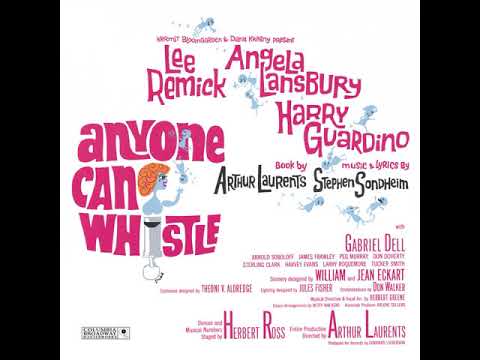
Anyone Can Whistle (1964) - stage musical - non-diegetic. Fay is not performing for the town. She is talking to herself, and by extension to us, while the machinery of the miracle scheme keeps turning without her. In the plot summary commonly cited in program notes and reference sources, she has slipped away from the crowd and the police, and the song lands as the show’s rare pause button: a human being asking for help without turning it into a pitch.
Creation History
Stephen Sondheim wrote music and text for Anyone Can Whistle, with a book by Arthur Laurents. The Broadway production opened April 4, 1964 and disappeared almost immediately, but the score never behaved like a failure. As stated in a Music Theatre International feature, songs from the show became cabaret standards over time, and this title is singled out as one of them. Playbill later spotlighted a studio recording tied to the first complete recording project, which is a nice bit of theatre history irony: the song about heroes arriving quietly kept returning with very loud fanfare.
Song Meaning and Annotations
Plot
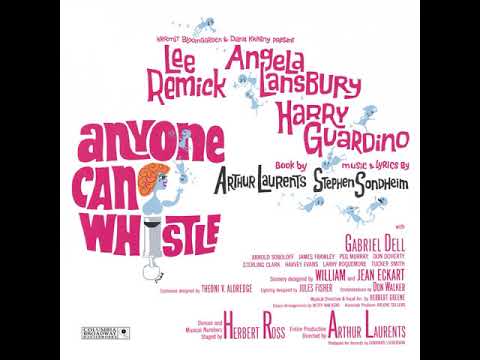
The town has declared a miracle at a rock, hoping to cash in, and the situation devolves into a crowd scene where no one can tell who belongs where. Fay, a nurse from the asylum, becomes the person insisting on truth. She vanishes into hiding, and the song arrives as her confession: she wants a rescuer, but she also knows the world is not staged like a civic parade.
Song Meaning
Fay’s fantasy is not about romance or celebrity. It is about relief. The lyric insists that salvation, if it comes at all, will not arrive with ceremonial signals. Sondheim.com underlines the point with an orchestration note: the arrangement avoids literal trumpet flourishes, honoring the text’s promise that the hero’s presence is the announcement. That is the show, in miniature: a musical about people manufacturing spectacle, suddenly offering a song that distrusts spectacle.
Annotations
The point is that when he comes she won't need trumpets to generate excitement; his presence will be enough.
This is Sondheim as dramatist, not just songwriter. The lyric is a direct rebuke to the town’s marketing plan, and it is also a performance instruction. Sing it as a big anthem and you miss the joke. Fay is not demanding fireworks, she is rejecting them.
Style, rhythm, and the emotional arc
In a score that often moves with civic-band swagger or crowd-driven chant, this number turns inward. The rhythm breathes. The melodic line feels like thought turning into speech, then catching itself. The arc is aspiration, then self-correction: Fay allows herself the dream of a hero, then insists the dream will be quiet or it will be false.
Images and symbols
Trumpets are a metaphor for public validation: announcements, medals, headlines, the noisy permission to believe. Fay asks for the opposite. In a town addicted to announcements, she asks for the kind of goodness that does not need a press agent.
Technical Information (Quick Facts)
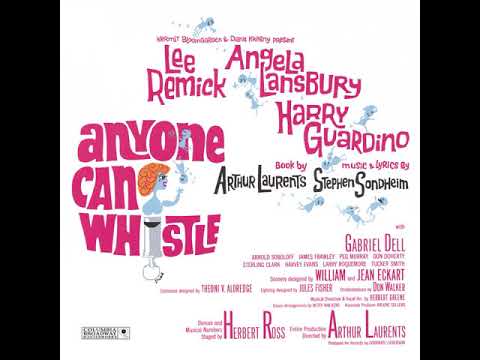
- Song: There Won't Be Trumpets
- Artist: Lee Remick (cast recording context)
- Featured: Fay Apple
- Composer: Stephen Sondheim
- Producer: Goddard Lieberson
- Release Date: May 13, 2003 (bonus-track album edition date)
- Genre: Musical theatre
- Instruments: Vocal with orchestra
- Label: Masterworks Broadway (reissue and distribution), Columbia Masterworks (original cast album label line)
- Mood: Hopeful; wary; private
- Length: 02:37 (common bonus-track listing)
- Track #: 4 (bonus-track album listing)
- Language: English
- Album (if any): Anyone Can Whistle (Broadway Cast Recording) - bonus-track edition
- Music style: Intimate theatre ballad with pointed anti-spectacle messaging
- Poetic meter: Conversational scansion with sustained phrases at key turns
Frequently Asked Questions
- Who sings "There Won't Be Trumpets" in the story?
- Fay Apple sings it while hiding and admitting what she wants the world to be, even as the town doubles down on its miracle spectacle.
- Is it on the main 1964 cast album?
- It is often discussed as material associated with the original Broadway period that later circulated through reissues, concerts, and bonus-track presentations.
- Why do so many performers treat it as a cabaret piece?
- Because it is self-contained: a clear situation, a strong point of view, and a finish that feels like a choice rather than a curtain cue.
- What is the lyric arguing against?
- Against the idea that goodness must arrive with public proof. Fay wants help that does not require ceremony.
- Is the title meant to be ironic?
- Yes, in the sense that the show is full of public announcements. Fay rejects announcements precisely because the town abuses them.
- Does the arrangement include trumpets?
- Sondheim’s commentary on the song emphasizes that the orchestration avoids turning the title into a literal fanfare trick.
- What kind of voice suits it best?
- Many published audition and excerpt editions place it in a mid-range lane with an emphasis on clean diction and sustained line rather than big belting.
- What is the dramatic action during the song?
- Fay stops running for a moment and lets herself hope, then disciplines that hope into a practical belief: rescue, if real, will arrive quietly.
- Why does it feel different from the big Act I crowd numbers?
- It trades crowd rhythm for inner rhythm. The number is built to make the audience lean in, not clap along.
Awards and Chart Positions
The song is not treated as a pop single with standard chart reporting. Its measurable footprint is theatrical: reference summaries note it has been performed widely outside the show, and it is frequently cited as a cabaret favorite connected to the musical’s afterlife.
Additional Info
There is a delicious theatrical contradiction here: the show ridicules manufactured spectacle, then hands its idealist a song that could be sung in a bare room with nothing but a piano. That bareness is not modesty, it is argument. According to Playbill, a major selling point of the complete-recording project was restoring material listeners had come to cherish in fragments, and this title is a prime example: a quiet number that kept refusing to disappear.
Music Theatre International’s production-history note makes a practical point that directors understand: even when the show itself is hard to mount, individual songs travel. "There Won't Be Trumpets" travels because it is dramatic without needing plot explanation, and it lets the performer play thought, not just sound.
Key Contributors
| Entity | Type | Relationship |
|---|---|---|
| Stephen Sondheim | Person | Wrote music and text; commented on the orchestration choice tied to the title idea. |
| Arthur Laurents | Person | Wrote the book that places the song in Fay’s hiding and self-revelation moment. |
| Lee Remick | Person | Originated Fay Apple on Broadway; associated vocalist in a widely circulated recording. |
| Goddard Lieberson | Person | Cast-album producer whose recording decisions helped preserve the score’s reputation. |
| Masterworks Broadway | Organization | Released and distributed reissues and audio uploads that keep the track accessible. |
| Music Theatre International | Organization | Published a production-history feature noting the song’s popularity beyond the show. |
| Playbill | Organization | Covered the complete-recording release campaign and featured the song in that context. |
| Majestic Theatre | Venue | Broadway venue for the 1964 opening of Anyone Can Whistle. |
How to Sing There Won't Be Trumpets
Published excerpt editions give a practical starting point: Musicnotes lists an arrangement in Bb major with a notated vocal range of D4 to C5 for the excerpt edition. Treat that as a guide for one commonly sold arrangement, not a law of nature for every key or cut.
- Tempo and line: Keep the phrases moving like spoken thought. Do not park on every important word. Let the sentences carry you.
- Diction: The lyric relies on clarity more than volume. Consonants should be present but not percussive, especially on the repeated negatives.
- Breath: Mark breaths where the thought changes, not where the measure ends. This is a character thinking out loud.
- Flow and rhythm: Aim for even rhythm through the list-like images. The text is building an argument, and arguments need forward motion.
- Accents: Save emphasis for the turns where Fay corrects herself. The song gains power when conviction arrives late.
- Ensemble awareness: Even as a solo, this sits inside a show full of crowd noise. Sing it as a contrast: less public, more human.
- Mic and space: In cabaret, allow quieter dynamics and closer storytelling. Onstage, keep the intimacy but support the line so it reads to the back.
- Pitfalls: Do not make it a big anthem. If it becomes a victory lap, the title idea collapses.
Sources
Sources: Sondheim.com analysis notes, Music Theatre International production-history article, Playbill feature on complete recording, Apple Music track listing, YouTube Masterworks Broadway audio upload, Musicnotes sheet music listing, Wikipedia reference summary
Music video
Anyone Can Whistle Lyrics: Song List
- Act 1
- Prelude Act I
- I'm Like the Bluebird
- Me and My Town
- Miracle Song
- There Won't Be Trumpets
- Simple
- Act 2
- Entr'acte
- Hooray for Hapgood
- Come Play Wiz Me
- Anyone Can Whistle
- A Parade in Town
- Everybody Says Don't
- Act 3
- I've Got You To Lean On
- See What It Gets You
- The Cookie Chase
- With So Little to Be Sure Of
- Finale