Entr'acte Lyrics — Anyone Can Whistle
Entr'acte Lyrics
Well, the whole town has gone absolutely mad for Hapgood. Still split into his two groups, they march merrily in and out and around the main square, singing his praise.
Song Overview
Review and Highlights
Quick summary
- Work: An orchestral entr'acte associated with Anyone Can Whistle (Broadway, 1964).
- Role in the evening: A reset button between big theatrical arguments, where the score re-centers its tempo and tells you the next act will not be calmer.
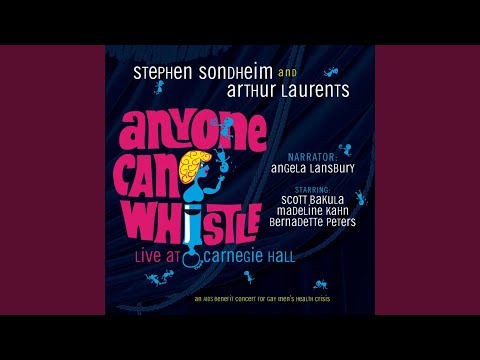
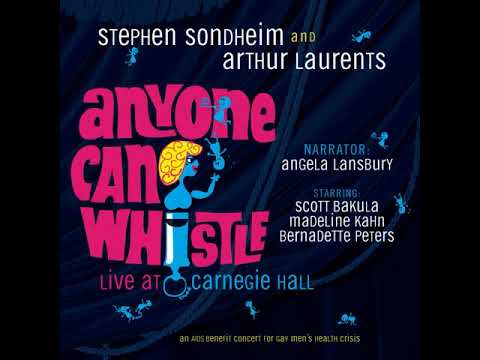
- Notable recording presence: Explicitly tracked in the 1995 Carnegie Hall concert recording, placed right after the long Act I sequence "Simple (The Interrogation)."
- Sound: Bright, compact, and purposeful - less a lullaby than a stage manager snapping fingers.
Anyone Can Whistle (1964) - stage musical - non-diegetic. This is music for the house, not music for the characters. It follows a blistering scene and clears the air without soothing it. If you like your entr'acte to sound like velvet curtains, you will not get that here. This score prefers the brisk nod, the quick pivot, the sense that the show has already started again before you have sat down.
Creation History
The original Broadway production was a three-act experiment that opened April 4, 1964 and closed quickly, yet the piece kept living through recordings. One of the most helpful documents for this entr'acte is the 1995 Carnegie Hall concert release, which tracks it as its own cue and gives it a precise place in the running order. Masterworks Broadway also notes that the concert presentation includes an Act Two entr'acte and extra choral material before "Come Play Wiz Me," a small archival gift for listeners who want the architecture, not just the hits. According to Masterworks Broadway, the cast album history for this show is unusually rich for such a short-lived production, and entr'actes are part of that story: connective tissue, finally audible.
Song Meaning and Annotations
Plot
Placed after "Simple (The Interrogation)" in the concert sequence, the entr'acte arrives at the point where the story has whipped the town into confusion and exposed how easy it is to follow authority when it arrives with rhythm. The next section of the show pivots toward Hapgood and the ensemble, and the entr'acte functions as the hinge.
Song Meaning
Instrumental cues in theatre have meaning when you ask what they prepare you to feel. Here, the meaning is momentum with a raised eyebrow. The cue does not comfort the audience after the interrogation scene; it keeps the pulse alive, as if the show distrusts any pause that might allow reflection to turn into resistance. It also acts as a sly comment on the town itself: even when everyone should stop and reconsider, the machinery keeps playing.
Annotations
Here we get the Act Two Entr'acte and a bit more choral music prior to "Come Play Wiz Me."
This is the archivist's version of a stage direction. It tells you why the cue matters on record: it restores a step in the staircase, so the next number does not appear out of thin air.
Style and orchestral rhetoric
The writing is concise. No extended melody, no grand display, just a clear tonal world and a sense of forward motion. In theatre terms, it is a lighting cue you can hum: not because it is sweet, but because it is efficient.
Technical Information (Quick Facts)
- Song: Entr'acte
- Artist: American Theatre Orchestra
- Featured: Paul Gemignani (conductor credit on the concert recording); Angela Lansbury (narrator credit for the album context)
- Composer: Stephen Sondheim
- Producer: Sony Music Entertainment (concert album rights line)
- Release Date: July 18, 1995 (Carnegie Hall concert cast recording release date on major platforms)
- Genre: Musical theatre; orchestral entr'acte
- Instruments: Orchestra
- Label: Masterworks Broadway (catalog and distribution)
- Mood: Brisk; transitional; alert
- Length: 01:22
- Track #: 11 (Carnegie Hall concert album sequence)
- Language: Instrumental
- Album (if any): Anyone Can Whistle (Carnegie Hall Concert Cast Recording - 1995)
- Music style: Compact transition cue designed to reset pace and focus
- Poetic meter: Not applicable
Frequently Asked Questions
- Is this cue on the 1964 original Broadway cast album?
- The 1995 Carnegie Hall concert release documents it clearly as its own track, while the original album focuses more on select numbers. Later archival writing stresses that the concert restored additional connective material.
- Where does the cue sit in the Carnegie Hall running order?
- It appears immediately after "Simple (The Interrogation)" and before "Hooray for Hapgood," acting as a hinge into the next sequence.
- Is it diegetic music inside the town?
- No. It is score music for the audience, built to shift attention and pace between story sections.
- How long is it?
- The concert recording lists it at about one minute and twenty-two seconds.
- Who performs it on the concert release?
- The American Theatre Orchestra, conducted by Paul Gemignani.
- Why does the show need an entr'acte at all?
- The original work is structured in three acts, and short transitions help the score keep continuity when the storytelling makes sharp turns.
- What should a listener pay attention to?
- Listen for how it resets the room without changing the temperature: it clears space, then pushes you forward.
- Does the cue preview themes from later numbers?
- It tends to function more as tonal setup than as a literal medley, keeping the style consistent while preparing the next scene.
- Is there a second entr'acte?
- Masterworks Broadway notes that the Carnegie Hall concert was done in two acts and does not include a second entr'acte cue in the same way.
Additional Info
Entr'actes are usually sold as breathers. This one behaves more like a brisk stagehand: it clears the space and hands you the next scene. Peter Filichia, writing for Masterworks Broadway, points out that the Carnegie Hall concert restores an Act Two entr'acte and some added choral setup before "Come Play Wiz Me." That is not trivia. It changes how the score breathes. You can hear why the show’s fans talk about structure as much as song: the seams are part of the design.
Key Contributors
| Entity | Type | Relationship |
|---|---|---|
| Stephen Sondheim | Person | Composed the entr'acte cue as part of the musical's orchestral fabric. |
| American Theatre Orchestra | Organization | Performed the cue on the 1995 Carnegie Hall concert recording. |
| Paul Gemignani | Person | Conducted the concert recording performance of the cue. |
| Angela Lansbury | Person | Served as narrator for the concert album in which the cue appears. |
| Masterworks Broadway | Organization | Issued the concert recording and published archival commentary about its restored structure. |
| Carnegie Hall | Venue | Hosted the 1995 performance documented on the album. |
Sources
Sources: Masterworks Broadway album page for Anyone Can Whistle live at Carnegie Hall 1995, Apple Music track listing for the concert recording, Masterworks Broadway blog post The Other Anyone Can Whistle, YouTube Masterworks Broadway topic upload for Entr'acte, Discogs track listing for the Carnegie Hall CD, Stephen Sondheim Society discography page for Anyone Can Whistle
Anyone Can Whistle Lyrics: Song List
- Act 1
- Prelude Act I
- I'm Like the Bluebird
- Me and My Town
- Miracle Song
- There Won't Be Trumpets
- Simple
- Act 2
- Entr'acte
- Hooray for Hapgood
- Come Play Wiz Me
- Anyone Can Whistle
- A Parade in Town
- Everybody Says Don't
- Act 3
- I've Got You To Lean On
- See What It Gets You
- The Cookie Chase
- With So Little to Be Sure Of
- Finale