The Cookie Chase Lyrics — Anyone Can Whistle
The Cookie Chase Lyrics
Lock 'em up! Put 'em away
In the Jar!
Time to start getting the nets out!
Lock 'em up!
Into the cage!
Quietly: no one must know.
Cart 'em of into the bin,
Turn the key.
Quick before anyone gets out!
Turn the key, throw it away,
There we are. Forty-eight to go!
Detmold! Check in your patients.
DETMOLD:
Yes, Your Honor? Your name, Madame?
OLD LADY:
This doesn't fit. It's much too big, I wear a size three-well, maybe a four.
DETMOLD:
Did you always hate your father?
CORA:
Detmold, arrest her now and convict her later. There is really only one question that needs answering:
Are they breathing? Then they're Cookies.
Are they moving? Then they're Cookies.
Are they living? Then they're Cookies.
So get on with it! Quick, get on with it!
Are they human? Then they're Cookies.
So shut up, my dear Doctor, and shut up her too!
Lookie, lookie, here comes Cookie
Now.
Naughty Cookie, playing hookey-
That we don't allow.
Cigarette?
Light?
Thanks.
Get them.
You take the key, my love,
I'm too exhausted to move!
Music, I must have music,
A moment's music or my head will burst!
I know you'll meet the test-
You've been well rehearsed.
Do your best
(Meaning do your worst),
Let me rest
And remember, Schubchen:
Women and children first!
CORA, SCHUB, COOLEY AND MAGRUDER:
Hmm...
Lock 'em up! Put 'em away
In the Jar!
Time to start getting the nets out!
Lock 'em up!
Into the cage!
Quietly: no one must know.
QUARTET AND ENSEMBLE:
Lock 'em up! Put 'em away
In the Jar!
Time to start getting the nets out!
Lock 'em up!
Into the cage!
Quietly: no one must know.
Cart 'em of into the bin,
Turn the key.
Quick before anyone gets out!
Turn the key, throw it away,
There we are. Forty-two to go!
FAY:
Ooh, la, la. Monsieur Schub.
SCHUB:
Not yet gone back to Lourdes yet?
FAY:
Non.
SCHUB:
Pourquoi pas?
FAY:
Pourquoi you hold ze key to my heart.
Song Overview
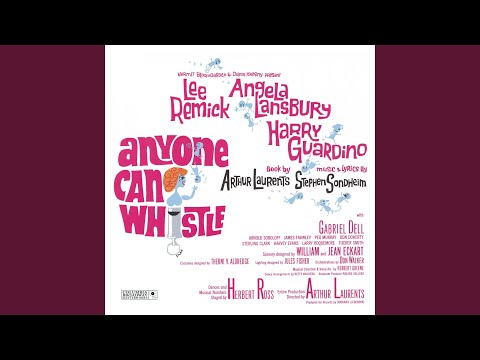
Review and Highlights
Quick summary
- Work: Extended ballet sequence from Anyone Can Whistle (Broadway, 1964).
- What it is: A pursuit scene scored as choreography-first theatre, with music functioning like stage directions you can hear.
- Where it lands: Act III, at the moment the town begins rounding up Cookies and Fay tries to free them.
- Why it matters: It turns the show’s satire into physical risk - bodies moving while the authorities close in.
- Recording legacy: Preserved as a full-length track on later editions and discographies, rather than being trimmed into a mere transition.
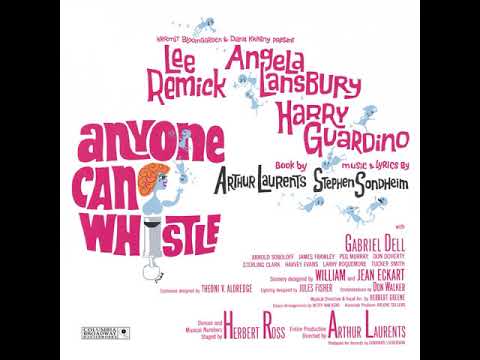
Anyone Can Whistle (1964) - stage musical - non-diegetic, with a diegetic problem to solve. When a musical goes into ballet, you can usually smell the detour coming. Here, the detour is the point: the characters have run out of arguments that can change the town, so the story switches to movement and survival. I think of it as Sondheim and company choosing theatre over sermon. No one gets to explain. They have to move.
Creation History
The original Broadway production opened April 4, 1964 and did not last, but recordings gave the score an afterlife. Discographies for the show note that later releases include a complete presentation of this sequence, which is unusually generous for a long dance-driven cue. Masterworks Broadway also frames the cast album as a key reason the show stayed alive in public memory. According to that catalog history, the recording was championed despite the production’s quick collapse, and the ballet sequence benefits from that preservation because it is easiest to lose on a highlights-only record.
Song Meaning and Annotations
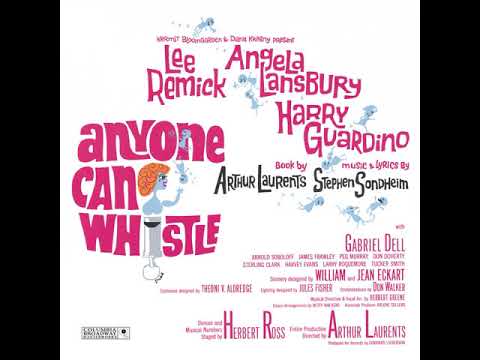
Plot
Act III turns punitive. The governor’s quota hangs over Cora, Schub proposes rounding up anyone to fill it, and the police begin arresting Cookies. Fay, refusing to stand by, tries to get the key to the wagon from the guards. The sequence is staged as a prolonged chase: the goal is simple, the obstacles multiply, and the town’s cruelty becomes visible in how efficiently it moves.
Song Meaning
This is what the show’s idea of madness looks like when it stops being a label and becomes a system. The chase turns institutional panic into choreography. Music, in this case, is the sound of a town enforcing itself. There is a sly irony too: earlier, the town invented a miracle to attract tourists, a public fantasy. Now it must produce bodies to keep power, a private terror. The score mirrors that shift by dropping verbal cleverness and letting motion do the accusing.
Annotations
Fay tries to get the key to the wagon from the guards in an extended ballet sequence.
That summary, from a standard plot outline, is the dramatic spine. It tells you why the music needs length: the attempt fails and re-starts, again and again, until the audience feels the exhaustion.
Track lists sometimes separate the lead-in as a short transition, then present the chase as its own full cue.
This matters for listeners because it restores the theatre logic. The transition is the door opening. The ballet is what happens once the room starts running.
Rhythm and architecture
The writing functions like a series of tightening circles. Phrases set up, repeat, and return with sharper edges. Even without staging, you can hear the scene’s geometry: approach, evade, regroup, lunge. This is the craft of musical storytelling without lyrics, and it is not common in Broadway scores of that era to be so unapologetically structural.
Emotional arc
It begins as determination, becomes frantic, and ends with the feeling that the town has learned how to hunt. Fay’s moral certainty is not enough to win. She needs timing, allies, luck, and the kind of physical bravery that is not romantic. The sequence insists on that truth.
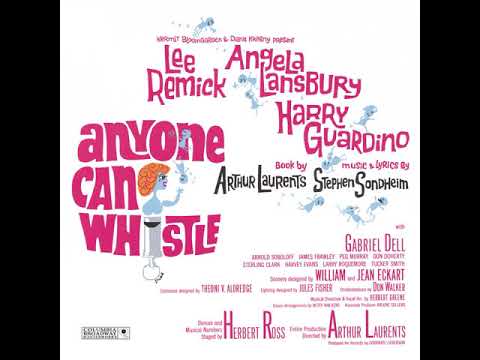
Technical Information (Quick Facts)
- Song: The Cookie Chase
- Artist: Original Broadway Cast and Company (recording contexts vary)
- Featured: Company and orchestra (ballet sequence); credited vocal and ensemble attributions differ by release notes
- Composer: Stephen Sondheim
- Producer: Goddard Lieberson (cast album context)
- Release Date: April 1964 (cast album era); May 2003 (remastered and expanded edition that includes the complete cue)
- Genre: Musical theatre; dance sequence
- Instruments: Orchestra (dance-driven writing)
- Label: Columbia Masterworks; Masterworks Broadway (reissues)
- Mood: Kinetic; anxious; relentless
- Length: 09:03 (documented timing in major discography notes)
- Track #: Appears as a late-sequence track on expanded editions; some concert track lists include a separate transition immediately before it
- Language: Instrumental
- Album (if any): Anyone Can Whistle - Original Broadway Cast Recording (expanded); Anyone Can Whistle - Live at Carnegie Hall 1995
- Music style: Choreography-first scoring with motif-driven pursuit structure
- Poetic meter: Not applicable
Frequently Asked Questions
- Is this a song with lyrics or a dance sequence?
- It is primarily a dance-driven cue, written to carry a chase scene rather than deliver a lyric argument.
- Where does it happen in the story?
- In Act III, during the crackdown, when Fay tries to obtain the key to the wagon used to transport arrested Cookies.
- Why is it so long compared to other cues?
- Because the scene is built on repeated attempts, reversals, and escalating obstacles. The length is the drama.
- How is it presented on recordings?
- Discographies document it as a full-length track, and some concert track lists separate a short transition immediately before it.
- Does it appear in the 1995 Carnegie Hall concert?
- Yes, track lists for that concert document the cue, often preceded by a transition tied to the arrests.
- What should a listener focus on without seeing staging?
- Listen for structural cues: repeated figures that return with new pressure, and tempo shifts that suggest turns and near-misses.
- Is it connected to the show’s theme of sanity?
- Yes. It shows the theme in action: sanity becomes an administrative label enforced by a moving apparatus.
- Are there notable later performances?
- Concert and staged excerpts circulated widely; multiple uploads feature different casts performing the chase sequence, underscoring its reputation as a standout set-piece.
- Why does this cue matter in Sondheim’s early career?
- It is an early example of extended scene writing where music carries plot mechanics, not just mood, anticipating the later Sondheim emphasis on musical architecture.
Additional Info
There is a certain kind of Broadway listener who treats dance music as filler. This cue is a rebuttal. It does not fill time. It fills space: the space between policy and harm. Once the town starts rounding up bodies, the show stops trusting language to rescue anyone. That is why the chase has bite. It is not cute. It is a mechanism in motion.
The recording history is also revealing. Discography notes emphasize that later editions include the complete chase, and concert track lists sometimes isolate a short transition and then let the long cue run. That is curatorial respect. It acknowledges that this sequence is a major structural beam in Act III, not a footnote. As stated in Masterworks Broadway catalog material, the cast album’s very existence helped preserve this score for later reappraisal, and sequences like this are part of what modern listeners cite when they talk about the work as audacious rather than merely odd.
Notable performance traces circulate online, including concert renditions with well-known Broadway singers and ensemble-driven versions credited to different casts. They make a case for the number as a set-piece directors love: it gives dancers narrative purpose, and it gives the audience a plot they can follow without being told what to think.
Key Contributors
| Entity | Type | Relationship |
|---|---|---|
| Stephen Sondheim | Person | Composed the cue to carry an extended Act III chase through musical structure. |
| Arthur Laurents | Person | Book writer; placed the chase at the moment policy becomes a physical crackdown. |
| Herbert Ross | Person | Choreographer of the original production; the chase sequence relies on dance storytelling. |
| Goddard Lieberson | Person | Cast-album producer whose insistence on recording helped preserve large sequences in the score’s legacy. |
| Masterworks Broadway | Organization | Catalog publisher that documents track listings and promotes historical context for the score. |
| Stephen Sondheim Society | Organization | Maintains discography entries that document timings and the presence of the complete chase cue. |
| Carnegie Hall | Venue | Site of the 1995 concert recording whose track lists separate transitions and the chase cue. |
Sources
Sources: Masterworks Broadway catalog page for Anyone Can Whistle, Stephen Sondheim Society discography, Wikipedia plot summary, Discogs track list for Anyone Can Whistle live at Carnegie Hall 1995, YouTube concert uploads of the chase sequence
Music video
Anyone Can Whistle Lyrics: Song List
- Act 1
- Prelude Act I
- I'm Like the Bluebird
- Me and My Town
- Miracle Song
- There Won't Be Trumpets
- Simple
- Act 2
- Entr'acte
- Hooray for Hapgood
- Come Play Wiz Me
- Anyone Can Whistle
- A Parade in Town
- Everybody Says Don't
- Act 3
- I've Got You To Lean On
- See What It Gets You
- The Cookie Chase
- With So Little to Be Sure Of
- Finale