Me and My Town Lyrics — Anyone Can Whistle
Me and My Town Lyrics
Everyone hates me-yes, yes-
Being the Mayoress, yes.
All of the peasants
Throw rocks in my presence,
Which causes me nervous distress, yes.
OOOH, OOOOOOOOOH, OOOH, OOH, OOOOOOOOOH.
Me and my town, battered about,
Everyone in it would like to get out.
But me and my town,
We just wanna be loved!
Stores are for rent, theatres are dark,
Grass on the sidewalks, but not in the park,
Me and my town,
We just wanna be loved!
The people are starving,
So they sleep the day through.
My poor little people,
What can they do?
TOWNSPEOPLE:
Boo!
CORA:
Who asked you?
Come on the train, come on the bus,
Somebody please buy a ticket to us.
Hurry on down-
We need a little renown.
Love me,
Love my
Town!
OOOHHHH OOOOOHHHHH OOOOOOOOOOOHHHHHHHHHH!
BOYS:
Hi there, Cora. What's new?
CORA:
The bank went bust and I'm feeling blue.
BOYS:
And who took over the bankruptcy?
CORA:
Me, boys, me!
BOYS:
Si, si!
CORA:
Me, boys, me!
BOYS:
Tell us, Cora, how you are.
CORA:
I just got back from the reservoir.
BOYS:
And what's the state of the water supply?
CORA:
Dry, boys, dry!
BOYS:
My, my!
CORA:
Dry, boys, dry!
BOYS:
Ay, ay!
CORA:
A lady has responsibilities...
BOYS:
Responsibilities...
CORA:
And civic pride!
BOYS:
Civic pride!
CORA:
Well, I look around and what do I see? I see no crops.
BOYS:
No crops.
CORA:
I see no business.
BOYS:
No business
CORA:
To the North, to the South,
Only hoof-and-mouth!
BOYS:
To the East, to the West,
No community chest
CORA:
I see a terrible depression all over the town-
BOYS:
Oh, a terrible depression,
Yes, a terrible depression.
CORA:
What a terrible depression
And I'm so depressed
I can hardly talk on the phone.
I feel all alone.
CORA AND BOYS:
But a lady has responsibilities-
BOYS:
Responsibilities-
CORA:
To all my poor! Starving! Cold! Miserable!
Dirty! Dreary! Depressing! Peasants!
ALL:
Peasants! Ick!
CORA:
A lady has responsibilities-
BOYS:
Responsibilities-
CORA:
To try to be
Popular with the populace.
BOYS:
She's unpopular with the populace!
ALL:
Unpopular with the populace,
Unpopular with the populace,
Unpopular with the populace...
CORA:
Everyone here hates me at length,
Probably lynch me if they had the strength.
But me and my town,
Me and my town,
We just wanna be loved!
BOYS:
We just want to be loved!
We just want to be loved!
CORA:
Just loved!
BOYS:
A friendship is lovely
And a courtship sublime,
But give her a township-
CORA:
Township!
Every time!
ALL:
What'll we do, me and my town?
Gotta do something or we're gonna drown!
Give me my coat,
Give me my crown,
Gimme, gimme your vote
And hurry on down!
CORA:
Show how much you think
BOYS:
Yeah!
CORA:
Of me!
ALL:
Love me,
Love my
Town!
Song Overview
Review and Highlights
Quick summary
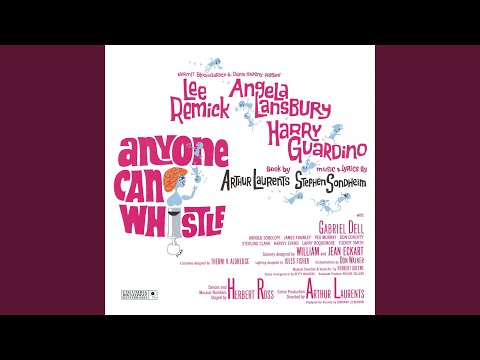
- Work: Act I Cora number from Anyone Can Whistle (Broadway, 1964).
- Who sings it: Cora Hoover Hooper with her Boys (a built-in cheering section that doubles as a comic device).
- Where it lands: Early Act I, right after the show has shown a crumbling town and then a strangely orderly asylum chorus.
- What it sounds like: Brassy, bluesy musical-comedy pastiche with tight harmony writing - a "classic" frame used to expose a very un-classic mayor.
- Why it matters: It is Cora's character introduction in musical terms: vanity, grievance, and civic branding, all sung as if they were public service.
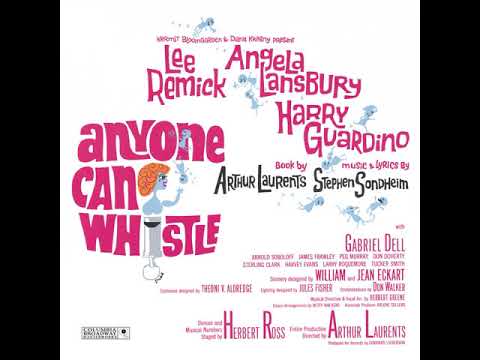
Anyone Can Whistle (1964) - stage musical - diegetic-ish. Cora performs this as a public self-pity aria, essentially a campaign appearance with choreography. In the plot, the town has gone bankrupt, the square is literally crumbling, and yet the mayor enters like a star with backup boys. The number is her brand statement: she can tolerate anything except being disliked, which is a very useful flaw if you are about to stage a miracle.
Creation History
Stephen Sondheim wrote music and lyrics for Anyone Can Whistle, with a book by Arthur Laurents. The Broadway production opened April 4, 1964 at the Majestic Theatre and vanished quickly, but the cast album kept the score in circulation. According to Masterworks Broadway, performers in the original company spoke about how detailed the harmony writing was in this number, and you can hear why: it is built to sound effortless while it keeps shifting gears beneath the smile.
Song Meaning and Annotations
Plot
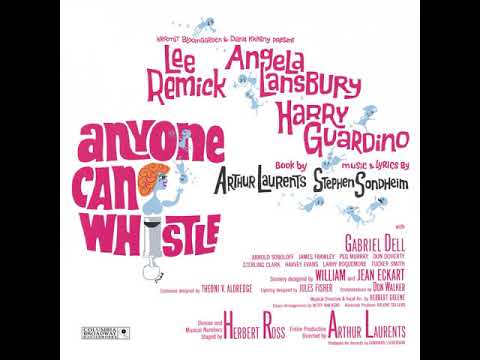
Act One introduces a bankrupt town where the only thriving business is the local asylum. The Cookies march in calmly, then the administration appears in full panic-mode pageantry. Cora, the mayoress, is carried in with her Boys and sings about how difficult it is to be her while the townspeople resent her leadership. The number sets up the show’s core problem: the civic story is always being staged, even when the town is falling apart.
Song Meaning
This number is Cora in a mirror, and the mirror is a show-tune. She laments unpopularity with the vocal manner of a torch singer, then flips into bright ensemble exchanges that feel like a public-relations routine. New Line Theatre describes it as a brassy, bluesy, old-fashioned musical-comedy pastiche, and that is the key: the style is not nostalgia, it is camouflage. She uses a familiar Broadway language to make her self-absorption sound like community suffering. A mayor who sings in pastiche is still a mayor; the form simply lets her dodge the consequences for four minutes.
Annotations
The first full song in the show is Cora's number, a brassy, bluesy, old-fashioned show tune with Gershwin-esque harmonies.
That "old-fashioned" surface is the gag and the trap. The audience recognizes the idiom, relaxes, and then the lyric keeps insisting that the mayor is the injured party. The harmony sparkle becomes a spotlight she refuses to step out of.
In this number, Sondheim uses Latin for comic effect.
It is a small flourish with a big implication: Cora reaches for prestige language when her town is collapsing. Latin reads as education, authority, distance. Onstage it lands as a joke; in the story it is also a tell.
Driving rhythm and character mechanics
The Boys do not merely harmonize; they manage the room. Their responses function like a press team: they soothe, they support, they redirect. Rhythmically, the song toggles between bluesy complaint and brisk patter-like exchanges, which keeps the scene moving the way politics keeps moving. If Cora stops, she might have to listen.
Emotional arc
It starts as grievance, swells into performance, and ends with Cora still centered. The town is not fixed, but her self-image is protected. That is the arc: not growth, not change, just reinforcement, polished and loud.
Historical touchpoints
The score is often discussed as a satire of mid-century conformity and civic mythmaking. A bright "public" musical language, deployed to sell a broken reality, belongs to that cultural moment as much as it belongs to this character.
Technical Information (Quick Facts)
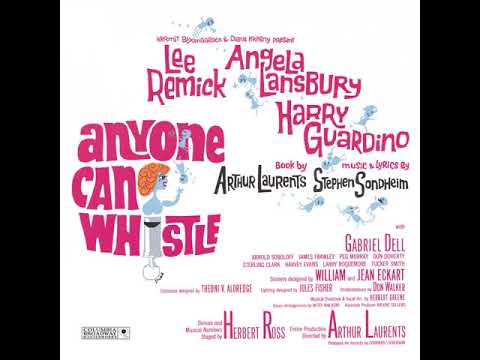
- Song: Me and My Town
- Artist: Original Broadway Cast of Anyone Can Whistle (Cora Hoover Hooper and Boys)
- Featured: Cora Hoover Hooper; Boys
- Composer: Stephen Sondheim
- Producer: Goddard Lieberson (cast album)
- Release Date: 1964 (Original Broadway Cast Recording); April 8, 1995 performance released as the Carnegie Hall concert album
- Genre: Musical theatre
- Instruments: Vocal with orchestra
- Label: Columbia Masterworks (cast album); Masterworks Broadway (Carnegie Hall release); Jay Records (complete recording)
- Mood: Brassy; self-dramatizing; satiric
- Length: About 4:26 on a common cast-album listing
- Track #: 2 on the Masterworks Broadway cast-album track list
- Language: English
- Album (if any): Anyone Can Whistle - Original Broadway Cast Recording; Anyone Can Whistle - Live at Carnegie Hall 1995; Anyone Can Whistle (First Complete Recording)
- Music style: Musical-comedy pastiche used as characterization
- Poetic meter: Not stated in official materials; built around conversational scansion and ensemble echo
Frequently Asked Questions
- Who sings the number in the Broadway song list?
- IBDB lists it as sung by Cora Hoover Hooper and Boys, placing it squarely as Cora’s public self-portrait.
- Is it early in the show or a later Act I build?
- It arrives early, after the town is established and Cora is introduced as the mayor who cannot stand being disliked.
- Why does it sound like an older Broadway style?
- Because the style is part of the characterization. A familiar show-tune frame lets Cora turn self-pity into spectacle and make vanity sound civic.
- What do the Boys add besides harmony?
- They function as narrative machinery: backup dancers, enablers, and a Greek-chorus-for-hire that keeps her image intact.
- Does the lyric include unusual language choices?
- Commentary around the show notes that Latin appears for comic effect, a quick flash of status language in a town that cannot pay its bills.
- Is there a recommended recording if I want more dramatic context?
- The 1995 Carnegie Hall concert recording is useful because it preserves a concert performance frame with narration and fuller sequencing.
- Is there a complete recording that restores more of the score?
- Yes. A later "first complete recording" release presents Act I in a more continuous form than typical album extracts.
- Did the song chart as a single?
- No standard pop chart history is associated with this theatre track. Its life is in cast albums, concerts, and revivals.
- What is the quickest description of its dramatic job?
- It tells you Cora is addicted to approval, then proves she can sing that addiction like a public anthem.
Awards and Chart Positions
The song is not treated as a chart single in standard pop reporting. For awards context, the original Broadway production received a Tony Award nomination for choreography (Herbert Ross), a reminder that this show’s theatrical ambition was visible even when its run was not.
Additional Info
I keep coming back to how the number weaponizes comfort. The harmony writing is busy, the idiom feels familiar, and the whole thing presents itself as a "normal" Broadway entrance for a star. But the show is not interested in normal. According to the Masterworks Broadway cast-album notes, the company found this number unusually detailed to learn, which tracks with what you hear: it moves like a practiced stunt, and that is the point. Cora is a practiced stunt.
Masterworks Broadway’s Carnegie Hall album page summarizes the scene plainly: Cora laments the status quo with her admirers, then heads toward the rock where the scheme will find its miracle. That framing makes the number read less like an isolated comedy and more like a hinge: a mayor sings her brand, then walks into the event that will sell the town.
Key Contributors
| Entity | Type | Relationship |
|---|---|---|
| Stephen Sondheim | Person | Wrote music and lyrics; used pastiche to define Cora’s theatrical persona. |
| Arthur Laurents | Person | Wrote the book; shaped the satiric frame that the number plays against. |
| Angela Lansbury | Person | Originated Cora on Broadway; recorded the 1964 cast-album version. |
| Goddard Lieberson | Person | Cast-album producer credited with preserving the score on record. |
| Don Walker | Person | Orchestrator for the original production materials. |
| Herbert Greene | Person | Musical director and vocal arranger listed for the Broadway production. |
| Masterworks Broadway | Organization | Publisher of cast-album editions and Carnegie Hall concert release notes. |
| Majestic Theatre | Venue | Broadway opening venue (April 4, 1964). |
| Carnegie Hall | Venue | Hosted the April 8, 1995 concert performance documented on record. |
| Jay Records | Organization | Issued a later complete recording with the song and an orchestral playoff. |
Sources
Sources: Internet Broadway Database production record, Masterworks Broadway cast-album page, Masterworks Broadway Carnegie Hall album page, Music Theatre International synopsis, New Line Theatre analysis, Jay Records complete recording track listing, Wikipedia plot summary
Music video
Anyone Can Whistle Lyrics: Song List
- Act 1
- Prelude Act I
- I'm Like the Bluebird
- Me and My Town
- Miracle Song
- There Won't Be Trumpets
- Simple
- Act 2
- Entr'acte
- Hooray for Hapgood
- Come Play Wiz Me
- Anyone Can Whistle
- A Parade in Town
- Everybody Says Don't
- Act 3
- I've Got You To Lean On
- See What It Gets You
- The Cookie Chase
- With So Little to Be Sure Of
- Finale