Anyone Can Whistle Lyrics – All Songs from the Musical
Anyone Can Whistle Lyrics: Song List
- Act 1
- Prelude Act I
- I'm Like the Bluebird
- Me and My Town
- Miracle Song
- There Won't Be Trumpets
- Simple
- Act 2
- Entr'acte
- Hooray for Hapgood
- Come Play Wiz Me
- Anyone Can Whistle
- A Parade in Town
- Everybody Says Don't
- Act 3
- I've Got You To Lean On
- See What It Gets You
- The Cookie Chase
- With So Little to Be Sure Of
- Finale
About the "Anyone Can Whistle" Stage Show
Opening of the show was held in 1964, and its advertising was started back in 1961 in print. The Natives Are Restless – such was the working title of the musical, which, as we know, was later renamed to Anyone Can Whistle. Arthur Laurents directed the show, Stephen Sondheim wrote music and lyrics. As in 1962, the same throughout 1963, the expected opening of the musical was shifted because its production was delayed many times due of financial issues. Stephen Sondheim was in a rather gloomy mood, and he almost did not work, because money problems constantly prevailed over him. Despite the fact that he and Arthur Laurents developed 4 different musical these years and two of them successfully entered life – two more were postponed because of the uncertainty. But since they were quite purposeful personalities, they eventually collected the investments from 115 independent sources and gathered the required amount of USD 350.000 to run it.Pre-Broadway shows were in Philadelphia in 1964, and the first presentation in March received feedbacks about the banality and complexity of show, as well as about the inability to understand the plot because of these difficulties. But the director did not consider it necessary to draw his attention to feedback. The show were constantly plagued with failures – the heart attack occurred one of the actors, Henry Lascoe, and he had to be replaced immediately; the main actress was unhappy staged (but she blossomed after replacing Henry); the composer found performances humiliating.
Broadway’s production was shut down after only 9 plays since the public took everything that happened extremely negative. Despite the complete failure of the music, the show received Tony nomination (for music). Bernadette Peters, who has starred in Annie Get Your Gun, played a role here in 1995, in the re-launch. Totally there were several more attempts to revive the musical, but it never went further and music turned out to be the most successful part and has survived several recordings on discs by Columbia.
Release date: 1964
"Anyone Can Whistle" – The Musical Guide & Song Meanings
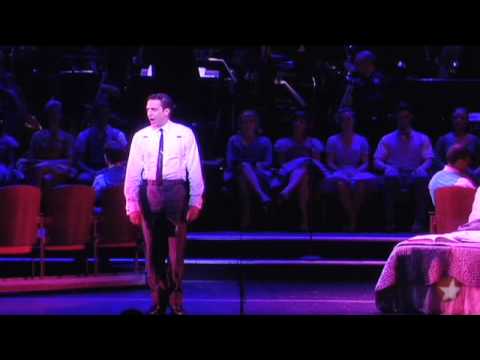
Review
“Anyone Can Whistle” is a satire that behaves like a nervous system. It twitches. It contradicts itself. It refuses to calm down long enough to be “tidy,” which is the point and also the problem. The story puts a bankrupt town onstage, then asks what happens when a fake miracle becomes public policy. In that setup, Stephen Sondheim’s lyrics are not decoration. They are diagnosis. The words keep turning institutions into punchlines, then turning the punchlines into warnings. One minute the show is selling a miracle. The next minute it is admitting that selling is the real miracle.
Arthur Laurents’ book pushes absurdity hard: crowds that move as verdicts, officials who treat ethics as a budgeting choice, and a “Cookie Jar” asylum that looks healthier than the town outside it. The lyric approach matches that shape. Sondheim writes slogans that splinter mid-phrase. He writes patter that sounds like civic paperwork. He writes ballads that keep catching on a single anxious idea. The score sits with one foot in Broadway melody and the other in something sharper, almost clinical. Even when the tune is pretty, the language bites. That tension is why the show’s best songs outlived its first run.
The real engine is Fay Apple, the nurse who wants proof, and Hapgood, the stranger who wants permission. Their romance is not a fantasy. It’s a negotiation with fear. Meanwhile, Cora Hoover Hooper, the mayoress, sings power like a habit she can’t quit. The show’s thesis lands in a paradox: conformity is sold as safety, but it behaves like madness. The “sane” characters are the ones most invested in the hoax.
How It Was Made
The 1964 Broadway production is famous for its short life, but the birth story is longer and stranger. Early in development, the project circulated under different titles, and money was a recurring stress point. By accounts preserved in album notes and production histories, backers were wary of how offbeat the piece felt, even as it drew serious believers and high-profile supporters. It is a show that arrived on Broadway carrying ambition and anxiety in equal measure.
That anxiety shows up inside the writing. The satire swings wide: government, religion, science, tourism, civic pride, mental health systems. The book tries to hold all of it, at speed. Sondheim’s score responds by making structure the hook. Extended sequences behave like set pieces in a film: interrogation as music (“Simple”), civic frenzy as chorus (“Miracle Song”), and ballets that turn chaos into choreography. If the show sometimes feels overstuffed, it is also unusually formal for a so-called flop. It is built, not merely written.
The recording history helped fix its reputation. Columbia’s cast album kept the score in circulation, and later releases expanded what listeners could hear, including songs cut during tryouts or previews and bonus material drawn from Sondheim’s own demos. In other words, the soundtrack story is also a revision story. “Anyone Can Whistle” has been edited by time as much as by rehearsal rooms.
Key Tracks & Scenes
"I'm Like the Bluebird" (Cookies, Company)
- The Scene:
- Morning in the town square. The “Cookies” drift out from the sanitarium, smiling too easily. Bright light, almost antiseptic. Their happiness reads as suspicious, then oddly tempting.
- Lyrical Meaning:
- The lyric weaponizes cheer. It sells freedom as a simple refrain, which makes the town’s bitterness look like the real illness. The song plants the show’s question: who decides what “well” looks like?
"Me and My Town" (Cora Hoover Hooper)
- The Scene:
- Cora is carried in like a local monarch. She performs confidence as pageantry, backed by “Boys” who turn flattery into harmony. The staging wants polish. The lyric wants control.
- Lyrical Meaning:
- Cora’s self-myth is civic policy. She confuses popularity with legitimacy, and the lyric exposes how quickly that confusion becomes cruelty. It is villain music that thinks it’s an anthem.
"Miracle Song" (Cora, Townspeople, Pilgrims)
- The Scene:
- At the rock on the edge of town, water bursts forth and the crowd instantly turns it into commerce. Sunlight flares. People point. The chorus becomes a sales pitch with a prayer on top.
- Lyrical Meaning:
- Faith is treated like branding. The lyric shows how a community can agree to lie because the lie is profitable and emotionally convenient. The “miracle” is a group decision to stop thinking.
"There Won't Be Trumpets" (Fay Apple)
- The Scene:
- Fay alone, hiding from the police as the Cookies scatter into the crowd. A tight spotlight. Quiet after noise. She admits what she wants, without bargaining it down.
- Lyrical Meaning:
- This is not a “princess” song. It’s a plea for a hero, paired with the painful knowledge that heroes rarely arrive with fanfare. The lyric makes longing sound practical, which is why it hurts.
"Simple" (J. Bowden Hapgood, Company)
- The Scene:
- Hapgood interrogates the town, sorting people into Group A and Group One without explaining the rules. Lights snap between faces like flashbulbs. The scene plays like a public sanity test.
- Lyrical Meaning:
- The title is bait. The lyric is about how power disguises itself as logic. Hapgood’s language makes the crowd doubt itself, and that doubt becomes a kind of control.
"Anyone Can Whistle" (Fay Apple)
- The Scene:
- Fay, disguised as a miracle inspector, finally feels what anonymity gives her: permission. The space opens up. The lighting warms. She tries on freedom like a coat that almost fits.
- Lyrical Meaning:
- The lyric equates whistling with ease, but the song is really about fear management. It argues that courage is a technique, not a trait. It is a self-help idea written as romance.
"Everybody Says Don't" (Hapgood)
- The Scene:
- Hapgood steps forward, almost as if he is speaking directly to the audience. The band kicks in with bite. The moment has the swagger of a rule being broken on purpose.
- Lyrical Meaning:
- It’s the show’s clearest manifesto: conformity as cowardice. The lyric is punchy because it’s defensive. It sells rebellion as joy, but you can hear how much he needs it to be true.
"With So Little to Be Sure Of" (Fay Apple, Hapgood)
- The Scene:
- After the chaos, Fay and Hapgood face the cost of leaving, and the cost of staying. The stage empties. The sound gets softer. Their voices sit close, like a promise made in a whisper.
- Lyrical Meaning:
- The lyric refuses certainty. That’s its romance. In a show full of crowds and slogans, this duet values doubt as honesty. It is the emotional rebuttal to the miracle scam.
Live Updates
In 2025 and 2026, “Anyone Can Whistle” stays alive the way cult musicals usually do: through concert-style mountings, regional risks, and the gravitational pull of Sondheim’s name. Minneapolis Musical Theatre programmed an in-concert presentation in September 2025 as part of its season identity, and regional critics treated it as both a curiosity and a serious score that rewards strong singers.
On the West Coast, El Portal Theatre in North Hollywood listed a full production by All Roads Theatre Company (ARTCO) scheduled for April 24 through May 3, 2026, with advertised ticket prices spanning a wide range depending on performance date and time. That kind of pricing spread is typical for venue-based runs and special-event weekends, and it signals a production positioned as an occasion, not a routine repertory title.
For listeners, the soundtrack story remains unusually rich for a show with a famously brief original run. The original cast album has been reissued in expanded form, and later recordings and concert documents broaden what you can hear beyond the 1964 snapshot. For producers, licensing and materials availability are active through Music Theatre International, including a revised version associated with a 2004 update and concert extraction options. The piece is still a hard sell as a standard book musical. The score is the argument for doing it anyway.
Notes & Trivia
- The original Broadway production opened April 4, 1964, and closed April 11, 1964, after 12 previews and 9 performances.
- It was Angela Lansbury’s Broadway musical debut, paired with Lee Remick as Fay Apple.
- The show cycled through earlier working titles, including “The Natives Are Restless” and “Side Show,” before becoming “Anyone Can Whistle.”
- The cast album exists largely because Columbia Records president Goddard Lieberson insisted on preserving the score even after the show failed commercially.
- “There Won’t Be Trumpets” was cut during the early process but later became central to the musical’s reputation and was restored in later contexts.
- MTI licenses a revised version associated with 2004 and also offers pre-approved concert selections for specific songs.
- El Portal Theatre’s listing for the 2026 ARTCO run publicly posts a ticket range that reaches well beyond typical bargain pricing, suggesting “event” framing rather than minimalist presentation.
Reception
In 1964, the critical story was blunt: reviewers respected the attempt at originality but questioned whether the satire and storytelling cohered. The New York Times review is still quoted because it names the central complaint in one clean phrase: the idea has possibilities, but the show struggles to make its own fantasy playable.
Later reassessments often flip the emphasis. The book stays divisive. The score gets defended, sometimes fiercely, because Sondheim is already experimenting with long-form musical scenes and choral architecture that will become his signature. By the time Encores! revived it in 2010, reviews tended to treat the material as flawed but historically important, with performers and musical direction supplying the persuasive force the book doesn’t always earn.
“Mr. Laurents's book lacks the fantasy that would make the idea work.”
“Raul Esparza gives an especially winning, well-controlled performance.”
Technical Info
- Title: Anyone Can Whistle
- Year: 1964
- Type: Original satirical Broadway book musical
- Music & Lyrics: Stephen Sondheim
- Book: Arthur Laurents
- Original Broadway Venue: Majestic Theatre
- Original Broadway Run: 12 previews, 9 performances
- Choreography (Original): Herbert Ross
- Orchestrations (Licensed materials): Don Walker
- Selected notable placements: “Miracle Song” at the Miracle Rock; “Simple” as the public sorting/interrogation sequence; “With So Little to Be Sure Of” as the separation duet
- Album and release context: Original Broadway cast recording first issued by Columbia Records (later reissued/expanded)
- Release date marker: First LP release noted as April 17, 1964
- Licensing status: Available via Music Theatre International, including a revised version (2004) and concert selections
FAQ
- Why did “Anyone Can Whistle” close so quickly in 1964?
- The original production faced harsh major-press reviews and struggled to translate its absurdist satire into a clear, satisfying night of story for mainstream audiences, even as many listeners admired the score.
- What is the “miracle” in the plot, and why does it matter?
- A gush of water at a rock is marketed as divine intervention, but the show frames it as civic fraud and mass consent. The miracle matters because it reveals how easily a crowd will trade truth for comfort and money.
- Which songs should I start with if I only know Sondheim by reputation?
- Start with “There Won’t Be Trumpets,” “Everybody Says Don’t,” the title song “Anyone Can Whistle,” and “With So Little to Be Sure Of.” They show the score’s range: confession, manifesto, self-instruction, and intimate doubt.
- Is the show licensed for theatres today?
- Yes. Music Theatre International lists the show for licensing and also offers approved concert selections for individual songs and symphonic contexts.
- Is anything happening with the show in 2025 or 2026?
- Yes, mostly in the form of special presentations. A concert-style staging played in Minneapolis in September 2025, and El Portal Theatre in North Hollywood lists a full production scheduled for late April through early May 2026.
Key Contributors
| Name | Role | Contribution |
|---|---|---|
| Stephen Sondheim | Composer-Lyricist | Wrote the full score and lyric architecture, including extended musical scenes (“Simple”) and signature paradox-ballads (“There Won’t Be Trumpets”). |
| Arthur Laurents | Book Writer | Built the absurdist political fable framework: a miracle scam, a town as chorus, and sanity as public theater. |
| Herbert Ross | Choreographer | Shaped the show’s physical comedy and large sequences, including the chase/ballet logic that later productions often emphasize. |
| Don Walker | Orchestrator | Credited orchestrations for licensed materials; supports the score’s quick pivots between civic bombast and private confession. |
| Goddard Lieberson | Record Producer (Columbia Records) | Greenlit and protected the cast recording, a major reason the score remained widely heard after the show closed. |
| Angela Lansbury | Original Cora Hoover Hooper | Originated the mayoress and gave the role its Broadway-star voltage, helping cement the show’s mythology. |
| Lee Remick | Original Fay Apple | Originated Fay and anchored the score’s emotional center on the original recording. |
| Sutton Foster | Encores! Fay Apple (2010) | Reintroduced Fay to a modern audience in a high-profile concert staging and revived attention around the title song. |
| Donna Murphy | Encores! Cora Hoover Hooper (2010) | Gave Cora a steely modern glamour, often cited as the “reason” the 2010 staging feels theatrically urgent. |
| Raúl Esparza | Encores! Hapgood (2010) | Delivered a controlled, charismatic Hapgood in a production many reviewers treated as a performance rescue mission. |
Sources: IBDB, Music Theatre International (MTI), Masterworks Broadway, Playbill, Variety, eNotes (reprint/citation of NYT review), Everything Sondheim, Wikipedia, El Portal Theatre, Talkin’ Broadway (Minneapolis/St. Paul).