I'm Like the Bluebird Lyrics — Anyone Can Whistle
I'm Like the Bluebird Lyrics
There is one place in town doing business; Dr. Detmold's Sanatorium for the Socially Pressured. Locally known as the Cookie Jar.
COOKIES:
I'm like the bluebird.
I should worry, I should care.
I should be a millionaire.
I'm like the bluebird...
NARRATOR:
The Mayoress is so depressed by her unpopularity that she makes a nostalgic pilgrimage to a huge rock on the outskirts of town.
CORA:
I am in the depths of positive despair.
SCHUB:
Ah now, Cora, you need to relax.
CORA:
I need a miracle, that's what I need.
NARRATOR:
Suddenly, Baby Joan licks the rock and there is an enormous spurt of water.
CORA:
Schroeder - Schroeder!
MRS. SCHROEDER:
Your honor, it's a miracle!
CORA:
It's what?
MRS. SCHROEDER:
A miracle! It's a miracle!
CORA:
You know, you're absolutely right. It is a miracle. I'm saved.
Song Overview
Review and Highlights
Quick summary
- Work: Opening number in Anyone Can Whistle (Broadway, 1964), sung by the Cookies (the asylum inmates).
- Placement: Early Act I, when the town is introduced and the Cookie Jar looks strangely healthier than the so-called normal world.
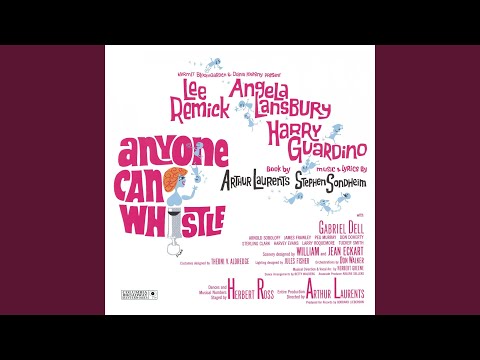
- On record: The cast album story is complicated: the expanded Masterworks Broadway edition highlights bonus demo material, while the full theatrical moment is better preserved in later concert and complete-recording releases.
- Style: A childlike tune with a deliberate edge - a nursery gait walking straight into civic satire.
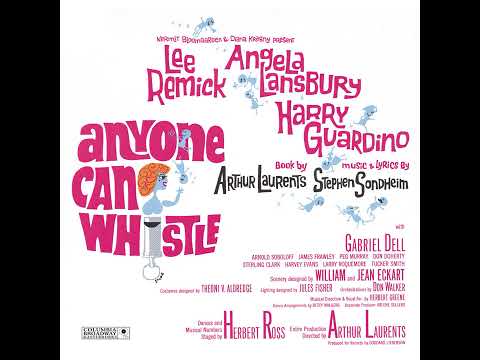
Anyone Can Whistle (1964) - stage musical - diegetic-ish, in the sense that the Cookies are presented as singing their own communal chant. In the show, the town square is literally falling apart, and then the Cookies march in neat as pins, singing a children’s-song refrain. That contrast is the point: the ones labeled unstable look organized, cheerful, and consistent, while the town sells panic in adult clothes.
Creation History
Stephen Sondheim wrote music and lyrics for Anyone Can Whistle with a book by Arthur Laurents, and the Broadway production opened April 4, 1964 at the Majestic Theatre. The show famously closed after nine performances, yet the score stayed in circulation through recordings and concert presentations. Masterworks Broadway has documented how the original cast album remained in the catalog and later editions added demos; the Carnegie Hall benefit concert (1995) and subsequent complete recordings restored musical material that a short Broadway run could not cement in repertory memory. I always think of this number as Sondheim’s early warning system: before the big set pieces arrive, he slips in a simple public tune and lets the audience notice how quickly "simple" becomes a mask.
Song Meaning and Annotations
Plot
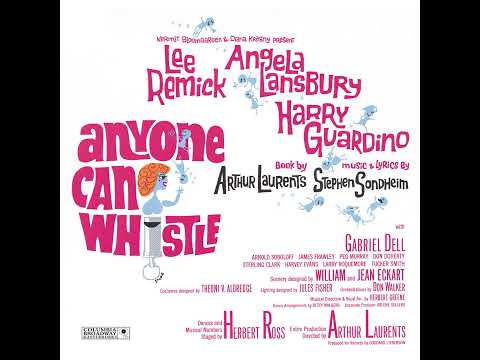
The musical opens in a bankrupt town run by a publicity-hungry mayor and her operators, scrambling to stage a miracle for money and control. Into that mess march the Cookies from the local asylum, the Cookie Jar. They look better than the townspeople, they move together, and they sing this brief anthem as if it were a rule of nature. MTI’s licensed synopsis points out the staging plainly: the Cookies enter in orderly fashion singing their chant, while the town around them cracks and crumbles.
Song Meaning
The lyric is disarmingly plain, which is the trap. The tune sits in a children’s-song mode, and that choice is not decorative: it frames the Cookies as disciplined, comforted by repetition, and perhaps rehearsed by the institution that keeps them. Meanwhile, the town is built on adult hypocrisy. New Line Theatre’s analysis describes the number as a fragment in the style of a children’s song, and Sondheim’s own show notes stress that the piece is the first singing we hear. That placement matters. The musical begins by letting the marginalized group sing first, calmly, and then letting the "civic" world reveal itself as the unstable one.
Selected listening notes
The first time we hear singing in the show is "I'm Like the Bluebird."
A small fact with big stage consequences: once the Cookies sing first, the audience has to keep asking who gets labeled sane and who gets labeled useful. It is a quiet change of power.
Sung by the Cookies, in the style of a children's song. It's only a fragment.
Fragment is the operative word. The number is short because it is meant to be. It lands like a slogan: neat, memorable, easy to repeat, hard to argue with in the moment. It is also a musical clue that the show is going to treat conformity as a rhythm you can march to.
Rhythm, texture, and the arc
The rhythmic walk is straight, almost mechanical. The harmony can feel too clean for the ruined town around it, which is the joke and the warning. The number does not travel far; it circles, insists, and exits. That is the emotional arc: steadiness that reads as comfort, then steadiness that starts to read as control.
Historical touchpoints
MTI’s background notes cite Sondheim describing the show as a mockery of Eisenhower-era conformity, with suburbia and sameness as a social ideal. Put that next to a childlike tune sung by institutionalized people, and the satire writes itself without raising its voice.
Technical Information (Quick Facts)
- Song: I'm Like the Bluebird
- Artist: Company (Cookies), Anyone Can Whistle (Original Broadway production context)
- Featured: Ensemble
- Composer: Stephen Sondheim
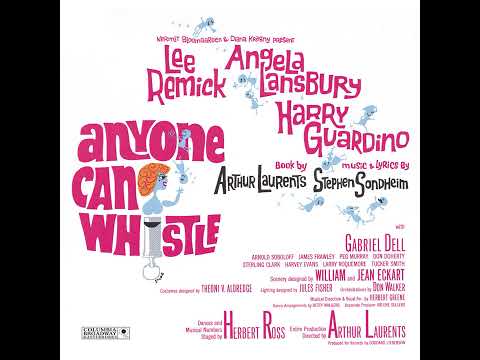
- Producer: Goddard Lieberson (cast album producer)
- Release Date: April 17, 1964 (first LP release date for the Original Broadway Cast Recording)
- Genre: Musical theatre
- Instruments: Vocal ensemble with orchestra (theatrical context)
- Label: Columbia Masterworks (Masterworks Broadway catalog context)
- Mood: Childlike; orderly; faintly unnerving
- Length: Varies by recording and edition (often treated as a brief fragment)
- Track #: Placement varies by release (the song is listed as an Act I number in production song lists)
- Language: English
- Album (if any): Anyone Can Whistle - Original Broadway Cast Recording (and later concert and complete-recording albums)
- Music style: Children's-song pastiche used as social commentary
- Poetic meter: Songlike regularity (designed for repetition and group delivery)
Frequently Asked Questions
- Who sings "I'm Like the Bluebird" in the original Broadway production?
- It is listed as sung by the Company, and in the story it is associated with the Cookies from the Cookie Jar asylum.
- Where does the song appear in Act I?
- It arrives very early, as part of the initial town setup, when the Cookies march in orderly and bright against a town that is visibly falling apart.
- Is it a full-length number?
- Many analyses describe it as intentionally brief, almost a motto: more like a chant than a conventional showstopper.
- Why a children's-song style?
- Because it lands like conditioning. The tune is easy to repeat and hard to question, which lets the show comment on institutions and conformity without shouting.
- Is it on the Original Broadway Cast Recording?
- Recording history varies by edition. The Masterworks Broadway expanded presentation spotlights a demo track among its bonus material, while later releases and concert recordings supply broader context for the musical’s opening sequence.
- What is the dramatic contrast the song sets up?
- The people labeled unstable look calm and coordinated; the town leadership looks frantic and opportunistic. The show keeps turning that contrast like a screw.
- Does the song return later?
- Yes. Production song lists and show descriptions note reprises or reappearances as the Cookies re-enter under changing circumstances.
- Did later performances change how it is presented?
- Concert and complete-recording projects often restore connective material around the opening, which can make the chant feel less like a throwaway and more like a thematic hinge.
- What is the song really "about" in one sentence?
- It is a tidy public mantra that exposes how much the town depends on tidy public mantras.
- Is it a typical Sondheim opening?
- It is an early example of a Sondheim habit: start with structure, then reveal what that structure is hiding.
Awards and Chart Positions
The number is not treated as a pop single with standard chart reporting. In the awards lane, the Broadway production received a Tony Award nomination for choreography (Herbert Ross), as listed in licensing and production documentation.
Additional Info
One of the show’s slyest moves is letting the Cookies sing first. Sondheim.com notes that this is the first singing in the score, and that sequencing changes the audience’s footing: you are asked to hear "institutional" voices as the opening normal. A Masterworks Broadway essay about the Carnegie Hall concert mentions how the concert overture leads into a brief taste of this material, a reminder that the musical’s opening architecture was something later listeners and performers wanted back in the room.
If you want a more technical reading, a pedagogy text on harmony in musical theatre discusses how chromatic and diatonic systems jostle in this opening number, suggesting that musical language itself is being used to blur the boundary between sane and insane. It is the sort of observation that makes you smile, then makes you replay the track to see how quickly the smile freezes. As stated in Music Theatre International’s show history notes, Sondheim connected the piece’s social target to Eisenhower-era conformity, which puts extra weight on any tune that sounds like it could be taught in unison.
Key Contributors
| Entity | Type | Relationship |
|---|---|---|
| Stephen Sondheim | Person | Wrote music and lyrics for the song and the musical. |
| Arthur Laurents | Person | Wrote the book and directed the original Broadway production. |
| Goddard Lieberson | Person | Produced the original cast album that kept the score circulating. |
| Herbert Ross | Person | Choreographer; received the show’s Tony Award nomination for choreography. |
| Columbia Masterworks | Organization | Label associated with the original cast recording release history. |
| Masterworks Broadway | Organization | Publisher of expanded editions and archival notes about recordings and concerts. |
| Music Theatre International | Organization | Licensing source providing synopsis, show history, and production details. |
| Majestic Theatre | Venue | Broadway opening venue in 1964. |
| Carnegie Hall | Venue | Hosted the 1995 benefit concert that preserved more score context on record. |
How to Sing I'm Like the Bluebird
Most productions treat this as ensemble writing rather than a solo vehicle, so the useful technique notes are about unison, diction, and the institutional march feel. For range context, MTI lists principal character ranges (for example, Fay Apple G3 to D5), which helps a music director plan keys and ensemble placement even if the Cookies are a mixed group in modern casting.
- Tempo: Keep it steady, like a simple exercise. The impact comes from consistency, not pushy speed.
- Diction: Aim for crisp consonants in unison. This should sound rehearsed, almost trained.
- Breath: Plan group breaths so the line does not sag. Stagger-breathe in sections if the staging involves marching.
- Blend: Match vowels across parts. A pure, uniform vowel makes the number read as communal instruction.
- Color: Resist winks. Play it straight. If you lean into comedy too early, the satire arrives already explained.
- Movement and sound: If the staging includes a march-in, coordinate footfalls with phrase starts. The visual order should match the sonic order.
- Pitfalls: Overacting the sweetness. The number works when it is sincerely "nice" and quietly unsettling at the same time.
Sources
Sources: IBDB production song list, Music Theatre International licensing synopsis and show history, Masterworks Broadway cast album notes, Masterworks Broadway Carnegie Hall concert album page, Sondheim.com show analysis, New Line Theatre analysis, Music Theory Through Musical Theatre (Oxford University Press)
Anyone Can Whistle Lyrics: Song List
- Act 1
- Prelude Act I
- I'm Like the Bluebird
- Me and My Town
- Miracle Song
- There Won't Be Trumpets
- Simple
- Act 2
- Entr'acte
- Hooray for Hapgood
- Come Play Wiz Me
- Anyone Can Whistle
- A Parade in Town
- Everybody Says Don't
- Act 3
- I've Got You To Lean On
- See What It Gets You
- The Cookie Chase
- With So Little to Be Sure Of
- Finale